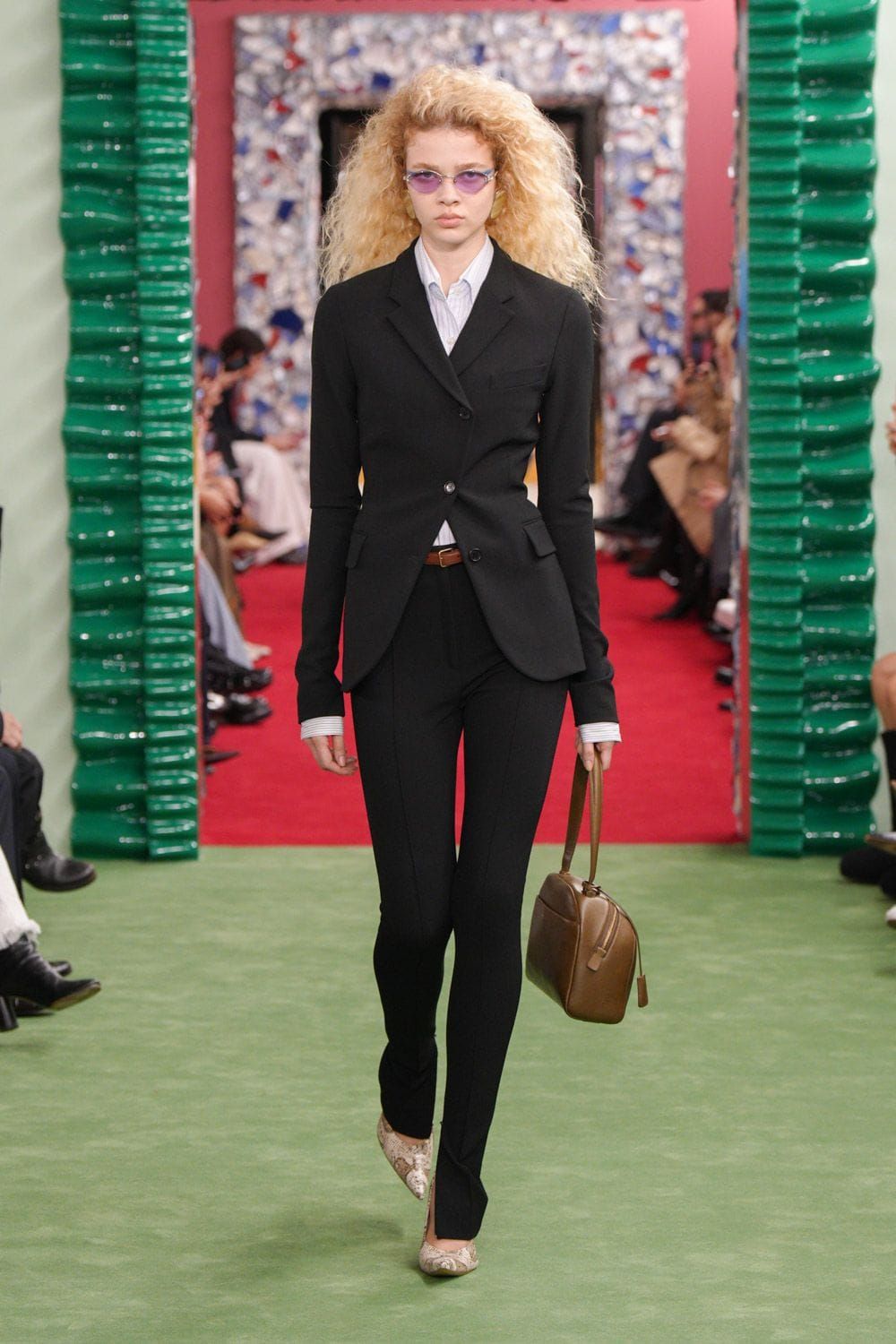
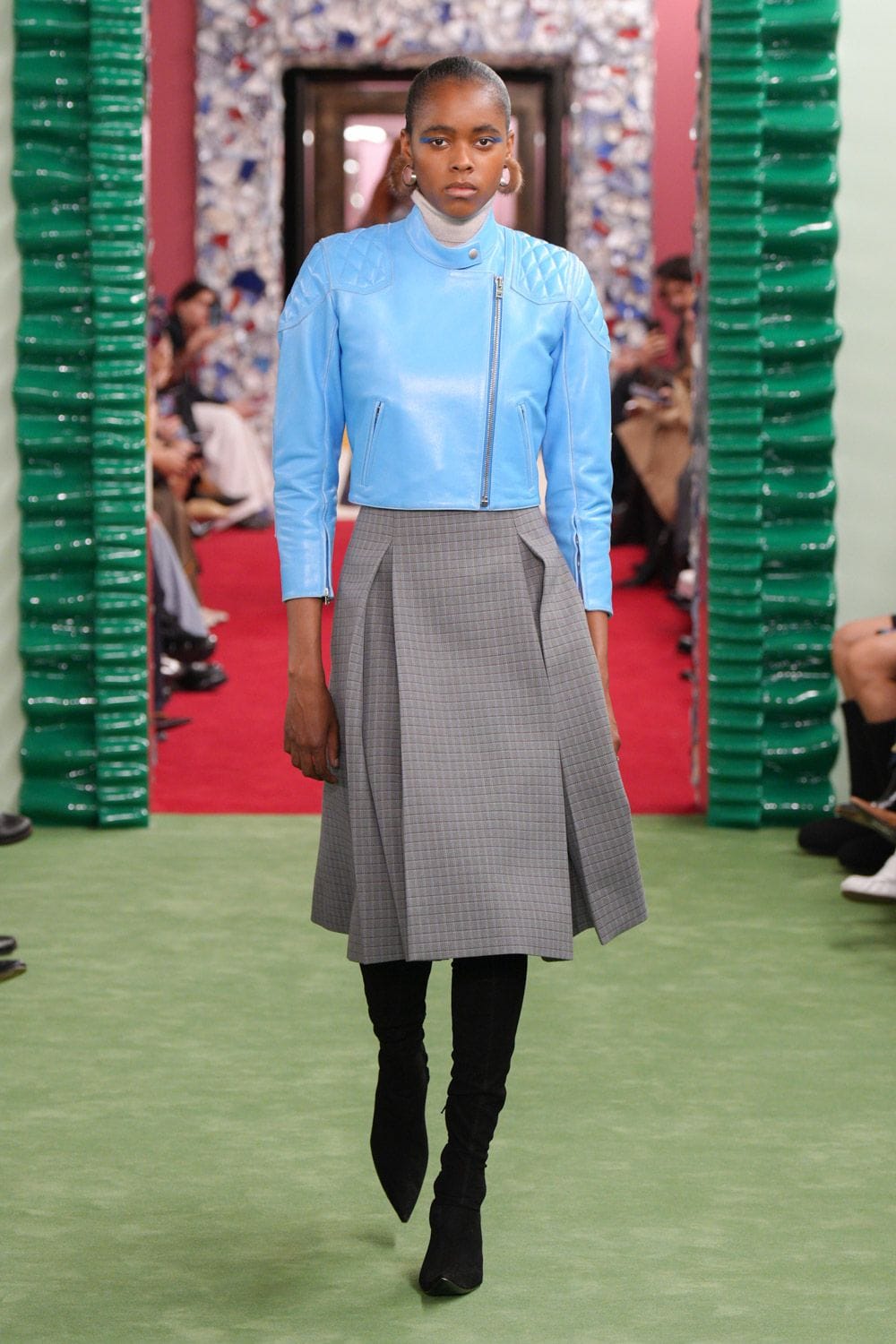
The most telling moment in Acne Studios' Fall 2026 presentation wasn't a dramatic finale piece or a viral runway moment—it was the restraint. Creative director Jonny Johansson sent out a collection for Vogue built on precision tailoring, considered proportions, and a color palette that felt more like a curator's wall than a runway spectacle. Oversized blazers in charcoal and camel. Trousers with architectural volume that stopped just short of costume. Knits that looked engineered rather than draped. It was fashion that asked you to look twice, not once.
That approach—intellectual without being inaccessible, conceptual without being unwearable—is exactly what Acne Studios has always done well, and exactly what the brand needs to lean into now. In a fashion landscape increasingly split between pure spectacle and algorithmic trend cycles, Acne occupies a rare middle ground: a brand with a clear design philosophy that doesn't require a manifesto to understand. The Fall 2026 collection reinforces that position. Johansson didn't chase virality or attempt to redefine the brand's identity. He refined what was already there.
The business logic is straightforward. Acne Studios operates in a segment of the market—contemporary luxury with an art-school sensibility—that has become crowded and confused. Younger brands are flooding the space with irony and references. Heritage houses are trying to capture the same customer base with streetwear collaborations and influencer campaigns. What Acne has that most of them don't is a consistent design language that has remained legible for over two decades. The Fall 2026 collection doesn't try to compete with the noise. It opts out of the conversation entirely, betting that there's still a customer who values craft over content.
That customer exists, but they're harder to reach than they used to be. The contemporary luxury market has bifurcated: on one side, brands that have embraced full-throttle digital engagement and treat every collection as a content opportunity; on the other, brands that have retreated into exclusivity and scarcity as a defense mechanism. Acne's play is different. The brand isn't chasing viral moments, but it's also not hiding behind limited drops and invite-only showrooms. It's simply making clothes that reward attention—and trusting that the people who care will find them.
What makes the collection work is its refusal to over-explain itself. There's no overarching theme, no narrative hook for press releases, no attempt to tie the garments to a cultural moment or a zeitgeist observation. It's fashion as design problem-solving: how do you make a coat that feels substantial without being heavy? How do you cut a trouser that has presence without losing wearability? Those aren't questions that generate headlines, but they're the ones that keep customers coming back season after season.
The strategy becomes clearer when you consider what Acne isn't doing. Saint Laurent's Fall 2026 collection felt like a brand trying to convince itself of its own relevance. Balmain leaned harder into maximalism because maximalism is what the brand knows how to sell. Acne didn't pivot, didn't overcorrect, didn't try to capture a moment it wasn't built for. That kind of discipline is rare in an industry that rewards reinvention over consistency.
It also positions the brand for a longer play. The fashion system is exhausting itself with its own pace—four collections a year, constant drops, collaborations that feel obligatory rather than inspired. Brands are starting to realize that customer fatigue is real, and that the people who actually spend money on clothes (as opposed to engagement) want something more durable than a trend cycle. Acne's bet is that those customers will remember which brands stayed consistent when the noise dies down.
The risk, of course, is invisibility. In an industry that rewards spectacle and punishes subtlety, a collection this restrained can read as absence rather than confidence. But Acne Studios has never been a brand that thrives on hype cycles. Its strength has always been in its ability to build a wardrobe rather than a moment—and in a fashion system increasingly exhausted by its own pace, that might be the smarter long-term bet.
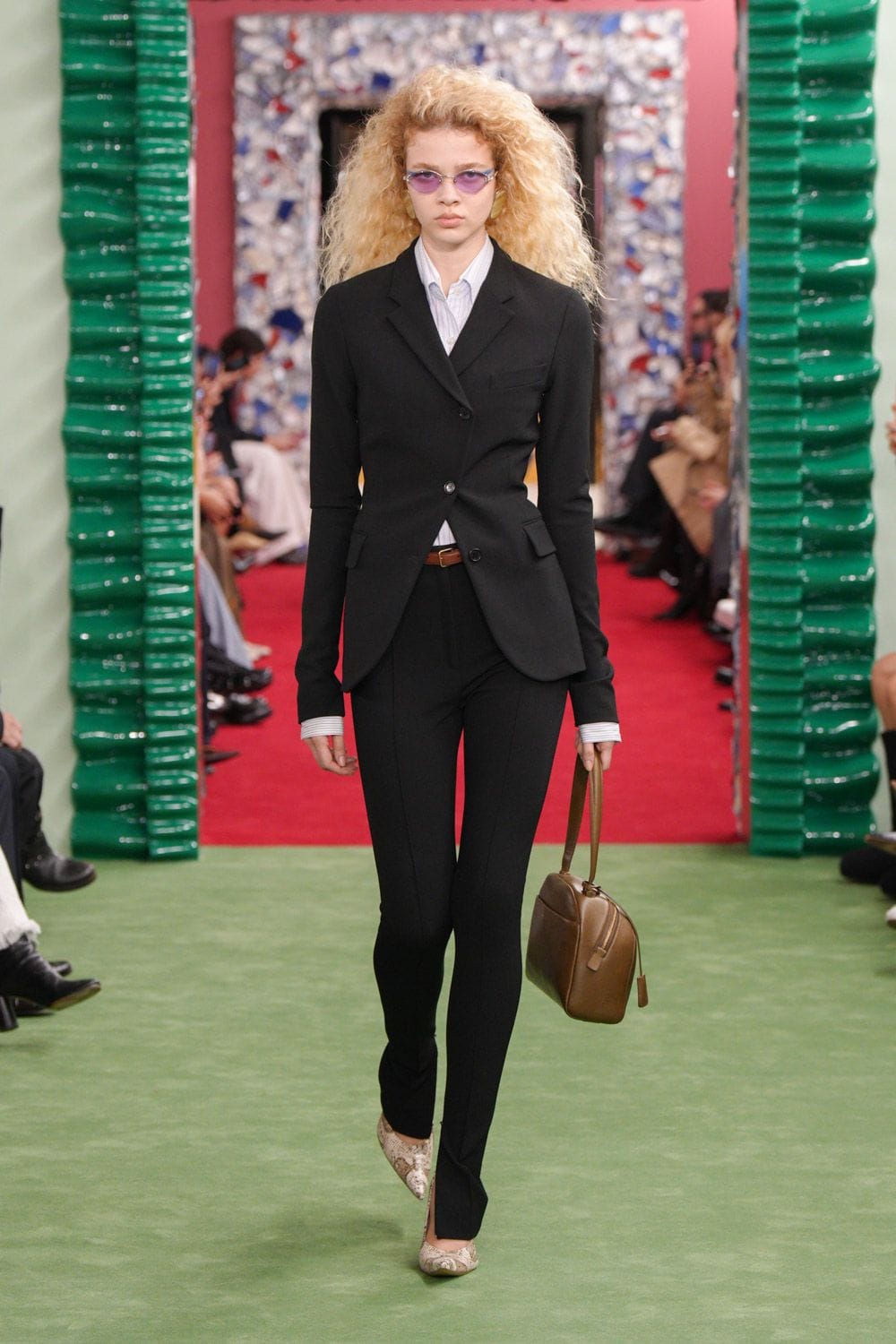
Fall 2026 doesn't announce a new direction for the brand. It confirms that Acne still knows what it's good at, and it's not interested in pretending to be anything else. In a season where other contemporary brands are either chasing virality or retreating into heritage narratives, Johansson sent out a collection that simply does the work. That quiet confidence might not generate the same press coverage as Matières Fécales' provocations or the same cultural cache as Courrèges' retro-futurism, but it's the kind of strategy that builds a business rather than a moment. And in a market where most brands are optimizing for the latter, there's real value in being one of the few still committed to the former.