The lights went down in the Palais de Tokyo, and the first model appeared wearing what looked like a white coat — until the ultraviolet light hit it. The garment bloomed into color, deep purples and electric blues spreading across the fabric like a chemical reaction. It wasn't projection mapping or LED integration. The color was in the material itself, photochromic dyes engineered to respond to specific wavelengths of light. Kunihiko Morinaga, the designer behind Tokyo-based label Anrealage, has built his career on moments like this: garments that don't just sit on the body but actively transform in response to their environment.
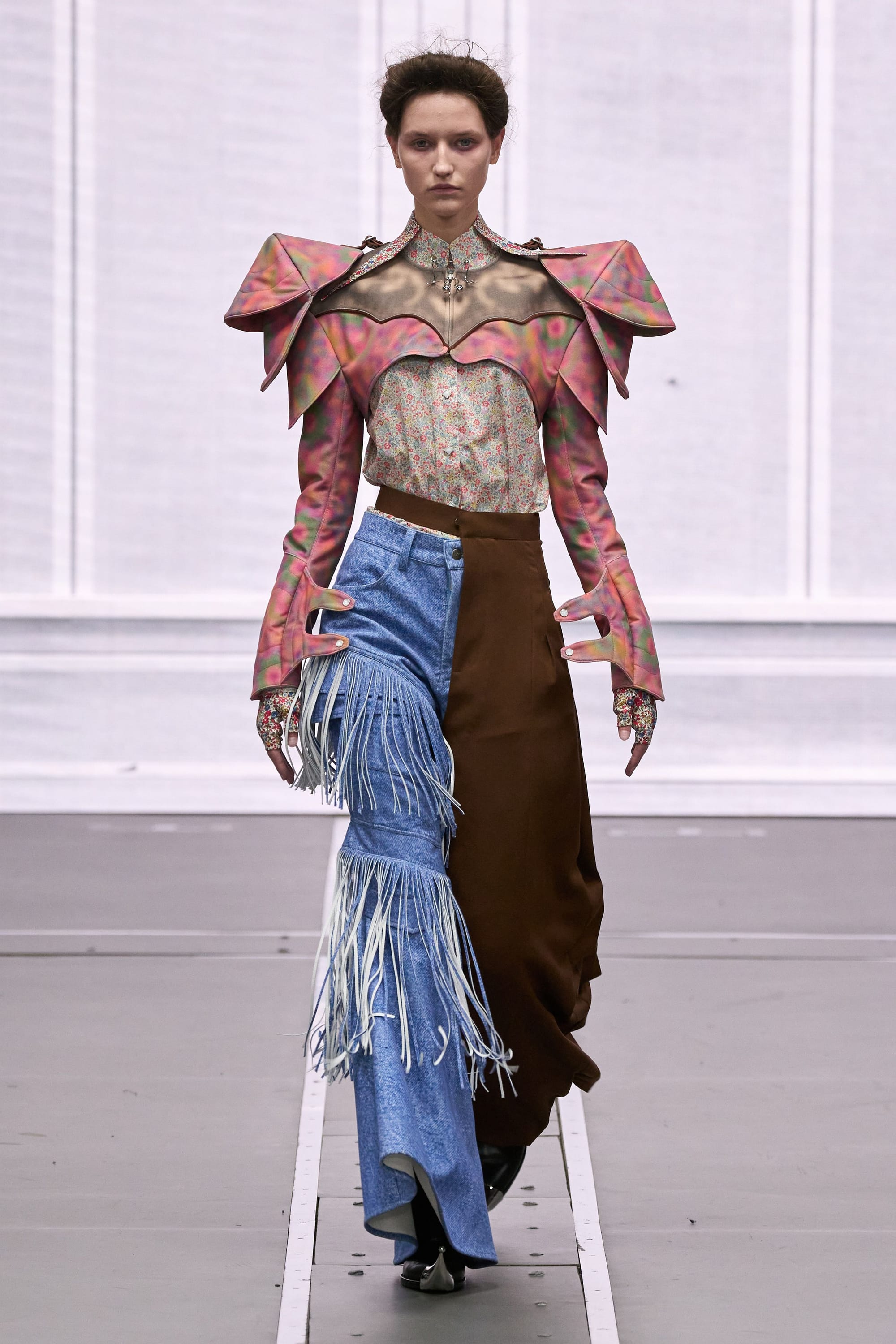
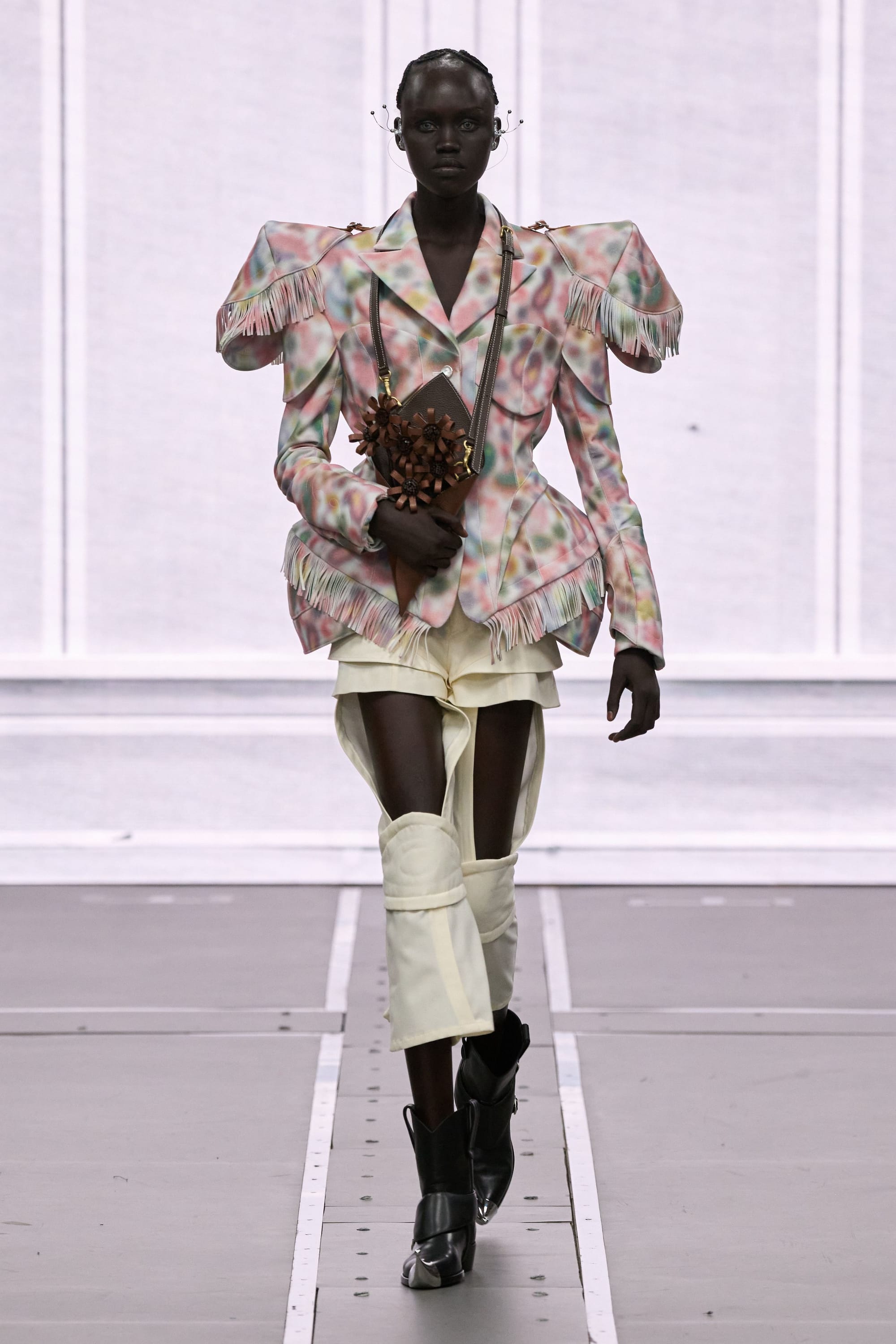
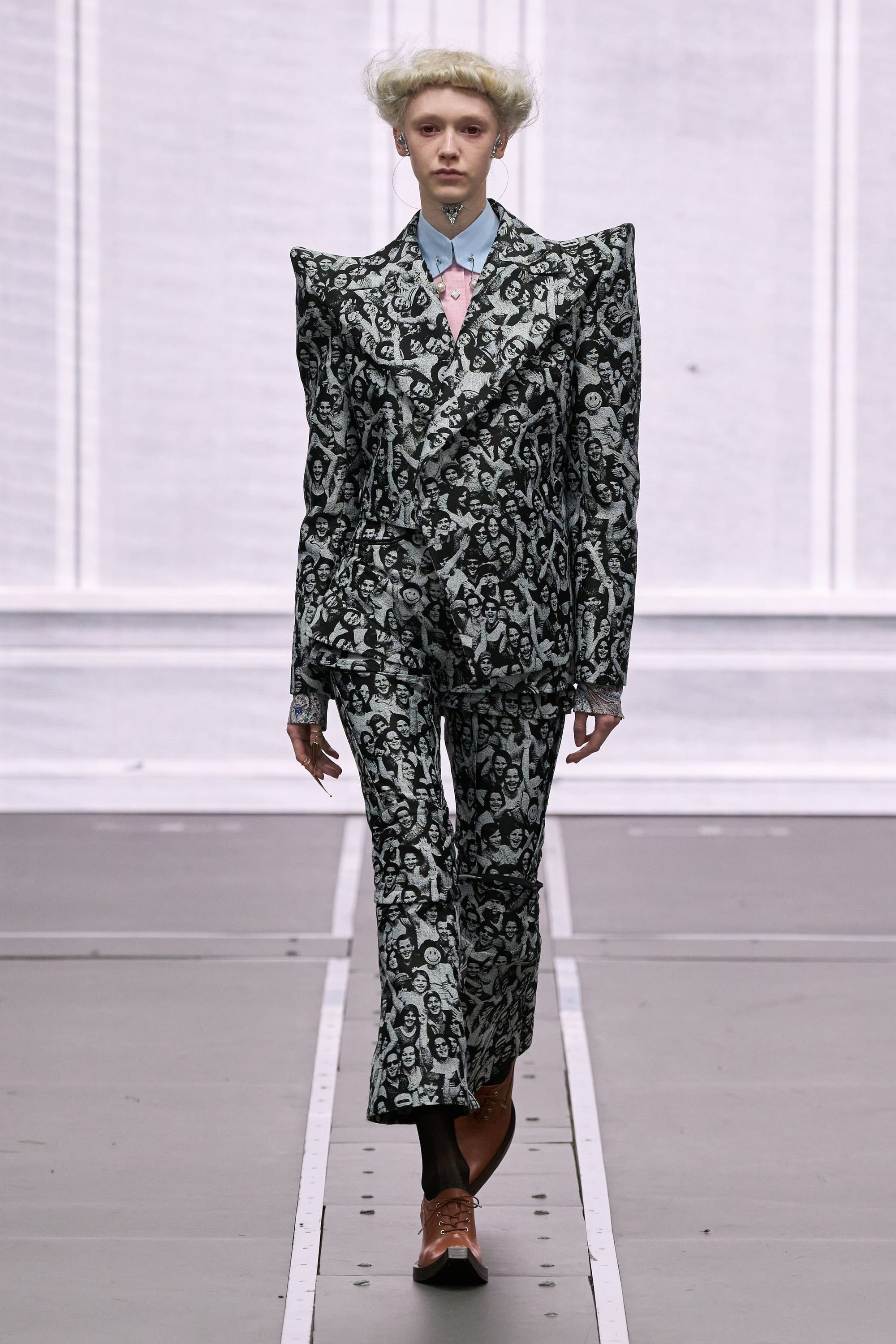
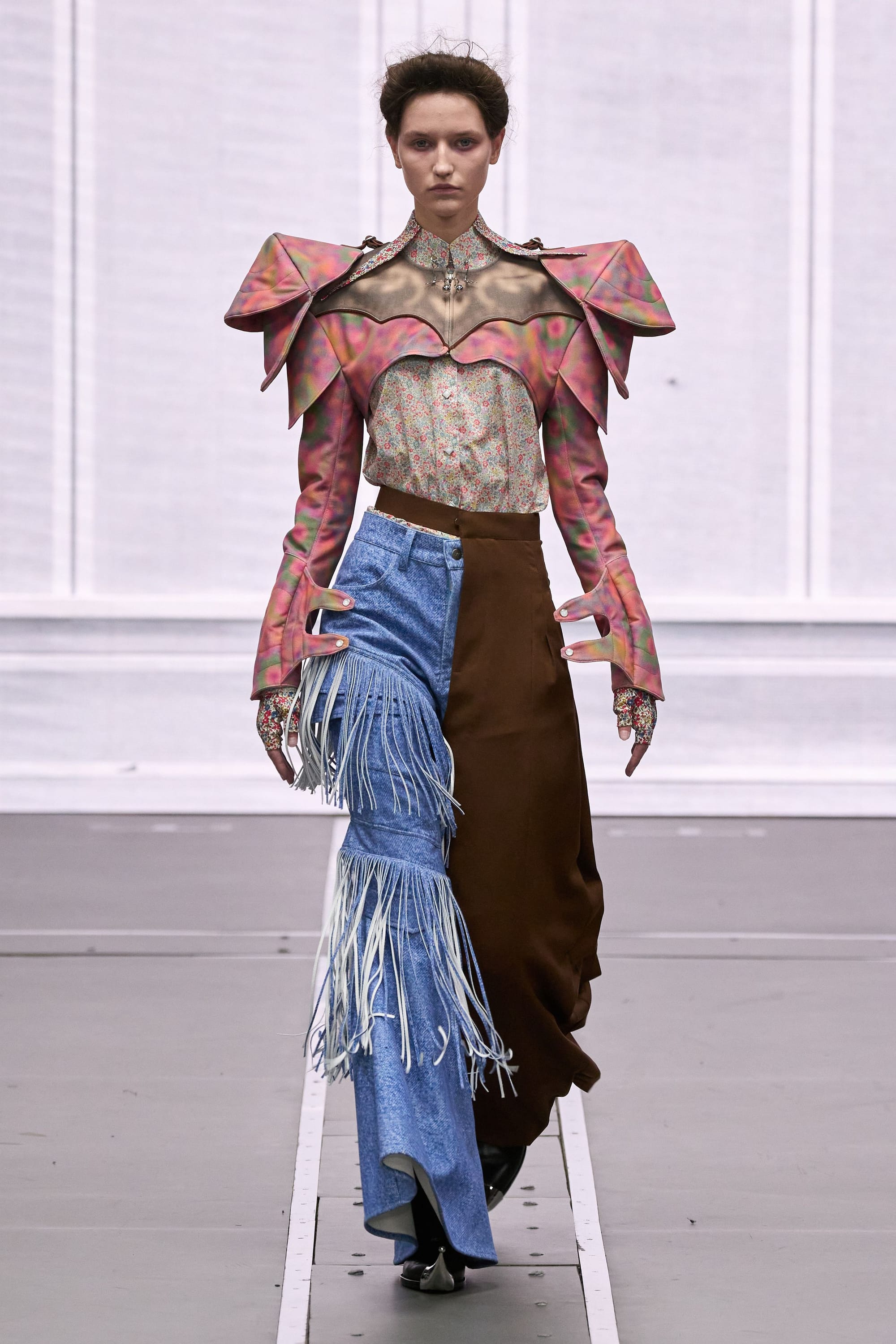
Anrealage's Fall 2026 ready-to-wear collection, shown during Paris Fashion Week, continues the label's decade-long commitment to treating the runway as a laboratory. According to Vogue's runway coverage, the collection featured photochromic materials that shifted color under UV light, laser-cut fabrications that created geometric patterns impossible to achieve by hand, and heat-responsive textiles that altered their opacity based on body temperature. These aren't visual tricks. They're material inquiries into what clothing can do beyond covering the body.
What makes this collection significant isn't the technology itself — it's how rare this kind of work has become. The fashion industry has largely abandoned material experimentation in favor of two safer bets: heritage houses mining their archives for recognizable codes that photograph well, and fast-fashion operations optimizing for algorithmic virality. Balmain's Fall 2026 collection exemplified the former — Olivier Rousteing delivering his greatest hits because that's what the market rewards. The latter doesn't even bother with Paris runways. Anrealage occupies a third space that's shrinking fast: fashion as genuine research and development.
The distinction matters because the industry has started calling everything "innovation." Sustainability initiatives that amount to marginal supply chain tweaks get branded as revolutionary. AI-assisted design tools that mostly generate mood boards are treated as creative breakthroughs. Meanwhile, Morinaga is rethinking what clothing can physically do. The photochromic pieces aren't just visually striking — they ask whether garments can exist in multiple states depending on context, whether fashion can be dynamic rather than static. It's the kind of work that reads as conceptual art on the runway but carries implications for how we understand clothing's relationship to environment, technology, and the body.
The brand's relevance isn't in whether these pieces will sell at scale — they won't, and that's not the point. Anrealage has cultivated a dedicated collector base willing to invest in experimental output, but the label's real function is as a counterweight to an industry increasingly dominated by market logic and content generation. Fashion Week's audience has shifted — shows are now designed for Instagram feeds and TikTok clips, not the editors and buyers in the front row. But brands like Anrealage continue to design for a world where the runway still means something beyond virality.
This creates real tension. The garments are technically sophisticated enough to warrant academic study, but they're presented within a commercial fashion system that has no patience for work that doesn't translate immediately to sales or social media engagement. Morinaga showed tailored coats with laser-cut panels that revealed contrasting layers beneath, dresses constructed from heat-bonded fabrics that eliminated traditional seaming, outerwear that shifted in structure as models moved. These are garments that reward close attention, that reveal their innovation slowly. That's a liability in an industry that rewards instant legibility.
The collection also clarifies a widening gap in how different segments of the industry define progress. For most brands, innovation means incremental improvements to existing systems — a more efficient supply chain, a more engaging social media strategy, a collaboration that generates headlines. For Anrealage, innovation means questioning the fundamental assumptions of what clothing is. That's a harder sell, a longer game, and a vision that doesn't fit into quarterly earnings reports or influencer marketing campaigns.
What makes Anrealage's position particularly revealing right now is how it contrasts with the broader trajectory of luxury fashion. Christian Dior's Fall 2026 collection signaled where luxury is heading: toward refinement, wearability, and quiet confidence that sells handbags. That's a legitimate strategy grounded in commercial reality. But it leaves no room for the kind of material experimentation Morinaga pursues. The fashion system increasingly sorts brands into clear categories — commercial players, heritage guardians, and a shrinking space for genuine experimentation. The middle ground is disappearing.
The comparison extends across the week's shows. Acne Studios demonstrated how intellectual fashion can remain wearable without sacrificing its conceptual edge. Courrèges proved that futurism can be commercially viable when tied to heritage codes. Even Viktor & Rolf's conceptual extremism operates within recognizable fashion vocabularies. Anrealage stands apart because the work begins at the molecular level — with the materials themselves rather than how they're cut or styled. That's a fundamentally different proposition, one that requires patience and trust that few brands can afford.
Anrealage's commitment to that experimental space feels both necessary and unsustainable. The brand operates outside the fashion industry's dominant incentive structures, which means it's free to pursue work that matters beyond this season's sales figures. But it also means the brand exists in permanent exception — celebrated by critics and collectors while remaining largely invisible to the broader market. Most brands can't survive in that position. The fact that Anrealage has for over a decade suggests the label has figured out something about scale and sustainability that doesn't require mass adoption. It's built a business model around being perpetually niche, perpetually experimental, and perpetually necessary as proof that fashion can still be about more than content and commerce.
The real question the collection poses isn't whether photochromic dyes will become mainstream — they won't. It's whether the fashion industry can continue to support work that exists primarily to push the medium forward, to ask questions rather than answer market demand. Right now, the answer seems to be barely, and only for a handful of brands willing to operate at the margins. That makes every Anrealage collection both a technical achievement and a test of whether the industry still has room for actual research.