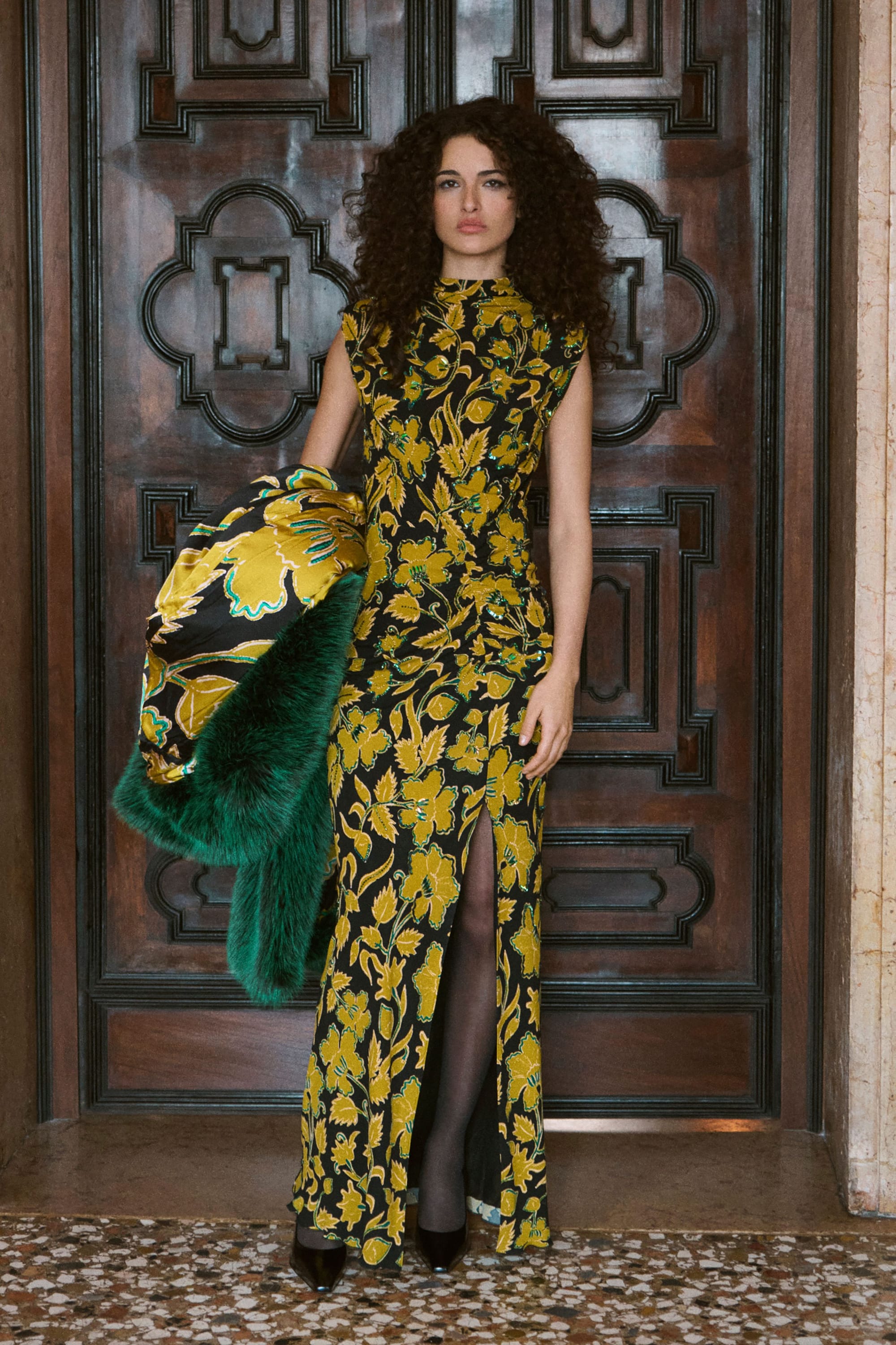
The wrap dress appeared in the Diane von Furstenberg Fall 2026 collection exactly where you'd expect it: front and center, unapologetic, printed in saturated jewel tones and geometric patterns that looked like they could have been pulled from the brand's 1976 archive. According to Vogue, the runway featured the silhouette in at least a dozen variations, each one a slight refinement on a design that's been commercially viable for five decades. No deconstructed reimagining. No ironic commentary. Just the dress, doing what it's always done.
That kind of consistency would be a death sentence for most heritage brands. But DVF isn't most heritage brands, and the Fall 2026 collection makes a quiet case for why staying in your lane can be more strategic than chasing whatever's trending on TikTok this quarter. While competitors scramble to court Gen Z with logo overhauls and collaborations with creators who'll forget them in six months, von Furstenberg is betting that her core customer base doesn't need to be convinced. The wrap dress remains one of the most commercially successful garment designs in modern fashion history, and the brand's refusal to abandon it is starting to look less like creative stagnation and more like disciplined brand management.
The Fall 2026 lineup leans into that legacy without treating it like a museum piece. The prints are saturated and unapologetic — bold florals, abstract geometrics, color-blocked stripes that photograph well but don't feel engineered for Instagram. The cuts remain flattering without being overly technical, and the overall aesthetic still reads as power dressing for women who don't need to perform power. There's no streetwear influence, no logo-heavy branding, no attempt to make the collection feel "relevant" by borrowing from whatever's dominating Fashion Week right now. It's DVF doing DVF, which is either brave or stubborn depending on how you look at it.
What DVF understands — and what many legacy brands don't — is that reinvention for its own sake is a trap. Balmain's Fall 2026 collection leaned hard into Olivier Rousteing's maximalist aesthetic, playing the greatest hits because that's what the brand does best. Saint Laurent's Fall 2026 show revealed a confidence problem, a brand trying to figure out what it stands for in a luxury market that's shifting under its feet. DVF doesn't have that problem. The brand knows exactly what it is, and the Fall 2026 collection suggests it's perfectly comfortable staying there.
Fashion Week has become a performance where the audience is often other industry insiders, not actual consumers. DVF's decision to stay in its lane suggests the brand knows who's actually buying the clothes. It's not the front row. It's the woman who's been wearing wrap dresses since the '70s and the one who just discovered them on resale platforms and realized they're one of the few vintage silhouettes that doesn't require tailoring to fit a modern body. That's a customer base with staying power, and it's one that doesn't need to be seduced with gimmicks.
There's also something to be said for the brand's refusal to participate in the hype cycle that dominates contemporary fashion. Dries Van Noten's Fall 2026 collection proved the house could evolve without its founder, but it did so by staying true to a very specific aesthetic vocabulary. DVF is operating in a similar space — evolution through refinement, not reinvention. The Fall 2026 collection doesn't feel like it's trying to prove anything. It's not a comeback narrative, not a reintroduction, not a "new era" for the brand. It's just another season of doing what DVF does, which in an industry obsessed with narrative arcs and transformation stories, is almost radical.
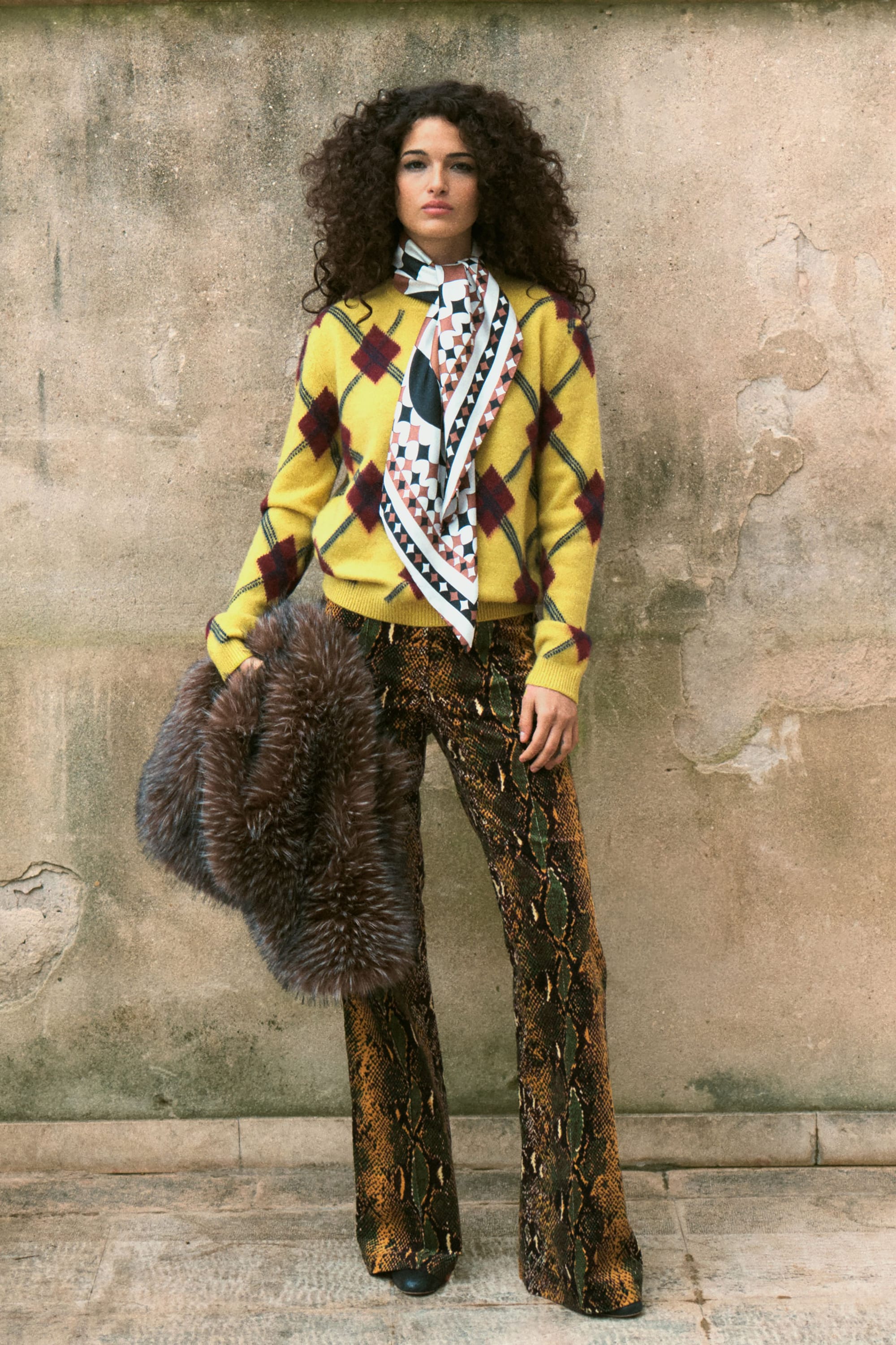
The commercial logic is hard to argue with. The wrap dress has survived every trend cycle since the 1970s. It's been in and out of fashion, but it's never been irrelevant. That kind of longevity doesn't happen by accident — it happens because the garment solves a problem. It's flattering on multiple body types, it's easy to wear, it's professional without being stuffy, and it photographs well. Those aren't sexy selling points, but they're the kind of practical considerations that keep a design in circulation for decades.
DVF's Fall 2026 strategy also highlights a deeper shift in how heritage brands are calculating risk. The industry has spent the last decade watching storied houses chase youth demographics with expensive pivots that often alienate existing customers without successfully capturing new ones. The math rarely works out. DVF is making a different bet: that the customer who already knows what she wants is worth more than the one who might be convinced. It's a rejection of the growth-at-all-costs mentality that's driven so many fashion brands into creative incoherence, and it's working precisely because the brand never lost sight of what made it valuable in the first place.
The resale market has quietly validated this approach. Vintage DVF wrap dresses move consistently on platforms like Vestiaire Collective and The RealReal, often at price points that rival contemporary pieces. That's not nostalgia — that's proof of concept. The design works, the construction holds up, and the aesthetic remains legible across decades. New customers are discovering the brand through secondhand channels and then buying current-season pieces because the language is consistent. That kind of circular customer acquisition doesn't happen when a brand is reinventing itself every three years.
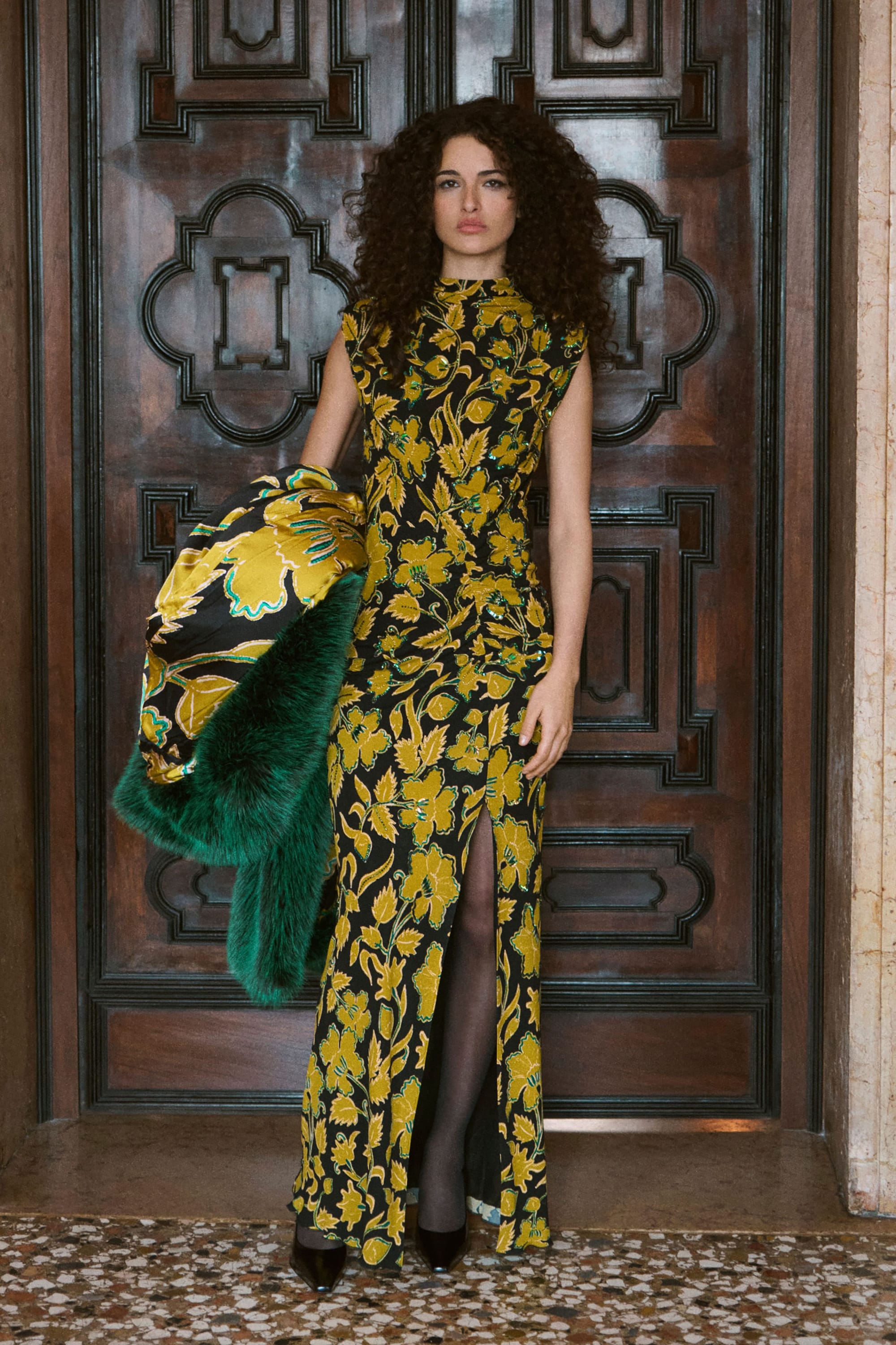
The Fall 2026 collection doesn't reinvent that formula because it doesn't need to. The prints are updated, the fabrics are refined, the styling feels contemporary without chasing trends. But the core product remains unchanged, and that's the point. In a fashion environment where brands are constantly trying to be everything to everyone, DVF's willingness to be one thing — and to be it well — is starting to look like the smarter play. The brand isn't chasing trends because it already created one that never fully went away. And in an industry that's increasingly fragmented, increasingly driven by algorithm-friendly content over actual design, that kind of clarity is rare enough to be worth paying attention to.