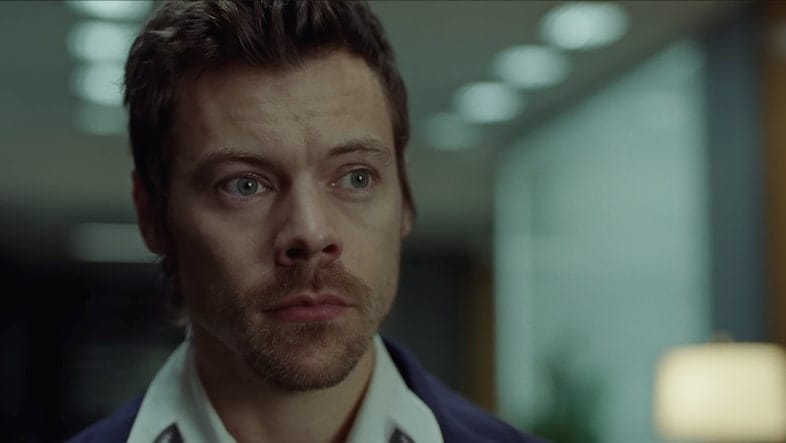
Harry Styles told the Sunday Times in his first print interview since 2019 that he'd been "struggling with trying to live." Not struggling to make music, or struggling with the industry — struggling with the basic mechanics of existing while being one of the most recognizable people on the planet. Then he disappeared. After Love on Tour wrapped in 2023 — a residency-format world tour that grossed over $600 million — Styles didn't step back. He vanished. Paparazzi caught him living in Rome in 2025, apparently unbothered by the entire machinery he'd left idling. No social media updates. No surprise features. No carefully timed paparazzi walks in London. Just silence from someone who had spent three years being, arguably, the biggest pop star in the world.
Now he's returned with a new album, and the most revealing thing about it is what he's refusing to do.
The record represents a full retreat from the formula that made Styles inescapable during the Harry's House era. No stadium-ready hooks designed for 80,000-person singalongs. No TikTok-optimized singles calibrated for a 15-second clip. No calculated bid for another "As It Was," which became one of the most-played songs of the decade not because it was revolutionary, but because it was perfectly engineered for ubiquity — the kind of track that felt like it had always existed the moment you first heard it.
What Styles has made instead sounds deliberately smaller. More personal. More interested in being heard than being everywhere. That's a meaningful choice from someone who spent years proving he could fill any room, dominate any platform, and move product at a scale that made the industry treat him less like an artist and more like a brand extension with vocal cords.
The context matters. Styles reached a level of pop saturation between 2022 and 2023 that few artists achieve and even fewer survive with their creative instincts intact. He was headlining Coachella, starring in films, launching a beauty brand, wearing clothes that generated more cultural commentary than most runway shows, and simultaneously trying to make music that meant something to him. The Love on Tour numbers were staggering — 173 shows, multiple night residencies in cities like New York, London, and Los Angeles, fan communities that organized around the concerts like cultural events rather than just gigs.
And then the backlash cycle started, the way it always does. The films underperformed. The discourse around his fashion choices shifted from celebration to scrutiny. The parasocial intensity that had powered his rise started to feel less like adoration and more like surveillance. Styles, to his credit, seems to have read the room — not the industry room, where the advice would have been to push through and capitalize on remaining momentum, but the room inside his own head.
The timing of Styles's retreat is particularly telling. He walked away at the exact moment when the infrastructure of pop stardom had become most optimized for perpetual extraction. The touring model had evolved into multi-night residencies that squeezed maximum revenue from core markets. Social media had professionalized into a 24/7 content operation. Brand partnerships had matured into full-scale product lines. Every aspect of celebrity had been monetized, measured, and optimized for conversion. Styles looked at the machine he'd helped perfect and decided the cost of running it was higher than the revenue it generated.
But there's another possibility. At a time when niche audiences drive more sustained engagement than mass-market ubiquity, Styles walking away from the pop machine might not be a retreat. It might be the only move that keeps the next decade of his career from looking like a long, managed decline into nostalgia touring. The artists who survive aren't the ones who try to maintain peak visibility forever. They're the ones who recognize when the machinery that built them has started to consume them, and who have the discipline to dismantle it before it does.
The parallel to Bethenny Frankel walking away from Bravo is instructive. Both built empires inside existing systems, both reached a point where the system's demands exceeded what it could offer in return, and both made the calculation that their brands were worth more outside the infrastructure that made them famous than inside it. The difference is that Frankel walked away with a clear business model for what came next. Styles is walking away with only the music — and the hope that artistic credibility still has market value in an industry that has spent a decade proving it doesn't.
Whether the music itself justifies the gamble remains to be heard. But the decision to make it — to dismantle the biggest pop apparatus of the 2020s and start over with something quieter — is the most compelling thing Styles has done since he left One Direction. It's a test of whether pop stardom can still accommodate artistic evolution, or whether the industry's infrastructure has become so optimized for perpetual visibility that stepping away is the same as stepping down.
Styles is betting he can prove it's not. The next year will show whether the audience he built on ubiquity will follow him into scarcity, or whether he's just given the industry permission to find someone else to fill the space he left behind.
For more, see how Kiss All the Time defies expectations.