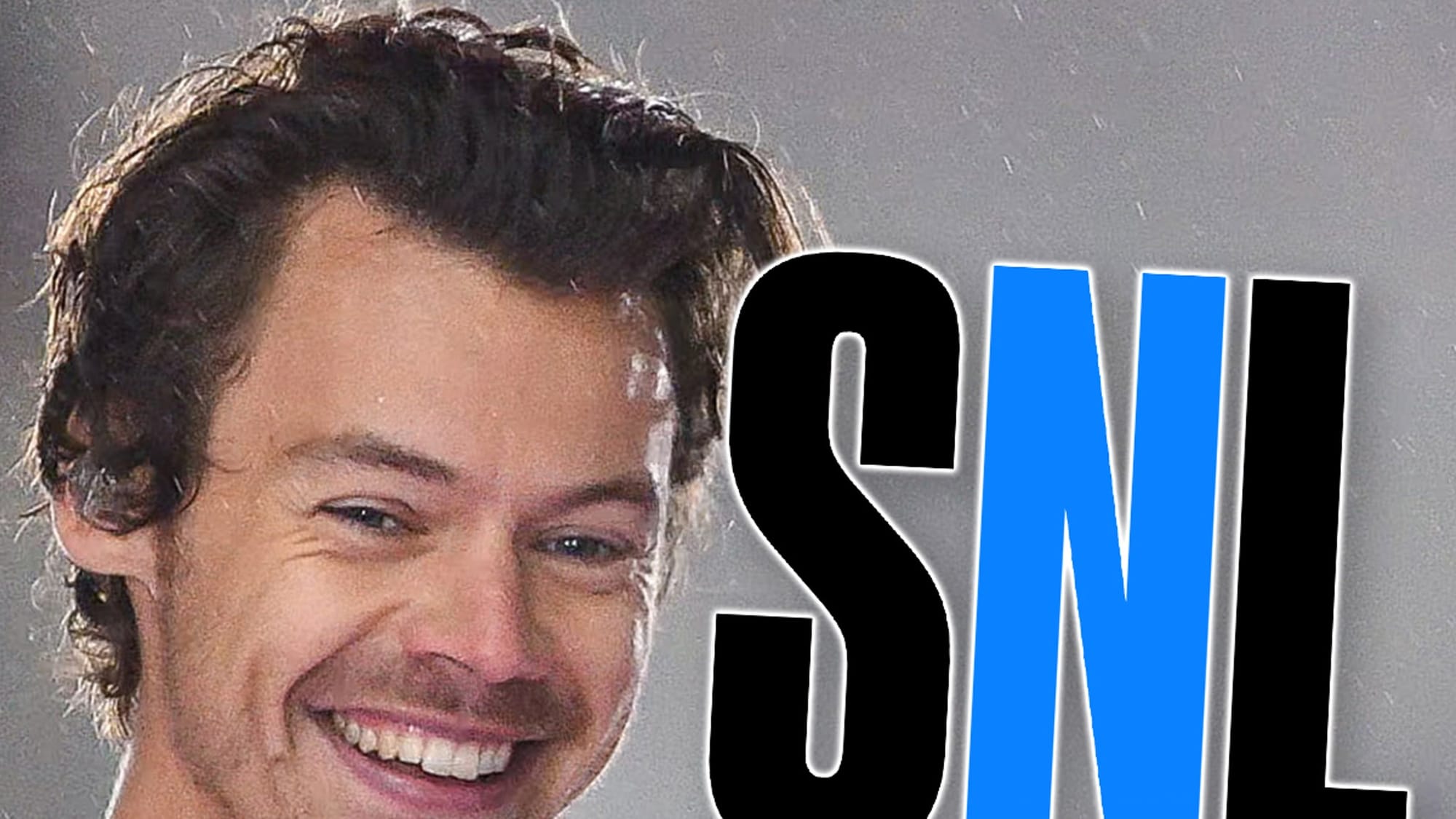
Harry Styles kissed a male cast member during his Saturday Night Live monologue this weekend, capping off a bit that directly referenced years of queerbaiting accusations. The kiss itself — quick, theatrical, played for laughs — landed somewhere between self-aware and self-promotional. The audience roared. The internet immediately began dissecting whether the gesture was brave, cynical, or both.
What's more revealing than the kiss itself is that it happened at all. Five years ago, a celebrity facing accusations of queerbaiting would have issued a carefully worded statement through a publicist or simply ignored the discourse entirely. Now, the discourse is the content. Styles didn't sidestep the controversy — he built a primetime sketch around it, complete with a punchline that doubled as a defense. The monologue wasn't damage control. It was brand management.
This is the new calculus of celebrity image strategy: you can't ignore what's being said about you online because silence reads as guilt, but you also can't issue a traditional denial because that reads as defensiveness. The only move left is to perform engagement — to acknowledge the criticism in a way that makes you look self-aware while simultaneously reframing the narrative on your terms. Styles's SNL appearance did exactly that. He addressed the queerbaiting accusations by joking about them, then kissed a man to prove he wasn't afraid of the implications, all while maintaining plausible deniability about what any of it actually meant.
The queerbaiting debate around Styles has been simmering since at least 2019, when he began wearing gender-fluid fashion and making vague statements about sexuality without ever explicitly labeling his own. Critics argued that he was leveraging queer aesthetics and ambiguity for cultural capital without taking on any of the social risks that come with actually being out. Supporters countered that no one owes the public a disclosure of their sexuality and that Styles's willingness to blur gender lines in a mainstream pop context was itself a form of advocacy.
Both arguments have merit, but they also miss the larger structural shift: the expectation that celebrities must now publicly reckon with their own image in real time. Paris Hilton's bathtub selfie turned product placement into personal brand integration. Styles's SNL monologue turned controversy into content. The difference is that Hilton was monetizing her own narrative, while Styles is monetizing criticism of his narrative — a more complex but equally calculated maneuver.
The kiss itself is almost beside the point. What matters is that Styles chose to engage with the discourse at all, and that the engagement happened on SNL — a platform that has historically been where celebrities go to rehab their public image through self-deprecation. The format is designed to make the audience feel like they're in on the joke, which creates a sense of intimacy that traditional PR statements can't replicate. By kissing a cast member in the context of a monologue that explicitly referenced the queerbaiting accusations, Styles was able to address the controversy without actually addressing it. He performed acknowledgment without offering explanation.
This strategy works because it leverages the mechanics of online discourse itself. The queerbaiting debate has always been less about Styles's actual sexuality and more about the semiotics of his public presentation — what he wears, who he's photographed with, what he says in interviews. By turning that semiotic analysis into a sketch, Styles effectively co-opted the framework of the criticism. He made the queerbaiting discourse part of his brand rather than a threat to it.
The move is reminiscent of how Styles walked away from pop ubiquity after building the biggest machine in the industry — except this time, he's not walking away. He's leaning in, but on his own terms. The SNL appearance wasn't a retreat or a clarification. It was a demonstration of control. Styles showed that he could take the most persistent criticism of his career and turn it into entertainment, which is a more effective form of image management than any publicist's statement could ever be.
The broader implication is that celebrity image management now requires a level of meta-awareness that would have been unthinkable a decade ago. It's not enough to be famous. You have to be famous in a way that acknowledges you know how fame works, that you're aware of the discourse around you, and that you're savvy enough to participate in that discourse without being consumed by it. This is the same dynamic that drives the creator economy — the expectation that public figures must constantly engage with their audience's perception of them in order to maintain relevance.
What makes Styles's SNL appearance particularly effective is that it doesn't resolve anything. He kissed a man, but he didn't come out. He acknowledged the queerbaiting accusations, but he didn't apologize or explain. He performed engagement without offering closure, which keeps the discourse alive while also demonstrating that he's not threatened by it. This is the ideal outcome for a celebrity navigating controversy in 2026: you address the criticism just enough to show you're aware of it, but not so much that you give it legitimacy.
The risk, of course, is that this strategy only works as long as the audience believes the performance is genuine. If the kiss reads as purely cynical — a calculated move designed to defuse criticism without actually engaging with the substance of it — then it backfires. But Styles has always been skilled at walking that line. His entire career has been built on a kind of studied ambiguity that allows different audiences to project different meanings onto him. The SNL monologue was just the latest iteration of that strategy, adapted for an era where the discourse itself has become the product.
What's less clear is whether this model is sustainable. The expectation that celebrities must constantly perform their own self-awareness creates a feedback loop where every public appearance becomes a referendum on how well they understand their own image. At some point, the performance collapses under its own weight. But for now, the strategy works. Styles kissed a man on SNL, the internet spent the weekend debating what it meant, and his publicist didn't have to issue a single statement. That's not just good crisis management. It's a new template for how celebrities navigate criticism in a media environment where silence is no longer an option and sincerity is always suspect.