
An A-list stylist—someone whose job requires intimacy, trust, and the ability to have difficult conversations about how a body looks in public—told Page Six something quietly devastating this week: "You can't tell these actresses they're too skinny. They'll just say, but [another actress] is smaller than I am!"
That sentence contains the entire architecture of Hollywood's body image crisis. Not that actresses are thin—that's been true for decades. Not even that they're getting thinner—though health experts quoted in the same report warn of malnutrition and muscle waste. The crisis is structural: the competition has become the only metric that matters. There is no objective standard, no floor, no point at which someone can say "this is enough." There is only the next person down the call sheet who weighs less.
This is what happens when an industry builds its aesthetic standards on comparison rather than health, on hierarchy rather than humanity. The actress in question isn't asking "am I healthy?" or "do I feel strong?" She's asking "am I winning?" And the answer is always no, because someone else is always smaller. The game has no finish line. It only has casualties.
What makes this moment particularly bleak is that it's coming from stylists—the people who dress bodies for a living, who see them up close, who understand proportions and fit and the physical reality of a frame. If stylists can't intervene, who can? Agents are incentivized to keep clients booking. Publicists manage image, not health. Directors want a specific look. The industry has systematically removed every checkpoint that might interrupt the spiral.
The comparative logic is the trap. It's the same mechanism that makes social media so corrosive: the feed is infinite, the competition never ends, and there is always someone performing better on whatever metric you've chosen to measure yourself against. Except in this case, the metric is body mass, and the performance is happening on red carpets, in franchise castings, and in fashion week front rows where market value is measured in visibility.
Hollywood has always trafficked in impossible standards. But what's shifted in the last decade is the transparency of the competition. Actresses used to be able to pretend the thinness was incidental, a byproduct of good genes or good discipline. Now the game is visible. Everyone knows who's thinner, who's booking, who's on the September cover. The comparison isn't subtext anymore—it's the text.
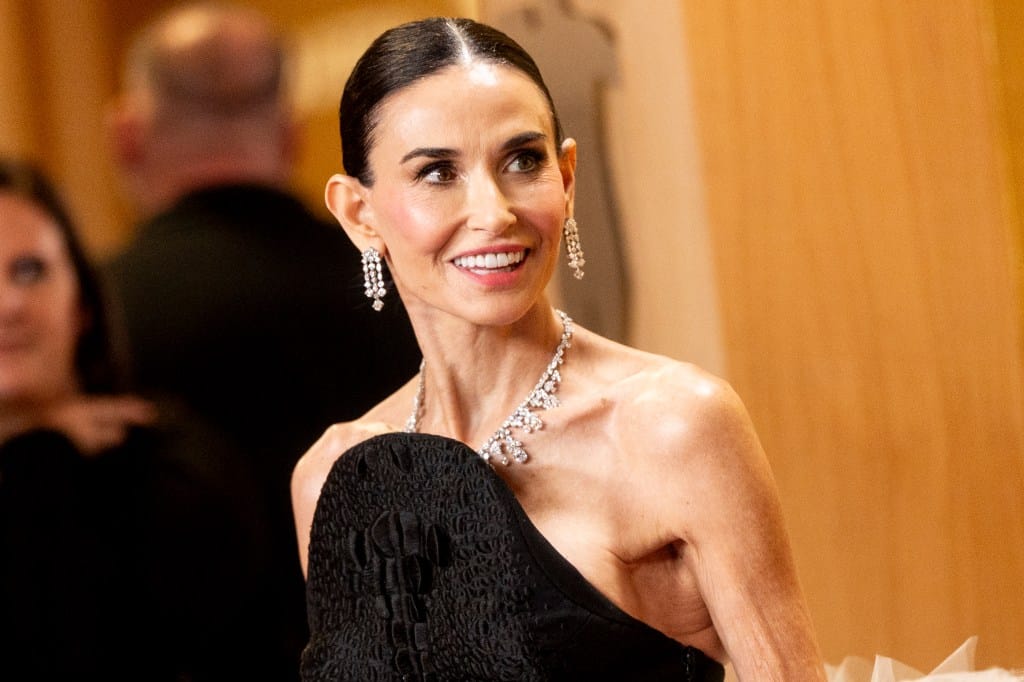
And the cruelest part is that the actresses in question probably do believe they're making rational decisions. If the industry rewards thinness with work, and work is how you stay relevant, and relevance is how you maintain power in a system designed to discard women over 40, then losing weight isn't vanity—it's strategy. The problem isn't individual pathology. The problem is that the strategy works, right up until it doesn't.
This is why the health expert warnings about malnutrition and muscle waste matter, even if they sound obvious. Muscle waste isn't just a medical term—it's a description of what happens when the body starts consuming itself because there's nothing left to burn. It's the physical manifestation of an industry that has always been willing to consume its workers. The same extractive logic that pushes reality stars into burnout and grinds crew members into hundred-hour weeks is operating here. The only difference is that in this case, the resource being extracted is the body itself.
What the stylist's quote makes clear is that the people closest to the problem feel powerless to stop it. That's not an accident. It's a feature of how Hollywood's power structures work. No single person has enough authority to intervene, because the system is bigger than any individual relationship. The stylist can't say "you're too thin" because the actress will point to someone thinner who's still working. The director can't cast someone larger because the studio wants someone who photographs a certain way. The studio can't change the standard because the market—or what they've decided the market wants—demands it.

The only way this changes is if the industry decides to value something other than competitive thinness. And that requires a level of collective action that Hollywood has never been good at. It requires directors to cast against type, studios to greenlight projects that don't center conventional beauty, audiences to show up for stories that don't traffic in aspiration. It requires the same kind of structural rethinking that's slowly happening around labor rights and sustainability and control over one's own image.

Until then, the stylists will keep dressing bodies that are disappearing in front of them, and the actresses will keep looking around the room for someone smaller, and the competition will continue with no winner and no end. The hall of mirrors reflects infinitely in every direction, and there's no exit because no one with the power to build one has decided it's worth the cost.