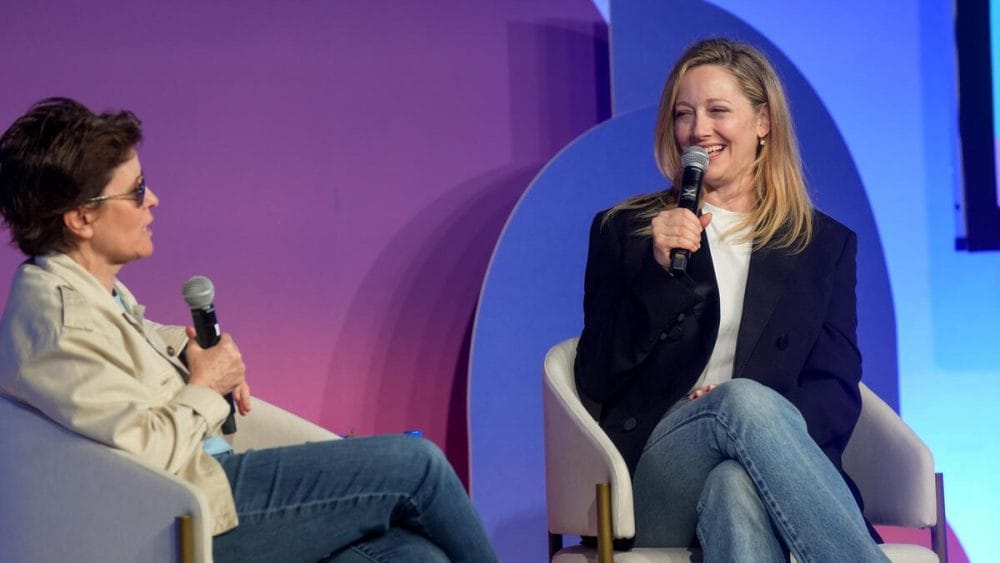
Judy Greer has worked steadily in Hollywood for over two decades, accumulating more than 150 credits across film and television. She's the best friend, the office manager, the ex-wife, the voice of reason—reliable, skilled, and almost never the lead. At SXSW, sitting across from journalist and TV host Kara Swisher at the SHE Media Co-lab space, Greer addressed the industry's mounting AI anxiety with the kind of clarity that comes from watching your labor get undervalued long before the robots showed up.
According to Variety, the conversation touched on AI fears, streaming's impact on compensation, and what it means to mature on screen in an industry that has historically treated aging women as disposable. But the real thesis of the discussion—the part that cuts deeper than the surface-level AI panic—is that Hollywood's automation anxiety is a distraction from a structural problem that predates ChatGPT by decades. Women over 40 have always been quietly phased out of leading roles, residual checks, and creative authority. AI didn't invent that dynamic. It just made the replacement process faster and more defensible.
Greer's career trajectory is a case study in how Hollywood compensates women who aren't stars. She's worked consistently, but consistency in Hollywood doesn't translate to financial security the way it does in other industries. Streaming residuals have gutted the backend payments that once sustained character actors between jobs. A sitcom rerun used to generate meaningful income for years. Now, a streaming series might pay once, regardless of how many times it's watched. Greer has been vocal about this before, and at SXSW, she connected the dots between streaming's compensation model and the broader devaluation of women's labor in entertainment. The industry didn't need AI to make women over 40 feel replaceable—it just needed to stop paying them fairly.
Swisher, who has spent her career interrogating tech's power structures, brought the conversation back to AI's role in this dynamic. The fear isn't just that AI will replace actors—it's that AI will replace the actors who were already being replaced by younger, cheaper talent. Galleries are using AI for inventory management, not art, because they don't believe generative tools deserve creative legitimacy. Hollywood's AI adoption will likely follow the same pattern: automation for the labor-intensive, low-prestige work that women and character actors have historically performed. The leading roles, the auteur-driven projects, the creative authority—those will stay human, at least for now. But the supporting roles, the voice work, the background characters? Those are already being tested for AI replacement.
The conversation also addressed the quiet part of Hollywood's AI debate that most executives won't say out loud: aging women are expensive to justify. A 25-year-old actor costs less, requires less negotiation, and fits the industry's preferred aesthetic. AI offers a way to bypass that negotiation entirely. Why cast a seasoned character actor when you can generate a synthetic performance that looks close enough? The technology isn't there yet, but the incentive structure is. And that's what makes Greer's commentary so sharp—she's not arguing that AI is inherently evil. She's arguing that Hollywood's willingness to deploy AI against women over 40 reveals how little the industry valued them in the first place.
Greer also spoke about what she called loving "this section" of her life—maturing on screen, taking roles that reflect her age rather than resisting it. It's a position that sounds empowering until you consider how few roles exist for women in that demographic. Miley Cyrus spent 20 years running from Hannah Montana before realizing she could rewrite the story, but that kind of narrative reclamation requires leverage that most actors don't have. Greer's acceptance of aging on screen is admirable, but it's also a pragmatic response to an industry that offers limited alternatives. The roles for women over 40 are shrinking, and AI threatens to shrink them further by making it easier to cast younger or synthetic alternatives.
Swisher pushed the conversation toward accountability, asking who benefits from the current system and who loses. The answer is obvious but worth stating plainly: studios benefit from lower costs and fewer negotiations. Streaming platforms benefit from content libraries that don't require ongoing residual payments. AI companies benefit from licensing deals that turn actors' likenesses into perpetual revenue streams. The people who lose are the actors who were already getting squeezed—character actors, supporting players, and women whose careers peak in their 30s and decline sharply afterward.
The SXSW conversation also touched on streaming's broader impact on Hollywood's traditional compensation models. The shift from theatrical releases and broadcast syndication to streaming-first distribution has fundamentally changed how actors get paid. Residuals used to be a form of profit-sharing—if a show succeeded, the people who made it shared in that success. Streaming residuals are flat fees that don't scale with viewership. CBS News 24/7 writers walked out because streaming news services are using digital-only contracts to undercut broadcast union protections, and the same dynamic is playing out across entertainment. Streaming platforms have built business models that extract maximum value from creative labor while minimizing long-term compensation. AI is just the next tool in that extraction process.
What makes Greer and Swisher's conversation valuable is that it refuses to treat AI as a standalone crisis. AI is part of a continuum of cost-cutting, labor-devaluing strategies that Hollywood has been deploying for years. The industry didn't suddenly become hostile to women over 40 when generative AI arrived—it was already hostile. AI just makes that hostility more efficient. The fear isn't that AI will replace human creativity. The fear is that AI will replace the humans who were already being treated as replaceable.
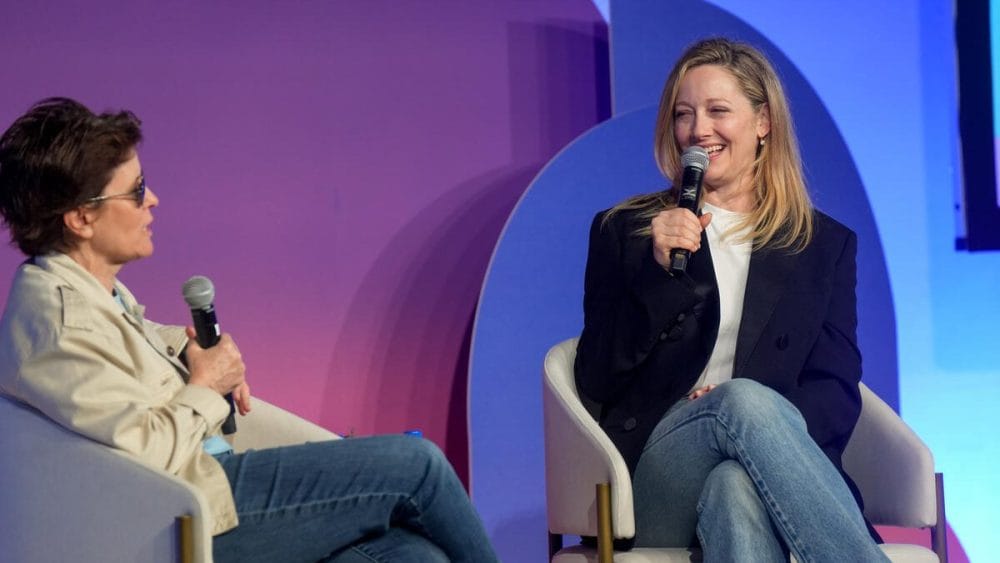
Greer's candor about her own career—acknowledging that she's rarely the lead, that she's built a career on supporting roles, that she's now navigating an industry that has limited interest in women her age—cuts through the usual celebrity deflection. She's not pretending that Hollywood is a meritocracy or that talent alone guarantees longevity. She's naming the structural barriers that make aging women expendable, and she's connecting those barriers to the industry's broader labor practices. Bob Iger built Disney into a $200 billion empire, and that's why his successor can't fix it—because the systems that generate profit are the same systems that make reform nearly impossible. The same logic applies to Hollywood's treatment of aging women. The industry is structured to devalue them, and AI is just the latest mechanism for doing so.
The conversation at SXSW didn't offer solutions, and that's probably the most honest part. There's no easy fix for an industry that has spent decades undervaluing women over 40. Union protections can help, but they can't force studios to cast older women in leading roles. Residual reform can help, but it can't undo the shift to streaming-first distribution. AI regulation can help, but it can't address the underlying incentive to replace expensive, experienced actors with cheaper alternatives. What Greer and Swisher offered instead is clarity: Hollywood's AI anxiety is a symptom, not the disease. The disease is an industry that treats women's labor as disposable and their aging as a liability. AI is just the tool that makes that treatment more scalable.
The broader cultural pattern here is that Hollywood's AI debate is being framed as a technological problem when it's actually a labor and equity problem. The same industry that underpays women, underrepresents people of color, and extracts maximum value from below-the-line workers is now deploying AI to further those dynamics. The actors who will be replaced first aren't the stars—they're the character actors, the voice performers, the supporting players who were already struggling to get fair compensation. And within that group, the people most vulnerable are the ones who were already being phased out: women over 40, actors of color, anyone whose demographic doesn't align with Hollywood's narrow definition of marketability.
Greer's comment about loving this section of her life is both a rejection of Hollywood's ageism and a quiet acknowledgment of how limited her options are. She's making peace with an industry that has made peace with her marginalization. That's not empowerment—it's survival. And if Hollywood's AI trajectory continues, even survival will require more negotiation, more compromise, and more acceptance of roles that were once considered beneath experienced actors. The automation isn't coming for the stars. It's coming for everyone else. And for women over 40, that replacement process started long before the first AI-generated performance hit the screen.