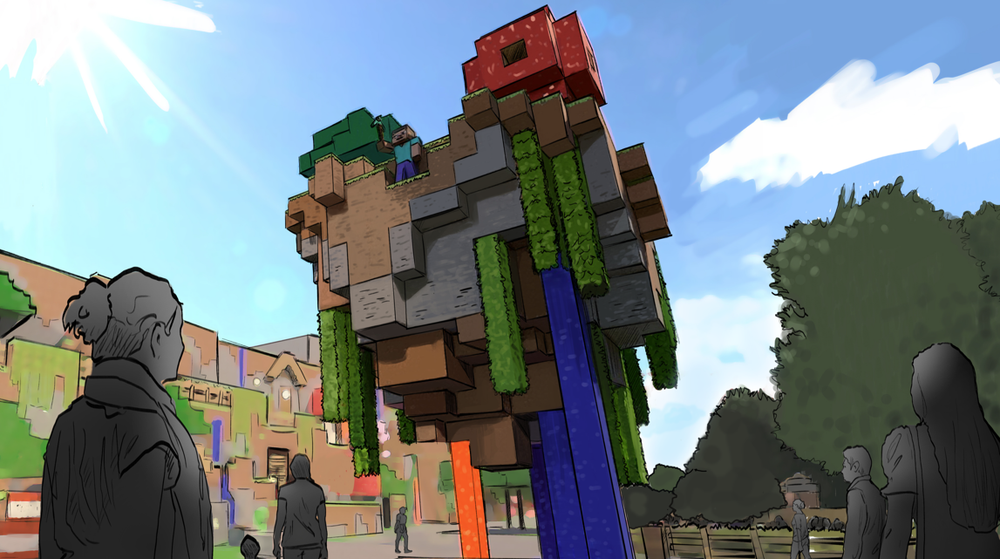
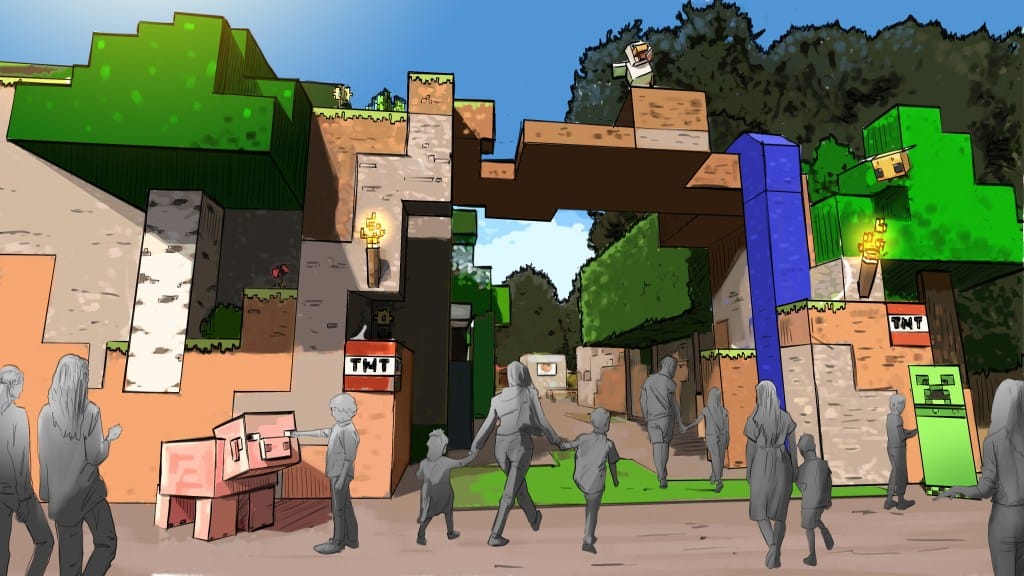
Microsoft and Merlin Entertainments are investing $70 million to build Minecraft World, a dedicated theme park area opening in 2027 at Chessington World Adventures in the UK. The project marks the first major physical attraction for the gaming franchise, which Microsoft acquired as part of its $2.5 billion Mojang Studios purchase in 2014.
The announcement puts a specific dollar figure on what the industry has been circling for years: gaming IP is now valuable enough to justify the same brick-and-mortar investment that film studios have leveraged for decades. Universal built The Wizarding World of Harry Potter for an estimated $265 million in 2010. Disney's Star Wars: Galaxy's Edge cost roughly $1 billion across two parks. Minecraft World's $70 million budget is modest by comparison, but the significance isn't the scale — it's that the deal exists at all.
Theme parks have always been Hollywood's most lucrative merchandising play. Disney pioneered the model, turning animated films into immersive environments that generate revenue long after box office runs end. Universal followed with franchises like Jurassic Park and Harry Potter. Gaming IP, despite generating more annual revenue than film and music combined, has historically struggled to translate into physical spaces. Nintendo's partnership with Universal — which opened Super Nintendo World in Japan in 2021 and expanded to Hollywood in 2023 — was the first major signal that the business case had shifted. Minecraft World is the second.
What makes this deal particularly telling is the partner. Merlin Entertainments, which operates Legoland parks globally, knows how to monetize physical play spaces built around creative construction. Minecraft's core mechanic — building worlds block by block — maps directly onto the tactile, hands-on experience that theme parks sell. It's a more natural fit than most film-to-park adaptations, which often struggle to turn passive viewing experiences into active participation.
The timing also matters. Minecraft's player base has remained remarkably stable since Microsoft's acquisition, with over 140 million monthly active users as of 2023. Unlike battle royale games or live-service shooters that spike and fade, Minecraft has sustained cultural relevance across multiple platform generations. That longevity makes it a safer bet for long-term infrastructure investment than trendier gaming properties. Theme parks can't pivot quickly — once you've built a $70 million attraction, you're committed for at least a decade.
Microsoft's broader strategy is also visible here. The company has been aggressively expanding Minecraft beyond gaming: a Netflix animated series, merchandise partnerships, educational licensing. Gaming platforms are increasingly functioning as Hollywood's most valuable real estate, but the reverse is also true — gaming IP is colonizing every available revenue stream that film franchises have historically dominated. A theme park is the logical next step in that expansion.
The UK location is strategic. Chessington World Adventures is close enough to London to draw international tourists but doesn't carry the same operational costs as a central London attraction. It's also Merlin's testing ground — if Minecraft World performs well, expect expansions to Merlin's other properties in Germany, the US, and Asia. The $70 million investment is modest enough to be a calculated risk rather than a bet-the-company move.
What this deal ultimately confirms is that gaming IP has matured into a multi-generational cultural asset. Film studios have known for decades that the real money isn't in ticket sales — it's in the decades of ancillary revenue that a successful franchise generates. Gaming companies are finally building the same infrastructure. Minecraft World won't be the last gaming-themed attraction to open in the next five years. It's just the first one expensive enough to prove the business model works.