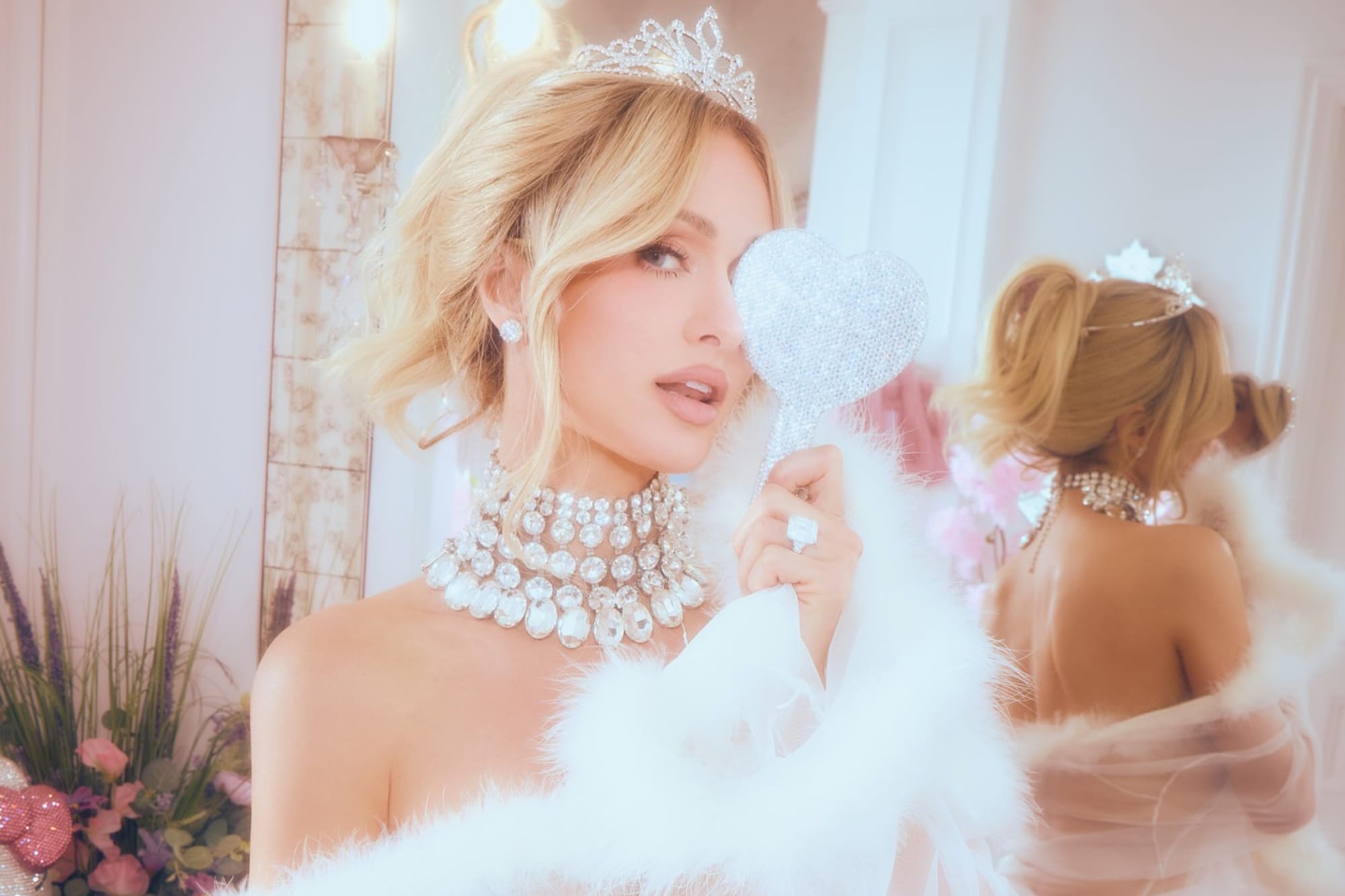
The bathtub is a clawfoot. The bubbles are strategically placed. Paris Hilton is apparently nude but for a layer of soap and a full face of her own skincare line, Parivie Beauty. She posted the photos to Instagram this week — Page Six picked them up within hours — and the images hit every familiar note: aspirational luxury, just enough skin to trigger the algorithm, and product placement so seamless it barely registers as placement at all.
Twenty years ago, this would have been a magazine ad. Hilton would have been photographed by someone like David LaChapelle, the images would have run in Vogue or Vanity Fair, and the skincare brand would have paid seven figures for the media buy. Instead, Hilton shot the photos on her own terms, posted them to her own platform, drove her own traffic, and kept the margin. The entire advertising supply chain — the agency, the magazine, the media buyer, the photographer's agent — got cut out of the transaction.
This is where celebrity commerce has arrived in 2026, and Hilton is a particularly useful case study because she's been running this playbook longer than almost anyone. Before Kylie Jenner launched Kylie Cosmetics, before Rihanna built Fenty into a multi-billion-dollar empire, before every reality star with 500K followers started a supplement brand, Hilton understood something that the traditional entertainment industry was slow to grasp: the person and the product are the same thing. There is no separation between Paris Hilton the celebrity and Paris Hilton the brand. There never really was.
What's changed is the infrastructure. In the early 2000s, Hilton monetized her fame through licensing deals — perfumes, fashion lines, club appearances — that required middlemen at every step. A brand would pay for her name, a retailer would stock the product, and Hilton would collect a percentage while someone else handled the logistics. The model worked, and it made her wealthy, but it meant the vast majority of the value she generated flowed to other people's companies.
The current model inverts that entirely. Every individual now functions as their own distribution network, and Hilton has spent two decades building a persona with the reach and credibility to move product without the friction of traditional advertising. Her Instagram is the media buy. Her aesthetic — the specific combination of camp luxury, ironic self-awareness, and Y2K nostalgia — is the creative brief. A bathtub selfie does what a Super Bowl ad used to do, and it does it at a fraction of the cost with more direct conversion data.
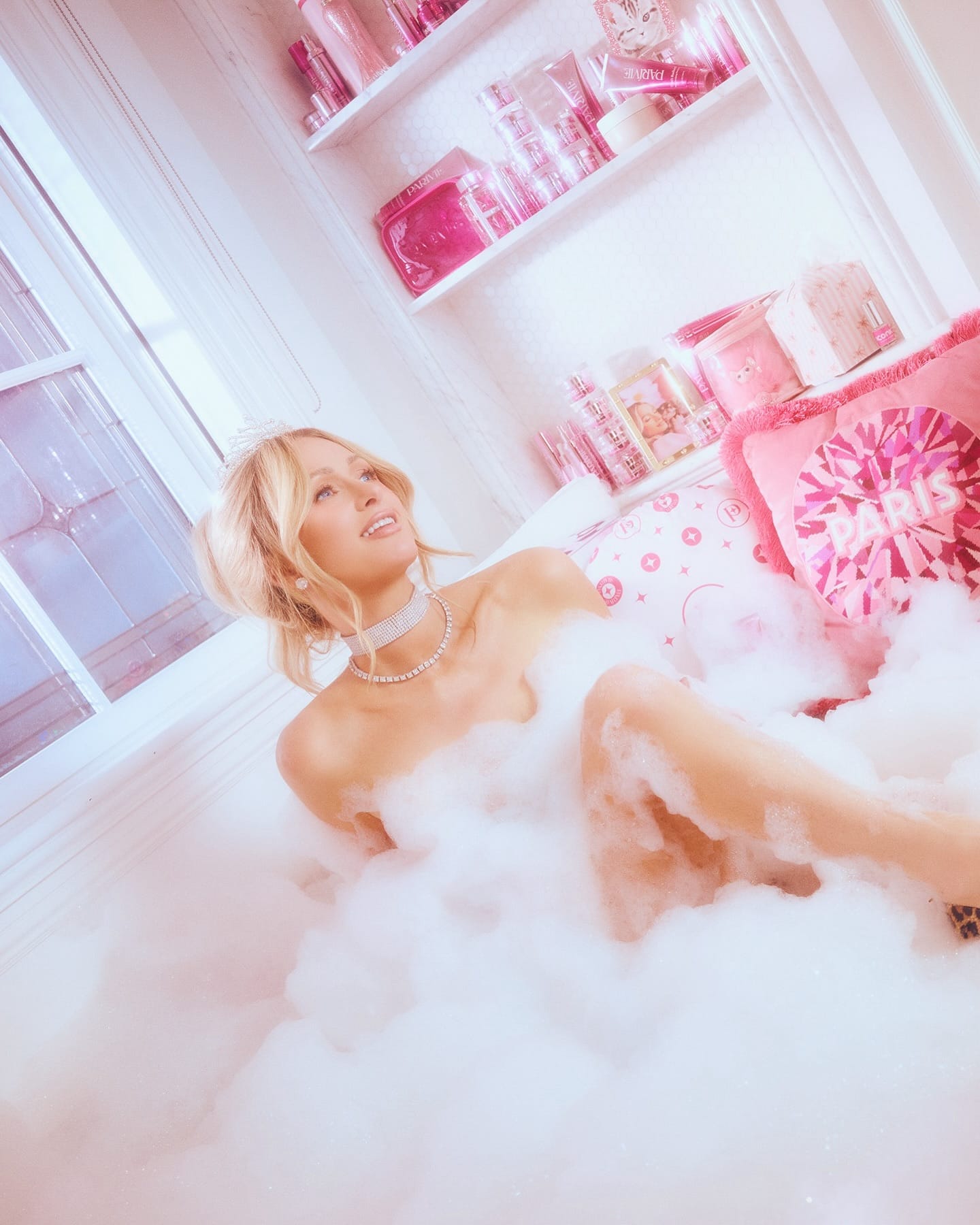
The economics are striking. A traditional beauty brand launch in the prestige category — the kind that involves department store placement, print advertising, influencer seeding, and PR — costs between $5 million and $20 million before a single unit ships. A celebrity-direct brand launching through owned social channels can reach the same audience for the cost of content production, which, when the celebrity is the content, approaches zero. The entire marketing budget is the celebrity's time and willingness to post.
But here's what most analysis of celebrity-direct commerce misses: Hilton isn't just cutting out the middlemen in the supply chain. She's replacing the entire advertising industry's value proposition. Traditional advertising promised reach, targeting, and creative execution. Hilton's Instagram delivers all three, plus something Madison Avenue could never offer: authenticity as a product feature. When you buy Parivie Beauty, you're not buying skincare that Paris Hilton endorsed. You're buying skincare that is Paris Hilton. The product and the persona are fully integrated, and the integration is the selling point.
This is why the bathtub photos work. They're not trying to hide the commercial intent behind editorial credibility or aspirational storytelling. They're honest about what they are: a celebrity using her platform to sell her product. The transparency is the strategy. Hilton's audience knows she's selling to them, and they're fine with it because the transaction feels direct. There's no pretense that this is anything other than commerce, and in a media environment where every interaction is potentially monetized anyway, that honesty reads as refreshing.
The larger question is whether this model represents a genuine democratization of celebrity commerce or just a new form of consolidation. Hilton can launch a skincare line with an Instagram post because she's Paris Hilton — three decades of cultural presence provide the trust and the audience. For the next tier of celebrities, the ones with 2 million followers instead of 27 million, the bathtub-as-billboard model starts to look less like a revolution and more like a reminder that the infrastructure may have changed, but the advantages still accrue to people who were already famous.
What's different now is the margin structure. In the old licensing model, Hilton might have taken home 5-10% of wholesale revenue while the manufacturer, distributor, and retailer split the rest. In the direct-to-consumer model, she keeps closer to 40-60% after manufacturing and fulfillment costs. That's not a minor improvement — it's a fundamental shift in who captures the value that celebrity generates. The middlemen didn't disappear because they were inefficient. They disappeared because the infrastructure that made them necessary — the media gatekeepers, the retail distribution networks, the advertising agencies — became redundant once celebrities could reach their audiences directly.
The irony is that this disintermediation creates its own new intermediaries. Hilton still needs Shopify for e-commerce, TikTok Shop for social commerce, Meta for distribution, and a fulfillment partner to ship the product. The difference is that these platforms take a smaller cut and provide less editorial control than the old gatekeepers did. Hilton owns the customer relationship in a way that was never possible when department stores controlled access to the consumer.
This is the same dynamic playing out across celebrity commerce, from Bethenny Frankel walking away from Bravo's ecosystem to build her own empire, to musicians bypassing labels to release directly to streaming platforms. The pattern is consistent: celebrities who understand their own distribution power are extracting themselves from legacy systems and keeping more of the economics. Hilton's bathtub photos are just the most literal visualization of that shift — the celebrity as the medium, the message, and the product all at once.
Whether this is cynical depends on whether you think celebrity culture was ever not commercial. Hilton has always been selling something — herself, a lifestyle, an aspiration. Now she's just keeping more of the margin. The brand integration was never absent from celebrity culture. The difference is transparency: Hilton's bathtub photos are honest about what they are in a way that a glossy magazine ad placement never was. You know you're being sold to. The question is whether you mind, and judging by the engagement numbers and the speed at which Page Six amplified the images, most people don't.