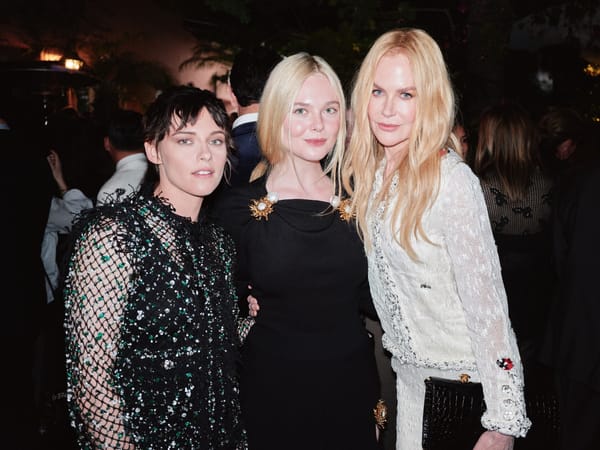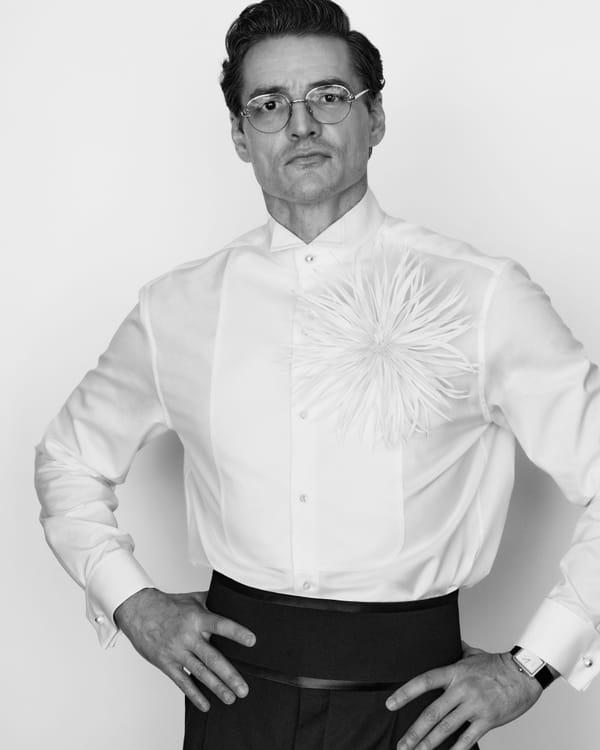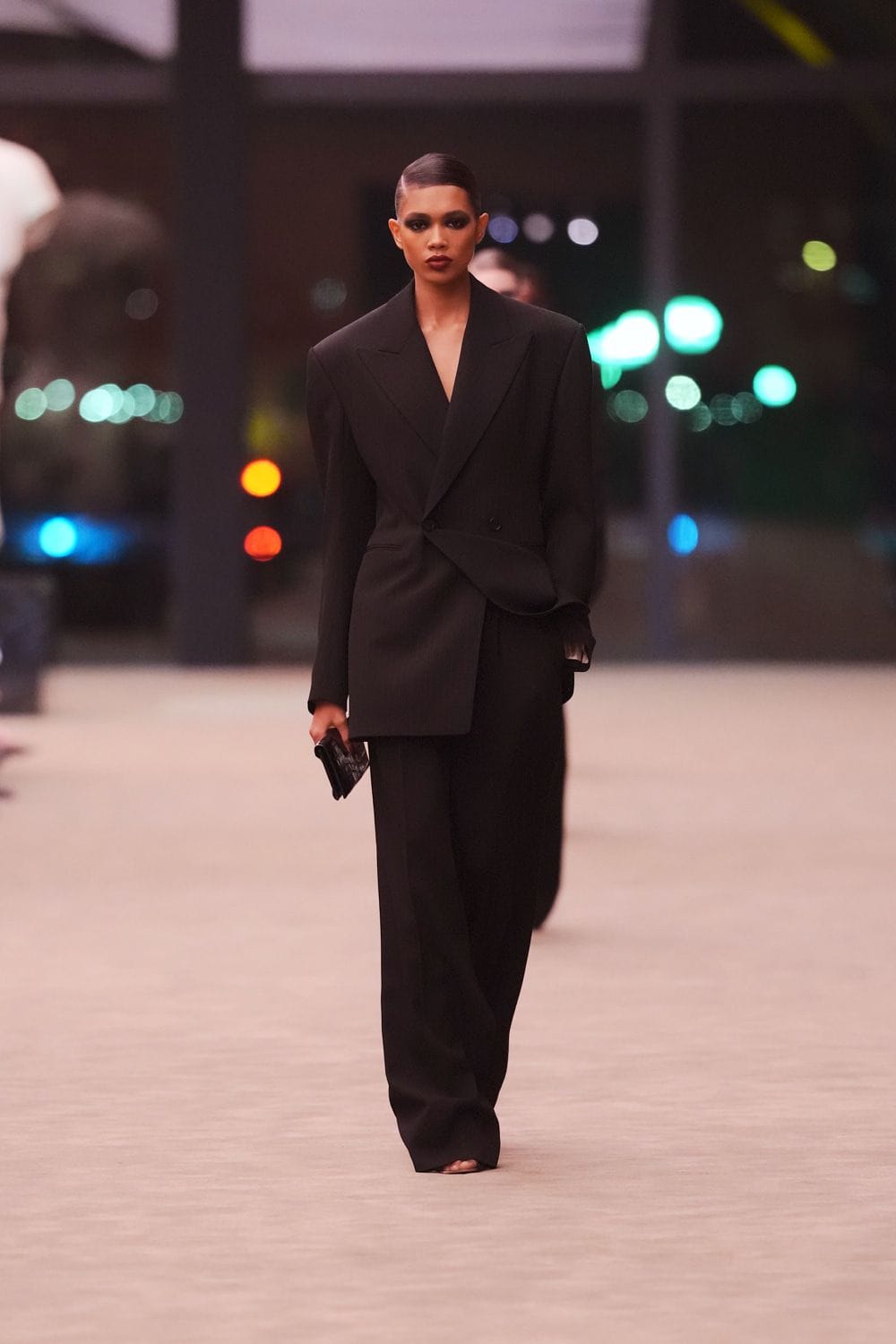
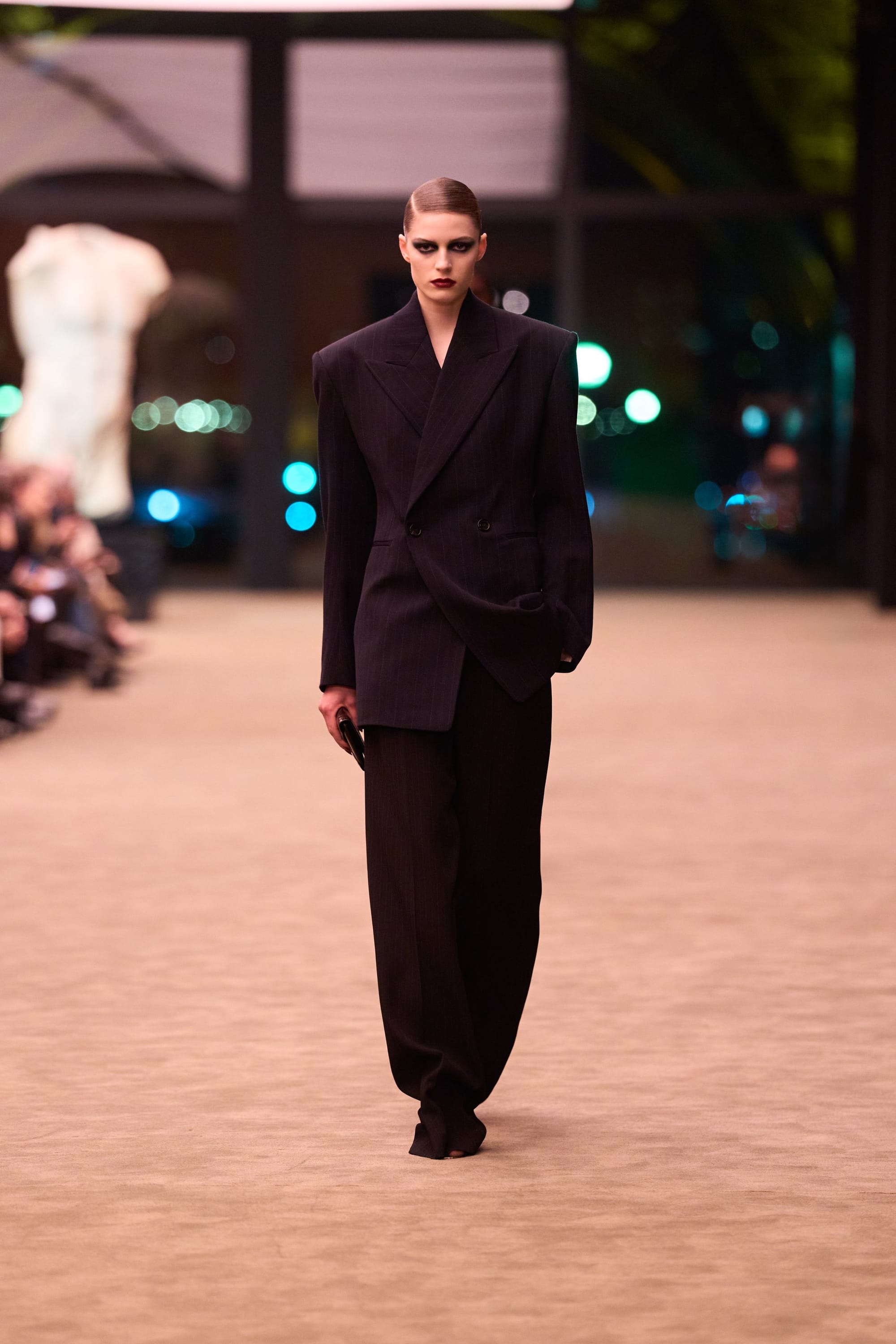
The lights went down at the Grand Palais Éphémère. The soundtrack kicked in—something moody, something vaguely menacing in the way Saint Laurent soundtracks always are. Models walked out in sharp-shouldered blazers, leather trousers, and the kind of slouchy elegance that's been the house's calling card since Anthony Vaccarello took over in 2016. According to Vogue's coverage, the Fall 2026 ready-to-wear collection hit every expected note: the tailoring was impeccable, the rock-and-roll codes were intact, and the overall effect was expensive, competent, and exactly what you'd expect from Saint Laurent in 2026.
Which is to say: it was safe. Not bad. Not uninspired, exactly. Just careful. And in luxury fashion right now, careful is the dominant mode.
Saint Laurent's Fall 2026 show matters less as a collection than as evidence of a broader industry retreat. The house is far from alone in playing to type this season—Dior is recalibrating its identity, DVF is leaning into heritage, and even the provocateurs are being strategic about their provocations. But Saint Laurent's particular brand of risk-aversion reveals something specific: the house that built its modern reputation on effortless danger—the kind of cool that felt like a secret even when every fashion editor in Paris was wearing it—has started playing defense.
That shift requires explanation, because it represents a fundamental miscalculation about what luxury sells. Saint Laurent's original appeal under Vaccarello wasn't just about good tailoring or rock-and-roll references. It was about confidence. The clothes suggested you didn't need anyone's approval. They were for people who already knew. Now the house is making clothes for people who need reassurance, and there's a difference.
The numbers explain the caution. Luxury's growth engine has sputtered. China, which drove double-digit expansion for years, is cooling. The resale market is cannibalizing primary sales. Younger consumers are increasingly skeptical of paying four figures for a logo, and they're vocal about it. The industry's response has been to retreat into heritage, craftsmanship, and atelier mythology. It's defensible. It's also a signal that the industry has stopped believing in its own capacity to create desire from scratch.
When luxury stops experimenting, it's because it's scared of alienating the customers it still has. That fear shows up as competence. As polish. As collections that are good but not challenging, wearable but not surprising. Saint Laurent's Fall 2026 offering checks every box. It will sell. It will photograph well. It will reinforce the brand's established codes. But it's not creating new desire, and in an industry built on the promise that fashion is always moving forward—always redefining what's possible—that's a problem.
Compare this to houses still willing to take risks. Matières Fécales is pushing provocation into serious design territory. Viktor & Rolf is testing the limits of concept fashion. Anrealage is integrating wearable tech in ways that feel experimental. These aren't necessarily bigger houses or better-funded operations. They're just willing to bet that their audience wants to be surprised. They're creating clothes for people who want to feel something new, not people who want to feel secure.
Saint Laurent is betting on recognition. On the comfort of the familiar. On the idea that customers will keep coming back for the same sharp-shouldered blazer, the same leather trousers, the same mythology of Parisian cool that Vaccarello has been refining for nearly a decade. It's not a bad bet—Saint Laurent's business is strong, and Vaccarello's vision has been remarkably consistent. But consistency, at a certain point, becomes indistinguishable from stagnation. And stagnation is particularly dangerous when your brand was built on the opposite.
The broader question is whether luxury can afford to be this cautious when it's simultaneously asking consumers to pay more for less. The industry has spent the last decade training its audience to expect spectacle, to see fashion week as content, to treat runway shows as cultural events rather than trade presentations. Fashion week became a performance, and the audience was conditioned to expect a narrative, a moment, something worth discussing. When that performance becomes predictable, when the narrative is just "we're still here, doing what we've always done," the audience tunes out. Not because the clothes are bad, but because there's no reason to pay attention beyond baseline brand recognition.
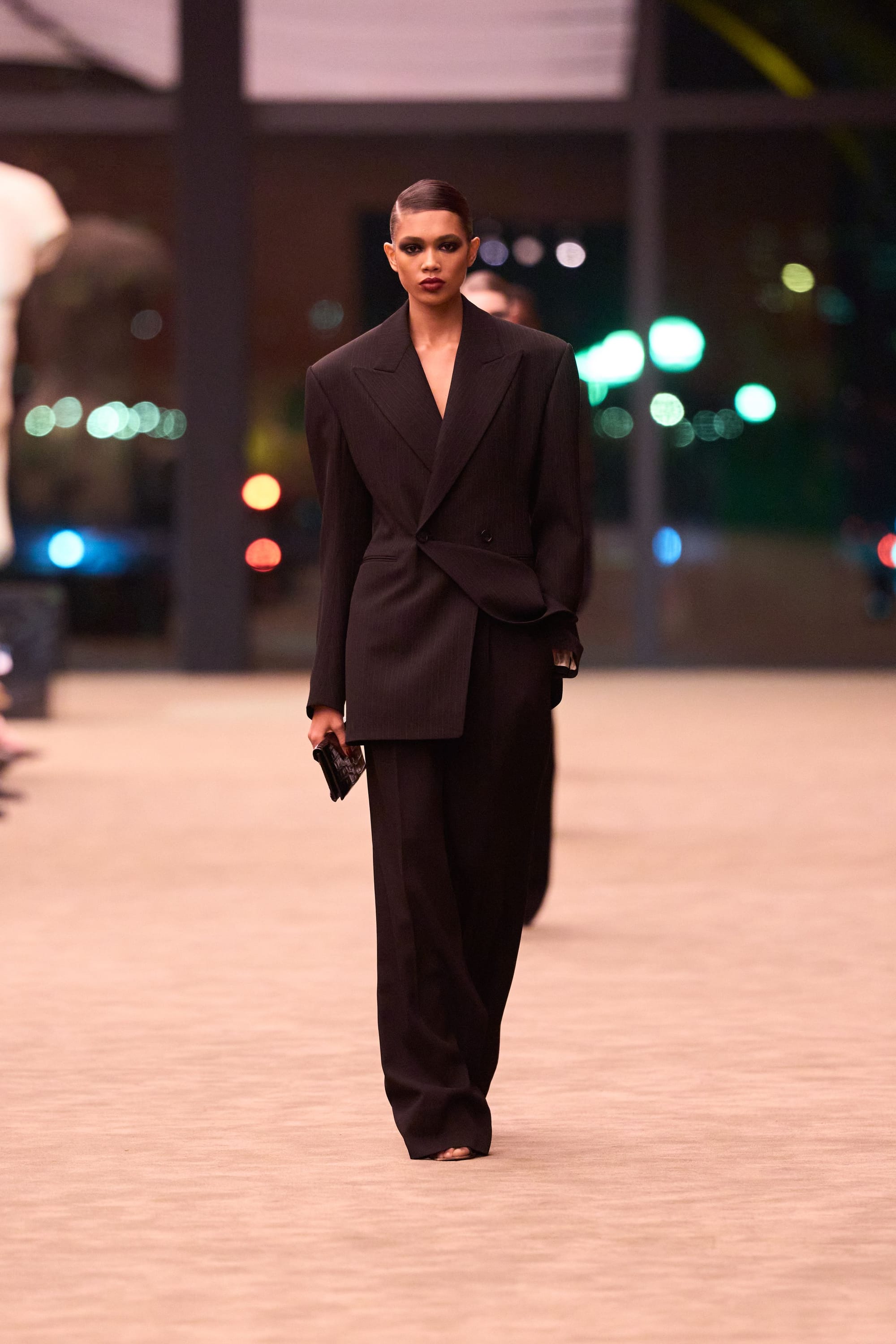
Saint Laurent's Fall 2026 collection will succeed on its own terms. It's good. It's wearable. It will move product. But it's not giving anyone a reason to feel anything beyond the expectation that Saint Laurent will continue to be Saint Laurent. In an industry facing structural challenges—demographic shifts, market saturation, a crisis of cultural relevance among younger consumers who have more options and less brand loyalty than any previous generation—that's not a sustainable position. The confidence problem isn't that luxury is making bad clothes. It's that luxury has stopped believing it can create new desire, and has retreated into servicing existing desire instead. That might work in the short term. But desire that isn't refreshed eventually fades, and when it does, competence won't be enough to replace it.