The opening look at Schiaparelli's Fall 2026 show was a coat with anatomical embroidery tracing the nervous system across the torso—veins and arteries mapped in metallic thread, precise enough to pass for medical illustration. It wasn't gilded nipples. It wasn't a lion's head molded to a model's chest. It wasn't the kind of thing that generates 50,000 Instagram reposts in the first hour. It was quiet, intricate, and deeply strange in a way that required you to actually look at it.
Which is exactly the problem Schiaparelli is trying to solve.
Daniel Roseberry has spent the last five years turning the house into fashion's most reliable shock factory. The trompe-l'œil body parts, the anatomical breastplates, the gilded animal heads—each collection delivered a new viral moment, each one more algorithmically optimized than the last. It worked. Schiaparelli became the brand celebrities wore when they wanted to own the red carpet news cycle. But it also created a trap: when everything is designed to shock, shock becomes the baseline. The audience stops gasping. They start scrolling.
Fall 2026 feels like Roseberry realized that before the audience did.
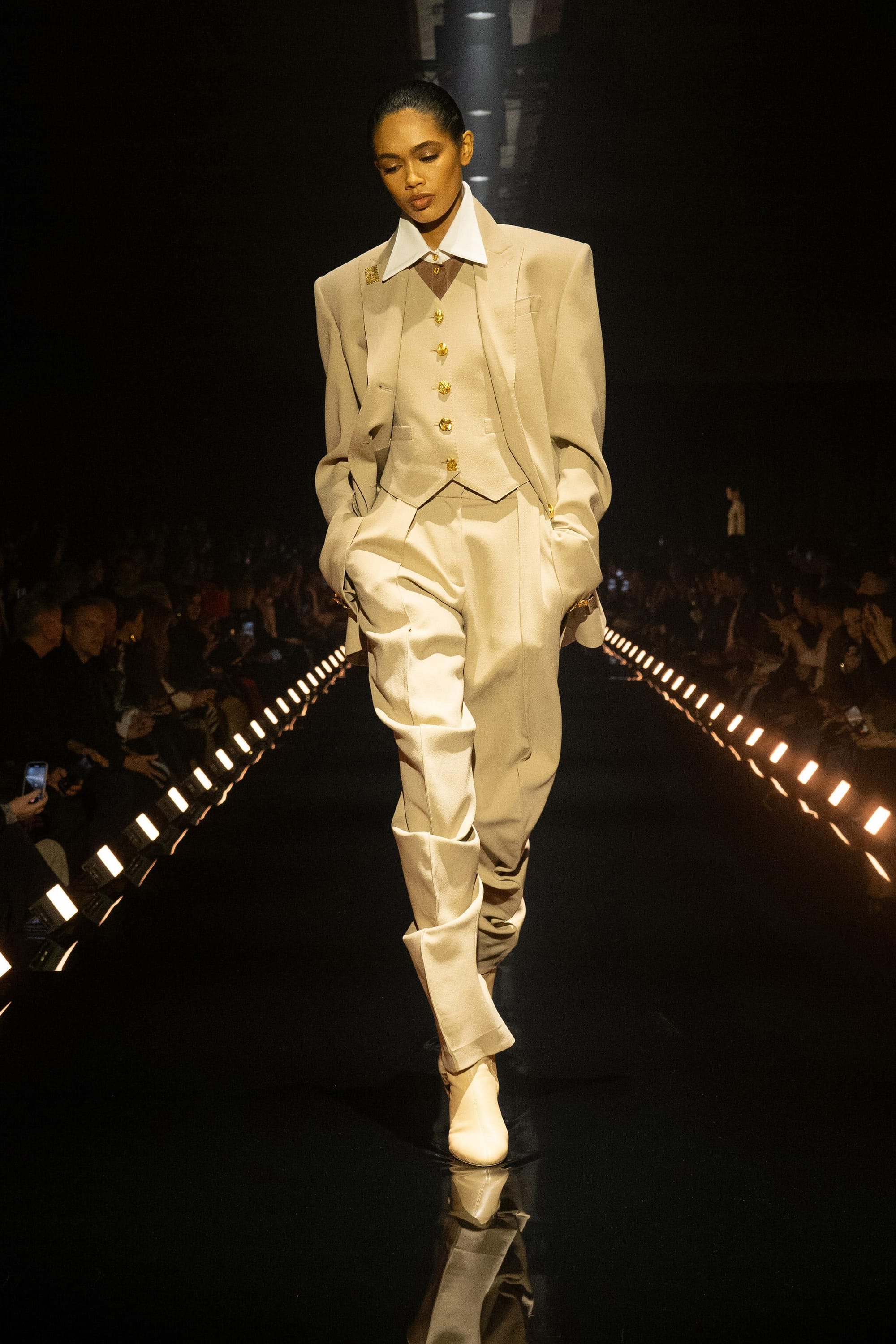
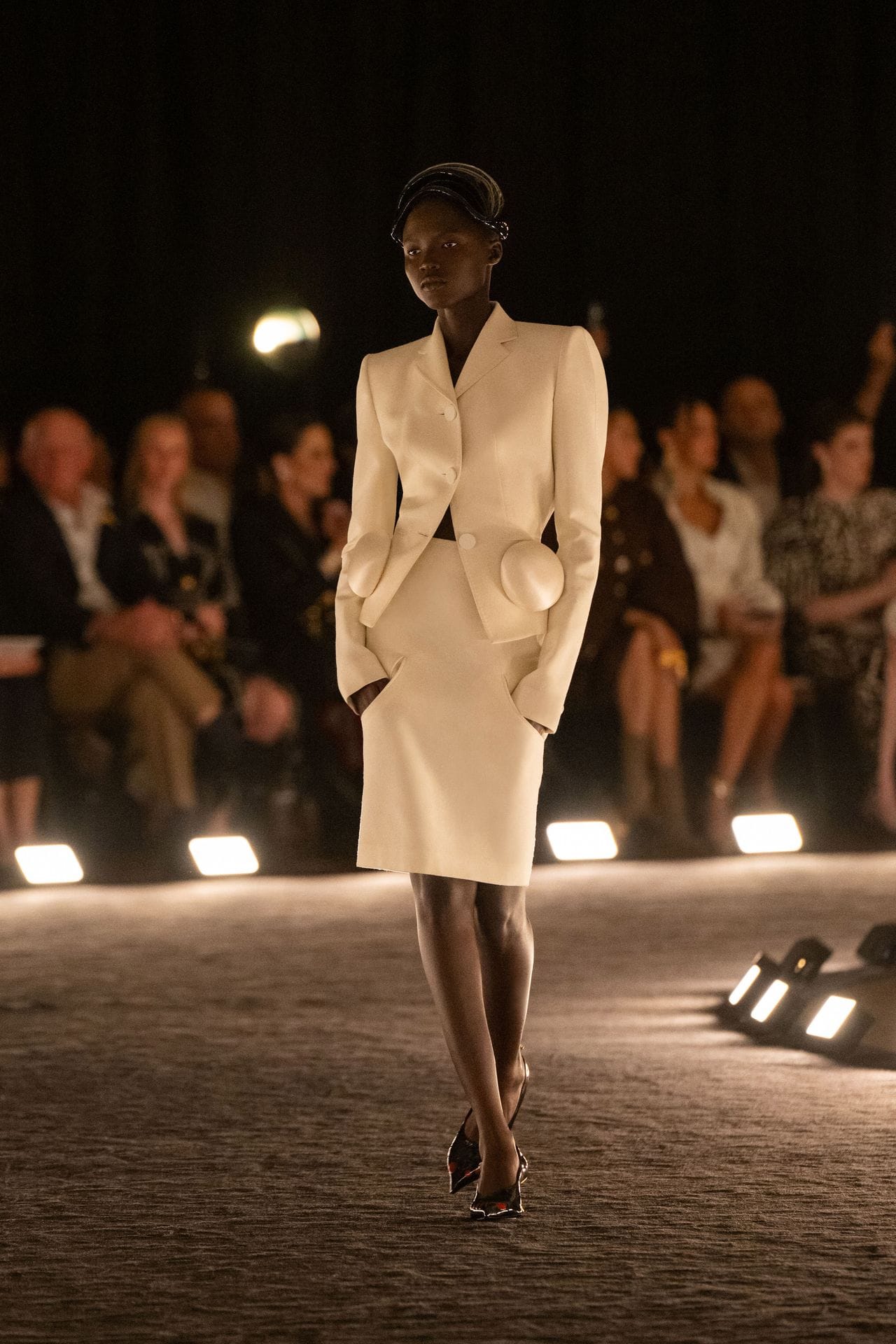
The collection still traffics in surrealism—this is Schiaparelli, the house Elsa founded on the principle that fashion should unsettle as much as it flatters. But the surrealism here is structural, not sculptural. Vogue's runway coverage noted tailoring that warped proportions just enough to feel off-kilter: shoulders that extended past the natural line, sleeves that ballooned at unexpected points, hems that fell asymmetrically without calling attention to the asymmetry. The strangeness was embedded in the construction, not bolted on top of it.
That shift matters because it reflects a broader recalibration happening across luxury fashion. The brands that dominated the last decade—Balenciaga's ironic ugly, Gucci's maximalist excess, Schiaparelli's own shock tactics—all relied on a specific cultural condition: the assumption that fashion's primary function is to generate content. Viktor & Rolf's recent collection wrestled with the same tension, trying to preserve conceptual rigor in an industry that increasingly values virality over vision. But where Viktor & Rolf leaned harder into provocation, Roseberry is pulling back, testing whether surrealism can still land when it's not screaming for attention.
The business logic is sound. Schiaparelli's viral moments drove brand awareness, but brand awareness doesn't automatically translate to brand equity. The gilded lion head Kylie Jenner wore to the 2023 Met Gala generated millions of impressions. It also generated backlash, think pieces, and a news cycle that centered on whether the piece was in poor taste rather than whether it was well-made. That's the risk of shock as strategy: you control the initial moment, but you lose control of the narrative almost immediately.
Fall 2026 suggests Roseberry is betting that the next phase of Schiaparelli's growth requires a different kind of cultural capital—the kind that comes from sustained creative credibility rather than intermittent viral spikes. The collection included plenty of pieces that could still dominate a red carpet: sculptural evening gowns with exaggerated draping, tailored coats with surrealist trompe-l'œil details, accessories that reinterpreted the house's signature motifs. But none of them felt designed primarily for the screenshot. They felt designed for the person wearing them, which is a surprisingly radical position for a brand that has spent half a decade optimizing for the algorithm.
The shift also reflects a broader fatigue with shock as aesthetic strategy. We're living in an era when AI-generated imagery can produce infinite variations of the surreal, when deepfakes and digital manipulation have made the uncanny feel mundane, when every scroll through social media delivers a dozen images designed to provoke a reaction. Dazed's recent robot-model fashion shoot demonstrated how quickly the boundaries between human and synthetic collapse when everything is content. In that context, shock loses its potency. The audience has built up a tolerance. What actually feels transgressive now is restraint.
Roseberry's anatomical embroidery—those nervous systems traced across tailoring—works because it operates at a different register. It's not asking you to react immediately. It's asking you to notice, to lean in, to engage with the craft before you engage with the concept. That's a harder ask in the content economy, where engagement is measured in seconds and virality is the primary metric of success. But it's also a more sustainable strategy for a heritage brand trying to build a customer base that extends beyond the celebrity-red-carpet-viral-moment cycle.
The question is whether the broader luxury market is ready to reward that bet. Paris Fashion Week's front rows remain the best map of celebrity market value, and the celebrities who show up still gravitate toward brands that deliver instant visual impact. Schiaparelli's pivot toward quieter surrealism could position the house as a more serious creative force—or it could cede ground to competitors who are still willing to play the shock game. Matières Fécales proved provocation still has a place in fashion, but that brand operates at a different scale, with different expectations. Schiaparelli is trying to thread a much narrower needle: maintaining cultural relevance without sacrificing creative integrity, staying visible without becoming a meme.
The collection's strongest moments came when Roseberry found ways to embed surrealism into wearability rather than treating them as opposing forces. A tailored blazer with sleeves that twisted subtly at the seam. A gown with draping that suggested movement even when the model stood still. These weren't pieces designed to shock. They were pieces designed to unsettle—quietly, persistently, in ways that lingered after the initial viewing. That's closer to what Elsa Schiaparelli actually did: surrealism as a lens for seeing the body differently, not as a gimmick for generating headlines.
Whether the market will reward that approach is still an open question. The luxury industry's current economics favor brands that can generate consistent content, maintain high visibility, and convert celebrity endorsements into consumer desire. Schiaparelli's shift toward subtlety could signal creative maturity—or it could be a miscalculation, a retreat from the very strategy that put the brand back on the map. The difference will come down to whether Roseberry can make quieter surrealism feel as essential as the shock tactics that preceded it.
What's clear is that the collection represents a choice. Roseberry could have delivered another round of viral-ready spectacle, another gilded animal head, another piece engineered to dominate the algorithm. Instead, he offered something harder to quantify: surrealism that trusts the audience to do the work of interpretation, fashion that asks for attention rather than demanding it. In an industry increasingly optimized for content, that might be the most surreal move of all.
For more, see Viktor & Rolf’s conceptual runway and the economics of front-row celebrity.