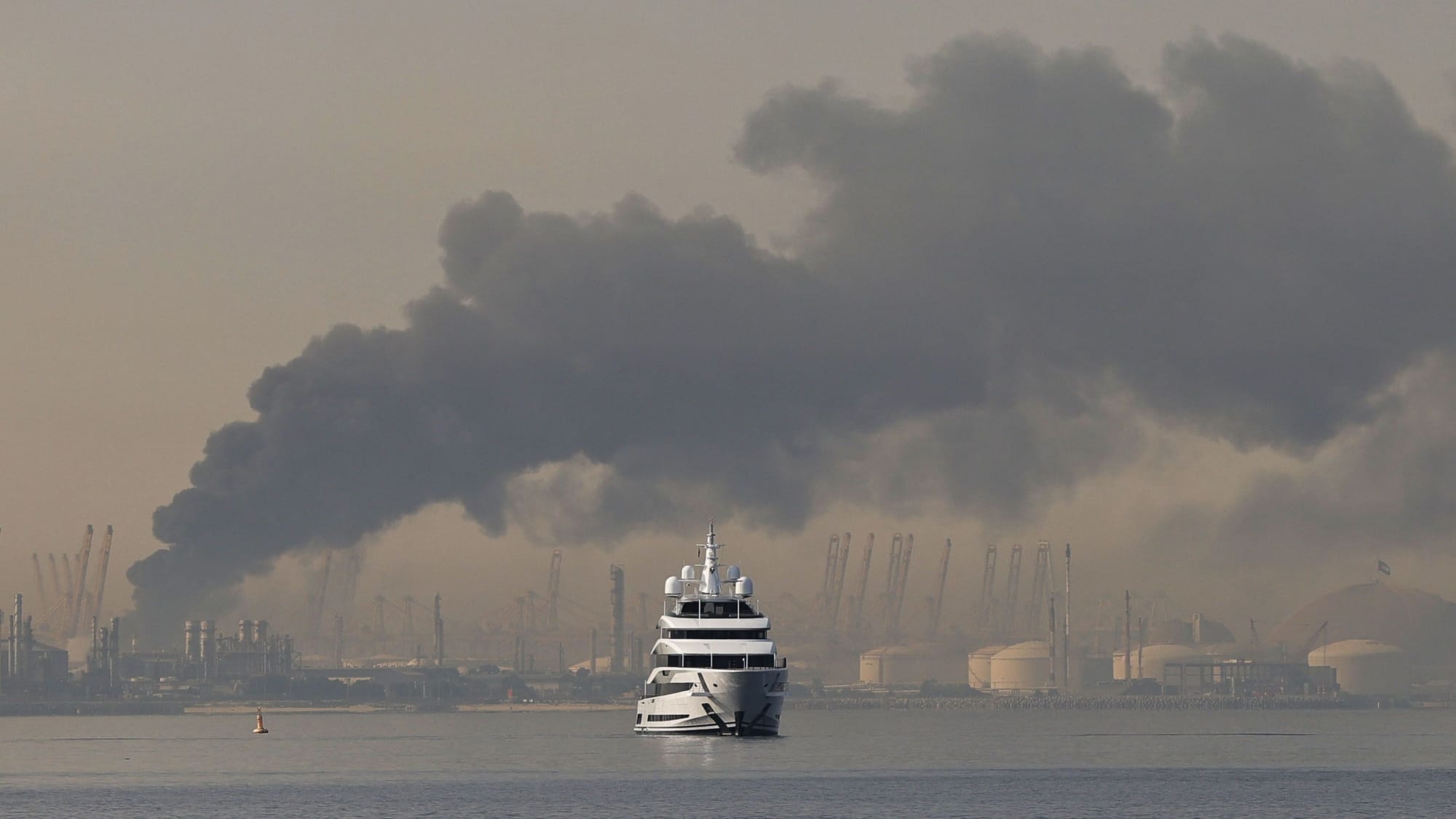
The Strait of Hormuz — a 21-mile-wide waterway between the Persian Gulf and the Gulf of Oman — has been closed for less than a week, and fashion's supply chain is already showing cracks. According to Vogue, freight costs are rising, fiber input costs are volatile, and brands built on lean, just-in-time manufacturing are scrambling. The closure is amplifying pressure on systems that were already stressed. But the speed of the collapse is the real story. Fashion spent two decades building a supply chain optimized for efficiency, not resilience — and it turns out efficiency has a very short shelf life when a single chokepoint shuts down.
Just-in-time manufacturing — the model that lets brands order exactly what they need, when they need it, with minimal inventory overhead — has been fashion's operating system since the early 2000s. It keeps costs low, reduces waste, and allows brands to respond quickly to trend cycles. It also requires everything to work perfectly, all the time. No delays. No bottlenecks. No geopolitical disruptions in a waterway that handles roughly 21 percent of global petroleum and a significant portion of textile shipments from Asia to Europe and North America. The Strait of Hormuz closure is exposing what the industry has known but rarely said out loud: the system only works when nothing goes wrong.
The immediate impact is financial. Freight costs are spiking as shipping routes reroute around Africa, adding weeks to delivery times and thousands of dollars to container costs. Fiber prices — cotton, polyester, wool — are fluctuating as suppliers scramble to secure alternative transport. Brands that ordered spring inventory expecting March delivery are now looking at April or May, which means markdowns, missed selling windows, and margin compression. But the bigger problem is structural. Just-in-time manufacturing assumes predictable lead times. When lead times become unpredictable, the entire model breaks. Brands can't order closer to demand if they don't know when the order will arrive. Retailers can't plan floor sets if the product might show up three weeks late. The efficiency gains evaporate the moment the timeline becomes a variable instead of a constant.
This isn't the first time fashion's supply chain has been stress-tested. The pandemic revealed similar vulnerabilities — factory shutdowns, port congestion, shipping delays. Brands responded by diversifying suppliers, nearshoring some production, and building slightly more inventory cushion. But those adjustments were incremental, not structural. The fundamental model didn't change. Fashion is still operating on the assumption that goods will move freely, cheaply, and predictably from manufacturing hubs in Asia to consumer markets in the West. The Strait of Hormuz closure is a reminder that assumption has always been fragile. It just hasn't been tested this directly in a while.
The brands feeling the most pressure right now are the ones that leaned hardest into fast fashion and ultra-lean operations — companies that pride themselves on speed-to-market and minimal warehousing. Resale platforms are watching closely too, because supply chain disruptions in the primary market tend to drive more sellers and buyers to secondhand — a market that doesn't rely on container ships from Shenzhen. Meanwhile, luxury brands with more capital and longer lead times have more room to absorb the shock, but even they're not immune. A delayed shipment of Italian wool or French silk still disrupts production schedules, and luxury customers don't tolerate late deliveries any better than fast fashion shoppers do.
What's striking is how little margin for error the industry built into its systems. Just-in-time works beautifully in stable conditions, but it has no shock absorbers. There's no Plan B inventory sitting in a warehouse. There's no buffer week built into the production calendar. The entire apparatus is calibrated to operate at maximum efficiency under ideal conditions — which means any deviation from ideal becomes a crisis. The Strait of Hormuz isn't even fully closed yet; it's partially restricted, with some vessels rerouting and others waiting for clearance. If this were a total, sustained closure, the fashion industry would be looking at a supply chain collapse, not just a disruption.
The broader question is whether this moment forces any structural change. After the pandemic, there was a lot of talk about resilience, diversification, and rethinking global supply chains. Some of that happened. More of it didn't. The economic incentives still favor efficiency over redundancy. Holding extra inventory costs money. Nearshoring production costs money. Building relationships with multiple suppliers in multiple countries costs money. Just-in-time manufacturing, for all its fragility, is still the cheapest way to operate — until it isn't. The Strait of Hormuz closure is a short-term shock, but it's also a preview of what happens when the global logistics infrastructure that fashion depends on stops being reliable.

The industry will adjust. Brands will reroute shipments, eat some margin loss, and move on. But the lesson here isn't about one waterway or one geopolitical flashpoint. It's about what happens when an entire sector builds its business model on the assumption that the world will stay predictable. Fashion optimized for speed, and speed only works when nothing slows you down. The Strait of Hormuz just slowed everything down — and the brands that spent two decades telling customers they could deliver anything, anytime, are learning what 'just-in-time' really costs when the timing breaks. The question isn't whether they'll recover from this disruption. It's whether they'll build systems that can handle the next one.