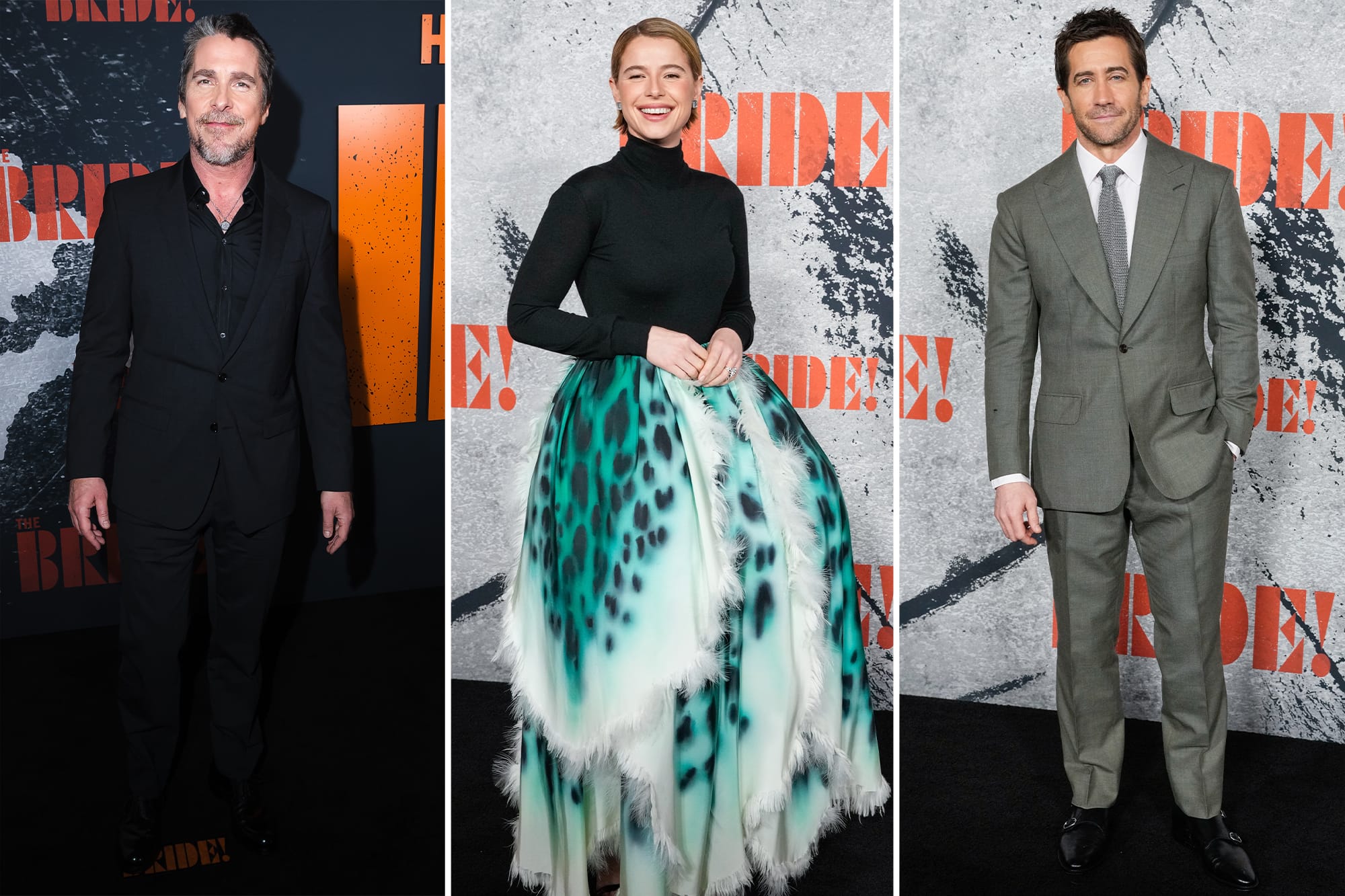
Christian Bale arrived at the New York premiere of The Bride! in a charcoal wool suit with a barely perceptible sheen, the kind of fabric choice that photographs flat in direct flash but catches dimension in natural light. Jessie Buckley wore a high-necked black gown with architectural pleating. Jake Gyllenhaal, supporting his sister Maggie's second directorial feature, opted for navy tailoring with a subtle texture that read more considered than flashy. The looks, documented by Page Six, leaned moody and restrained—dark palettes, deliberate silhouettes, nothing that screamed for attention.
The restraint wasn't accidental. It was strategic. When you're marketing a gothic horror film from a director known for psychological precision, the last thing you want is a red carpet that looks like every other franchise premiere. Maggie Gyllenhaal's The Bride! got a rollout that understood the assignment: no brand takeover, no step-and-repeat engineered for maximum TikTok churn, no chaotic scrum of creators angling for the same wide shot. Just a film with a clear aesthetic point of view, and a carpet that reflected that specificity.
That matters because red carpet photography has become a high-speed extraction process, optimized for speed and scale over editorial perspective. The result is visual sameness—everyone photographed the same way, in the same light, for the same audience. Premieres have evolved into multi-platform launch events where the film itself is often secondary to the content ecosystem built around it. The carpet becomes a backdrop for brand partnerships, creator activations, and sponsored moments designed to generate clips rather than images. When ubiquity becomes the default strategy for most entertainment releases, the things that require a particular context or audience get flattened.
But when a premiere is tied to a filmmaker like Gyllenhaal—whose first film, The Lost Daughter, earned her an Oscar nomination and a reputation for uncompromising vision—the event can afford to operate differently. The cast skews toward actors rather than multi-hyphenate content machines. The aesthetic is specific enough that it doesn't need to appeal to everyone. The rollout strategy bets on intrigue over ubiquity, which is a quieter play in a market that rewards noise.
The Bride! is Gyllenhaal's follow-up to The Lost Daughter, a shift from psychological drama to gothic horror that maintains her interest in women navigating constrained, oppressive systems. The film reimagines the Frankenstein story from the perspective of the Bride, with Buckley in the title role. According to Page Six's coverage, the premiere drew a cast that included Annette Bening, Peter Sarsgaard, and Julianne Hough—all actors with established careers who don't need the visibility of a premiere to justify their attendance. They were there because the project merited it.
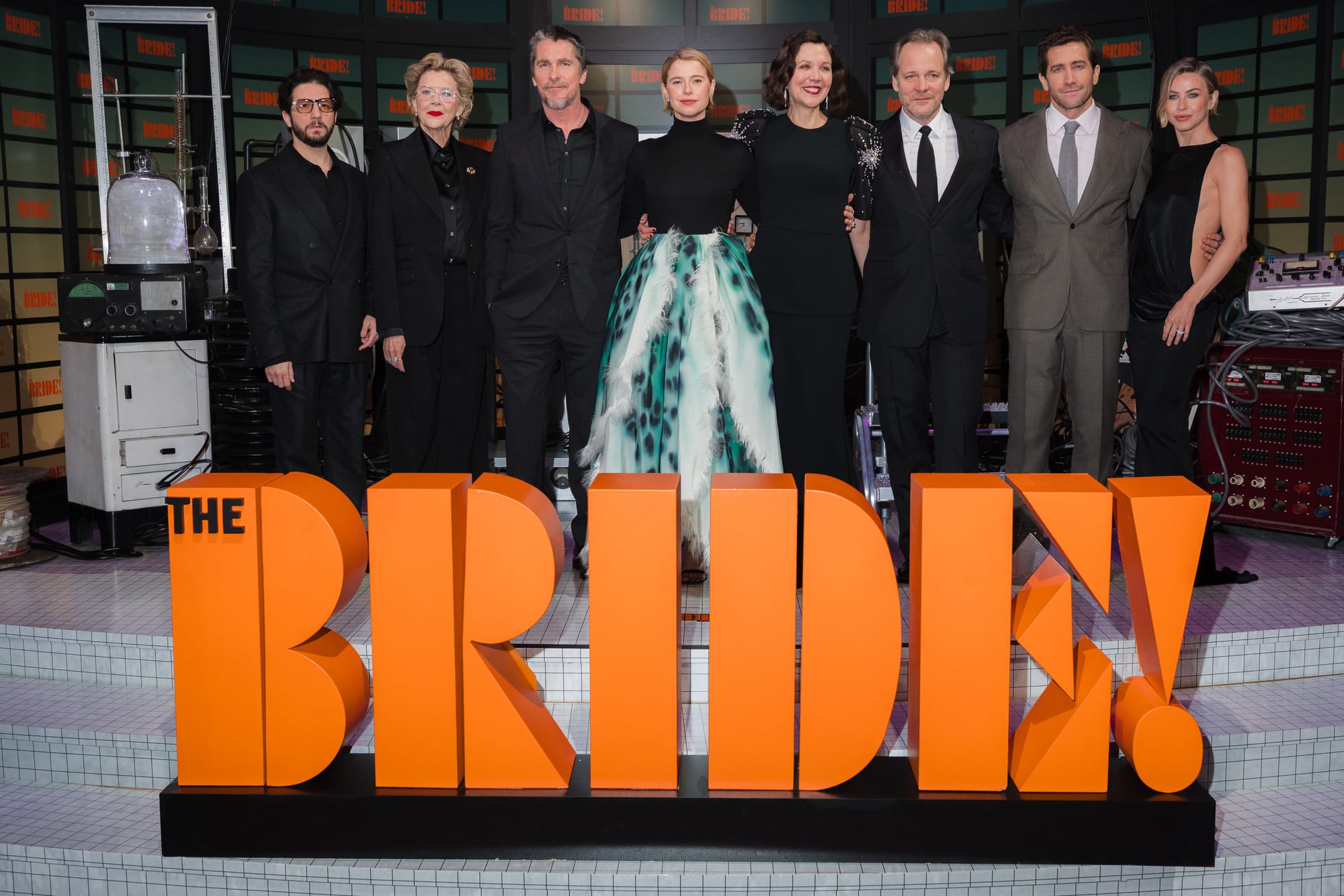
The premiere's visual restraint mirrors a broader tension in how auteur-driven projects manage commercial rollout. Too much spectacle and you risk undercutting the film's atmosphere. Too little and you disappear in a release calendar crowded with bigger budgets and louder campaigns. Gyllenhaal's approach—both in her filmmaking and in how her work is presented—suggests a different calculation. She's not trying to reach everyone. She's trying to reach the right people, and she's trusting that specificity will do more work than scale.
That's a gamble in an industry that has spent the last decade optimizing for the opposite. The theatrical market has been unforgiving to mid-budget adult dramas and genre experiments that don't come with built-in IP recognition. Even premium theatrical experiences have struggled to find sustainable footing. Warner Bros. Pictures is distributing The Bride!, which means the film has studio backing, but it also means it will be measured against commercial benchmarks that don't always account for the value of a strong critical reputation or a devoted niche audience.
The real test will be whether the film can convert aesthetic coherence into ticket sales. Gyllenhaal has proven she can make critically acclaimed work. The Lost Daughter was a Netflix release, which insulated it from the pressures of theatrical performance. The Bride! doesn't have that luxury. It needs to perform in theaters, which means it needs to convince audiences that a gothic reimagining of Frankenstein from the Bride's perspective is worth leaving the house for.
But stylistically, the premiere made its case. It looked good. It felt intentional. And in a moment when most red carpets feel interchangeable, that coherence between a film's aesthetic and its public presentation is worth paying attention to. The premiere didn't just introduce a movie—it demonstrated that auteur-driven projects can still carve out space for themselves by refusing to look like everything else. Whether that translates to box office success is still an open question. But as a statement of intent, it was clear.
For more, see the economics of front-row celebrity fashion and the best fashion documentaries streaming now.