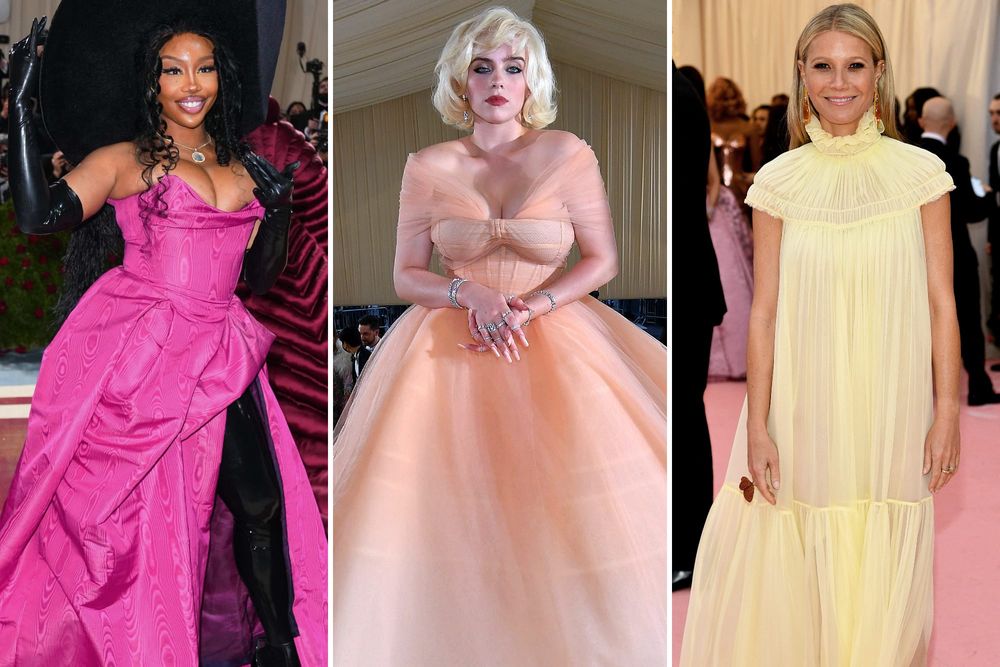
SZA left the 2024 Met Gala barefoot. Not as a statement, not as a fashion choice — she just walked out. Took off her heels, grabbed her shoes, and left through the side exit before the night was over. The image of a Grammy-winning artist sneaking out of fashion's most exclusive event like a teenager ditching prom should tell you everything about what the Met Gala actually is.
It's not a party. It's not even really about fashion anymore. It's a brand obligation with a red carpet attached.
Gwyneth Paltrow said it plainly years ago: the Met Gala is "so un-fun." She called it "boiling" and "crowded" — a punishment dressed up as prestige. Tina Fey described it as a "jerk parade." Amy Schumer left early and never came back. Zazie Beetz admitted she didn't understand why she was invited. Lena Dunham stopped going after realizing the event made her feel terrible about herself. These aren't complaints about bad catering or long speeches. They're admissions that the event's actual purpose — to be seen, to perform access, to fulfill a brand contract — is fundamentally at odds with anything resembling enjoyment.
The Met Gala operates on a simple premise: attendance is currency. You're not there because you want to be. You're there because your publicist, your brand partnership, or your studio deal requires it. The invitation isn't a compliment — it's a business transaction. Fashion houses pay for tables. Celebrities attend as guests of those houses, wearing their clothes, performing enthusiasm, and generating content that will be reposted, analyzed, and monetized for months. The event itself is secondary. What matters is the documentation.
This is why celebrity brand strategy has turned the Met Gala into the year's most visible performance of obligation. The red carpet is where brands demonstrate their access to cultural capital. The celebrities are the proof. Their discomfort is irrelevant. Their job is to show up, look expensive, and leave enough visual material for the brand to justify the table cost.
What's striking about the complaints is how consistent they are. It's too hot. It's too crowded. The music is too loud. You can't move. You can't eat. You can't leave when you want to. These are not the complaints of people attending a glamorous party — they're the complaints of people fulfilling a contract they didn't negotiate. The event's structure is designed to maximize visibility, not comfort. The lack of phones inside ensures that the only images that circulate are the official ones — controlled, branded, optimized for editorial use. The seating arrangements are determined by who paid for the table, not who actually wants to sit together. The schedule is rigid. The expectations are non-negotiable.
And yet, the cultural mythology around the Met Gala insists it's the pinnacle of fashion prestige. It's Vogue's night. It's Anna Wintour's domain. It's where the industry's power structure becomes visible. All of that is true — but it's true in a way that makes the event more transactional, not less. The prestige is the point. The performance of prestige is the product. The celebrities are the labor.
SZA's barefoot exit is the most honest response to that dynamic. She didn't make a scene. She didn't issue a statement. She just left. The same way Tina Fey stopped going. The same way Amy Schumer decided once was enough. The same way Lena Dunham quietly removed herself from the guest list. These aren't rebellions — they're opt-outs. And the fact that the event continues without them, year after year, proves that individual celebrity presence is less important than the collective spectacle.
The Met Gala's real function is to reinforce the hierarchy it claims to celebrate. Fashion houses demonstrate their influence by securing the most famous guests. Celebrities demonstrate their market value by being invited. Media outlets demonstrate their access by covering it. The public demonstrates their engagement by watching. Everyone plays their role. The fact that many of the participants actively dislike the experience is irrelevant to the machine's operation.
This is where fashion week's front row dynamics become most visible. The Met Gala is the front row scaled to stadium size. It's the same brand-celebrity partnership model, the same performance of access, the same documentation-first priority — just condensed into one night and amplified by the institutional prestige of the Met and Vogue's editorial authority. The difference is that fashion week happens multiple times a year across multiple cities. The Met Gala happens once. The pressure to perform is exponentially higher.
Gwyneth Paltrow's "so un-fun" comment wasn't a complaint about the event failing to live up to expectations. It was an acknowledgment that the event's actual purpose — to generate content, to demonstrate access, to perform prestige — has nothing to do with fun. Fun is not the goal. Visibility is the goal. The discomfort is a feature, not a bug. The crowding, the heat, the noise — all of it creates an environment where the only rational response is to focus on the documentation and endure the rest.
The celebrities who keep going back aren't enjoying themselves. They're maintaining relationships. They're fulfilling obligations. They're protecting their position in a hierarchy that punishes absence. The ones who stop going — like Fey, like Schumer, like Dunham — are the ones who've decided the cost isn't worth the return. They're not less successful. They're just less willing to perform discomfort for someone else's brand strategy.
SZA left barefoot because the performance was over. She'd been photographed. She'd been documented. She'd fulfilled the obligation. What happened after that — the dinner, the after-party, the continued performance of enthusiasm — was optional. And she opted out. The fact that this registers as notable, rather than entirely reasonable, shows how thoroughly the event has normalized the expectation that celebrities will endure discomfort for the sake of the spectacle.
The Met Gala will continue. The complaints will continue. The barefoot exits and early departures and quiet opt-outs will continue. Because the event was never designed to be enjoyable. It was designed to be photographed. And as long as the photos keep circulating, the mission is accomplished.