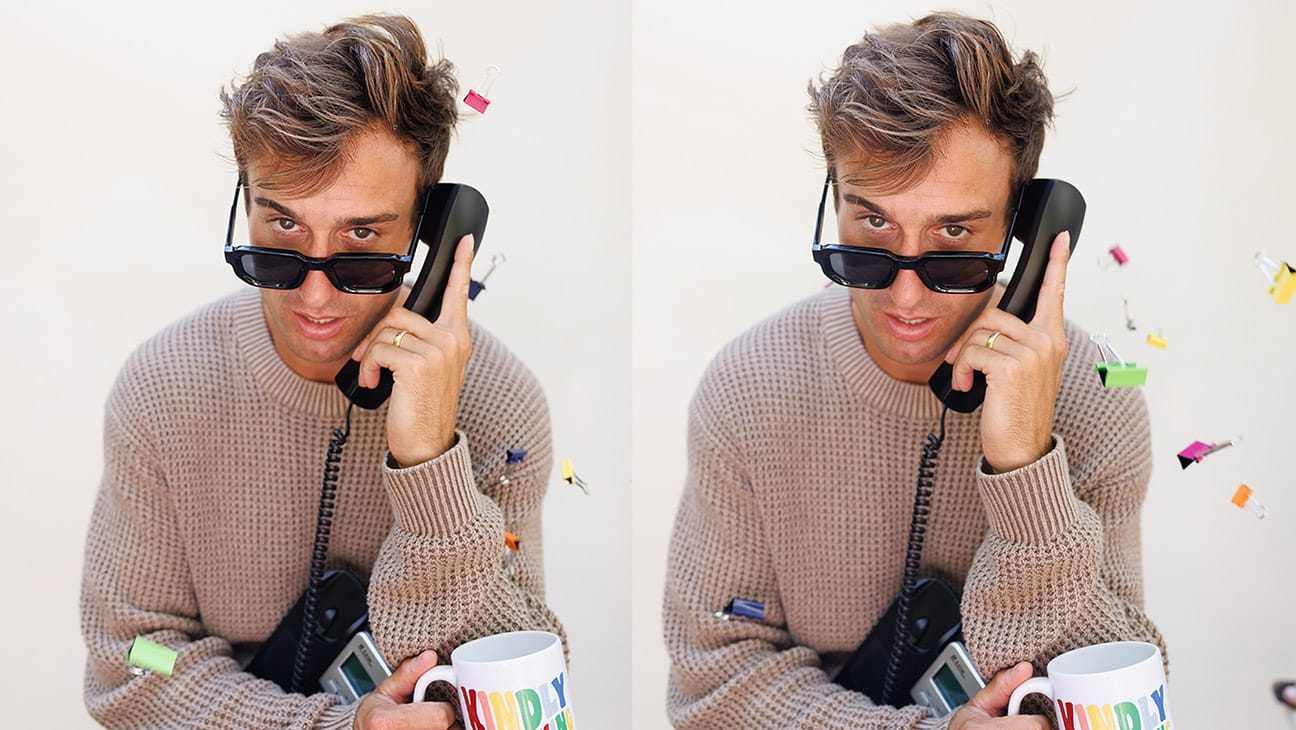
Warner Bailey is launching a livestream talk show about Hollywood business. Not Hollywood gossip, not celebrity interviews — Hollywood business. Contract structures, deal-making, the economics of production companies. There's another show about trucking logistics. One entirely devoted to advertising strategy. These aren't passion projects or experimental formats. They're viable media properties with dedicated audiences, consistent revenue, and zero interest in appealing to anyone outside their target demographic.
This is niche-casting, and it's not just a new distribution model. It's the economic infrastructure that makes the death of the monoculture permanent.
The traditional broadcast model operated on a simple premise: cast the widest possible net, attract the largest possible audience, sell that audience to advertisers. Everything was designed for mass appeal, which in practice meant appealing to no one in particular. The result was decades of content engineered to offend no one and excite no one, programming that treated specificity as a liability and depth as a ratings risk.
That model is dying. What's replacing it isn't just streaming or digital — those are delivery mechanisms, not editorial strategies. What's replacing it is a fundamental reorientation around the value of small, committed audiences over large, indifferent ones. And the reason it's working is because the economics finally support it.
A livestream talk show about trucking logistics doesn't need ten million viewers. It needs ten thousand people who work in logistics, care deeply about supply chain optimization, and will pay for premium access to insider conversations. That's a sustainable business. That's also a better product — because when you're not trying to be everything to everyone, you can be something specific to someone who actually cares.
The monoculture — that brief historical moment when most Americans watched the same three TV networks and listened to the same forty songs on the radio — was an anomaly, not a norm. We're not losing something natural. We're returning to what media looked like before mass broadcasting: fragmented, localized, serving specific communities with specific interests. The difference now is scale and access. A talk show about advertising arcana can find its audience globally, instantly, without needing a broadcast license or a cable carriage deal.
The barriers to entry have collapsed, and so has the economic pressure to dilute your concept until it's palatable to everyone. We've seen this play out in music, where the most vital work is being made for tiny, committed audiences rather than radio programmers. We're seeing it in how creators are building their own distribution, bypassing traditional gatekeepers entirely. Niche-casting is just the logical endpoint: media that knows exactly who it's for and has the economic model to survive without anyone else.
And these hyper-specific shows aren't just serving existing communities — they're creating new ones. A livestream about Hollywood business isn't just attracting people who already work in entertainment; it's building an audience of aspiring producers, film students, media analysts, and curious outsiders who want insider access. The niche expands to include everyone interested in the niche, which turns out to be more people than broadcast ever imagined.
This is also where the promotional logic shifts entirely. Why would a filmmaker do a generic morning show interview when they could do an hour-long deep dive on a Hollywood business livestream, reaching exactly the audience most likely to care? The old press tour model — maximize reach, minimize depth — collapses when cultural relevance within specific communities matters more than mass awareness. Niche-casting is just the infrastructure catching up to that reality.
There's a counterargument here, and it's worth taking seriously: maybe we need some shared cultural experiences. Maybe the fragmentation of media is contributing to political polarization and social atomization. Maybe niche-casting is just filter bubbles with better production value.
But that argument assumes the monoculture was unifying us, rather than just forcing us to pretend we had more in common than we did. It assumes those three TV networks were serving the public interest, rather than just the lowest common denominator. It assumes there's something inherently valuable about millions of people watching the same mediocre content at the same time, rather than smaller groups engaging deeply with material that actually speaks to their interests and expertise.
What I see in niche-casting is media that respects its audience enough to assume they have specific interests and the intelligence to engage with specialized content. That's not a filter bubble. That's just knowing who you're talking to and what they care about. The monoculture didn't create unity — it created the illusion of unity by smoothing over every edge until nothing was left but the blandest possible version of culture.
The transition won't be smooth. Broadcast isn't dead yet, and the advertising infrastructure still privileges scale over engagement. But the trajectory is clear. According to reporting from The Hollywood Reporter, these niche livestreams are proliferating precisely because the economics work — smaller audiences, lower overhead, direct revenue models, no need to satisfy advertisers looking for mass reach. The incentive structure has changed, and once that happens, the content follows.
What we're watching is the birth of something more sustainable: media that knows exactly who it's for and isn't embarrassed about everyone it's not for. The monoculture didn't die because we stopped wanting shared experiences. It died because the economic model that supported it collapsed, and what replaced it turned out to work better for both creators and audiences. Smaller, more committed, more specific, more sustainable.
The micro-cultures, the niche communities, the hyper-specific talk shows about trucking logistics and advertising minutiae aren't the future because they're replacing mass media. They're the future because they never needed mass media's permission to exist in the first place. They just needed the economics to catch up.
For more, see the mythology of Oscar’s anonymous ballots and Marlon Wayans on Scary Movie 6 and cancel culture.