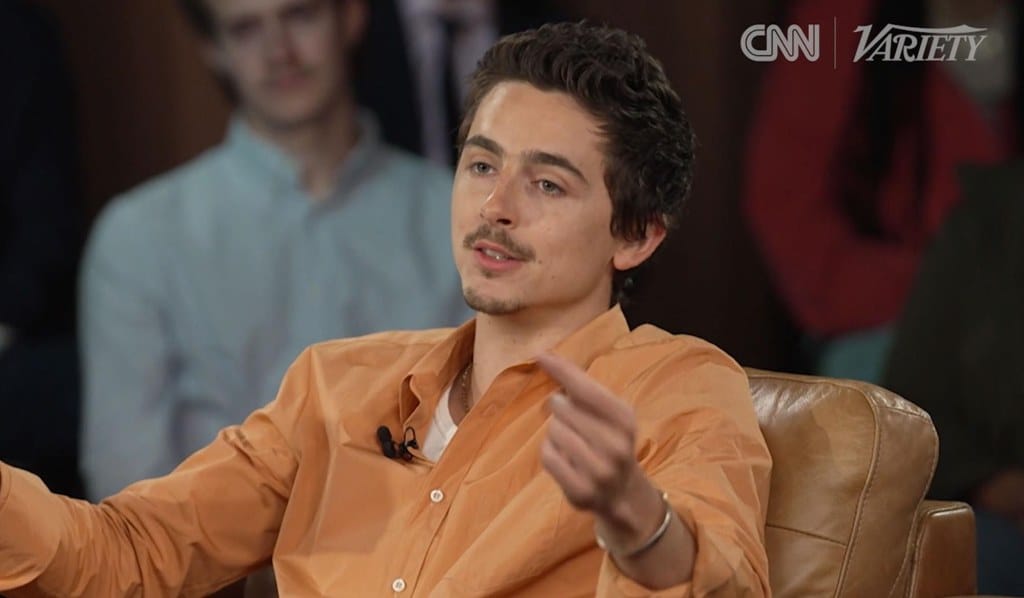
Timothée Chalamet made an observation about opera and ballet at the Oscars. It was correct. It was boring. And because it was boring, it became a controversy.
The actor mentioned that opera and ballet are "less accessible" art forms — a statement so factually uncontroversial that it barely qualifies as an opinion. Opera tickets at the Metropolitan Opera start around $30 but average closer to $200. Ballet companies operate in major cities with limited touring schedules. These are not mass-market entertainment forms, and pretending otherwise doesn't make them more democratic. But within hours, Page Six was covering the "backlash" — a manufactured scandal built from a handful of angry tweets and the desperate need to fill the content pipeline.
This is not about opera. It's not even really about Chalamet. It's about a celebrity discourse ecosystem that has become so algorithmically dependent on controversy that it will invent scandals from factually accurate statements just to keep the feed moving. The attention economy doesn't reward nuance or accuracy. It rewards conflict. And when real conflict isn't available, it manufactures it from nothing.
The pattern is exhaustingly familiar. A celebrity says something benign. A few people on Twitter — sorry, X — decide to be mad about it. Entertainment outlets cover "the backlash" as if a dozen quote-tweets constitute a cultural moment. The story gets packaged as "[Celebrity] sparks controversy," when what actually happened is that a slow news cycle needed content and someone's publicist didn't get ahead of it fast enough. The controversy isn't organic. It's industrial.
What makes this particular non-scandal worth examining is how transparently it exposes the mechanics. Chalamet's observation wasn't inflammatory. It wasn't poorly worded. It wasn't even interesting. It was the kind of obvious statement that would have passed unremarked in any other context. But in the attention economy, obviousness is irrelevant. What matters is whether a statement can be reframed as divisive, whether it can generate enough heat to justify a headline, whether it can be stretched into a multi-day story that keeps people clicking.
The cost of this manufactured outrage cycle isn't just that it wastes everyone's time — though it does. It's that it trains audiences to treat every celebrity statement as potentially scandalous, every observation as a potential controversy. It flattens the difference between actual harm and mild disagreement. It makes it harder to recognize when something genuinely worth criticizing happens, because the same language and framing gets applied to everything from a thoughtless comment to a factually correct observation about ticket prices.

The opera controversy also highlights how celebrity discourse has become unmoored from the actual subjects celebrities discuss. No one involved in this story — not the outlets covering it, not the people angry about it, not the readers clicking through — actually cares about opera accessibility. If they did, the conversation would be about arts funding, ticket pricing models, or how cultural institutions can genuinely expand their audiences. Instead, it's about whether Chalamet is out of touch, whether he's a nepo baby, whether he should have phrased it differently. The art form becomes a prop in a discourse that has nothing to do with art.
What's most telling is that the people manufacturing outrage over Chalamet's comments are doing exactly what they accuse him of: treating opera as a signifier rather than a subject. For them, opera isn't a living art form with real accessibility challenges. It's a symbol of elitism they can wield against a celebrity they've decided to be mad at. The irony is that by turning a straightforward observation into a class-war talking point, they've made the conversation even less accessible than the art form itself.
The Chalamet opera controversy will be forgotten by next week, replaced by whatever benign statement the next celebrity makes that can be reframed as scandalous. But the pattern won't change until the economics do. As long as celebrity media operates on a model that requires constant content and constant conflict, it will keep manufacturing scandals from nothing. And as long as audiences keep clicking, outlets will keep serving them up. The attention economy doesn't care if the outrage is real. It just needs it to be loud enough to register as engagement.