The Viktor & Rolf Fall 2026 runway show opened with a model wearing what appeared to be an inverted coat — sleeves jutting upward like architectural beams, collar folded into impossible geometry. According to Vogue, the collection continued in this vein: sculptural silhouettes that defied gravity and logic, garments that looked more like spatial experiments than clothing. The audience responded with the kind of reverent silence usually reserved for contemporary art installations.
Three decades into their career, Viktor Horsting and Rolf Snoeren still operate on a different plane than most of the industry. Their Fall 2026 collection featured the signature conceptual gestures that have defined their work since the late '90s — upside-down construction, impossible volumes, garments that make more sense in a museum vitrine than a closet. It's the same impulse that produced their inverted dresses in 2006, their "No" collection in 2008, and their ongoing haute couture experiments with text and scale.
But here's what's changed: the industry that once had room for this kind of work has spent the last decade systematically eliminating the middle ground where Viktor & Rolf exist. The economics are brutal and getting worse. Independent design houses without major conglomerate backing are being hollowed out. Too conceptual for mass market, too small for LVMH or Kering acquisition, too uncommercial for venture capital — there's no business model left for what Viktor & Rolf do. They've survived by not depending on ready-to-wear sales at all. The runway collections exist almost entirely as cultural capital generation for their fragrance licensing deals. Which means the work operates in an increasingly hermetic space, disconnected from the commercial fashion system it's implicitly critiquing.
The timing makes this collection read differently than it would have even five years ago. Fashion Week has become a performance where the primary audience isn't buyers or editors — it's algorithmic content distribution and brand positioning. Most houses treat the runway as a product launch event optimized for social media virality and immediate retail conversion. Christian Dior's Fall 2026 collection signaled a clear commercial direction, balancing creative ambition with retail viability. Saint Laurent is wrestling with luxury's broader confidence problem, but still delivering clothes designed to move units. Even Matières Fécales, another house built on provocation, manages to pair conceptual daring with wearable pieces that can sustain a business.
Viktor & Rolf's refusal to play that game reads as either admirably stubborn or strategically obsolete, depending on whether you think fashion needs spaces that aren't optimized for commerce. They're one of the last houses still treating the runway as a place for pure experimentation rather than strategic brand communication. Their work exists as a kind of ongoing critique of the industry's commercial imperatives, a reminder that fashion can be more than product and that the runway can be more than a sales tool.
The problem is that critique only works if someone's listening, and the audience for uncommercial fashion is shrinking fast. Viktor & Rolf shuttered their ready-to-wear line in 2015, pivoting to haute couture and fragrance deals. The ready-to-wear collections they've shown since then exist in a strange liminal space — not quite commercial product, not quite pure art project. They're shown during Paris Fashion Week, covered by the industry press, and then largely disappear from retail circulation. The business runs on perfume sales. The runway work generates the cultural credibility that makes those licensing deals possible, but it's an increasingly precarious arrangement.
What makes the Fall 2026 collection notable isn't the conceptual rigor — that's been Viktor & Rolf's signature for decades. What's notable is how isolated that approach has become. The independent design houses that once shared their commitment to concept over commerce have either been acquired, gone bankrupt, or pivoted to more commercial work. Dries Van Noten is navigating post-founder transition under new ownership. Balmain is playing to its Instagram-ready maximalist strengths. The middle tier of fashion — conceptually ambitious but independently operated — has been systematically eliminated by an industry that demands scale or niche domination.
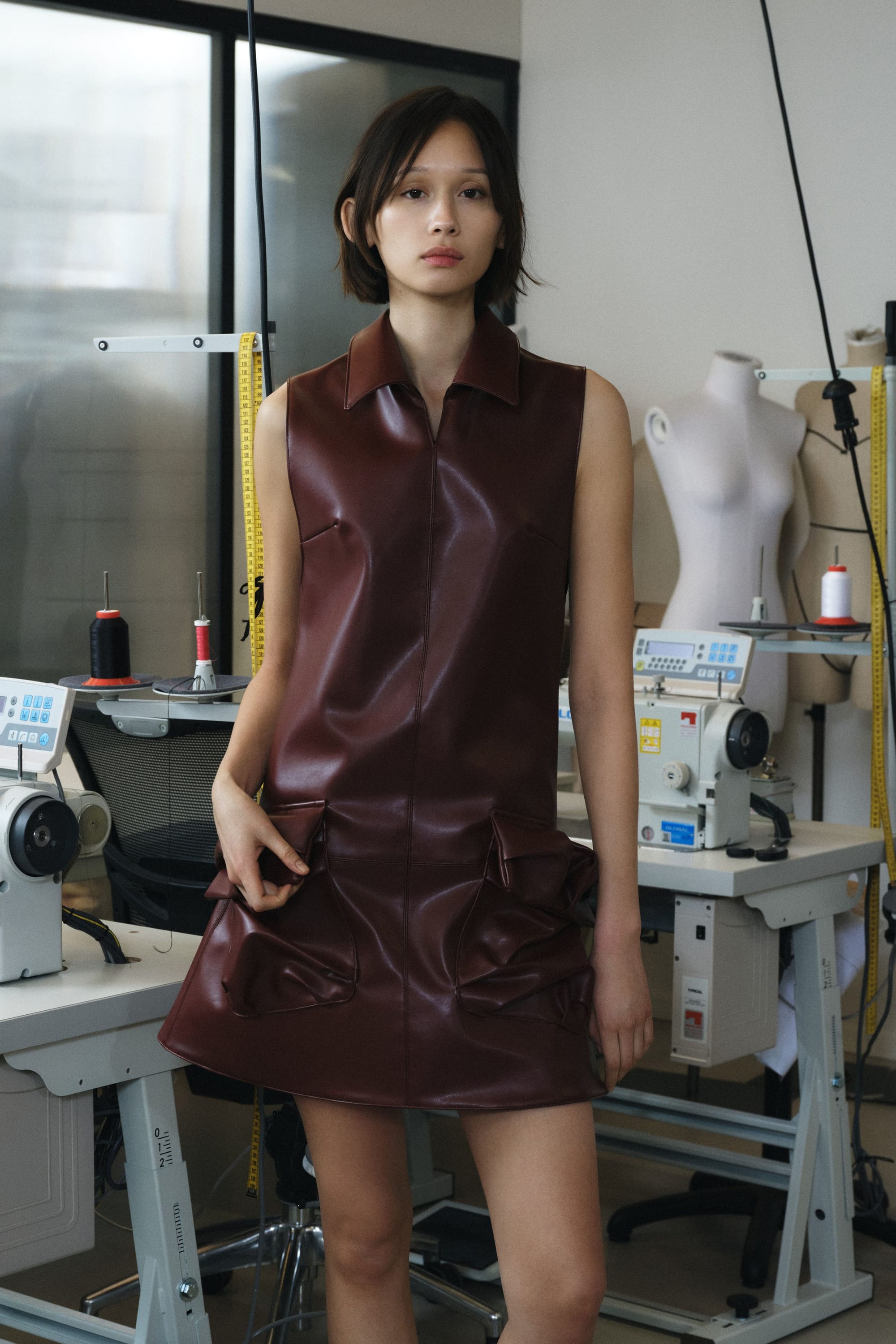
The shift isn't just about individual houses failing or succeeding. It's about the infrastructure that once supported experimental fashion collapsing entirely. Department stores that used to buy conceptual collections in small quantities have consolidated or closed. Independent boutiques that championed difficult designers can't compete with direct-to-consumer brands and rental platforms. The editorial apparatus that once translated experimental runway work into cultural capital has been gutted by the advertising recession and algorithmic media distribution. What's left is a system that rewards immediate legibility and punishes anything that requires context or interpretation.
Viktor & Rolf have responded by leaning harder into the conceptual work, making collections that are increasingly uncompromising in their refusal to be commercial. The Fall 2026 show included garments that couldn't be photographed effectively for Instagram, silhouettes that resist the flat visual language social platforms demand. It's a strategy that only works if you've already accepted that the work won't generate revenue through traditional fashion channels. The fragrance deals subsidize the creative freedom. The runway shows exist as loss leaders for brand equity that gets monetized elsewhere.
Compare that model to how Acne Studios navigates conceptual ambition — by making sure intellectual fashion still translates into wearable, sellable product. Or to Courrèges' approach to futurism, which balances heritage with commercial viability. Both houses operate in the same luxury tier as Viktor & Rolf, both traffic in conceptual ideas, but both have figured out how to make those ideas legible to buyers and wearers. Viktor & Rolf have chosen the opposite path — purity over pragmatism, concept over conversion.
The question the collection raises isn't whether Viktor & Rolf's work is valuable — it clearly is, both as cultural production and as a counterweight to fashion's relentless commercialization. The question is whether the industry can sustain work that exists primarily as critique rather than product. Right now, the answer seems to be: only if that work can be monetized through adjacent revenue streams. Fragrance licensing, hotel collaborations, museum retrospectives — the cultural capital Viktor & Rolf generate on the runway gets converted into cash through channels that have nothing to do with selling clothes.
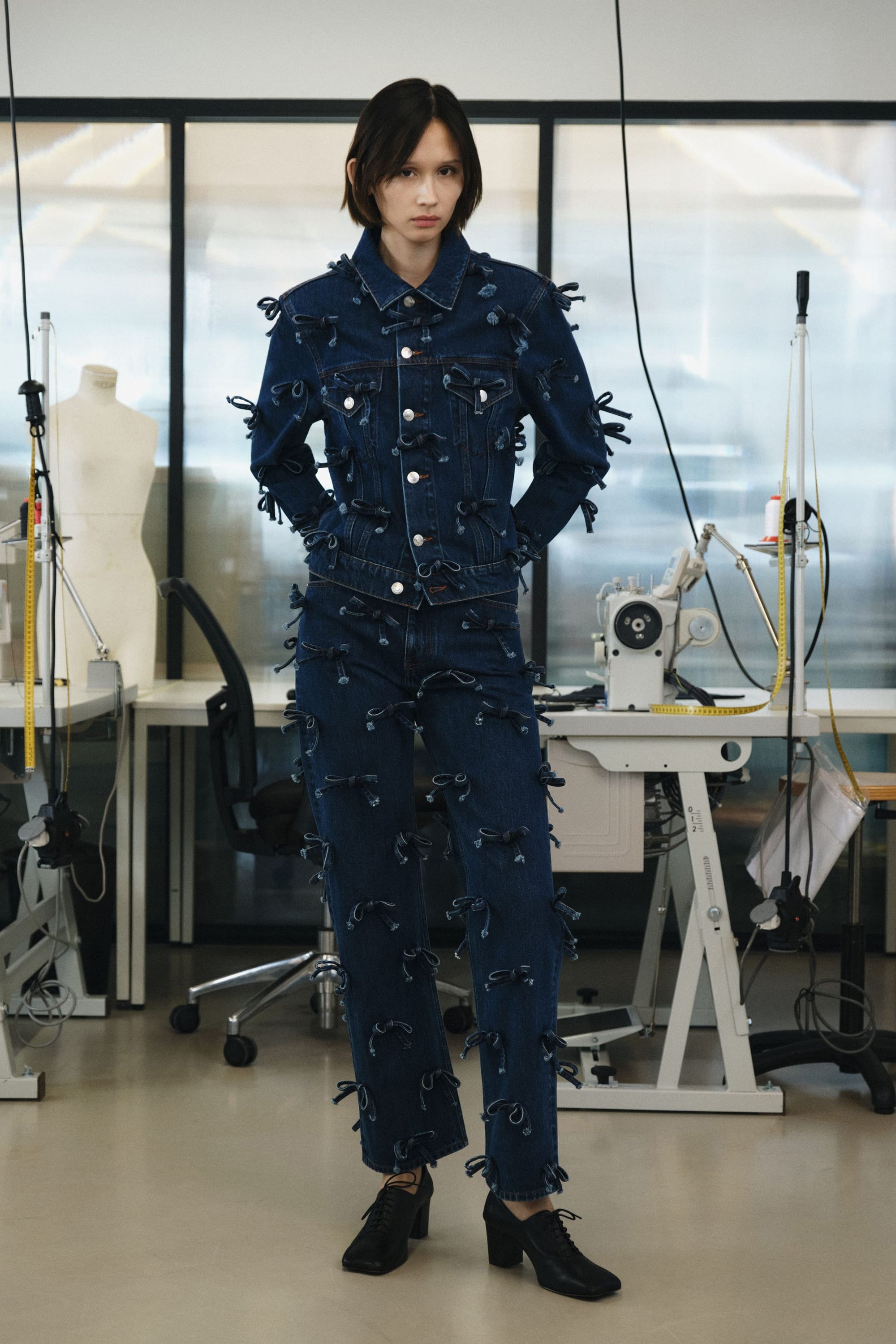
That's not inherently bad. It's kept the house operational for nearly a decade since they stopped making ready-to-wear commercially available. But it does mean the work exists in a kind of protective bubble, insulated from market pressures but also disconnected from the fashion ecosystem it's commenting on. The critique loses some of its force when it's delivered from outside the system rather than within it. When your business model doesn't depend on selling clothes, your collection's refusal to be commercial reads less as resistance and more as irrelevance.
Viktor & Rolf have carved out a space where fashion can be intellectually ambitious, where a collection doesn't need to answer to engagement metrics or sell-through rates. In an industry that's increasingly hostile to anything that can't be immediately monetized, that kind of sustained commitment is rare. But it also raises the question of who this work is for in 2026, and whether conceptual rigor alone can sustain a house when the infrastructure that once supported independent design has collapsed.
The collection will likely disappear from view within weeks, preserved mainly in archival photography and critical writing. The garments themselves were never meant to be worn in any conventional sense — they're proposals, thought experiments, spatial investigations that happen to use fabric and the human body as their medium. That's valuable work. Whether the fashion industry in 2026 has room for work that doesn't generate immediate commercial returns is the real test Viktor & Rolf are running. The answer, increasingly, appears to be no. Which makes their continued insistence on making this kind of work either a principled last stand or a slow-motion retreat into irrelevance. Possibly both.