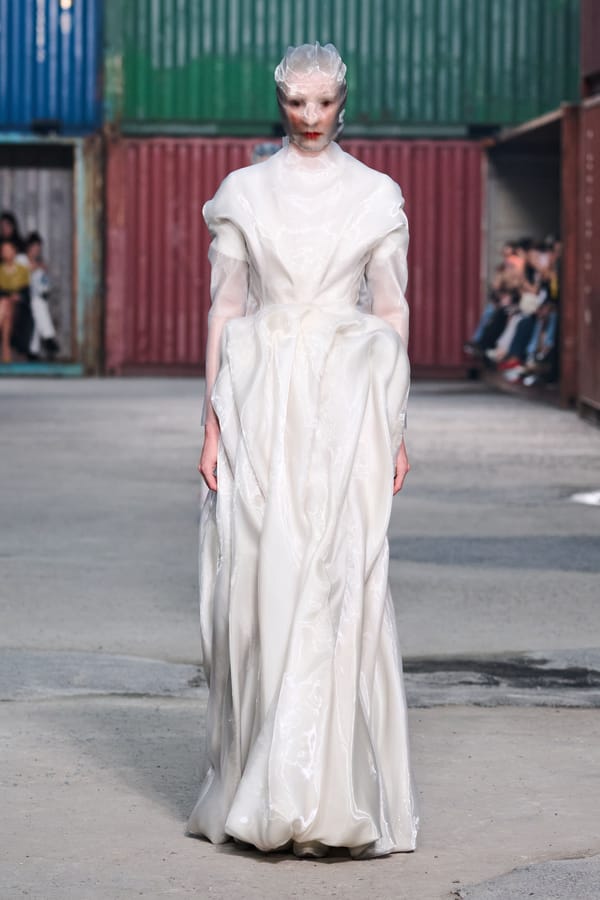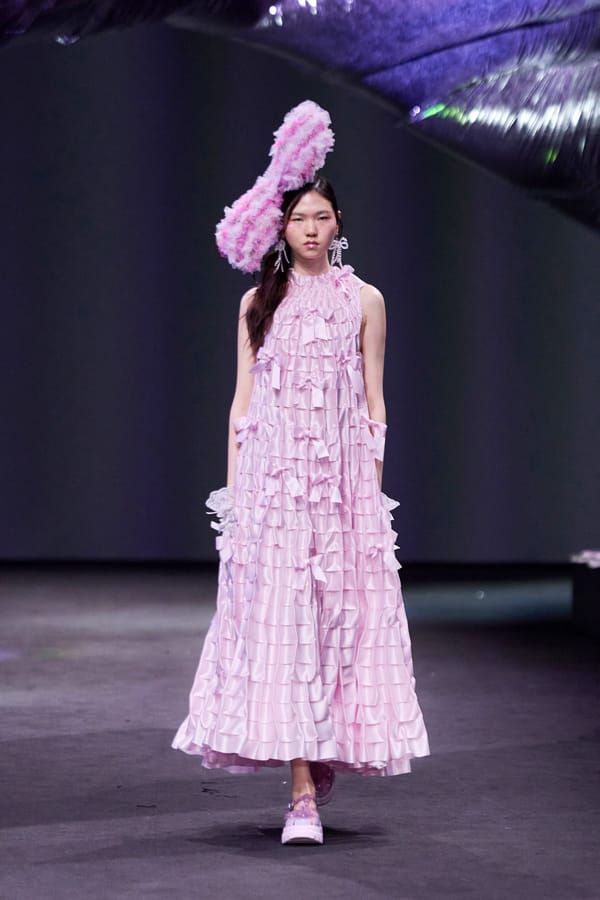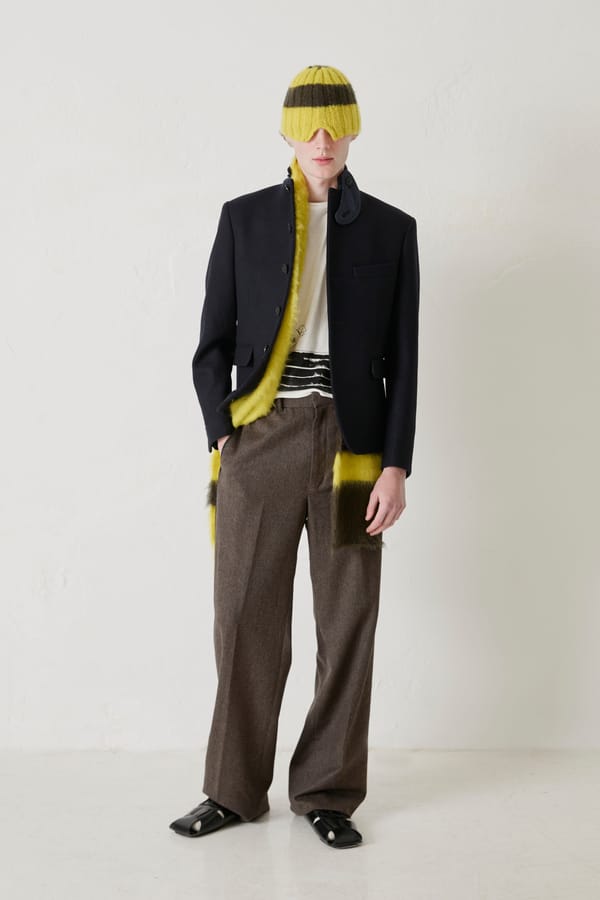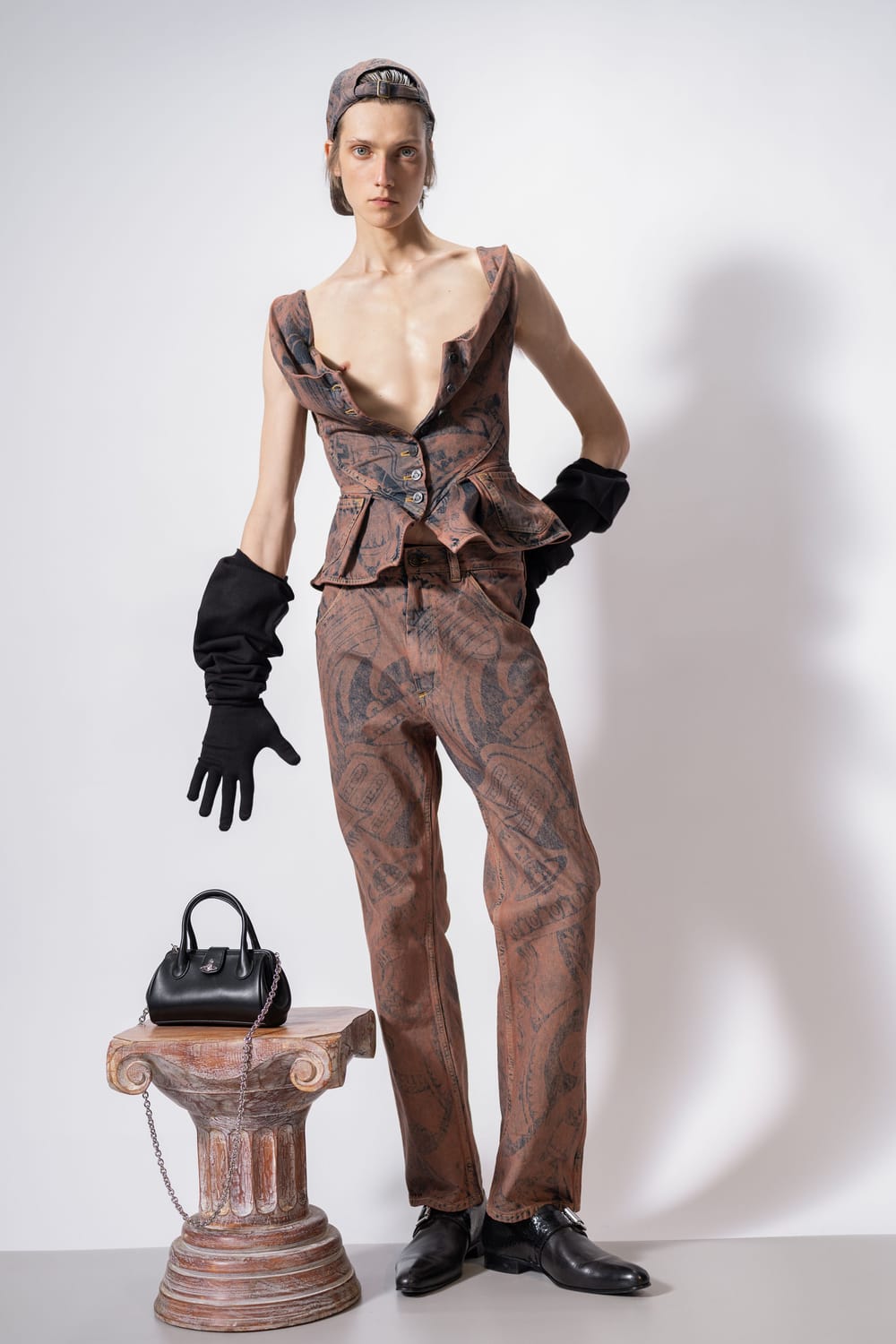
Andreas Kronthaler opened Vivienne Westwood Fall 2026 with a tartan coat dress cinched with a corset—an archival callback so precise it could have walked straight out of the brand's 1993 Anglomania collection. The silhouette was unmistakable: exaggerated hips, nipped waist, the kind of historical pastiche that made Westwood a household name in the first place. But where the original Anglomania felt like an argument—punk meets aristocracy, DIY meets couture—this version felt like a citation. The rebellion has been cataloged, authenticated, and reissued at a markup.
Kronthaler has spent the last decade stewarding Westwood's legacy after her death in 2022, and Fall 2026 is his most explicit attempt yet to reconcile the brand's punk origins with its current position as a heritage label. The collection featured corsetry, tartan, draped jersey, and bondage straps—all signature codes. But the energy that once made those gestures feel dangerous now reads as dutiful. Vogue described the show as "a love letter to the archive," which is precisely the problem. Love letters don't start revolutions.
Heritage punk brands face a structural contradiction that other fashion houses with cult followings have solved by diversifying their design language. Westwood's identity is inseparable from its oppositional stance—punk, anti-establishment, politically confrontational. But that stance becomes harder to maintain when the brand is selling $1,200 tartan blazers to the same class of consumer it once mocked. The original punk gesture was about access and disruption; the heritage version is about exclusivity and preservation. Those are opposing business models dressed in the same tartan.
Kronthaler is aware of the tension. His collections have increasingly leaned into craft—hand-draped jersey, intricate corsetry, archival textile research—as a way to justify the price point and distinguish Westwood from fast-fashion imitators. Fall 2026 included several pieces that required significant atelier work: a draped gown constructed from a single piece of fabric, a corset with boning so precise it functioned as both structure and decoration. This is the move other American heritage brands have made to survive—shift the narrative from rebellion to craftsmanship, from provocation to technique.
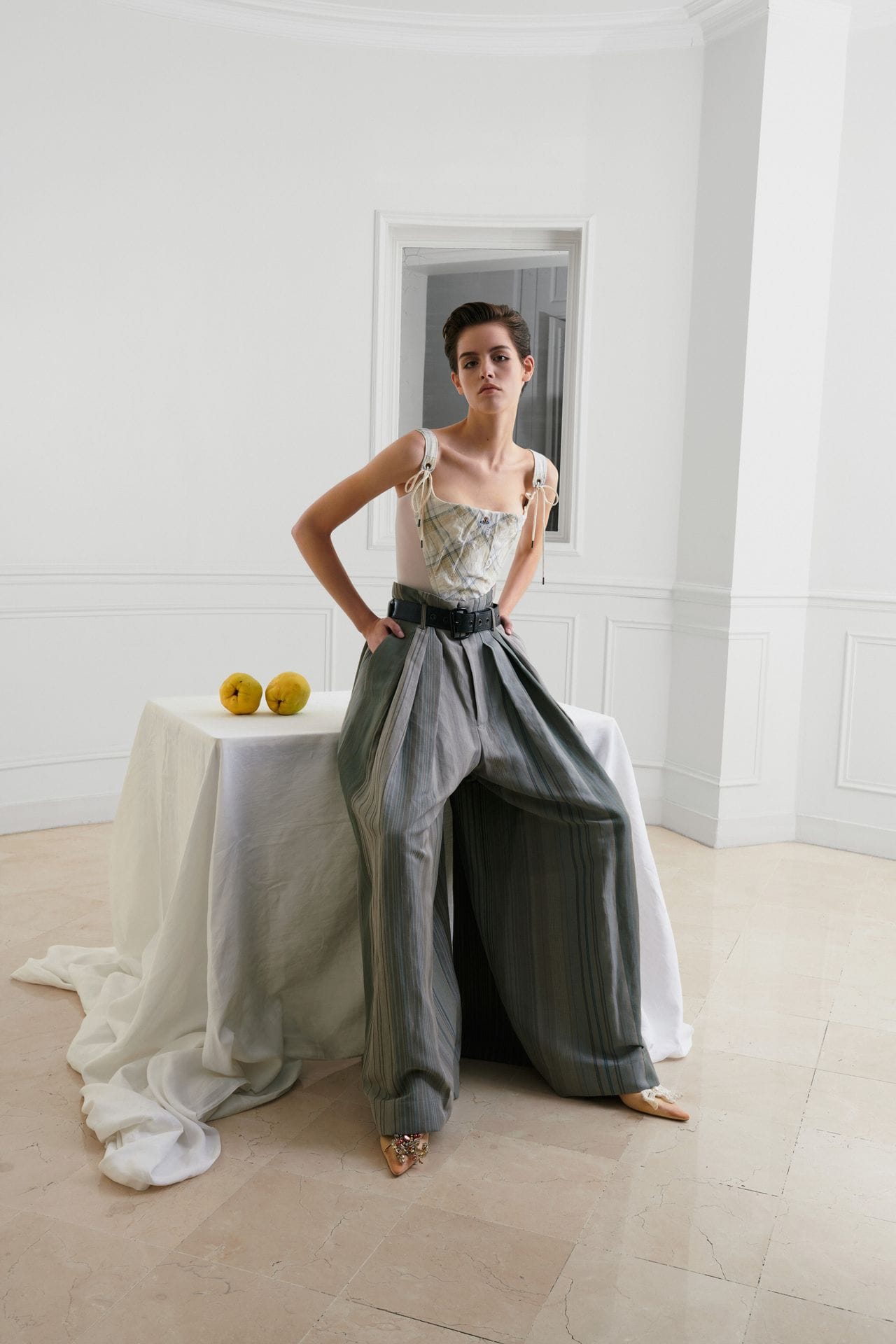
But craft alone doesn't solve the brand's identity crisis. Westwood's original appeal wasn't about construction quality—it was about cultural position. The brand mattered because it had something to say, and it said it loudly, messily, and without permission. Fall 2026 is impeccably made and entirely polite. The bondage straps are decorative. The tartan is tasteful. The corsetry is wearable. Every sharp edge has been sanded down into something you could wear to a museum gala without raising an eyebrow. That's not punk—that's patrimony.
The collection also included several pieces that felt like direct responses to current fashion trends: oversized tailoring, utility details, exaggerated proportions. These gestures toward relevance only highlighted the problem. When a heritage punk brand starts chasing trends, it admits that its original vision no longer generates enough momentum on its own. The question isn't whether Kronthaler can design a good collection—he can, and Fall 2026 is technically accomplished—but whether Westwood's rebellious identity can survive its own commercial success.
Other heritage brands have navigated this by leaning into irony or nostalgia, treating their archives as raw material for remix rather than gospel. Acne Studios built an entire business model on recontextualizing Scandinavian minimalism for a generation that grew up online. But Westwood's identity is too earnest, too politically committed, to pivot into irony without feeling cynical. The brand's fans expect sincerity—they want the activism, the environmental messaging, the sense that buying a Westwood piece means something beyond the transaction. Fall 2026 delivers on the aesthetics but not the urgency.
The real issue is that the cultural conditions that made punk fashion meaningful no longer exist in the same way. Punk was a response to economic collapse, class rigidity, and institutional gatekeeping. Today's fashion landscape is fragmented, algorithmically mediated, and ideologically diffuse. The rebellion Westwood is selling—against what, exactly?—no longer has a clear target. Heritage punk can reference its own history, but it can't recreate the conditions that made that history matter. What's left is the aesthetic without the antagonism, the uniform without the war.