Google searches for "quiet luxury" increased 614 percent in 2022. "Stealth wealth" spiked 990 percent. "Old money style" hit 874 percent. The trigger was HBO's Succession — a show about billionaires in $3,000 cashmere sweaters who looked like they got dressed in the dark. Millions of viewers watched the Roy family spend extravagantly on clothes with no visible logos, then googled every brand they couldn't identify.
The concept isn't new. Understated dressing has been the default of old money for generations. What changed is that it became a mass-market aspiration, driven by a television show, a handful of brands, and an algorithm that turned cashmere into content.
How Succession Dressed a Movement
HBO's Succession didn't invent quiet luxury, but it gave the aesthetic a cast of characters. The Roy family dressed exclusively in Brunello Cucinelli, Loro Piana, and The Row — brands that most viewers had never heard of, which was precisely the point. Costume designer Michelle Matland built wardrobes where a single cashmere sweater cost more than most people's monthly rent, and the characters wearing them looked like they'd pulled on whatever was closest to the bed. The show's wardrobe became a cultural reference point almost overnight.
The Brands That Define the Movement
Brunello Cucinelli is the movement's spiritual center. The Italian house, headquartered in the medieval village of Solomeo, builds its entire identity on craftsmanship, fair labor, and the philosophy of "humanistic capitalism." While the broader luxury market experienced its first contraction in 15 years, Cucinelli's sales rose nearly 11 percent in the first half of 2025, with projected annual growth of 10 percent through 2026. Mark Zuckerberg wears custom Cucinelli T-shirts that cost $300 to $400 each and look identical to generic basics.
The Row, founded by Mary-Kate and Ashley Olsen, represents American minimalism stripped to its essential form. The brand operates on exclusivity through craftsmanship rather than marketing — no celebrity ambassadors, no influencer campaigns, barely any social media presence. Tinsel has covered how The Row turned even its fashion show catering into a brand statement.
Loro Piana, acquired by LVMH in 2013 for $2.57 billion, makes what are arguably the finest cashmere and vicuña garments in the world. The brand's appeal is almost paradoxical: it charges extraordinary prices for clothes that are designed to be invisible.
Other key players include Bottega Veneta (whose woven leather bags became the quiet luxury accessory), Khaite, Totême, Max Mara, and Celine under Phoebe Philo's tenure.
How the Aesthetic Actually Works
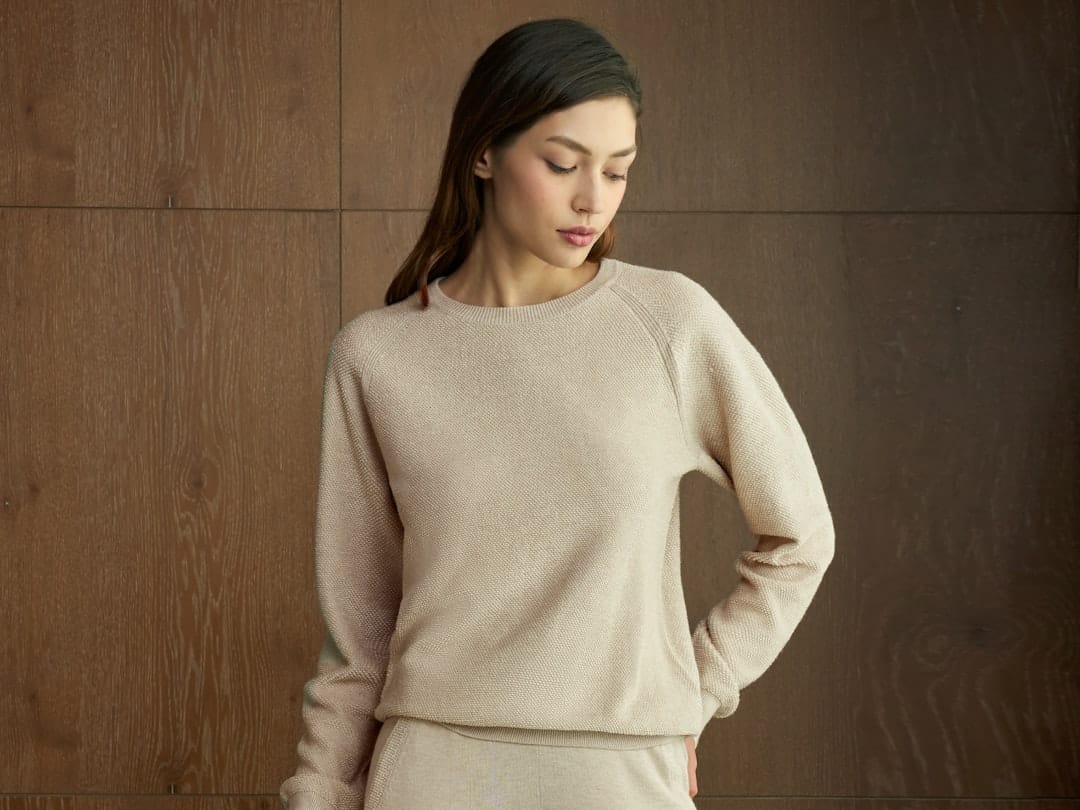
Quiet luxury operates on a set of unwritten rules. Neutral palettes: navy, grey, camel, cream, olive. Natural materials: cashmere, merino wool, fine cotton, linen. Perfect tailoring, because fit signals money even when the brand is unknown. No visible logos, or logos so discreet they function as inside jokes. The paradox is that looking like you don't care about clothes requires caring enormously about clothes — and spending accordingly.
The look also demands maintenance. Cashmere pills. Linen wrinkles. White T-shirts stain. The quiet luxury wardrobe requires the kind of care that presupposes either significant disposable income or significant disposable time, which amounts to the same thing.
The Sofia Richie Grainge Effect
If Succession introduced quiet luxury to prestige television audiences, Sofia Richie Grainge brought it to Instagram. Her 2023 wedding in the South of France — documented in exquisite detail across social platforms — became a visual manifesto for the aesthetic: custom Chanel couture, Aman hotels, and a guest list that looked curated by a museum. The wedding generated more search interest in quiet luxury than any single fashion show.
Is Quiet Luxury Over?
Short answer: no. Longer answer: it's evolving. At New York Fashion Week in September 2025, front-row attendees showcased animal prints, exaggerated silhouettes, and layered textures — a counter-trend driven by younger consumers hungry for individuality. Industry analysts describe the current moment as "Quiet Luxury 2.0," where the emphasis has shifted from stealth wealth to what Bain & Company calls "emotional utility and material science." The pendulum hasn't swung back to logomania, but it's no longer locked in place either. Both aesthetics coexist — which is, ironically, the most quietly luxurious outcome possible.
Bain & Company's 2024 Luxury Report confirms that brands emphasizing craftsmanship and distinctive values will capture future growth — aligning with quiet luxury's core principles even as the surface-level trend evolves. For more on how luxury houses are navigating this shift, see Tinsel's coverage of Polo Ralph Lauren betting on American heritage and Prada's Versace turnaround strategy.