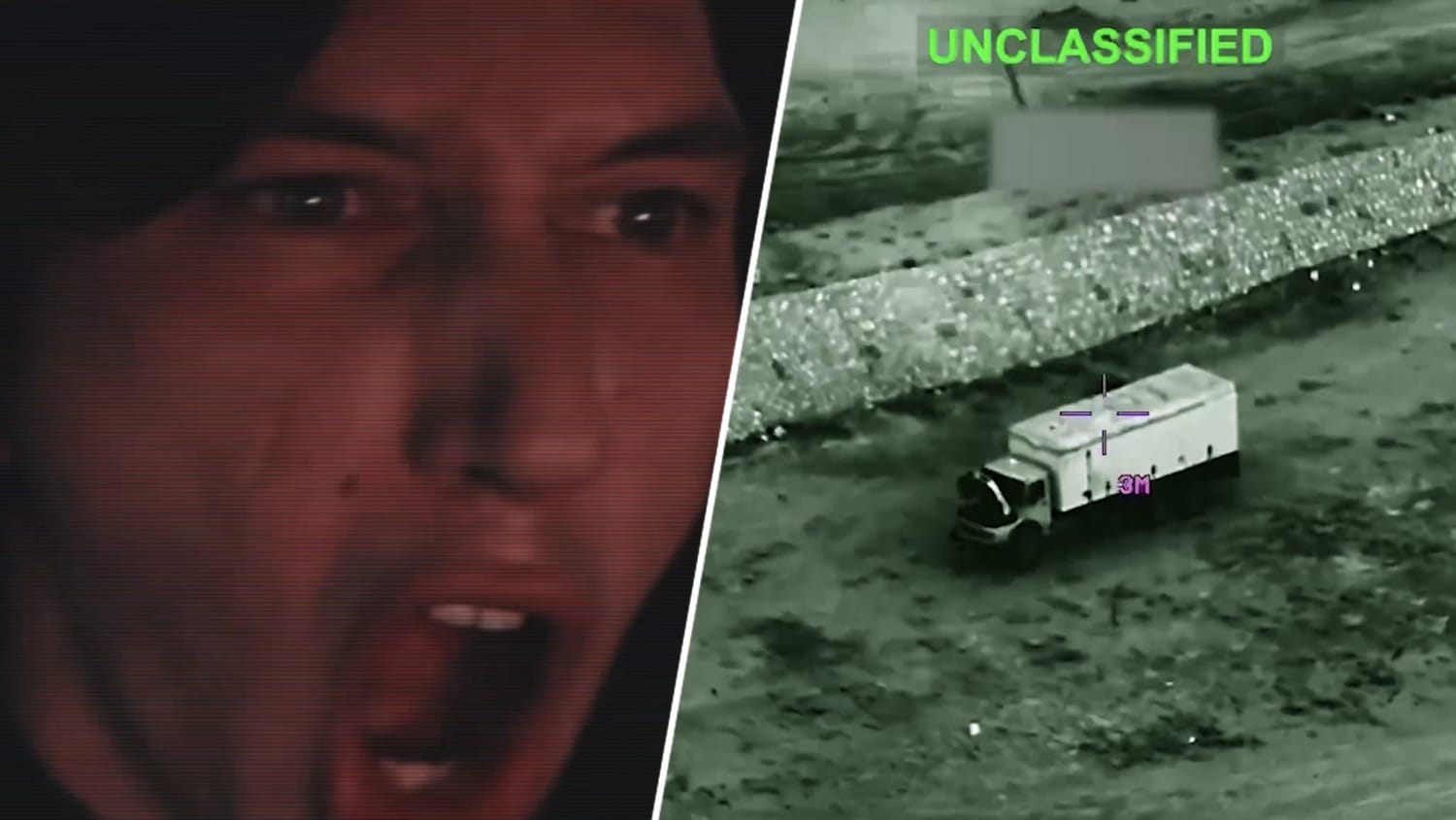
On Thursday, the White House posted a video celebrating recent U.S. and Israeli airstrikes in Iran. The footage — drone surveillance, explosions, infrastructure collapsing in real time — was intercut with clips from Mission: Impossible, Breaking Bad, and Star Wars. Tom Cruise's Ethan Hunt mid-sprint. Bryan Cranston's Walter White delivering a line about consequences. Darth Vader igniting a lightsaber. The edit was slick, testosterone-soaked, and designed to make military action feel like the climax of a summer blockbuster. It was also, as reported by Deadline, an official government communication.
The video wasn't a parody. It wasn't a leak from an overzealous staffer's personal account. It was posted by the White House, under the administration's branding, as part of the messaging apparatus around a potential escalation into war. The fact that it used intellectual property owned by Paramount, Sony, and Disney — without apparent licensing agreements — is its own legal question. But the bigger story is what the video assumes: that Hollywood franchises are now the emotional infrastructure the government uses to make violence legible, desirable, and justified.
This isn't the first time a presidential administration has borrowed the aesthetics of entertainment to sell policy. Ronald Reagan famously invoked Star Wars when pitching his Strategic Defense Initiative. George W. Bush's "Mission Accomplished" aircraft carrier moment was pure stagecraft. Barack Obama's administration understood the power of celebrity endorsement and cultural signaling. But what's happening now is different. The White House isn't referencing these franchises as metaphors. It's using them as the message itself — as if the emotional beats of a Mission: Impossible set piece can stand in for geopolitical strategy, and the moral simplicity of a Star Wars binary can replace the complexity of foreign policy.
The choice of IP is revealing. Mission: Impossible is about impossible odds, last-minute saves, and the triumph of American ingenuity. Breaking Bad is about a man who justifies increasingly violent actions by telling himself he's protecting his family. Star Wars is about the ultimate battle between good and evil, where the villains wear black and the heroes blow up Death Stars without civilian casualty counts. These are not stories about diplomacy, proportionality, or the long-term consequences of military intervention. They are stories about winning — cleanly, decisively, and with a satisfying third-act explosion.
The video works because these franchises have spent decades training audiences to associate certain visual and emotional cues with righteousness. A slow-motion walk toward danger. A defiant one-liner before a decisive action. The hum of a lightsaber as a stand-in for moral clarity. Hollywood has built these narratives so thoroughly into the cultural vocabulary that the White House can now deploy them as shorthand, confident that the audience will fill in the rest. You don't need to explain why the strikes were necessary. You just need to show Tom Cruise running, and the emotional logic does the work for you.
This is where the business strategy lens becomes critical. Hollywood franchises are not neutral cultural artifacts. They are multibillion-dollar properties designed to generate emotional investment and global brand loyalty. Mission: Impossible exists to make audiences feel that Ethan Hunt's missions are worth the collateral damage because the stakes are always existential. Star Wars exists to make the Rebellion's violence feel heroic because the Empire is unambiguously evil. These narratives are not built to accommodate nuance — they are built to sell tickets, toys, and streaming subscriptions by offering moral certainty in a world that rarely provides it.
When the government borrows that infrastructure, it's not just borrowing aesthetics. It's borrowing the emotional architecture that makes audiences root for violence as a solution. The White House video doesn't argue for airstrikes. It doesn't present evidence, legal justification, or strategic objectives. It just places the strikes inside a narrative framework where the good guys always win, the bad guys always deserve it, and questioning the mission is what cowards do. That's not propaganda in the traditional sense — it's franchise logic applied to foreign policy.
The accountability lens here is stark. Who benefits from this framing? The administration gains a communications tool that bypasses the need for detailed justification. Hollywood gains continued cultural dominance as its IP becomes the lingua franca of American power. The defense industry gains public support for actions that might otherwise face scrutiny. Who loses? Anyone trying to have a substantive conversation about whether military escalation serves long-term U.S. interests, what the human cost of these strikes will be, or whether the framing of "good vs. evil" is remotely applicable to the geopolitical realities of U.S.-Iran relations.
The video also raises questions about IP ownership and control. Paramount, Sony, and Disney did not grant the White House permission to use their footage — at least, no licensing deals have been disclosed. If a private citizen made this video and monetized it, they'd face immediate copyright claims. But when the government does it, the legal landscape becomes murkier. Is this fair use? Is it government speech, which operates under different rules? Or is it a tacit acknowledgment that these franchises are now so embedded in the American cultural psyche that they function as public property, available for anyone — including the state — to deploy in service of their messaging?

What makes this moment particularly unsettling is how normalized it feels. The video didn't spark mass outrage or widespread confusion. It circulated on social media with the usual partisan reactions — supporters cheering the aesthetics, critics mocking the propaganda, most people scrolling past without much thought. That's the signal. Hollywood's emotional infrastructure is so deeply embedded in how Americans process power, violence, and morality that a government propaganda video using Mission: Impossible clips to sell airstrikes registers as unremarkable. We've seen this pattern before — when personal brands become indistinguishable from advertising, when the line between content and commerce collapses entirely. Now it's happening with state power.
The cultural pattern here is acceleration. Hollywood has always been in conversation with American power — from World War II propaganda films to Cold War spy thrillers to post-9/11 torture apologias. But the relationship has shifted from influence to infrastructure. The government no longer needs to commission its own narratives or work with studios to shape messaging. It can simply grab the IP that already exists, confident that decades of franchise storytelling have done the ideological work in advance. Tom Cruise doesn't need to endorse the strikes. His character already did, every time Ethan Hunt saved the world with a well-placed explosion.
The video ends with the explosions, the franchise clips, and no aftermath. No discussion of what happens next, no acknowledgment of the human cost, no consideration of whether this escalation serves anyone beyond the people who benefit from perpetual conflict. Just the emotional high of a mission completed, a villain defeated, a narrative resolved. That's the franchise model. It's also, increasingly, the model for how the U.S. government talks about war. And if Hollywood's IP has become the language the state uses to justify violence, then the question isn't whether entertainment and politics are blurring. It's whether they were ever really separate — or whether we just stopped noticing when the merger became complete.