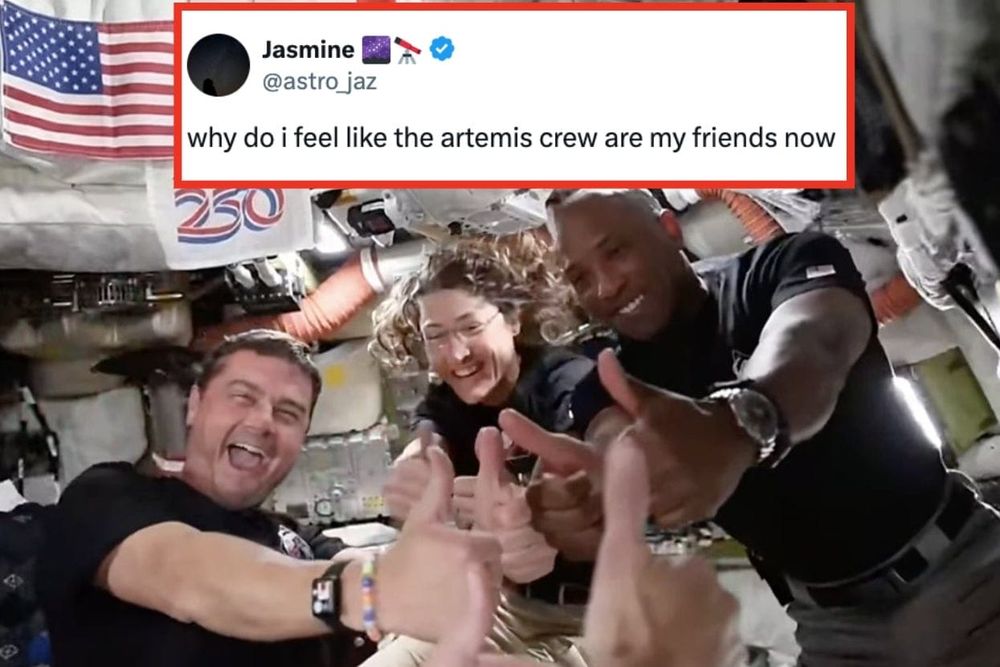
Four astronauts flew past the moon on April 28, 2025, completing NASA's Artemis II mission—the first crewed lunar flyby in over 50 years. Within hours, Twitter was flooded with sincere excitement, wholesome memes, and zero discourse about whether caring about space was politically coded. BuzzFeed compiled 42 of the best tweets, and the striking thing wasn't the humor—it was the absence of cynicism.
The internet doesn't do this anymore. Cultural events arrive pre-sorted into ideological camps. Award shows become referendums on representation. Album drops spark debates about authenticity. Even celebrity opera attendance becomes a character test. But Artemis II landed differently. People just… liked it. They posted photos of the Earth from space, made jokes about the astronauts' playlist choices, and celebrated the engineering feat without needing to contextualize it through a culture war lens.
Space exploration occupies a unique position in the cultural economy: it's one of the last remaining domains where awe still functions as a shared emotional currency. There's no algorithm optimizing for outrage when the subject is four humans circling the moon. There's no parasocial drama when the protagonists are 240,000 miles away. The mission wasn't marketed as resistance or rebellion or disruption—it was just a thing humans did that other humans found inspiring.
Part of what made the Artemis II response so striking is that it reminded the internet what it used to feel like to care about something collectively without performing that care for an audience of enemies. The tweets weren't defensive. They weren't pre-emptively addressing criticism. They were just people being genuinely excited about a cool thing that happened, which is the emotional register internet culture has systematically optimized out of existence everywhere else.
The mission's crew composition—Christina Koch, Victor Glover, Reid Wiseman, and Jeremy Hansen—represented a demographic milestone (first woman, first Black astronaut, first Canadian on a lunar mission), but the discourse didn't collapse into either performative celebration or reactionary backlash. The representation was present, acknowledged, and then the conversation moved on to the actual mission. That's not because the internet suddenly developed nuance—it's because space exploration hasn't yet been fully absorbed into the content economy's demand for perpetual conflict.
Compare this to how literally any other major cultural event gets processed. A blockbuster film's casting choices become a referendum on Hollywood's politics. A musician's tour stop in a controversial city sparks boycott discourse. A fashion show's cultural appropriation gets litigated in real-time. But four astronauts flying past the moon? The internet just let it be a good thing. The memes were affectionate, not ironic. The excitement was earnest, not coded.
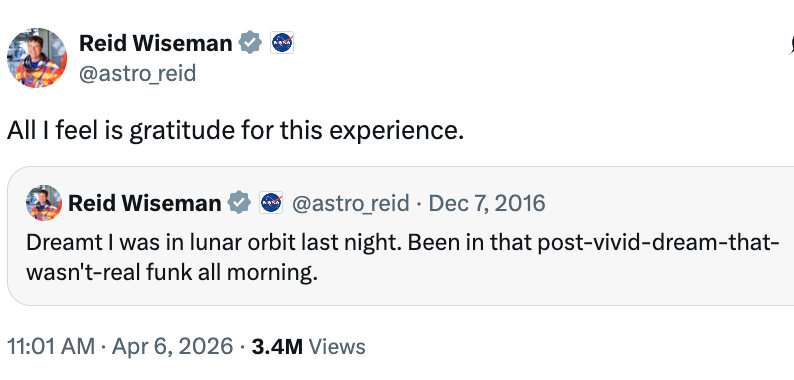
This won't last. Space exploration is already being absorbed into the same incentive structures that turn everything else into content. Private space companies are building founder cults. Space tourism is becoming a class signifier. Mars colonization discourse is already politically polarized. But for one 10-day mission in April 2025, the internet remembered what it felt like to care about something without needing to weaponize that care.
The Artemis II response wasn't a return to some imagined pre-polarization internet—that version never existed. It was a reminder that the current state of online discourse is a design choice, not an inevitability. The platforms built the infrastructure that rewards conflict and punishes sincerity. The algorithm learned that division drives engagement better than awe. But when something genuinely awe-inspiring happens outside the content economy's usual battlegrounds, the internet can still remember how to just… enjoy it.
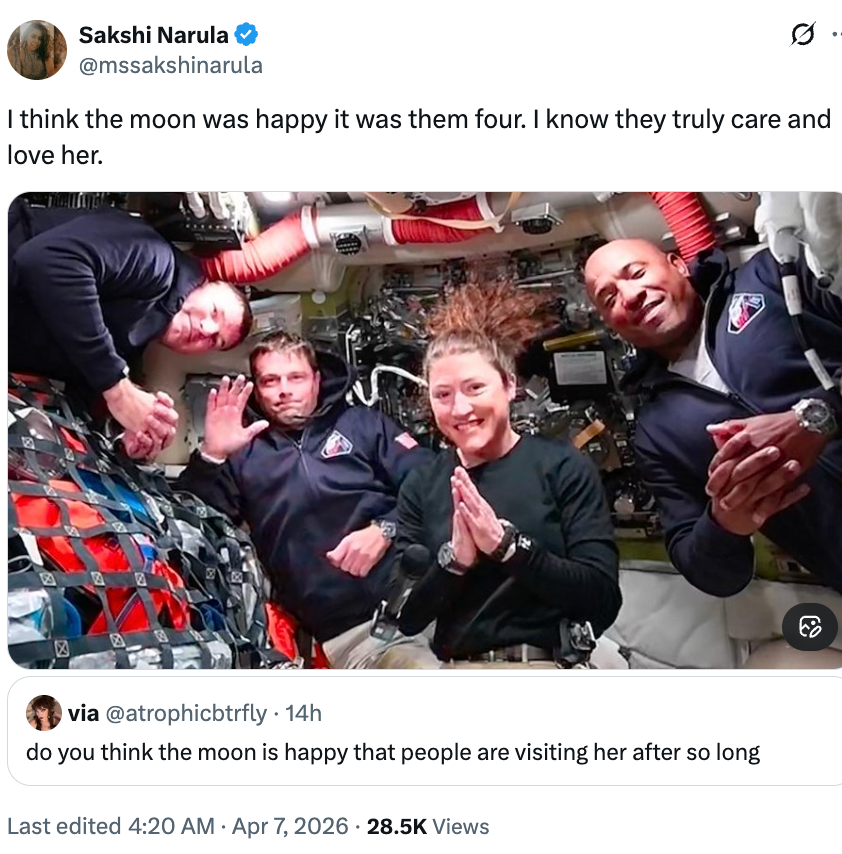
The next Artemis mission will land humans on the moon. By then, the discourse will have caught up. Someone will find a way to make lunar exploration a culture war issue. The memes will get meaner. The sincerity will get harder to access. But for 10 days in April, the internet had a moment where caring about something big and beautiful didn't require choosing sides first. That's not nostalgia—it's a signal of what the internet could be if it wanted to build for awe instead of outrage.