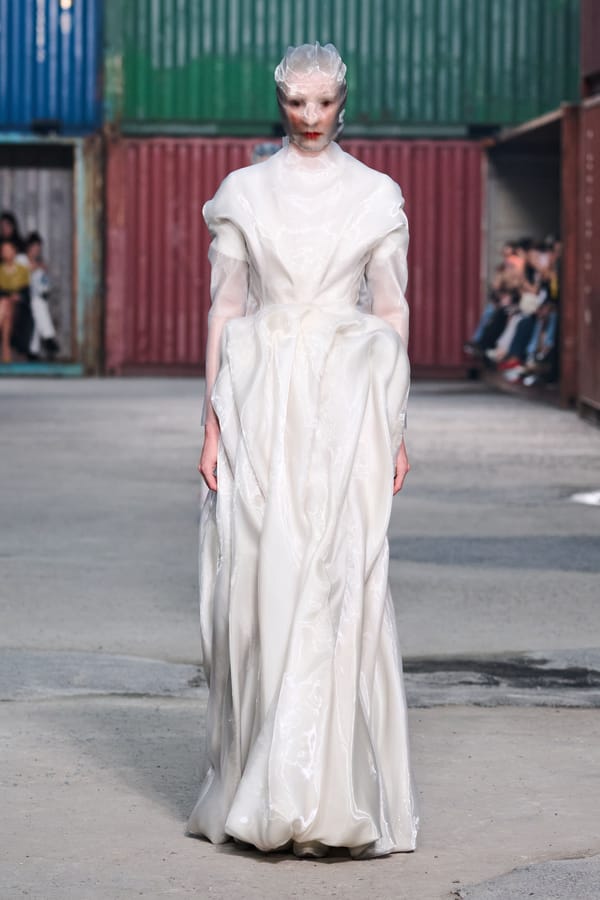
A.W.A.K.E. Mode's Fall 2026 collection opened with a coat so architecturally precise it looked like it had been engineered rather than sewn. The shoulders were sharp enough to cast shadows. The sleeves were set at angles that suggested drafting software, not pattern-making intuition. The fabric — a heavy wool melton — held its shape with the rigidity of scaffolding. It was the kind of garment that makes you forget the designer doesn't have a century of atelier history behind them.
That's the point. Natalie Kingham, the former Matchesfashion buying director who launched A.W.A.K.E. Mode in 2016, has built her label on a specific bet: that in 2026, when heritage brands are mining their archives for relevance and luxury conglomerates are extracting profit from legacy names, emerging designers can compete on craft alone. No founding myth. No atelier folklore. Just the work.
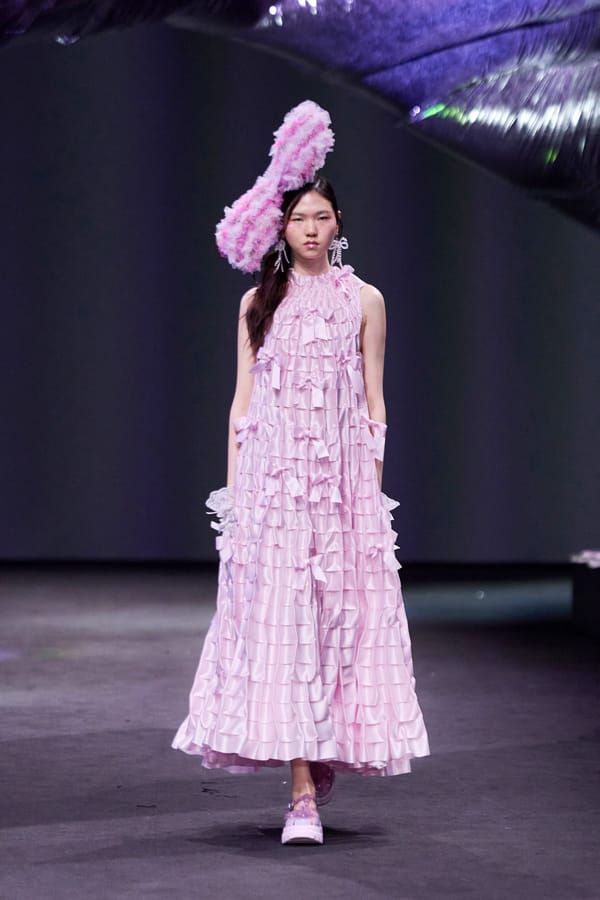
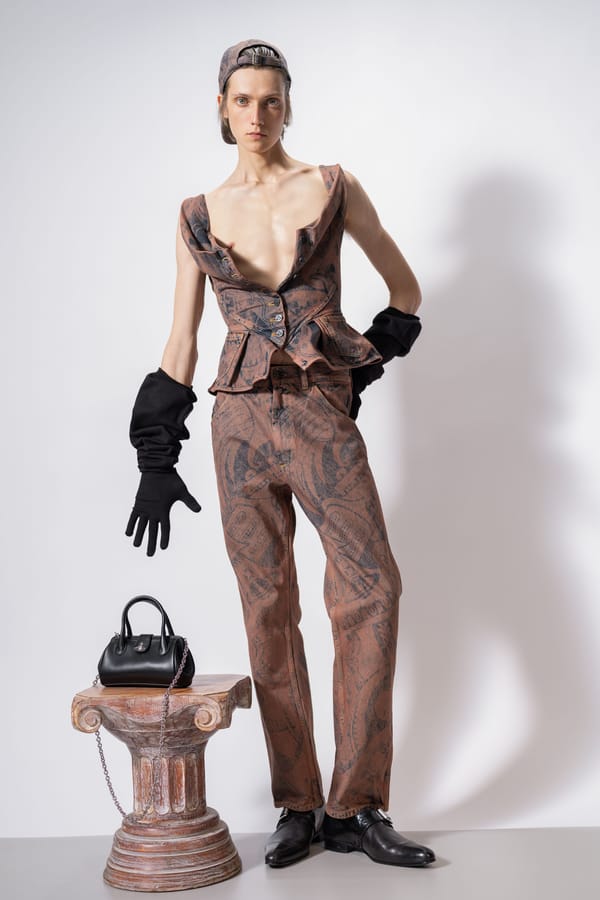
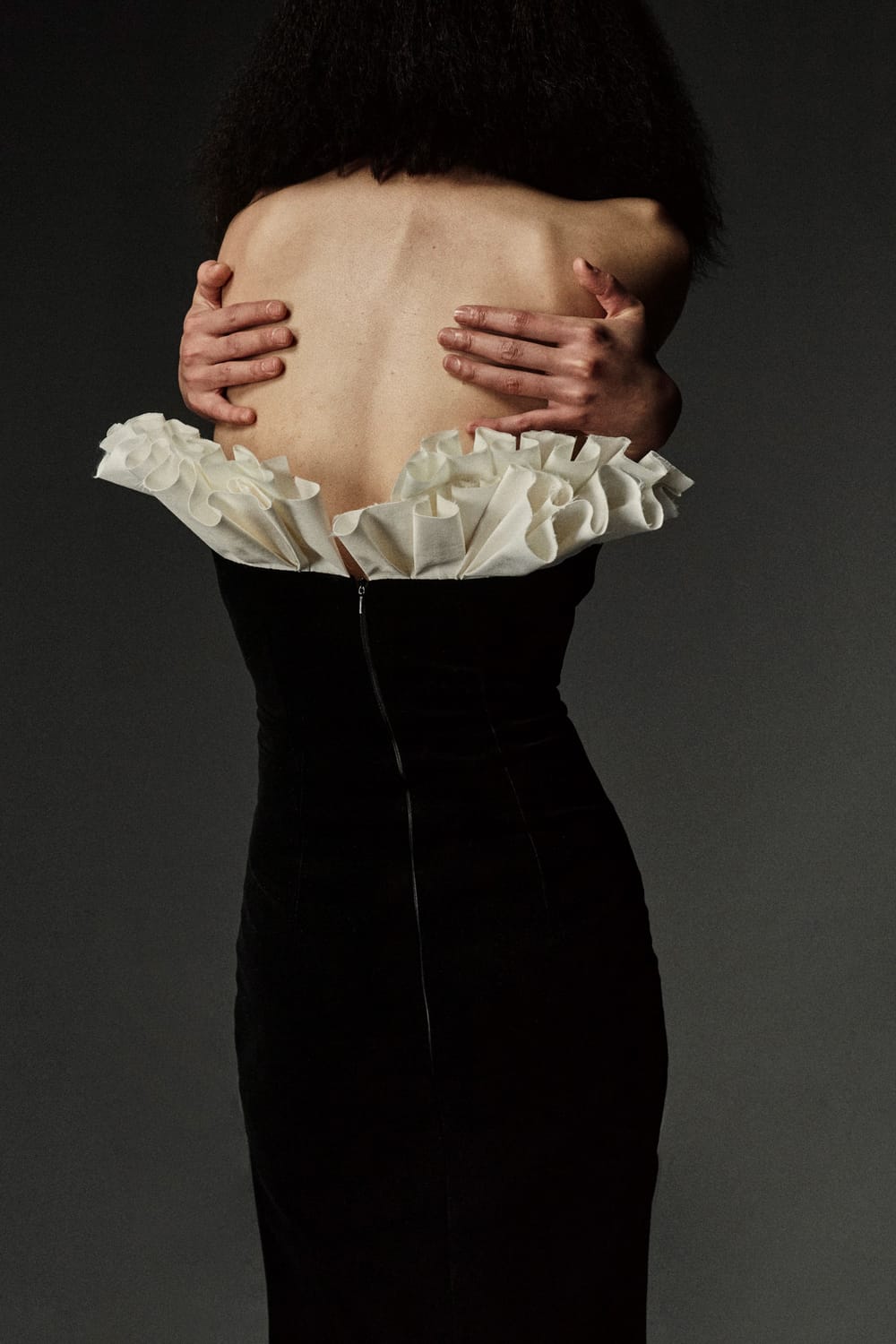
The collection doubled down on that thesis with a series of sculptural silhouettes that felt more like architectural studies than seasonal fashion. Coats were constructed with exaggerated volumes that collapsed and expanded depending on the angle. Dresses were cut with asymmetric hems that looked accidental until you noticed the seam work — every line was deliberate, every proportion calculated. Tailoring was sharp but never severe, with softness introduced through draping rather than embellishment. The palette was neutral — charcoal, camel, ivory, black — because color would have distracted from the construction.
What A.W.A.K.E. Mode is doing here is strategic. The brand isn't trying to out-heritage the heritage brands. It's not competing with Chloé's archival nostalgia or Dior's couture pedigree. It's competing on a different axis entirely: technical precision. The message is clear — if you can't claim a founder's archive, you claim the craft itself. You make garments so well-constructed that the absence of a backstory becomes irrelevant.
This approach is increasingly common among emerging designers who came of age during the 2010s luxury boom and learned that consumers were willing to pay for newness if it felt substantive. Cecilie Bahnsen built her brand on voluminous, technically complex silhouettes that required couture-level construction. Rick Owens has spent decades proving that architectural minimalism can hold its own against maximalist spectacle. Uma Wang used textile innovation and draping to carve out space in a market dominated by European houses. What these designers share is a refusal to apologize for not having a founding story — they're building credibility in real time through the work itself.
A.W.A.K.E. Mode's Fall 2026 collection also signals something else: that the market for architectural fashion is expanding beyond the niche. For years, sculptural silhouettes and technical construction were the domain of a specific customer — the kind of person who understood the difference between a bias cut and a princess seam, who valued craft over logo recognition. But as heritage brands lean harder into archival repetition and logo-heavy maximalism, there's a growing audience for fashion that feels intellectually rigorous without being inaccessible. Acne Studios proved that intellectual fashion can look effortless. A.W.A.K.E. Mode is proving it can also be commercial.
The risk, of course, is that architectural fashion can feel cold. When every garment is a structural exercise, the collection can start to feel like a thesis defense rather than a wearable proposition. A.W.A.K.E. Mode avoided that trap by introducing softness through fabrication — cashmere knits that draped against the body, silk slips layered under tailored coats, shearling linings that added warmth without bulk. The effect was fashion that felt considered rather than austere, intellectual without being alienating.
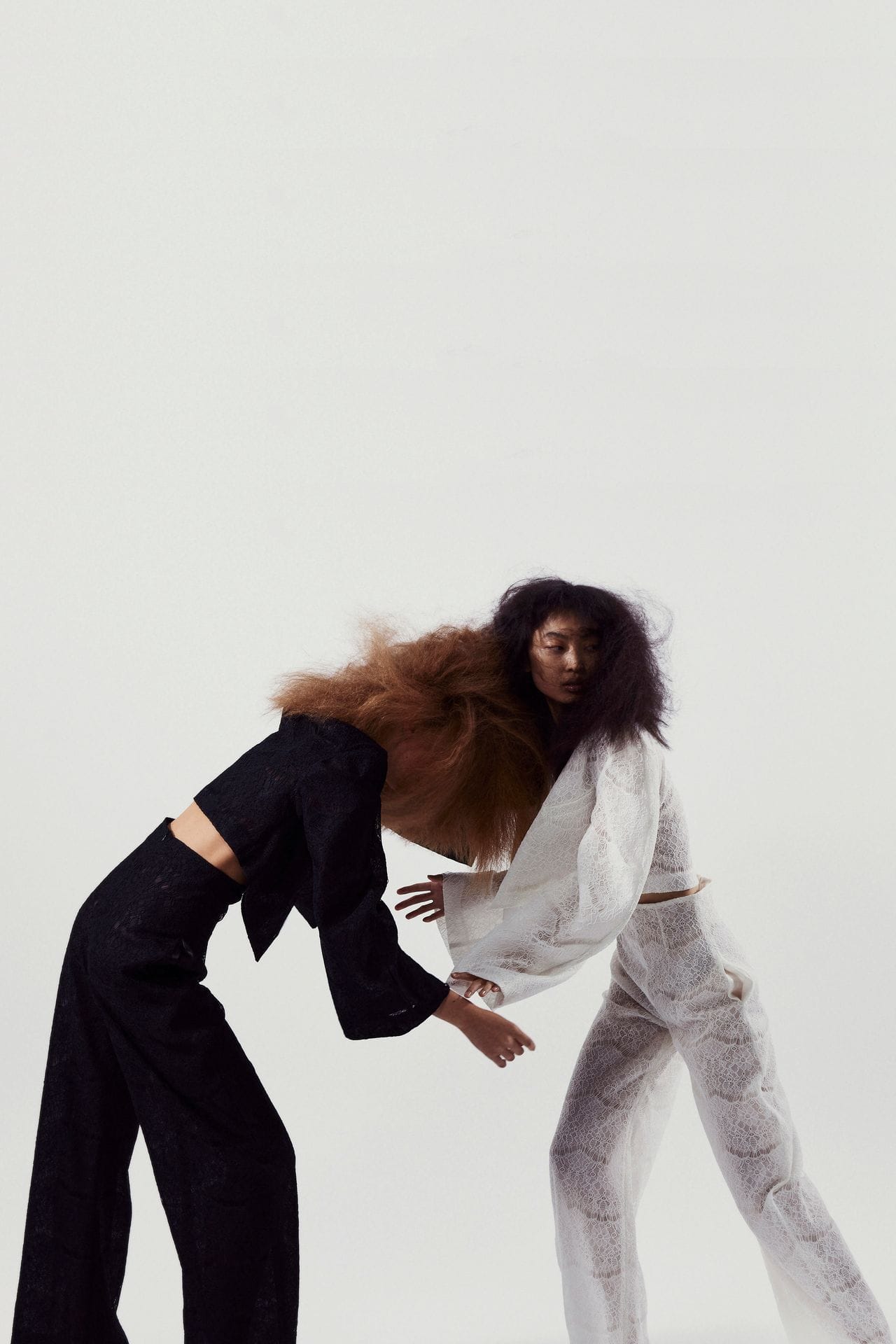
What A.W.A.K.E. Mode's Fall 2026 collection makes clear is that the next generation of luxury brands won't be built on heritage — they'll be built on craft that's visible, verifiable, and impossible to fake. The customer who buys A.W.A.K.E. Mode isn't buying a story. They're buying a coat that holds its shape, a dress that moves the way it's supposed to, a silhouette that looks like someone spent weeks getting the proportions right. That's a different kind of luxury — one that doesn't require a century of history to feel legitimate.