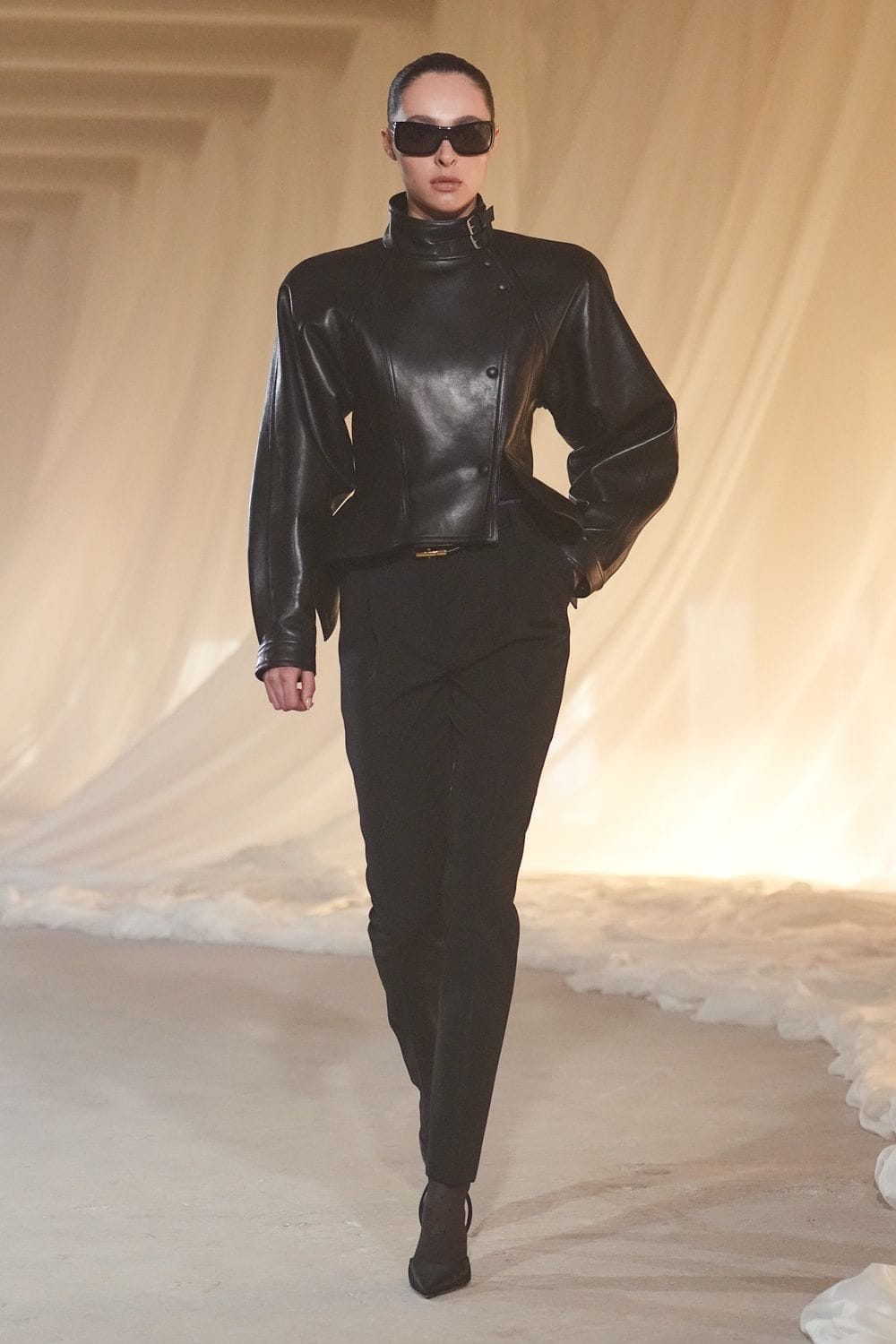
The model who closed the first act of Balmain's Fall 2026 show wore a double-breasted military jacket with shoulders so sharp they could slice through the front-row chatter, paired with a body-con skirt slit to the thigh and embellished with enough gold hardware to anchor a yacht. The look landed exactly as intended: applause, camera flashes, the low hum of approval from buyers mentally calculating order quantities. It also triggered something else—the faint recognition that this wasn't just familiar, it was the same. Sharp shoulders, military detailing, maximum embellishment. Olivier Rousteing has been working this formula for fifteen years, and Fall 2026 made it clear he has no intention of stopping.
Vogue's runway coverage catalogued the collection's signature codes with the dutiful precision of a checklist: structured blazers with exaggerated proportions, chainmail-inspired embroidery, silhouettes built for unapologetic glamour that photographs well and sells even better. The collection was polished, precise, and entirely predictable. Rousteing wasn't hiding that fact. He was advertising it.
What makes Balmain's Fall 2026 presentation worth examining isn't the clothes themselves—it's the strategic calculation behind them. While Dries Van Noten is demonstrating what thoughtful evolution looks like in the wake of a founder's departure, and Saint Laurent is grappling with what happens when signature aesthetics start to feel like creative limitations, Rousteing is making a different bet entirely: that in an industry obsessed with disruption, consistency is the actual luxury product. That his customer doesn't want evolution—she wants the thing she came for, executed flawlessly, season after season.
The commercial logic is airtight. Rousteing took over Balmain at 25 in 2011 and turned it into a global brand by understanding the intersection of fashion and fame in the Instagram era before most of his peers had figured out how to use a filter. He built a business model around delivering exactly what his audience expects, and there's real value in not fixing what isn't broken. Balmain's recognizability drives sales in a market where brand consistency equals financial stability. The house has a formula, and the formula works.
But formulas have expiration dates, especially in fashion, where the calendar demands constant newness—or at least the appearance of it. The platforms have shifted. The celebrity economy has fragmented. The kind of maximalist glamour that defined the 2010s doesn't carry the same cultural weight it once did. Where Rousteing once felt like he was responding to the moment, Fall 2026 felt like a continuation of a conversation he started over a decade ago—one that he's still having with himself, while the rest of the room has moved on to other topics.
The front row tells part of the story. Paris Fashion Week's celebrity attendance has become a precise map of brand value, and Balmain still draws names. But the nature of that celebrity has shifted. Where Rousteing once commanded the Kardashian-Jenner industrial complex at its peak cultural influence, the Fall 2026 front row reflected a more diffuse kind of fame—reality stars, influencers with seven-figure followings but questionable cultural impact, celebrities whose names move product but not conversation. The machinery still functions. The question is whether it's running on momentum or fuel.
The difference between Balmain and other heritage houses wrestling with their identities is that Rousteing isn't wrestling with anything. He's not trying to prove he can innovate. He's not responding to critics who say he's repeating himself, because repetition is the strategy. Viktor & Rolf are pushing conceptual boundaries to their breaking point. Dior is signaling where luxury is heading and what it's leaving behind. Rousteing is refining a signature he perfected a decade ago and betting that his core customer base doesn't want him to stop.
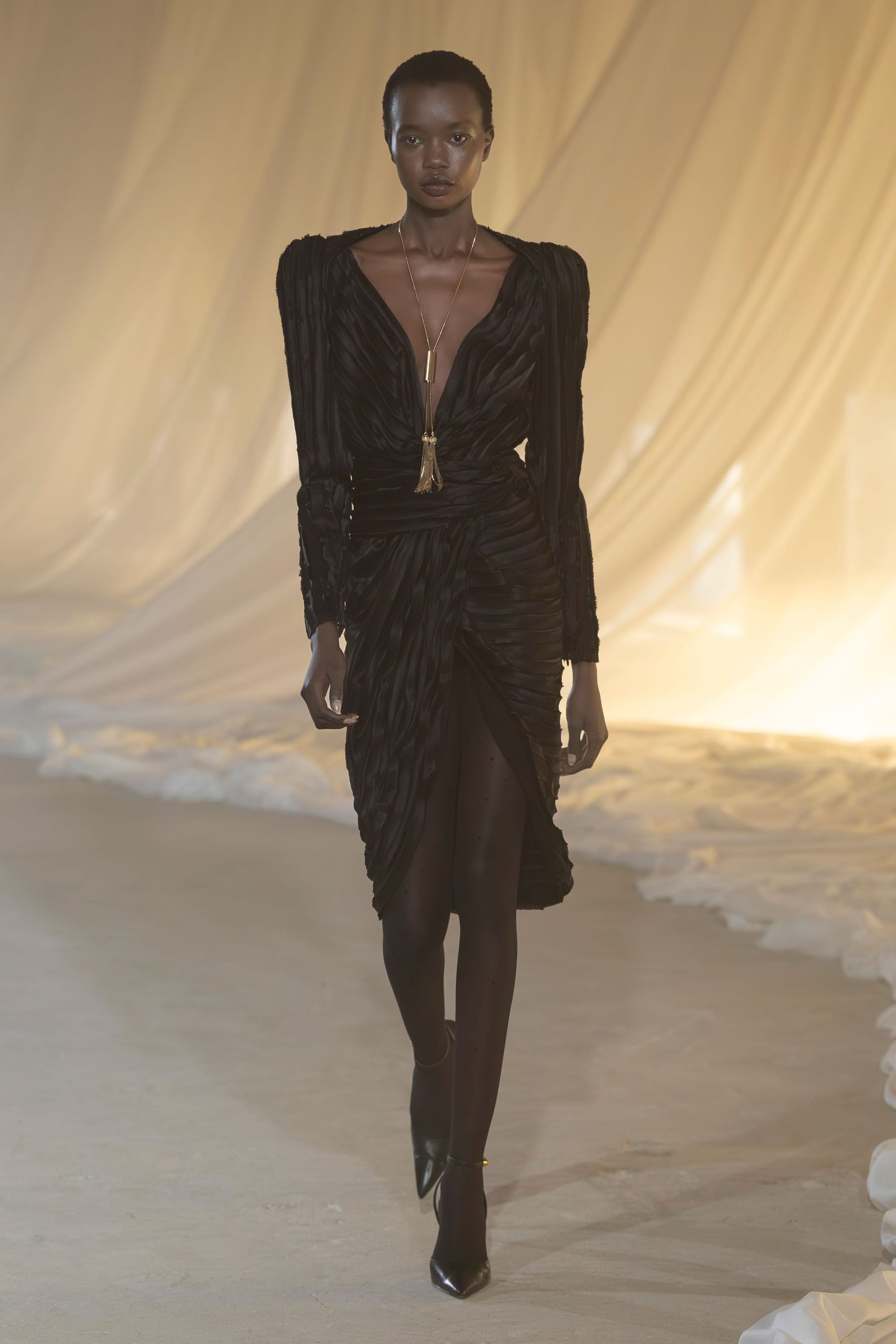
The question isn't whether that bet is smart right now—it clearly is. The question is how long the market rewards refinement over reinvention before refinement starts to look like stagnation. Fashion's critical establishment has already made up its mind. The reviews were polite, professional, and notably lacking in enthusiasm. But Rousteing isn't designing for critics. He's designing for the woman who wants to walk into a room and be immediately recognizable as someone who wears Balmain, and for her, consistency isn't a creative failure—it's brand reliability.
There's a parallel here to Tom Ford's first runway without Tom Ford, which demonstrated the pressure of maintaining a signature aesthetic without the founder's hand. But Rousteing's situation is inverted—he is the founder of this version of Balmain, the architect of its current identity, and he's choosing to stay exactly where he started. That's either confidence or calcification, depending on whether you're looking at the balance sheet or the runway.
What's notable about Rousteing's approach is that he's making this calculation at the exact moment when younger designers are finding ways to honor legacy codes without simply repeating them. The industry conversation has shifted toward evolution, toward proving you can respect a house's DNA while still pushing it somewhere new. Rousteing is arguing the opposite: that perfecting a signature is more valuable than reinventing it. That his customer doesn't come to Balmain to be surprised. She comes to get what she already knows she wants, just slightly sharper than last season.
The risk isn't that Rousteing will suddenly lose his customer base. The risk is that the customer base stops growing, that the next generation of luxury consumers looks at Balmain and sees their mother's aesthetic rather than their own. Fashion moves in cycles, and maximalism will return—it always does. But when it comes back, will it come back to Rousteing, or will it find a new interpreter who makes it feel urgent again?
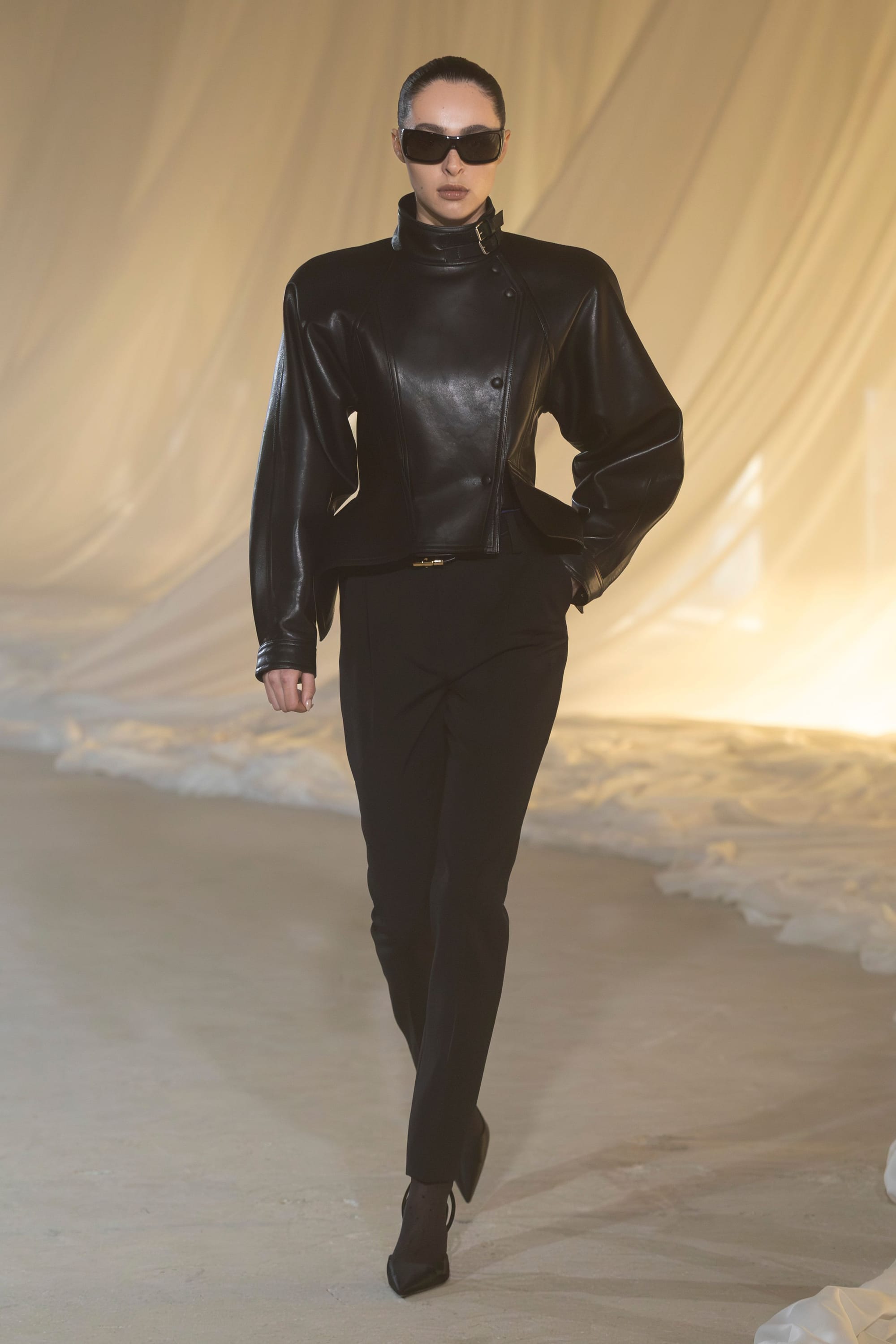
Whether that strategy holds depends entirely on whether the customer gets bored first or the critics get proven wrong. For now, Rousteing seems content to let his maximalism speak for itself, to keep delivering the Balmain his audience knows and expects, to treat consistency as the product rather than the problem. In an industry that increasingly values disruption over reliability, that's either a disciplined refusal to chase trends or a signal that Balmain has stopped asking itself what comes next. The difference matters—but only if the sales numbers start to care.