Four times a year — twice for women's ready-to-wear, with menswear and couture filling the gaps — the fashion industry migrates between New York, London, Milan, and Paris in a five-week circuit that determines what the world will wear next season. The schedule hasn't changed since the 1940s. The audience has.
Fashion Week used to be a trade event. Designers showed collections to buyers and editors, who placed orders and wrote reviews. The public saw the clothes months later, in stores. Now, thanks to livestreams, social media, and front-row influencers, millions of people watch runway shows in real time — even though the clothes they're watching won't be available to purchase for another six months.
Here's how the whole thing actually works.
The Calendar
The "Big Four" Fashion Weeks — New York, London, Milan, and Paris — run consecutively, always in the same order. The major seasons are February/March (showing Fall/Winter collections) and September/October (showing Spring/Summer). The naming convention is deliberately confusing: the shows you see in February are for clothes that will arrive in stores the following September.
For 2026, the Fall/Winter schedule ran: New York (February 11-16), London (February 19-23), Milan (March 2-10), and Paris following immediately after. January hosts menswear shows in Milan and Paris, plus Paris Haute Couture. Additional weeks in Copenhagen, Seoul, Berlin, Tokyo, and Shanghai fill the gaps.
The calendar is governed by national fashion councils — the CFDA in New York, the British Fashion Council in London, Camera Nazionale della Moda Italiana in Milan, and the Fédération de la Haute Couture et de la Mode in Paris. These organizations set the official schedule, accredit press, and coordinate logistics.
Why the Seasons Are Backwards
Designers show collections six months before they hit stores because the fashion industry runs on lead time. After a runway show, buyers from department stores and boutiques place orders. Factories produce the garments. Shipping, distribution, and merchandising take months. A dress that walks the runway in Paris in March arrives at Bergdorf Goodman in September. The system was designed for a world where fashion moved at the speed of ocean freight, and it hasn't fully adapted to a world where a runway photo reaches Instagram in seconds.
Who's Actually There
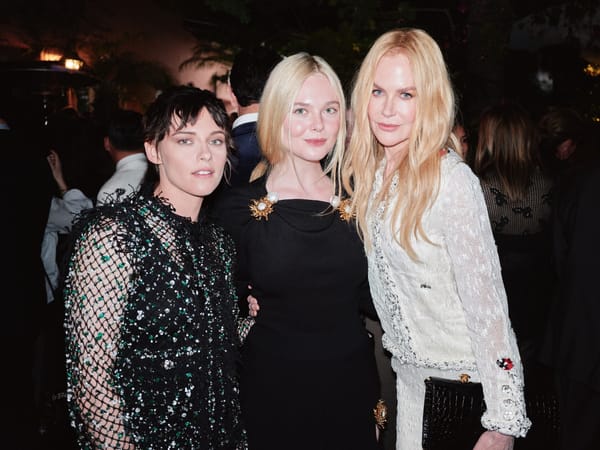
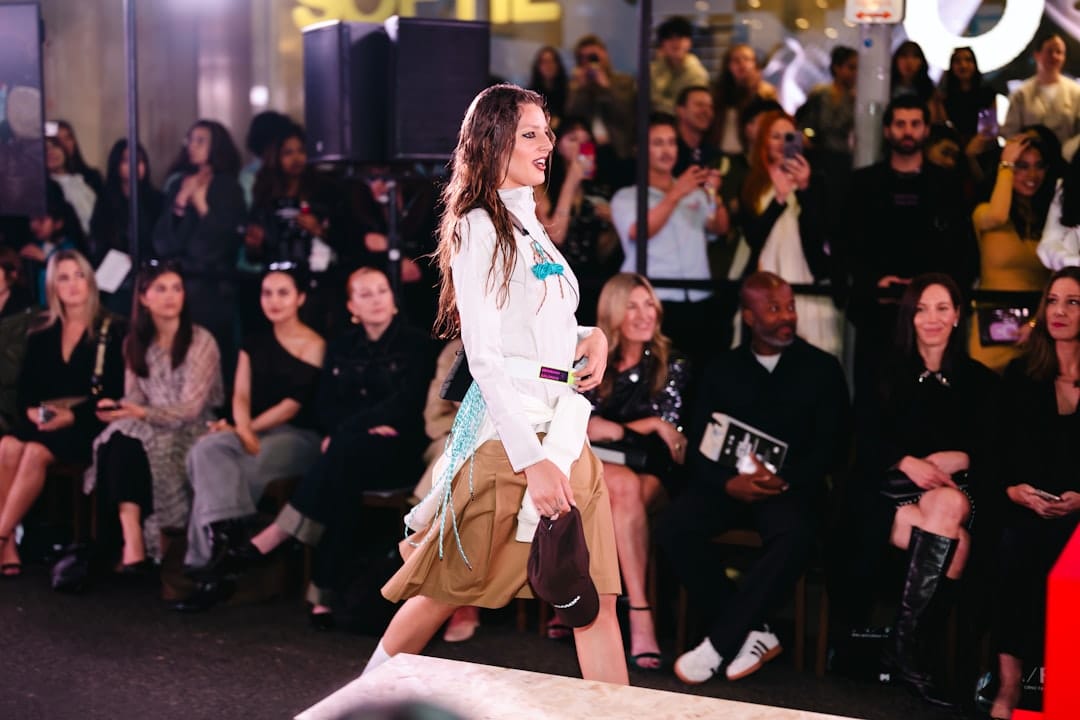
The front row is the fashion industry's seating chart, and it tells you everything about where power resides. The first row is reserved for magazine editors, top buyers, major celebrities, and — increasingly — content creators with large followings. The second and third rows hold junior editors, regional press, and emerging influencers. Standing room is for everyone else.
Seating is managed by the brand's PR team and is one of the most political processes in fashion. Where you sit signals your importance to the brand. An editor who gets moved from the front row to the second row reads it as a demotion. A creator who lands a front-row seat reads it as validation. The choreography is exquisitely petty and entirely deliberate.
What a Show Actually Costs
A major fashion show can cost between $500,000 and $5 million. That includes venue rental, set design and construction, lighting, sound, hair and makeup for 40 to 60 models, model fees, travel, catering, security, and production staff. Some brands — Chanel, Louis Vuitton, Dior — build elaborate sets that function as installation art. The Chanel supermarket, the Louis Vuitton carousel, the Dior garden — these sets generate media coverage worth multiples of their construction cost.
The Shows Beyond the Big Four
Copenhagen Fashion Week has positioned itself as the industry's sustainability leader, requiring participating brands to meet environmental standards. Seoul Fashion Week has become a launchpad for Korean designers who blend streetwear with traditional textile techniques. Shanghai and Tokyo bring distinct aesthetic traditions that influence the Big Four in ways that rarely get credited.
What Changed in 2026
The CFDA announced that beginning September 2026, animal fur will no longer be permitted in collections on the official New York Fashion Week schedule. Two major creative debuts dominated the February 2026 season: Matthieu Blazy's first couture collection for Chanel and Jonathan Anderson's couture debut at Dior — both designers bringing radically different visions to the oldest houses in fashion.
Fashion Week remains the industry's central ritual — the place where clothes are introduced, careers are made, and the conversation about what we wear and why gets reset twice a year. The format is imperfect, expensive, and occasionally absurd. Nothing has replaced it. For more on the fashion industry's mechanics, see our guides to quiet luxury and the most iconic Met Gala looks of all time, plus Tinsel's coverage of Polo Ralph Lauren's Fall 2026 collection, what method acting actually is.