Google searches for "quiet luxury" increased 614 percent in 2022. "Stealth wealth" spiked 990 percent. "Old money style" hit 874 percent. The trigger was HBO's Succession — a show about billionaires in $3,000 cashmere sweaters who looked like they got dressed in the dark. Millions of viewers watched the Roy family spend extravagantly on clothes with no visible logos, then googled every brand they couldn't identify.
The concept isn't new. Understated dressing has been the default of old money for generations. What changed is that it became a mass-market aspiration, driven by a television show, a handful of brands, and an algorithm that turned cashmere into content. The democratization of this aesthetic through social media created a peculiar paradox: an exclusivity-signaling style became the most searched-for fashion trend of the decade, accessible to anyone with a smartphone and a willingness to scroll.
How Succession Dressed a Movement
HBO's Succession didn't invent quiet luxury, but it gave the aesthetic a cast of characters. The Roy family dressed exclusively in Brunello Cucinelli, Loro Piana, and The Row — brands that most viewers had never heard of, which was precisely the point. Costume designer Michelle Matland built wardrobes where a single cashmere sweater cost more than most people's monthly rent, and the characters wearing them looked like they'd pulled on whatever was closest to the bed. The show's wardrobe became a cultural reference point almost overnight.
What made Succession's approach revolutionary wasn't just the clothes themselves, but how they functioned as character development. Shiv Roy's cream-colored cashmere turtlenecks and tailored trousers communicated power without the traditional corporate uniform. Kendall's perfectly rumpled Oxford shirts suggested inherited wealth attempting to perform casualness. Tom Wambsgans' slightly-too-eager adoption of the aesthetic revealed his outsider status. The costumes told stories that dialogue couldn't, and viewers noticed.
The Brands That Define the Movement
Brunello Cucinelli is the movement's spiritual center. The Italian house, headquartered in the medieval village of Solomeo, builds its entire identity on craftsmanship, fair labor, and the philosophy of "humanistic capitalism." While the broader luxury market experienced its first contraction in 15 years, Cucinelli's sales rose nearly 11 percent in the first half of 2025, with projected annual growth of 10 percent through 2026. Mark Zuckerberg wears custom Cucinelli T-shirts that cost $300 to $400 each and look identical to generic basics.
Cucinelli's success lies in its ability to sell a complete worldview alongside its garments. The brand doesn't just manufacture clothing; it positions itself as a guardian of artisanal traditions and ethical business practices. Its advertising features the restored Renaissance architecture of Solomeo, its craftspeople at work, and philosophical musings on beauty and dignity. For consumers seeking meaning in their purchases, Cucinelli offers moral justification for four-figure price tags. The clothes themselves — impeccably constructed cashmere, suede, and linen in muted earth tones — become physical manifestations of values rather than mere garments.
The Row, founded by Mary-Kate and Ashley Olsen in 2006, represents American minimalism stripped to its essential form. The brand operates on exclusivity through craftsmanship rather than marketing — no celebrity ambassadors, no influencer campaigns, barely any social media presence. Tinsel has covered how The Row turned even its fashion show catering into a brand statement.
The Row's design philosophy centers on obsessive attention to fabric, cut, and proportion. A white cotton shirt might require twenty iterations before production. Trousers are engineered with the precision of architecture. The brand's handbags, particularly the Margaux and Half Moon styles, have become quiet luxury icons — recognizable to those in the know, invisible to everyone else. This insider recognition is crucial to the brand's appeal. The Row doesn't want mass awareness; it cultivates a community of customers who appreciate references that others miss. Its runway shows are intimate affairs, its retail locations sparse and gallery-like. Everything about The Row communicates that it exists for a specific customer who doesn't need to be convinced.
Loro Piana, acquired by LVMH in 2013 for $2.57 billion, makes what are arguably the finest cashmere and vicuña garments in the world. The brand's appeal is almost paradoxical: it charges extraordinary prices for clothes that are designed to be invisible. A Loro Piana baseball cap costs $575. A cashmere hoodie runs $2,500. A vicuña coat can exceed $30,000. Yet none of these items scream luxury in the traditional sense — no monograms, no distinctive hardware, no recognizable patterns.
Loro Piana's mastery lies in material sourcing and textile innovation. The brand controls its supply chain from fiber to finished garment, managing cashmere production in Mongolia and vicuña conservation in Peru. Its "Storm System" fabric technology makes wool water-resistant without chemical treatments. The "Wish Wool" line uses fibers so fine they're measured in microns. For quiet luxury consumers, this technical excellence justifies premium pricing. The brand has become shorthand for a specific lifestyle: country houses, sailing, and the kind of wealth that doesn't require signaling. Loro Piana's signature "Summer Walk" suede loafers have achieved cult status as the footwear equivalent of a secret handshake among the affluent.
Other key players include Bottega Veneta (whose woven leather bags became the quiet luxury accessory), Khaite, Totême, Max Mara, and Celine under Phoebe Philo's tenure.
How the Aesthetic Actually Works
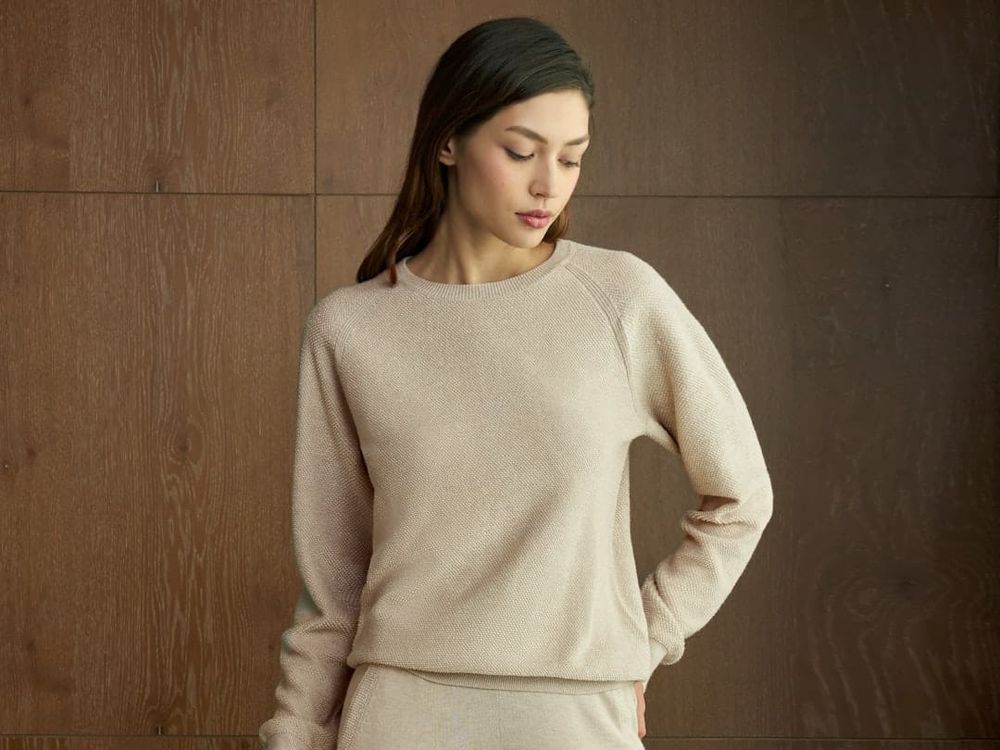
Quiet luxury operates on a set of unwritten rules. Neutral palettes: navy, grey, camel, cream, olive. Natural materials: cashmere, merino wool, fine cotton, linen. Perfect tailoring, because fit signals money even when the brand is unknown. No visible logos, or logos so discreet they function as inside jokes. The paradox is that looking like you don't care about clothes requires caring enormously about clothes — and spending accordingly.
The look also demands maintenance. Cashmere pills. Linen wrinkles. White T-shirts stain. The quiet luxury wardrobe requires the kind of care that presupposes either significant disposable income or significant disposable time, which amounts to the same thing. Dry cleaning bills accumulate. Garments require proper storage. Shoes need resoling. The aesthetic's apparent effortlessness conceals considerable effort and expense, which is part of its exclusionary function.
TikTok and the Old Money Aesthetic
While Succession introduced quiet luxury to prestige audiences, TikTok democratized it — or at least democratized the discussion of it. The #oldmoneyaesthetic hashtag has accumulated billions of views, with creators dissecting everything from the "correct" way to tie a sweater around shoulders to which neutral tones signal generational wealth versus trying too hard. The platform transformed quiet luxury from a niche style into a participatory phenomenon where teenagers in Ohio could study the semiotics of inherited privilege.
This TikTok interpretation often focused on accessible approximations: Uniqlo cashmere instead of Loro Piana, Everlane instead of The Row, Massimo Dutti instead of Brunello Cucinelli. The algorithm favored content that promised to decode exclusivity, offering "dupes" and styling guides that claimed to deliver the aesthetic without the price tag. This created a peculiar secondary market where the signifiers of wealth were separated from actual wealth, allowing mass participation in what was fundamentally an exclusionary style.
The irony wasn't lost on observers: a fashion movement predicated on discretion and insider knowledge became one of the most loudly discussed trends on the internet's most democratic platform. Some luxury brands leaned into this visibility, while others recoiled from it. The tension between exclusivity and exposure became central to quiet luxury's evolution, raising questions about whether an aesthetic can remain meaningfully "quiet" once millions are discussing it.
The Sofia Richie Grainge Effect
If Succession introduced quiet luxury to prestige television audiences, Sofia Richie Grainge brought it to Instagram. Her 2023 wedding in the South of France — documented in exquisite detail across social platforms — became a visual manifesto for the aesthetic: custom Chanel couture, Aman hotels, and a guest list that looked curated by a museum. The wedding generated more search interest in quiet luxury than any single fashion show.
Richie Grainge's influence extended beyond a single event. Her daily style — The Row handbags, Khaite cashmere, Loro Piana loafers — became a reference point for aspirational dressing. Unlike traditional influencers who cycle through trends rapidly, she presented a consistent, refined aesthetic that aligned perfectly with quiet luxury's emphasis on timelessness. Her approach suggested that these weren't clothes to be worn once for content, but investments to be repeated and cherished.
The Resale Market Connection
As quiet luxury gained mainstream attention, the secondary market for these brands exploded. Platforms specializing in authenticated luxury resale saw dramatic increases in searches for The Row, Loro Piana, and Brunello Cucinelli. For consumers priced out of retail, resale platforms offered access to the aesthetic at reduced prices — a cashmere Loro Piana sweater for $800 instead of $1,500, a previous-season Row coat for $2,000 instead of $4,000.
This resale boom had an unexpected effect: it reinforced quiet luxury's value proposition. Unlike logo-heavy pieces that depreciate rapidly once a trend passes, well-made neutral garments retained resale value precisely because they were timeless. A five-year-old Brunello Cucinelli blazer in excellent condition could sell for 60-70 percent of its original retail price. The secondary market became both an entry point for new consumers and a validation of the investment narrative that luxury brands promoted.
The Backlash Cycle
By late 2024, the backlash had begun. Fashion critics argued that quiet luxury had become as uniform and prescriptive as any other trend, replacing logomania's conformity with a different kind of sameness. The aesthetic's association with tech billionaires and their studied casualness made it a target for criticism about wealth inequality and performative humility. Why should looking "normal" cost thousands of dollars? Wasn't "stealth wealth" just another form of conspicuous consumption, dressed up in moral superiority?
Younger consumers, particularly Gen Z, began pushing back against quiet luxury's rigid codes. They gravitated toward maximalism, vintage mixing, and visible branding — not the logo mania of the 2000s, but a more playful, ironic relationship with luxury signifiers. Designers responded with collections that embraced color, pattern, and personality. The pendulum began its inevitable swing.
Yet the backlash itself became predictable, almost scripted. Fashion operates in cycles, and quiet luxury's peak visibility guaranteed its eventual rejection by trend-conscious consumers. What remained unclear was whether the aesthetic would fade entirely or settle into a permanent niche for customers who genuinely preferred understated dressing, independent of its trend status.
Is Quiet Luxury Over?
Short answer: no. Longer answer: it's evolving. At New York Fashion Week in September 2025, front-row attendees showcased animal prints, exaggerated silhouettes, and layered textures — a counter-trend driven by younger consumers hungry for individuality. Industry analysts describe the current moment as "Quiet Luxury 2.0," where the emphasis has shifted from stealth wealth to what Bain & Company calls "emotional utility and material science." The pendulum hasn't swung back to logomania, but it's no longer locked in place either. Both aesthetics coexist — which is, ironically, the most quietly luxurious outcome possible.
Bain & Company's 2024 Luxury Report confirms that brands emphasizing craftsmanship and distinctive values will capture future growth — aligning with quiet luxury's core principles even as the surface-level trend evolves. The brands that defined the movement — The Row, Loro Piana, Brunello Cucinelli — continue to perform strongly because their customer base was never purely trend-driven. These houses cultivated clients who valued their products independent of cultural moment, ensuring stability even as broader fashion conversations moved elsewhere.
For more on how luxury houses are navigating this shift, see Tinsel's coverage of Polo Ralph Lauren betting on American heritage and Prada's Versace turnaround strategy.
The future likely holds not the death of quiet luxury but its normalization. What was once a trend will become simply one option among many — available to those who prefer it, ignored by those who don't, and no longer burdened with the cultural weight of signaling anything beyond personal preference. That, perhaps, would be the most authentically quiet luxury outcome: dressing well without anyone caring enough to name it.