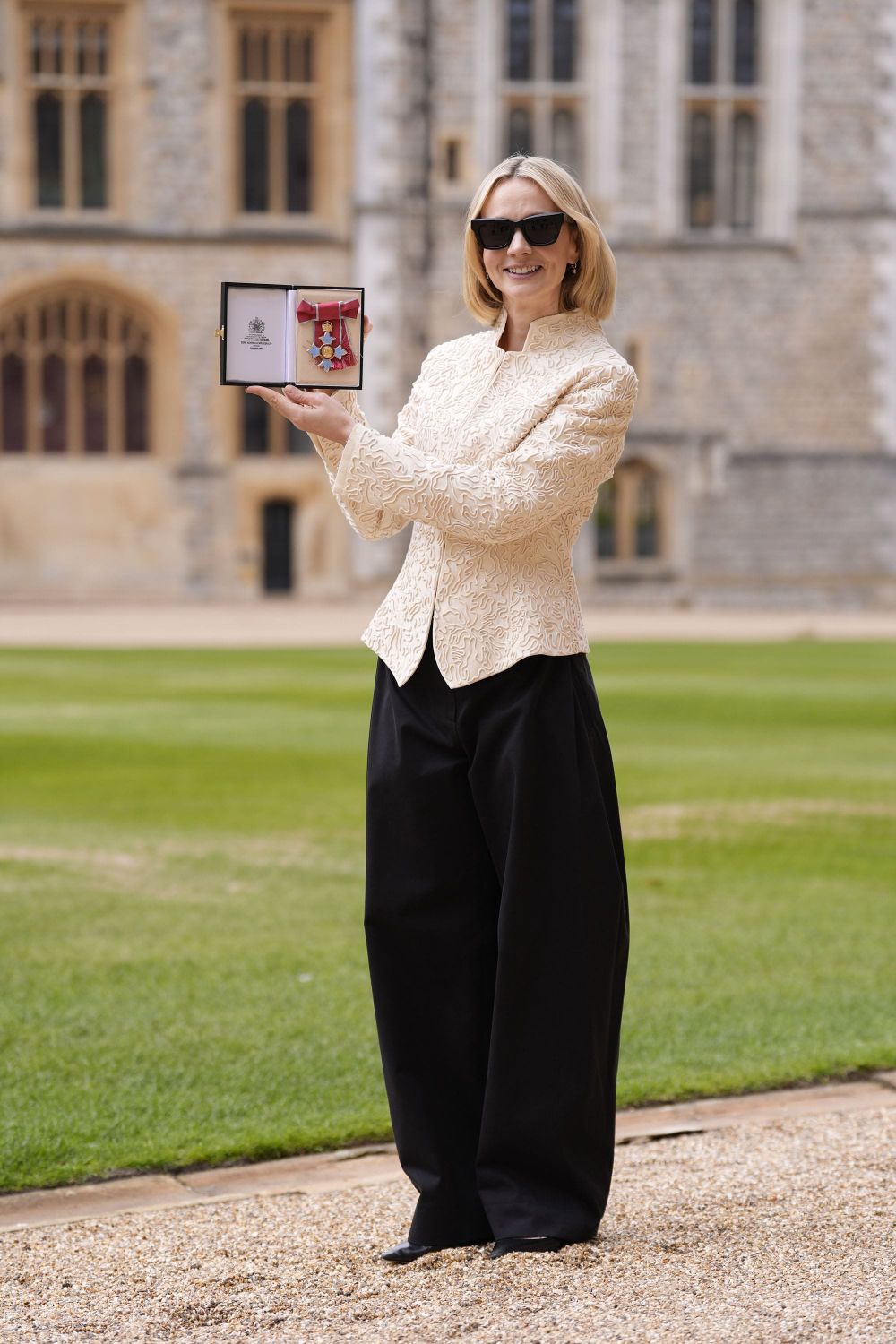
Carey Mulligan received her CBE from King Charles at Windsor Castle wearing The Row's barrel-leg trousers, a cream silk blouse, and a structured blazer. No gown. No fascinator. No nod to the dress codes that have governed investiture ceremonies for generations.
The look was elegant, respectful, and entirely on her terms. It was also the kind of choice that would have been unthinkable a decade ago—not because the palace would have objected, but because the unwritten rules of royal protocol have always leaned heavily on femininity performed through dresses, skirts, and the kind of formal tailoring that signals you know the assignment.
Mulligan's choice signals something bigger than one actress's personal style. It's the moment when quiet luxury's influence became visible enough to rewrite the visual language of institutional formality. The Row's barrel-leg trouser—wide, draped, architectural—has become the uniform of women who want to signal taste without performing femininity on anyone else's terms. It's shown up on red carpets, at fashion weeks, and in the kind of editorial spreads that treat clothing as intellectual exercise. Now it's shown up at Windsor Castle, and the message is clear: the old codes don't hold the same authority they used to.
The Row built its reputation on the kind of minimalism that requires serious money to pull off. The barrel-leg trouser retails for over $1,000. The blazer costs more. The whole look demonstrates expensive simplicity—the kind of outfit that reads as effortless because every seam, every drape, every proportion has been obsessed over until it looks like it wasn't. It's the opposite of the ornate, occasion-specific formalwear that royal events have traditionally demanded, and that's exactly why it works.
What makes Mulligan's choice culturally significant isn't just that she wore trousers to meet the King. It's that she wore these trousers—the ones that have become shorthand for a specific kind of intellectual, understated femininity that doesn't need to announce itself. The Row's aesthetic has always been about refusal: refusal to trend-chase, refusal to logo, refusal to make clothing that demands attention. Wearing it to Windsor is a refusal of a different kind—a polite but firm rejection of the idea that formality requires traditional femininity.
This isn't the first time The Row has redefined what luxury looks like in spaces that have historically demanded something else. The brand has spent years convincing the fashion world that minimalism can be the most expensive, most considered option in the room. Mulligan just proved the same logic applies to royal protocol.
The broader shift here is about who gets to define formality. For generations, royal investiture ceremonies have operated as one of the last bastions of traditional dress codes—places where women were expected to show up in dresses, hats, and the kind of polished femininity that signals respect for the institution. Mulligan's choice suggests that respect can look different now. It can look like a woman in trousers who knows exactly what she's doing.
It's worth noting that Mulligan's outfit still met every technical requirement of the dress code. It was formal. It was respectful. It was appropriate. What it wasn't was predictable. And now that intellectual fashion has become the new status symbol, that distinction matters. The Row has built an empire on the idea that the smartest women in the room don't need to dress like everyone else. Mulligan just took that logic to Windsor Castle and proved it holds up under royal scrutiny.
The choice also highlights a larger tension in how institutions adapt to cultural shifts. The royal family has spent years trying to modernize its image without losing the formality that defines it. Mulligan's outfit is the kind of move that forces the institution to reckon with what formality actually means in 2026. Is it about the silhouette, or is it about the level of consideration and craft? If it's the latter, The Row's barrel-leg trouser is as formal as it gets.
What happens next will be telling. If Mulligan's choice becomes a reference point for other women navigating formal royal events, it will mark a genuine shift in how these spaces operate. If it remains an outlier, it will still be remembered as the moment an actress in expensive trousers made the palace dress code look like a suggestion rather than a rule.