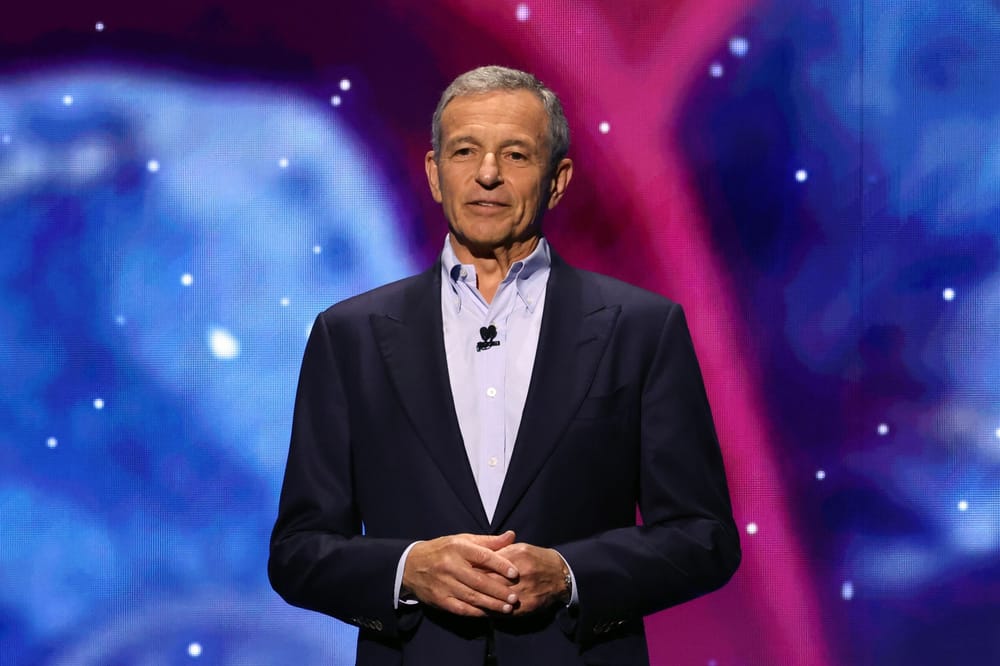
Disney is worth approximately $200 billion. It owns Marvel, Lucasfilm, Pixar, 20th Century Studios, ABC, ESPN, Hulu, National Geographic, and a theme park empire that spans three continents. When Bob Iger officially hands the CEO reins to Josh D'Amaro on March 18, he will leave behind one of the most successful acquisition sprees in modern corporate history. He will also leave behind a structural problem so fundamental that no successor — no matter how capable — can solve it: Disney is now too big to innovate and too valuable to break up.
Iger's tenure, which Variety describes as "transformative," reshaped the entertainment industry through a series of blockbuster deals that looked brilliant at the time and remain financially defensible now. The $7.4 billion Pixar acquisition in 2006. Marvel for $4 billion in 2009. Lucasfilm for $4 billion in 2012. 21st Century Fox for $71 billion in 2019. Each deal expanded Disney's IP portfolio, extended its theatrical dominance, and fortified its streaming ambitions. Wall Street rewarded him. Shareholders got rich. The stock price quintupled during his first run as CEO.
But the same strategy that made Disney the most powerful entertainment company in the world also made it the least flexible. Every major studio decision now requires coordinating across a dozen fiefdoms, each with its own legacy infrastructure, union agreements, and executive fiefdoms. Disney+ launched in 2019 with the full weight of the company's IP library — and still took years to turn a profit because the operational complexity of pivoting a conglomerate this size toward streaming was more expensive than anyone anticipated. The Fox acquisition, which was supposed to give Disney enough content to feed its streaming ambitions, instead gave it redundant back-office systems, overlapping executive roles, and a bloated cost structure that took multiple rounds of layoffs to trim.
The irony is that Iger understood this problem better than most. He spent his final years as CEO trying to streamline the company he had spent the previous decade expanding. He reorganized the corporate structure. He cut costs. He laid off 7,000 employees. He sold off non-core assets. He tried to make Disney leaner and more responsive. But you can't re-engineer a conglomerate this size without breaking something valuable in the process. Every efficiency gain comes at the cost of someone's division, someone's budget, someone's autonomy. The bigger the company, the more resistant it becomes to the kind of creative risk-taking that built it in the first place.
Josh D'Amaro, the incoming CEO, is a parks guy. He ran Disneyland, then Disney World, then the entire parks division. He knows how to manage large-scale operations, deliver consistent guest experiences, and extract maximum revenue from physical infrastructure. Those are useful skills for running a conglomerate. They are not the skills you need to figure out what Disney should look like in 2035. The entertainment industry is facing simultaneous crises in theatrical distribution, streaming profitability, linear TV collapse, and AI-driven production disruption. The companies that will survive are the ones that can move fast, kill legacy products, and reallocate capital toward emerging opportunities. Disney cannot do any of those things without a multi-year restructuring process that will cost billions and alienate stakeholders.
The studio system that Iger built is designed to maximize the value of existing IP, not to develop new franchises that might compete with the old ones. Marvel is on its fourth phase. Star Wars is mining the same 50-year-old mythology. Pixar is making sequels to sequels. The most successful Disney+ shows are spin-offs of theatrical franchises that are themselves decades old. This is not a creative failure — it is a structural inevitability. When you are managing a $200 billion portfolio, you cannot afford to take the kind of creative risks that might produce the next Frozen or The Mandalorian. You have to protect what you already have. And the bigger the portfolio, the more conservative the decision-making becomes.
Compare this to the strategy that is quietly reshaping the rest of Hollywood. A24, which just expanded into music, operates with a fraction of Disney's resources and ten times the creative flexibility. Netflix, which Iger once dismissed as a tech company playing in Hollywood's sandbox, now outspends Disney on content and can greenlight a $200 million project without consulting a dozen division heads. Even the legacy studios that survived the streaming wars — Warner Bros., Paramount, Universal — are smaller and more nimble than Disney. They can take bigger creative risks because they have less to lose.
Iger's defenders will argue that Disney's size is its competitive advantage. The company can outspend rivals, outlast downturns, and leverage its IP across multiple revenue streams in ways that smaller competitors cannot. All of that is true. But it is also true that the entertainment industry is entering a period of structural transformation that will reward speed and experimentation over scale and stability. The studios that will thrive in the next decade are the ones that can identify emerging talent, develop new IP, and adapt to changing consumer behavior faster than the market can punish them for being wrong. Disney cannot do that anymore. It is too big, too slow, and too invested in protecting what it already has.
The succession plan itself is revealing. D'Amaro is the safe choice — a steady operator who will not rock the boat, alienate stakeholders, or attempt a radical restructuring that might destabilize the stock price. He is not a creative visionary. He is not a tech disruptor. He is a parks guy who knows how to run a large, complex operation without breaking it. That is exactly what Disney's board wants right now. But it is not what the company needs if it wants to remain creatively relevant in 2035.
The real test of Iger's legacy will not be the deals he made or the stock price he delivered. It will be whether Disney can survive the next decade without him. The company he built is financially successful, operationally complex, and creatively risk-averse. It is optimized for managing existing IP, not for developing new franchises that might replace the old ones. It is built to defend market share, not to capture emerging opportunities. And it is too valuable to break up, too big to pivot, and too slow to compete with the smaller, faster studios that are quietly building the next generation of entertainment IP.
Iger spent 15 years turning Disney into the most powerful entertainment company in the world. He succeeded. The problem is that power and adaptability are not the same thing. The conglomerate he leaves behind is a monument to the M&A strategy that defined the 2010s. But the 2020s require a different playbook — one that prioritizes speed over scale, creativity over consolidation, and risk-taking over risk management. Disney cannot execute that playbook without dismantling the empire Iger built. And no CEO, no matter how capable, can dismantle an empire while also running it.
D'Amaro will do fine. He will manage the parks, optimize the streaming business, and protect the stock price. He will not transform the company. That is not his job. His job is to manage the structural problem Iger created — a conglomerate so large and so valuable that it can no longer take the creative risks that built it in the first place. The entertainment industry is moving toward a future that rewards independence, flexibility, and creative experimentation. Disney is moving toward a future that rewards operational efficiency, cost management, and IP protection. Those are not the same future. And that is the real legacy of Bob Iger's tenure as CEO.