
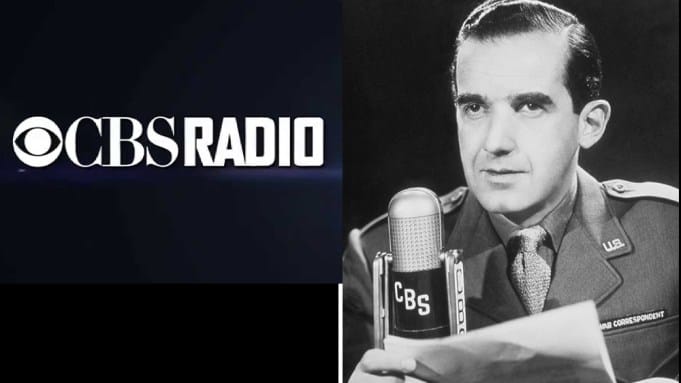
CBS News Radio will shut down on May 22, according to an announcement from CBS News editor in chief Bari Weiss and CBS News president Tom Cibrowski. The unit, with origins tracing back to the founding of the network nearly a century ago, is being closed as part of another round of cuts at the news division. The closure eliminates one of the oldest continuous operations in American broadcast journalism — the infrastructure that carried Edward R. Murrow's war reporting, broke Watergate updates, and built the credibility CBS News still trades on today.
The decision is being framed internally as a cost-cutting measure, but the real story is what CBS is willing to sacrifice. Radio news operations don't generate the revenue of streaming platforms or prime-time broadcasts, but they serve a structural function legacy media now treats as expendable: they built and maintained trust with audiences who had no other way to verify what they were hearing. CBS News Radio wasn't just a product — it was proof of institutional investment in reporting infrastructure. Shutting it down signals that the network no longer believes that kind of proof matters.
This is the same CBS News division that saw its 24/7 streaming writers walk out over contracts that undercut broadcast union protections. The pattern is clear: CBS is treating its news operation like a content factory, not a journalism institution. Radio required dedicated correspondents, producers, and editors who filed multiple reports daily across time zones. It was expensive, unglamorous, and impossible to scale the way digital content scales. So it's gone.
The timing makes the decision even sharper. Legacy media companies are in the middle of a credibility crisis they created by chasing scale over accuracy, speed over verification, and engagement over editorial judgment. Audiences don't trust institutions the way they used to — not because institutions were perfect, but because institutions dismantled the systems that made trust possible. CBS News Radio was one of those systems. It required reporters to show up, file from the scene, and operate under editorial oversight that couldn't be automated or outsourced. It was slow, expensive, and built for an era when news organizations believed their authority came from doing the work.
Now CBS is betting that authority can be maintained without the infrastructure. The network still has the kind of institutional prestige that gets documented by Oscar-winning filmmakers, but prestige without investment is just branding. And branding without journalism is just noise.
The closure also reveals how legacy media misunderstands its own value. CBS News Radio wasn't competing with podcasts or streaming audio platforms — it was serving a fundamentally different function. Radio news operations exist to deliver verified information quickly to audiences who need it, not to build parasocial relationships or generate algorithmic engagement. That model doesn't scale, but it works. Shutting it down because it doesn't generate streaming-level revenue is like dismantling the creative development process that built your IP library because it's cheaper to license existing franchises. You can do it, but you lose the thing that made you valuable in the first place.
What happens next is predictable. CBS will redirect resources toward digital platforms, streaming operations, and content formats that generate measurable engagement. The network will continue to produce news, but it will do so with fewer people, less infrastructure, and more reliance on systems that prioritize speed over accuracy. Audiences will notice — not immediately, but over time, as the gap between what CBS News claims to be and what it actually invests in becomes impossible to ignore.

The real question is whether any legacy media institution will recognize the problem before it's too late. CBS News Radio wasn't a relic — it was a reminder that credibility requires investment, that authority comes from showing up, and that trust is built through systems that can't be replaced by content strategies. Shutting it down doesn't make CBS leaner or more competitive. It just makes the network one more media company that stopped believing its own authority was worth paying for.