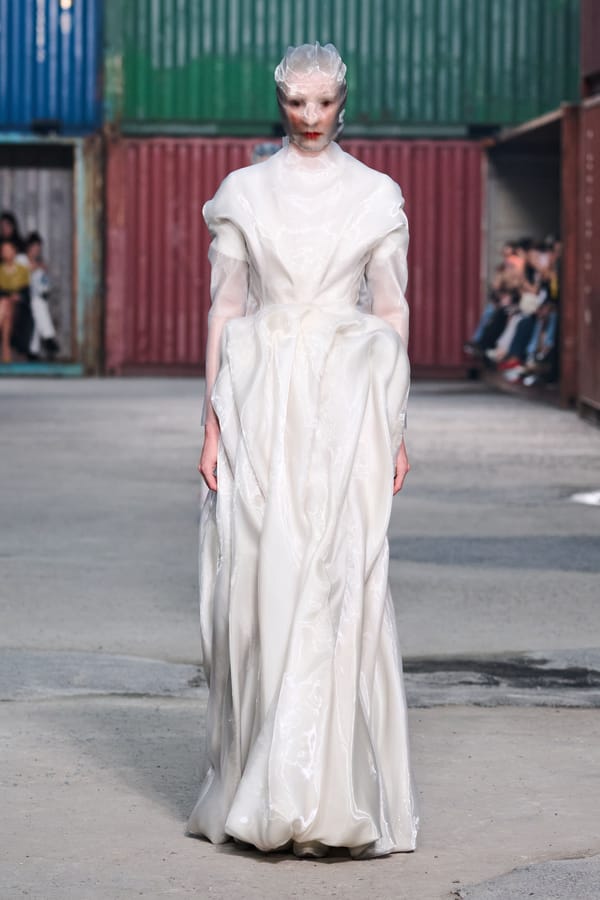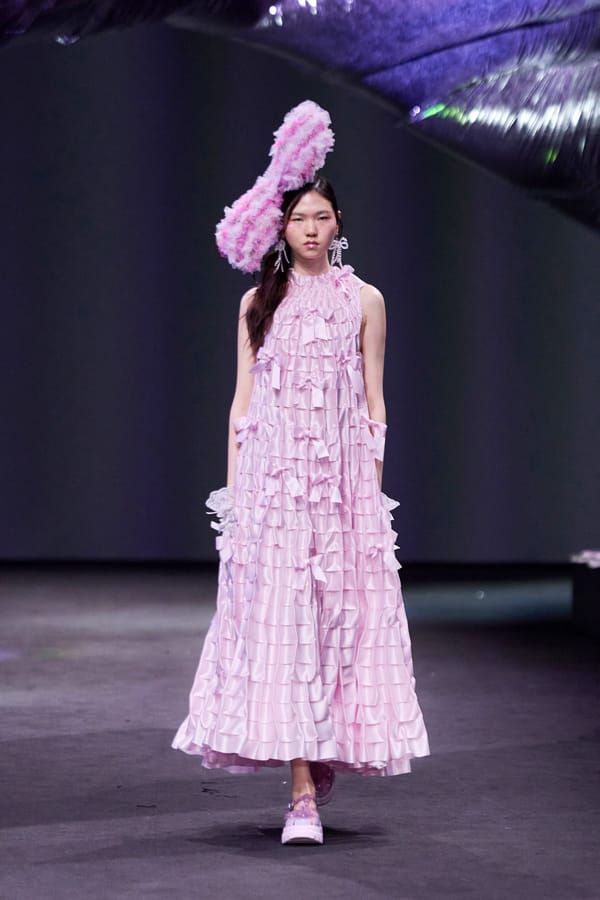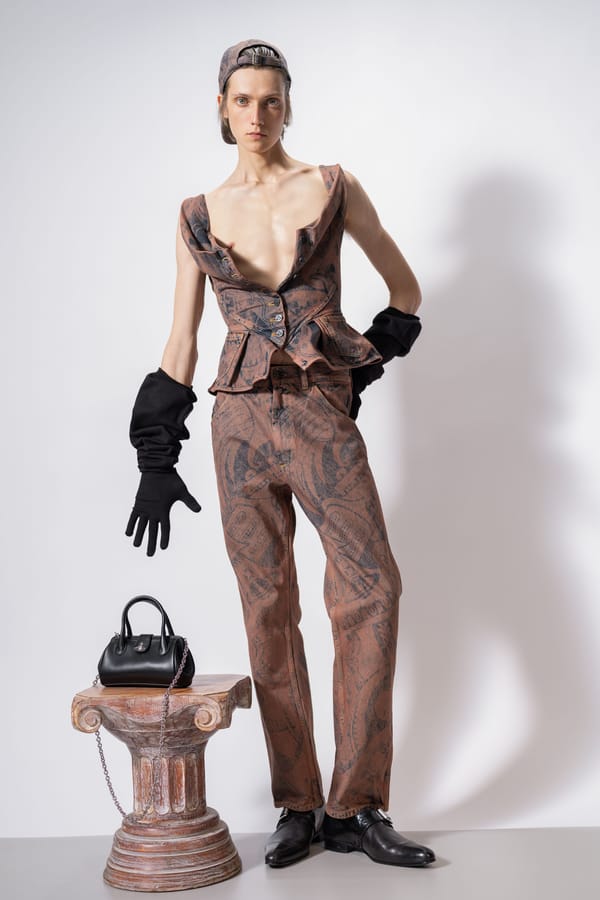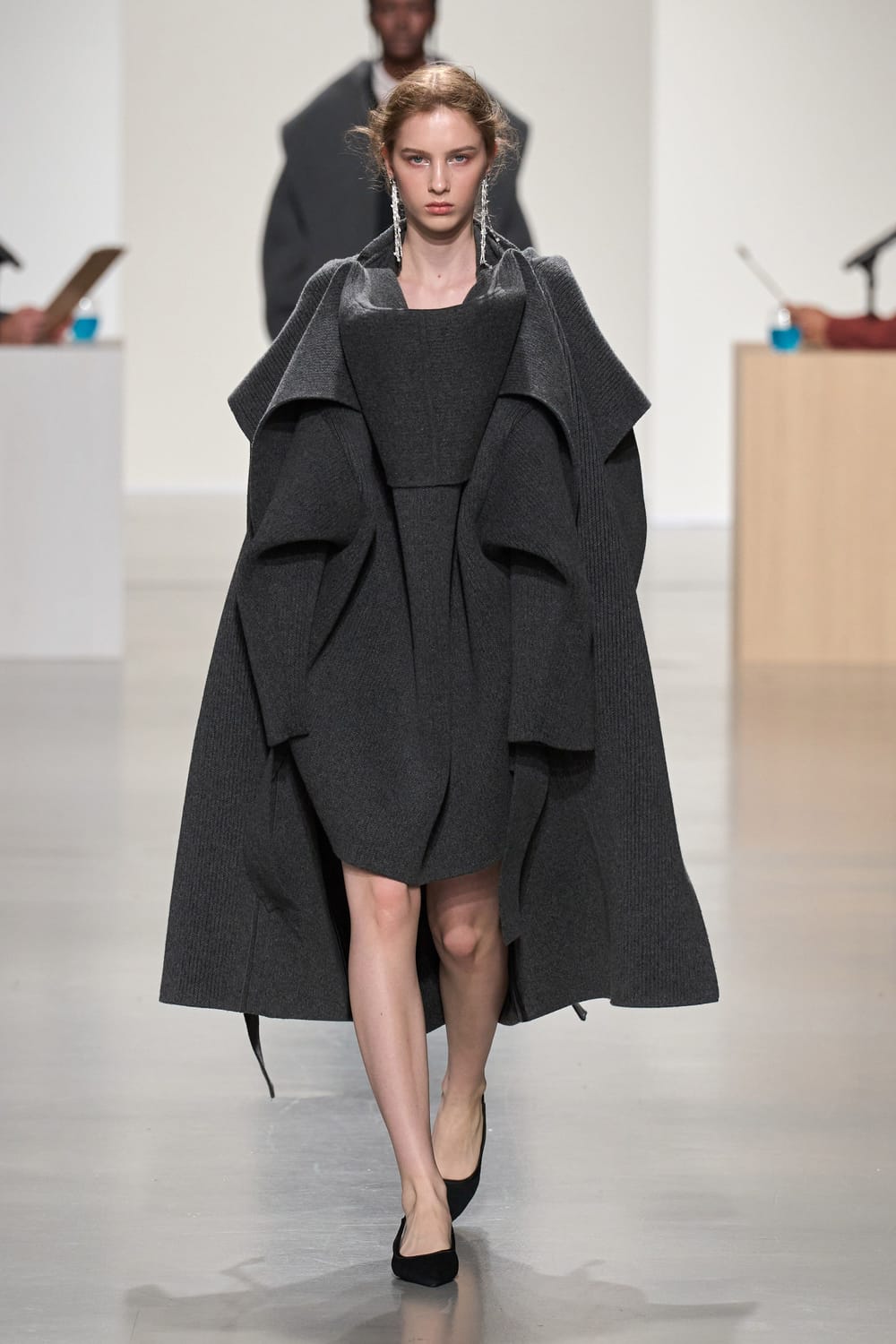
Yusuke Takahashi sent a dress down the runway at CFCL's Fall 2026 show made from a single piece of fabric with no seams, no waste, and no visible compromise. The garment moved like liquid architecture—structured but fluid, minimal but complex. It was the kind of technical achievement that fashion insiders recognize immediately and that most consumers would never notice, which is precisely the point.
CFCL's Fall 2026 collection, presented during Paris Fashion Week, is the latest proof that Japanese designers have cracked the code on sustainable fashion that doesn't announce itself. Where Western brands often treat sustainability as a marketing narrative—something to foreground, explain, and monetize through premium pricing—CFCL treats it as a design problem to solve quietly. The collection uses proprietary knitting techniques that eliminate textile waste during production, fabrics that require minimal water and chemical processing, and construction methods that reduce labor exploitation. None of this is mentioned in the show notes. The clothes simply exist as exceptionally well-made garments that happen to align with every sustainability metric the industry claims to care about.
This is the strategic advantage Japanese fashion has been building for two decades while luxury conglomerates were chasing logo visibility and influencer partnerships. Brands like CFCL, Anrealage, and Uma Wang have invested in fabric technology, production innovation, and supply chain transparency not as PR moves but as foundational infrastructure. The result is a generation of designers who can deliver on sustainability promises without requiring consumers to accept inferior aesthetics, reduced functionality, or virtue-signaling branding.
The timing matters. Luxury consumers—particularly younger buyers with disposable income—are increasingly skeptical of greenwashing and fatigued by brands that treat sustainability as a separate "conscious collection" rather than a baseline standard. CFCL's approach bypasses that skepticism entirely by making environmental responsibility invisible to the end user. The customer buys a beautifully constructed, technically innovative garment that performs better and lasts longer than conventional alternatives. The sustainability is embedded in the manufacturing process, not sold as a lifestyle choice.
Takahashi's technical innovations also solve a problem that has plagued sustainable fashion since its inception: the assumption that environmental responsibility requires aesthetic sacrifice. CFCL's seamless knitting techniques don't just reduce waste—they enable design possibilities that traditional cut-and-sew construction can't achieve. The Fall 2026 collection includes garments with complex three-dimensional shapes, integrated structural support, and variable density zones that would be impossible to produce using conventional methods. The sustainability isn't a constraint on the design; it's what makes the design possible.
This represents a fundamental shift in how fashion's sustainability conversation is structured. For years, the industry has framed environmental responsibility as a trade-off—consumers could choose between beautiful, well-made garments or sustainable ones, but rarely both. Brands like Stella McCartney have pushed back against that false binary, but even McCartney's collections often lead with the sustainability narrative rather than letting the design speak first. CFCL inverts the formula: the design is the story, and the sustainability is the infrastructure that makes it possible.
The broader implication is that Japanese and East Asian designers are building a parallel luxury ecosystem that operates on different principles than the European conglomerate model. Where LVMH and Kering prioritize brand heritage, logo recognition, and celebrity partnerships, designers like Takahashi are investing in proprietary technology, vertical integration, and manufacturing innovation. The former strategy produces higher short-term margins and better Instagram content. The latter produces better clothes and more defensible long-term positioning as regulatory pressure and consumer expectations around sustainability intensify.
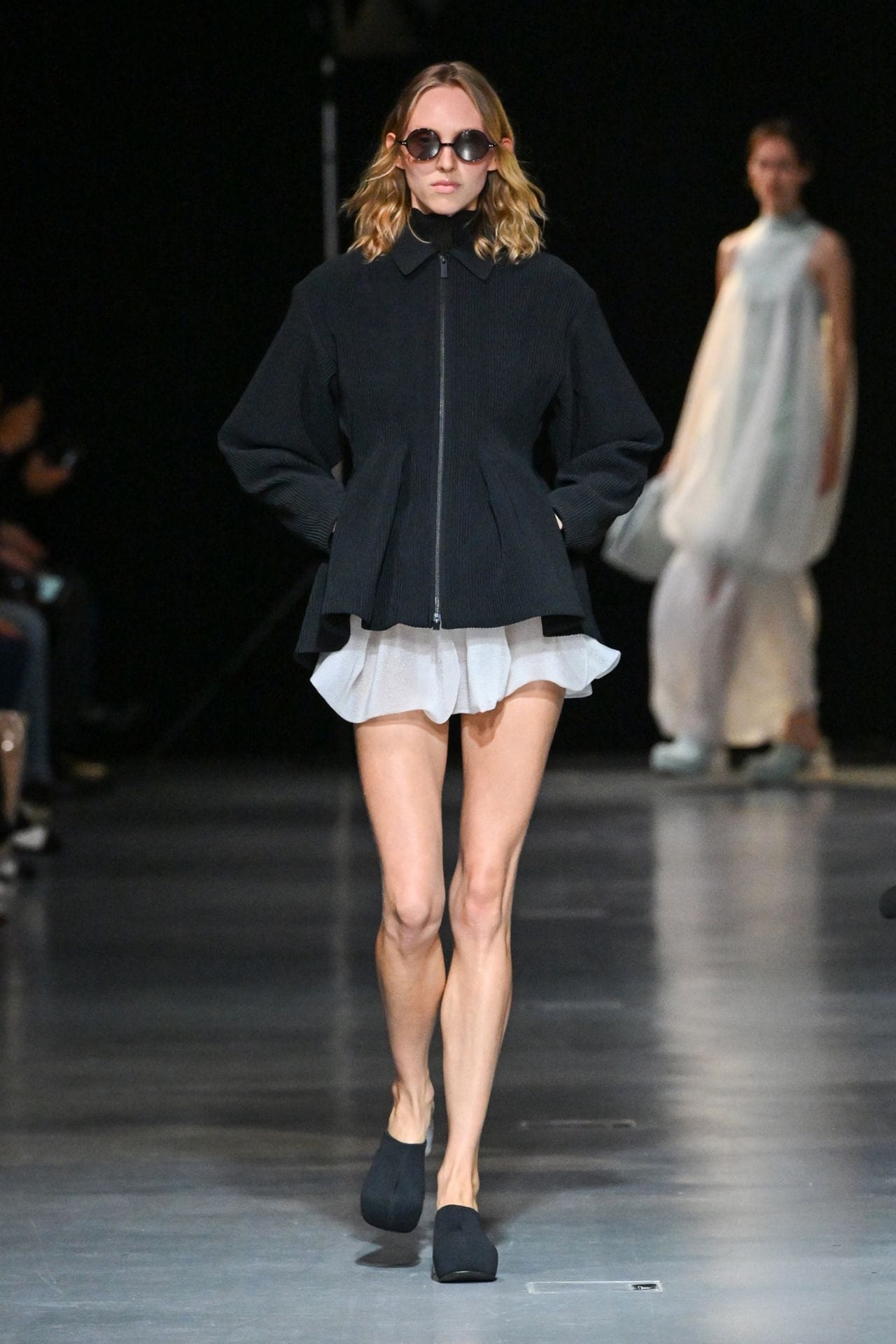
CFCL's Fall 2026 collection suggests that the future of luxury fashion won't be determined by who tells the best sustainability story, but by who builds the best sustainability infrastructure. The brands that win won't be the ones shouting about their environmental credentials—they'll be the ones whose technical innovation makes those credentials irrelevant to the purchase decision. The customer buys the dress because it's beautiful and well-made. The fact that it was produced without waste, without exploitation, and without environmental degradation becomes a structural advantage the brand doesn't need to advertise. That's not just smarter branding—it's a more honest relationship between designer, garment, and consumer. And it's a model the rest of the industry will eventually have to adopt or be left behind.