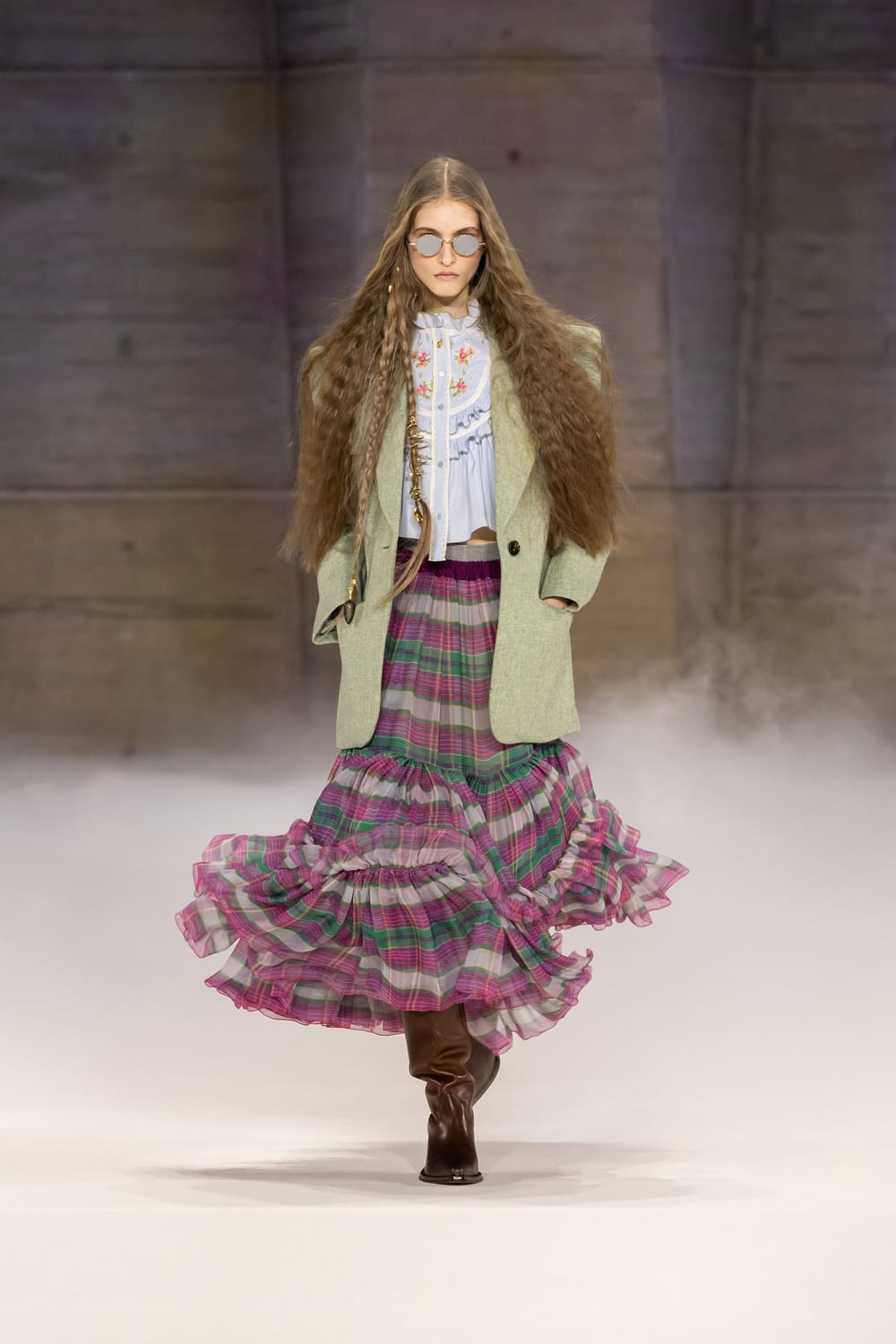
The opening look at Chloé's Fall 2026 show was a chocolate brown suede coat with a wide, soft collar and gently flared sleeves — the kind of piece that could have walked off the runway in 1975 or 2005 or last season. It was followed by another coat, this one in camel, equally soft, equally familiar. Then came the scarf prints, the flowing trousers, the languid silhouettes that have become Chemena Kamali's signature since she took over creative direction. The collection was beautiful, expertly executed, and entirely predictable. That's not a critique of craft — it's an observation about strategy.
Kamali has made her mandate clear since arriving at Chloé: bring back the codes that made the house synonymous with effortless Parisian femininity. The 1970s silhouettes, the bohemian ease, the sense that getting dressed should feel like an extension of living well rather than a performance. It's a strategy that worked brilliantly when she first arrived, delivering a jolt of nostalgia and relief to a market exhausted by overwrought branding andlogo saturation. But by Fall 2026, the strategy has calcified into something closer to repetition. The collection didn't evolve the archive — it reproduced it.
This is the tension at the heart of heritage-driven design: how many times can you mine the same codes before they stop feeling like a rediscovery and start feeling like a limitation? Kamali is far from the only designer navigating this question. Olivier Rousteing at Balmain has built an empire on repetition, refining the same maximalist aesthetic season after season until it became a recognizable brand language. Diane von Furstenberg's Fall 2026 collection proved that staying put can be a viable strategy when the foundational piece — the wrap dress — is strong enough to carry the weight. But Chloé's challenge is different. The house doesn't have a single hero piece. It has a mood, a sensibility, a feeling. And feelings are harder to sustain across multiple seasons without evolution.
What Kamali has done well is understand that Chloé's customer isn't looking for disruption. The woman buying into this vision wants the fantasy of ease, the idea that luxury can be soft rather than sharp, approachable rather than intimidating. That's a real market position, and it's one that differentiates Chloé from the harder-edged aesthetics dominating much of contemporary luxury. But the risk is that the brand becomes a period piece — a beautifully executed homage to an era rather than a living, evolving house with something to say about the present.
The broader pattern here is the fashion industry's increasing reliance on archival codes as a safe bet in an uncertain market. When cultural and economic conditions are unstable, brands retreat to what has worked before. It's why we're seeing so many houses appoint creative directors with explicit mandates to "return to the codes" rather than reimagine them. It's a defensible strategy in the short term — it reassures investors, stabilizes brand identity, and gives customers something familiar to anchor to. But it's also a strategy with diminishing returns. Eventually, the archive runs out of new ways to say the same thing.
Chloé's Fall 2026 collection wasn't bad. It was competent, commercial, and entirely on-brand. But competence isn't the same as vision, and on-brand isn't the same as forward-looking. The pieces will sell — there's a market for this kind of accessible luxury, especially as consumers pull back from more experimental fashion in favor of investment pieces that feel timeless. But timeless is a tricky word. It can mean enduring, or it can mean static. Right now, Chloé is betting its comeback on the former while inching closer to the latter.
What's missing is tension. The best heritage-driven design doesn't just reproduce the past — it puts the past in conversation with the present, creating friction that generates new ideas. Dries Van Noten's Fall 2026 collection showed how a house can honor its founder's codes while still evolving them into something that feels contemporary. Kamali's Chloé, by contrast, feels like it's playing it safe, leaning so heavily on the archive that there's no room for surprise.
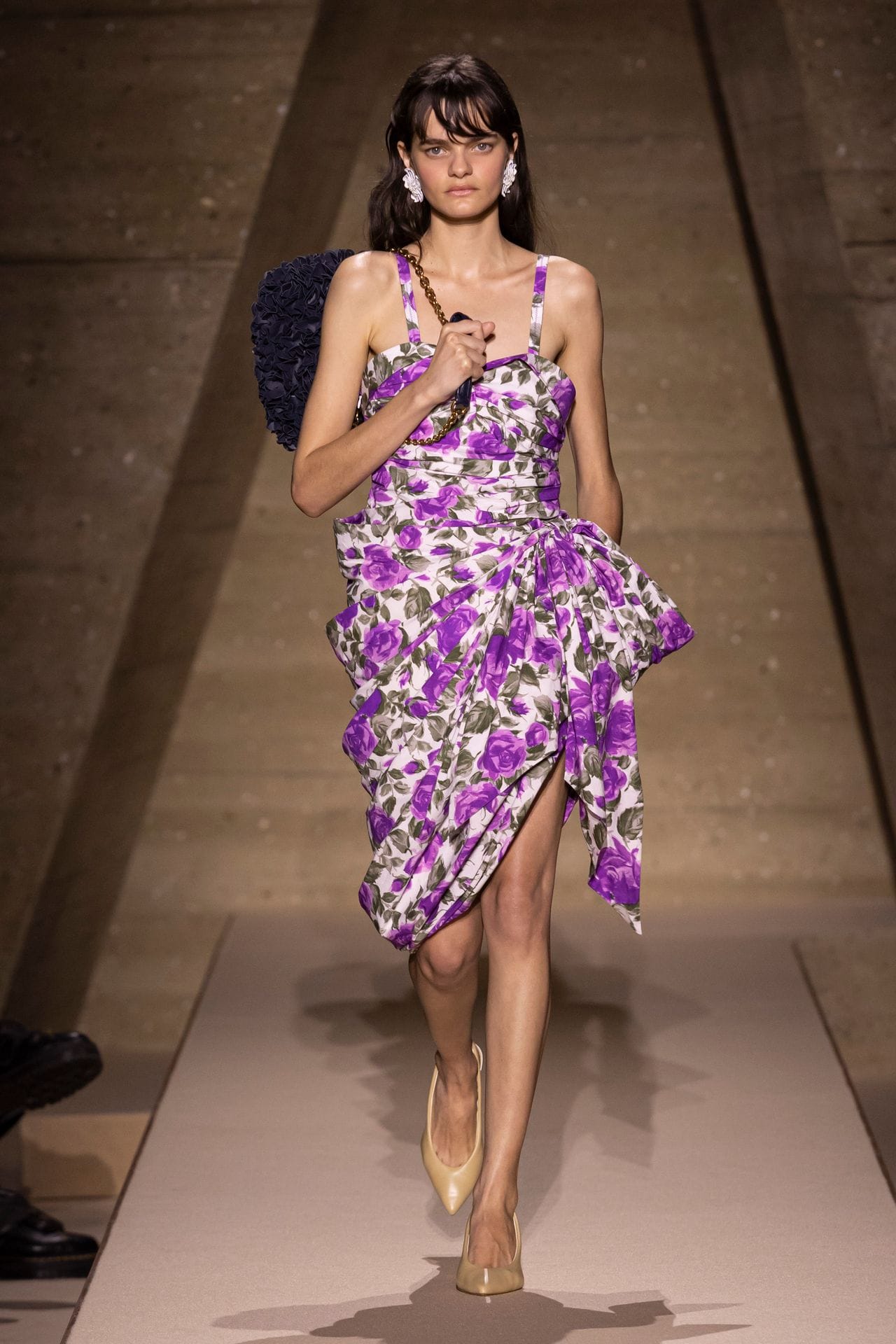
The real test will be whether Kamali can find a way to push the Chloé vocabulary without alienating the customer base she's successfully rebuilt. The house has momentum right now — sales are strong, the brand is culturally relevant again, and Kamali has proven she understands what made Chloé desirable in the first place. But momentum isn't the same as longevity. At some point, the archive stops being a resource and starts being a constraint. The question is whether Chloé will recognize that moment before the market does.
For more, see Isabel Marant’s French cool-girl formula and DVF’s heritage brand strategy.