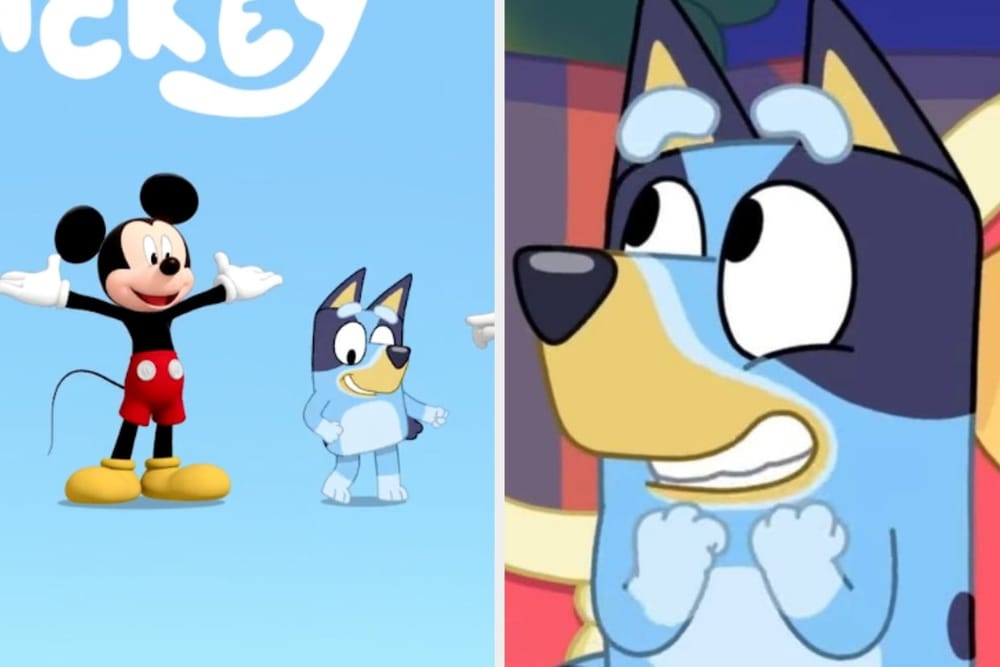
Disney just put Mickey Mouse in Bluey's house. Not the other way around.
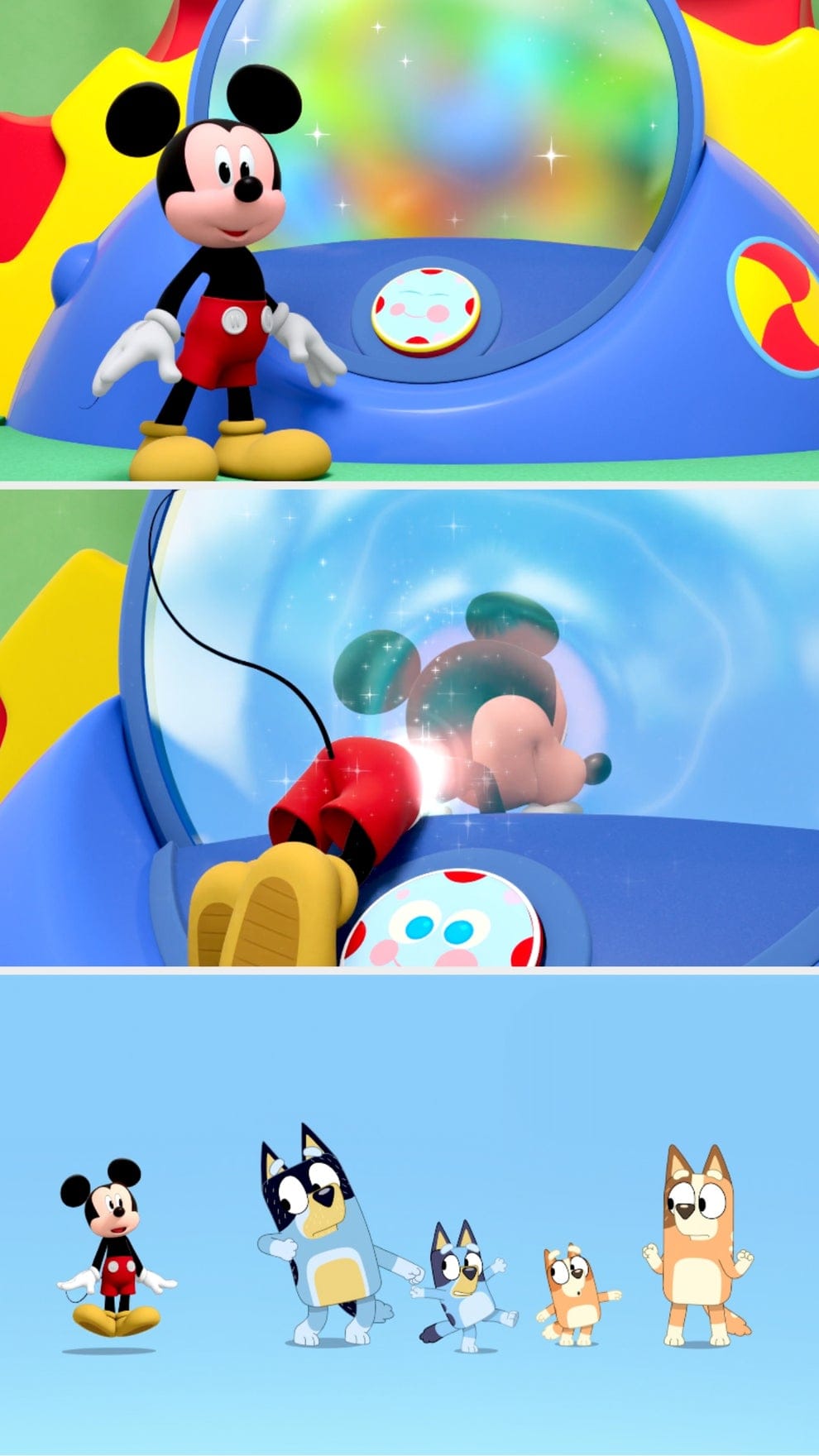
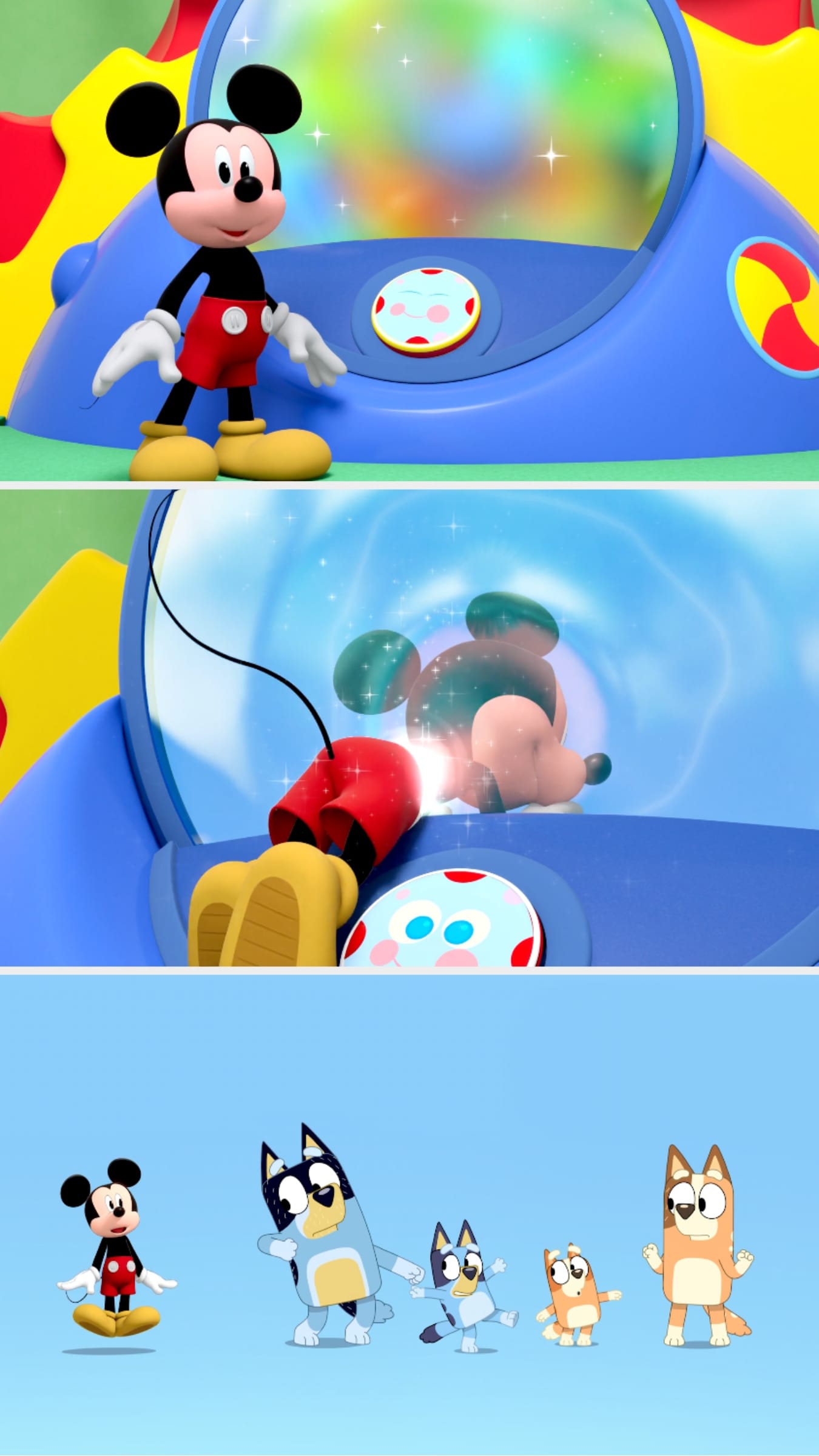
The 90-second crossover short, which aired on Disney Junior, shows Mickey tumbling into the Heeler family's backyard, where Bluey teaches him to play musical statues. It's brief, adorable, and strategically significant in a way that only makes sense if you've spent the last three years watching Bluey become the most culturally dominant kids' property in the English-speaking world—while Disney's legacy IP struggled to generate the same kind of organic family devotion.
The framing matters. Mickey is the guest. Bluey is the host. The setting is her world, her rules, her game. Disney didn't bring Bluey into the Magic Kingdom for a photo op. It sent its 96-year-old mascot to Brisbane to ask for an audience with a cartoon that didn't exist a decade ago. That's not collaboration—it's deference.
Bluey's rise has been the kind of cultural story legacy studios don't know how to replicate anymore. Created by Joe Brumm for ABC Kids in Australia and distributed internationally by BBC Studios, the show became a word-of-mouth phenomenon with parents who were desperate for children's programming that didn't insult their intelligence. It's tender without being saccharine, funny without relying on hyperactivity, and emotionally literate in a way that made it appointment viewing for adults who don't even have kids. By the time Disney+ picked it up for U.S. streaming in 2020, Bluey was already a cultural force—Disney just gave it infrastructure.
And that's the tension Disney is now navigating. It owns the U.S. distribution rights. It profits from Bluey's ubiquity. But it didn't create the IP, doesn't control the creative direction, and can't replicate the magic that made it successful. Bluey's cultural power comes from the fact that it wasn't designed by committee, wasn't optimized for toy sales, and wasn't built to serve a multi-platform franchise strategy. It's the opposite of how Disney builds IP—and it's working better than anything Disney has launched for preschoolers in years.
The crossover is Disney's way of borrowing that credibility. Mickey Mouse has been a corporate mascot longer than he's been a character with a personality. He's iconic, sure, but he's not beloved in the way Bluey is beloved. Kids don't beg to watch Mickey Mouse Clubhouse the way they beg for one more episode of Bluey. Parents don't cry during Mickey shorts. The emotional real estate Bluey occupies in family culture is something Disney used to own—and now it's renting space from an Australian public broadcaster.
This isn't the first time Disney has acknowledged the limits of its own IP. Miley Cyrus spent 20 years running from Hannah Montana before Disney figured out how to let her reclaim the story on her terms. Bob Iger built Disney into a $200 billion empire, but that scale also made it harder for the company to generate the kind of intimate, emotionally specific storytelling that defines Bluey. The studio has spent the last decade acquiring IP—Marvel, Lucasfilm, Pixar, Fox—because it couldn't organically create new franchises that resonated the way its legacy properties once did.
Bluey is what happens when you don't design for scale first. It's what happens when a creator is given the freedom to make something personal, specific, and emotionally honest—and it turns out that's what families were starving for. Disney can't build that from the inside anymore. Its development process is too risk-averse, too focused on franchise potential, too reliant on IP extension rather than original ideas. So instead, it's doing the next best thing: putting Mickey Mouse in Bluey's backyard and hoping some of that cultural capital rubs off.
The crossover will play on a loop in households where Bluey is already the default. Parents will find it charming. Kids will watch it 47 times. And Disney will continue to profit from a property it didn't create but desperately needs. That's not a failure—it's just a recognition that the most valuable IP in kids' entertainment right now didn't come from Burbank. It came from Brisbane. And even Mickey Mouse knows when to show up as the guest, not the star.