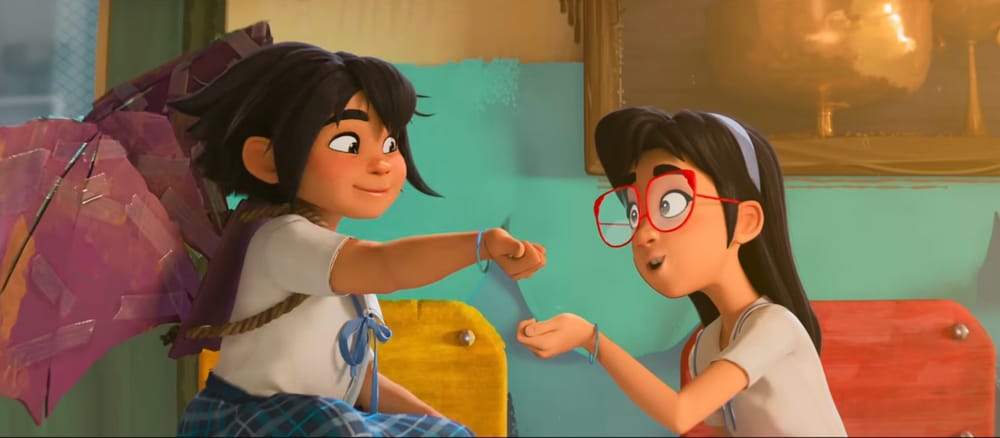
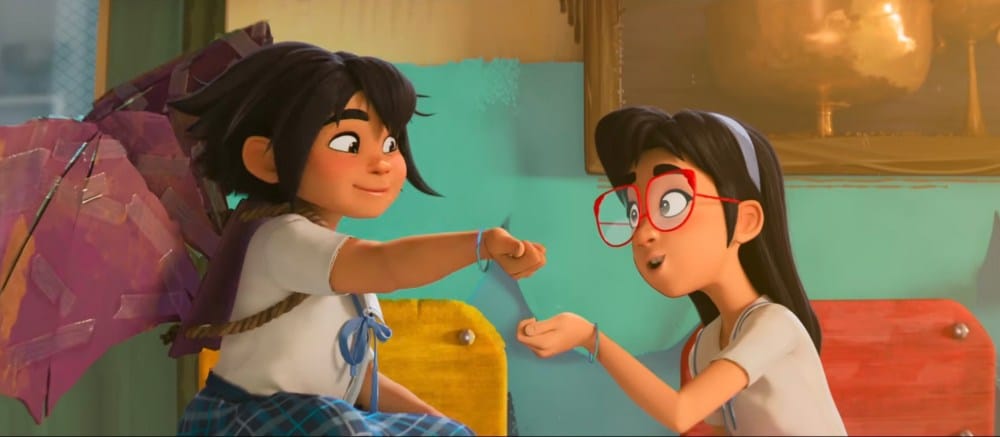
DreamWorks Animation just released the first trailer for Forgotten Island, an animated feature set in the 1990s that follows two Filipino-American best friends — voiced by H.E.R. and Liza Soberano — who get pulled into a world inspired by Filipino folklore after a night of karaoke and junk food goes sideways. The film opens wide this summer with a marketing budget that matches DreamWorks' other tentpole releases, not the cautious regional rollout that used to define how Hollywood treated Southeast Asian stories.
This isn't tokenism dressed up as representation. Forgotten Island is being positioned as a major studio release with A-list voice talent, a theatrical-first strategy, and the kind of merchandising infrastructure that only gets built when executives believe a property can sustain sequels. DreamWorks is betting that Filipino mythology can anchor a franchise the same way Norse gods did for Marvel or Greek legends did for Disney. That's a structural shift, not a symbolic one.
The timing matters. Forgotten Island arrives at the tail end of a decade where Hollywood's approach to Asian representation bifurcated into two paths: prestige awards bait (Everything Everywhere All at Once, Minari) and tentpole blockbusters that happened to center Asian stories (Shang-Chi, Raya and the Last Dragon). The first path proved that audiences would show up for specificity. The second proved that specificity didn't preclude scale. Forgotten Island is DreamWorks applying that lesson to a region Hollywood has historically treated as background flavor rather than narrative foundation.
Filipino folklore hasn't been invisible in Western media — it's been flattened. Aswang and tikbalang show up in genre TV as monster-of-the-week antagonists, stripped of cultural context and reduced to visual design. Forgotten Island is building an entire narrative world around that mythology, which requires the studio to treat Filipino cosmology as internally coherent and dramatically rich enough to sustain 90 minutes of storytelling. That's the difference between extraction and adaptation.
The casting of H.E.R. and Liza Soberano is strategic in ways that go beyond representation optics. H.E.R. brings Grammy credibility and a fanbase that skews young and culturally engaged — the exact demographic DreamWorks needs to turn an animated feature into a cultural moment. Soberano, a Filipino-American actress with a massive following in the Philippines, gives the film built-in cross-Pacific appeal. DreamWorks isn't just making a movie for American audiences who want to see themselves on screen — it's making a movie that can play as both a diaspora story and a homecoming in Southeast Asian markets where Hollywood has historically struggled to compete with local production.
The 1990s setting is doing narrative work too. Anchoring the story in a pre-social-media era lets DreamWorks lean into the tactile, analog textures of '90s Filipino-American adolescence — karaoke machines, VHS tapes, landline phones — without the complications of explaining why two teenagers don't just Google their way out of a mythological crisis. It's the same move Disney made with Bluey's analog childhood, where the absence of screens becomes a feature, not a limitation.
What makes Forgotten Island significant isn't just that it exists — it's that DreamWorks is treating it like it expects the film to work. The studio isn't hedging with a streaming-first release or a limited theatrical window. It's not framing the project as a noble experiment in representation that audiences should support out of principle. The marketing materials don't lead with diversity talking points — they lead with adventure, humor, and mythology that looks visually distinct from the Celtic and Nordic aesthetics that have dominated animated fantasy for the past two decades.
This is what it looks like when studios stop treating non-Western stories as niche content and start building them into the franchise pipeline. Filipino mythology isn't being positioned as an alternative to mainstream IP — it's being positioned as the next wave of mainstream IP. The question isn't whether audiences will show up for a story rooted in Filipino folklore. The question is whether DreamWorks can execute well enough to prove that Southeast Asian mythology can sustain the same kind of multi-film, merchandising-heavy, theme-park-ready franchises that Disney built around European fairy tales.
If Forgotten Island works — if it opens to $40 million-plus and holds through the summer, if the mythology lands with audiences unfamiliar with Filipino folklore, if it spawns the inevitable sequel — it will be because DreamWorks treated the material as inherently valuable, not as a strategic response to representation pressure. That's the gamble. And if it pays off, every other studio with a development slate will start asking what other mythologies they've been ignoring because they assumed American audiences wouldn't care. Southeast Asian stories just became bankable. The infrastructure was always there. Hollywood just needed someone to build the on-ramp.