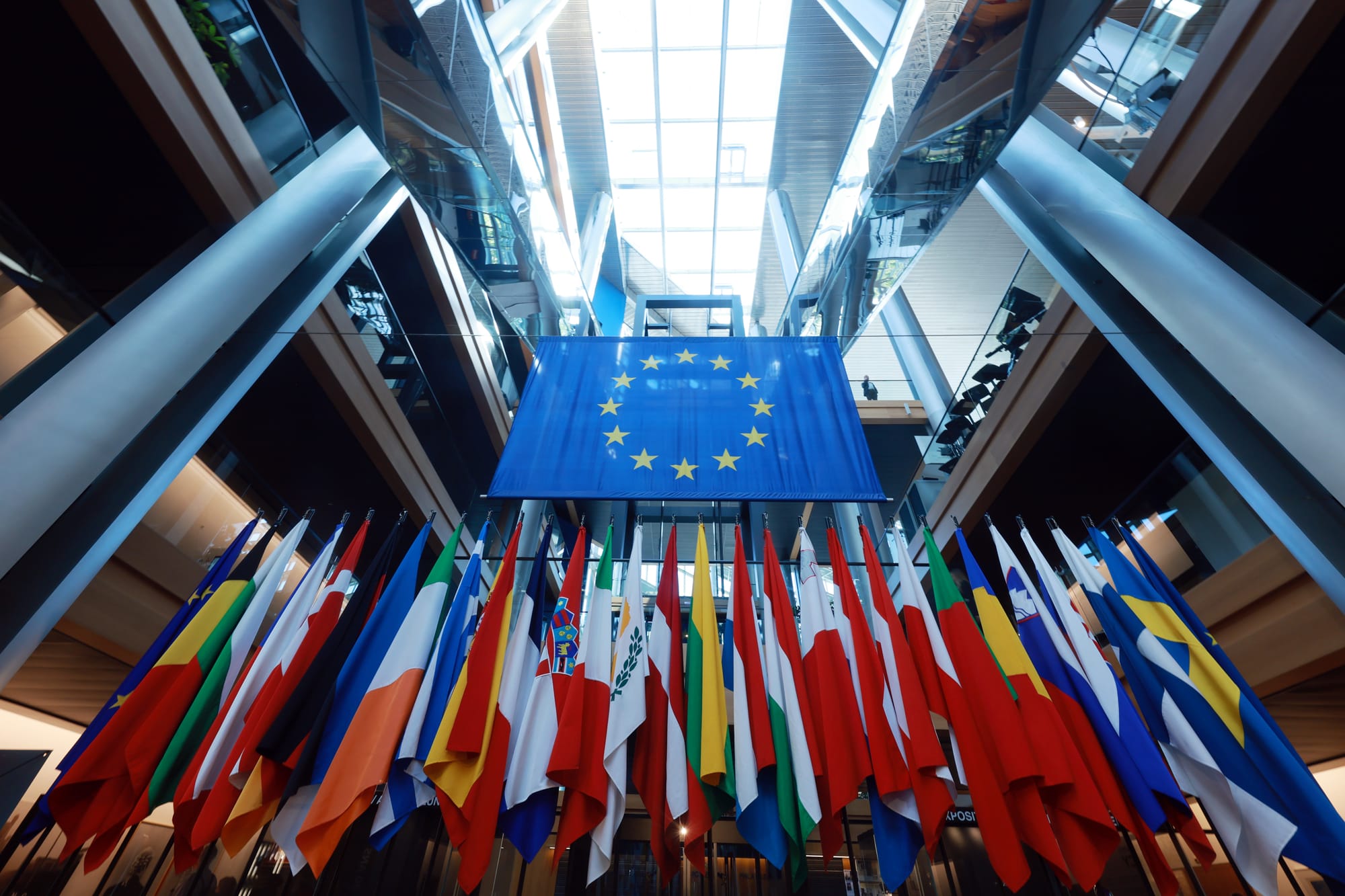
The European Parliament adopted a resolution on Tuesday titled "Copyright and Generative Artificial Intelligence – opportunities and challenges." The non-binding report, led by centrist Christian Democrat MEPs, aims to create a framework for deploying AI across Europe while protecting what the Parliament calls "cultural sovereignty." European creator organizations cheered. Regional tech lobbies issued statements expressing concern. The divide is not subtle.
The resolution doesn't have the force of law, but it signals where European regulatory energy is heading: toward a model that treats creative labor as infrastructure worth protecting, not raw material to be scraped. That puts it in direct opposition to the framework most US tech platforms operate under, which treats copyrighted material as fair game unless someone can afford to sue. The European approach assumes creators deserve compensation and consent before their work trains a model. The American approach assumes they don't, unless they can prove harm in court after the fact.
This is the transatlantic divide on tech regulation in miniature. Europe regulates proactively, even if the rules are clunky and the enforcement is uneven. The US waits for the market to sort itself out, then acts surprised when the market sorts itself in favor of whoever has the most capital and the best lawyers. The European Parliament's resolution is non-binding, but it's also a public articulation of values: cultural production has intrinsic worth, creators deserve protection, and the infrastructure that enables mass extraction of creative labor without compensation is not neutral—it's a policy choice that can be reversed.
The creator organizations that support the resolution understand this. They've watched generative AI companies scrape decades of work—text, images, music, video—without permission, without payment, and without meaningful accountability. They've seen those same companies argue that copyright law doesn't apply to them because their technology is "transformative," a legal defense borrowed from fair use doctrine and stretched beyond recognition. The resolution doesn't solve that problem overnight, but it establishes a baseline: in Europe, at least, the conversation starts with creator rights, not with the assumption that innovation requires carte blanche to take whatever it wants.
The tech organizations pushing back are making a predictable argument: regulation stifles innovation, Europe risks falling behind, overly restrictive rules will drive AI development to other markets. It's the same argument US tech lobbies make every time a government suggests that platforms should be accountable for the harms they enable or the labor they extract. The framing treats regulation as inherently anti-innovation, as if the only way to build new technology is to externalize every cost onto the people whose work makes it possible.
But the European model isn't anti-innovation. It's pro-accountability. The distinction matters because it reveals what each side thinks innovation is for. If the goal is to build tools that enhance human creativity and compensate the people who make culture, then a framework that protects creator rights isn't a bug—it's a feature. If the goal is to build monopolistic platforms that extract maximum value from creative labor while returning as little as possible, then yes, regulation is a problem. The question is whose definition of innovation wins.
The resolution's emphasis on cultural sovereignty is worth paying attention to. It's not just about protecting individual creators—it's about protecting the infrastructure that allows diverse cultural production to exist in the first place. When generative AI models are trained on English-language datasets dominated by American corporate media, they reproduce those biases at scale. When platforms optimize for engagement metrics that reward sensationalism and virality, they flatten cultural specificity into content. Europe's regulatory approach, for all its flaws, at least acknowledges that culture is not just another input for the algorithm.
The resolution won't stop American tech companies from doing what they've always done. But it does establish a framework that other jurisdictions can reference when they're building their own rules. And it puts pressure on platforms to decide whether access to the European market is worth building systems that respect creator rights—or whether they'd rather fight a regulatory battle on multiple fronts. The answer will reveal a lot about what these companies actually value, and whether the innovation they're selling is worth the cost they're externalizing onto everyone else.