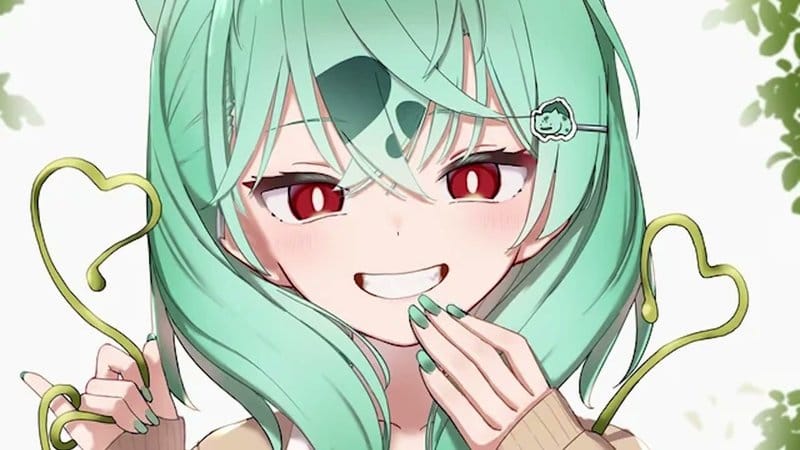
Pokopia, a mobile game developed by The Pokémon Company, gave Bulbasaur a personality transplant. The grass-type starter—historically portrayed as earnest, loyal, and a little dorky—now appears as a gyaru: an anime girl styled after Japanese street fashion, complete with bleached hair, tanned skin, dramatic makeup, and an attitude that reads as intentionally bratty. According to Know Your Meme, the design is already spawning memes, fan art, and discourse across TikTok, Twitter, and Reddit. The question isn't why this happened. It's why it took this long.
Gyaru Bulbasaur works because it treats Pokémon not as a protected childhood artifact but as raw material. The design doesn't ask permission from nostalgic millennials who grew up with the Game Boy originals. It doesn't care if you think Bulbasaur should stay cute and approachable. It takes the IP and remixes it into something that feels native to a generation raised on gacha games, anime aesthetics, and irony-poisoned internet humor. The result is a character that's simultaneously recognizable and completely alien to the franchise's established tone—and that's exactly why it's spreading.
The gyaru aesthetic—originally a form of rebellion against conservative Japanese beauty standards in the 1990s—has been resurrected online as shorthand for confidence, sass, and a kind of performative defiance. Applying it to Bulbasaur recontextualizes the Pokémon entirely. The original design was soft, nonthreatening, and built for mass appeal. The gyaru version is sharp, sexualized in a cartoonish way, and designed to provoke a reaction. It's not trying to sell you on nostalgia. It's trying to make you laugh, feel uncomfortable, or both. That tension is what makes it memeable.
This is part of a broader shift in how internet culture treats legacy IP. Millennials grew up in an era where childhood franchises were sacred—protected by copyright, controlled by corporations, and treated as emotional property that shouldn't be tampered with. Gen Z inherited those franchises but arrived in an ecosystem where remix culture is the default. TikTok edits, AI-generated fan art, and gacha game redesigns all operate on the assumption that IP is something you can take apart and rebuild. The original doesn't disappear—it just becomes one version among many. The creator economy has normalized this approach: everything is source material, and the best content comes from reinterpretation, not preservation.
Pokopia's decision to lean into this aesthetic isn't accidental. The game is targeting a mobile audience raised on Genshin Impact, Honkai: Star Rail, and other gacha titles where character design is hyper-stylized, often sexualized, and built to maximize fan engagement. Gyaru Bulbasaur fits that model perfectly. It's designed to generate fan art, cosplay, and discourse—all of which function as free marketing. The controversy is part of the strategy. The people who think it's disrespectful to the original design are generating just as much attention as the people who love it.
What's striking is how little pushback the design has received from The Pokémon Company itself. A decade ago, a redesign this radical would have been carefully managed, softened, or scrapped entirely to avoid alienating the core fanbase. Now, it's being deployed as a feature, not a bug. The company understands that the audience most likely to engage with a mobile game isn't the one clinging to the Game Boy aesthetic. It's the one scrolling through TikTok, looking for something weird enough to screenshot and share. Gyaru Bulbasaur is that thing.
The meme's spread also highlights how internet aesthetics now move faster than official branding. Within days of Pokopia's release, fan artists had already produced dozens of variations: other Pokémon reimagined as gyaru, alternate fashion subcultures applied to the same template, and ironic takes that layer additional levels of absurdity onto the original. The official design becomes a starting point, not an endpoint. This is how internet culture has always worked, but it's now operating at a scale and speed that makes it impossible for corporations to control the narrative. They can either participate or get left behind. The Pokémon Company chose to participate.
Gyaru Bulbasaur isn't a betrayal of the franchise. It's an acknowledgment that Pokémon has outgrown its original demographic and now exists in a space where multiple versions of the same character can coexist without invalidating each other. The Game Boy Bulbasaur still exists. So does the anime version, the Pokémon Go version, and now the gyaru version. The franchise isn't being replaced—it's being pluralized. That shift is uncomfortable for people who grew up believing their childhood franchises belonged to them. But the internet doesn't care about ownership. It cares about what's funny, shareable, and weird enough to break through the noise. Right now, that's a sassy, fashion-forward Bulbasaur with an attitude problem. And the memes are just getting started.