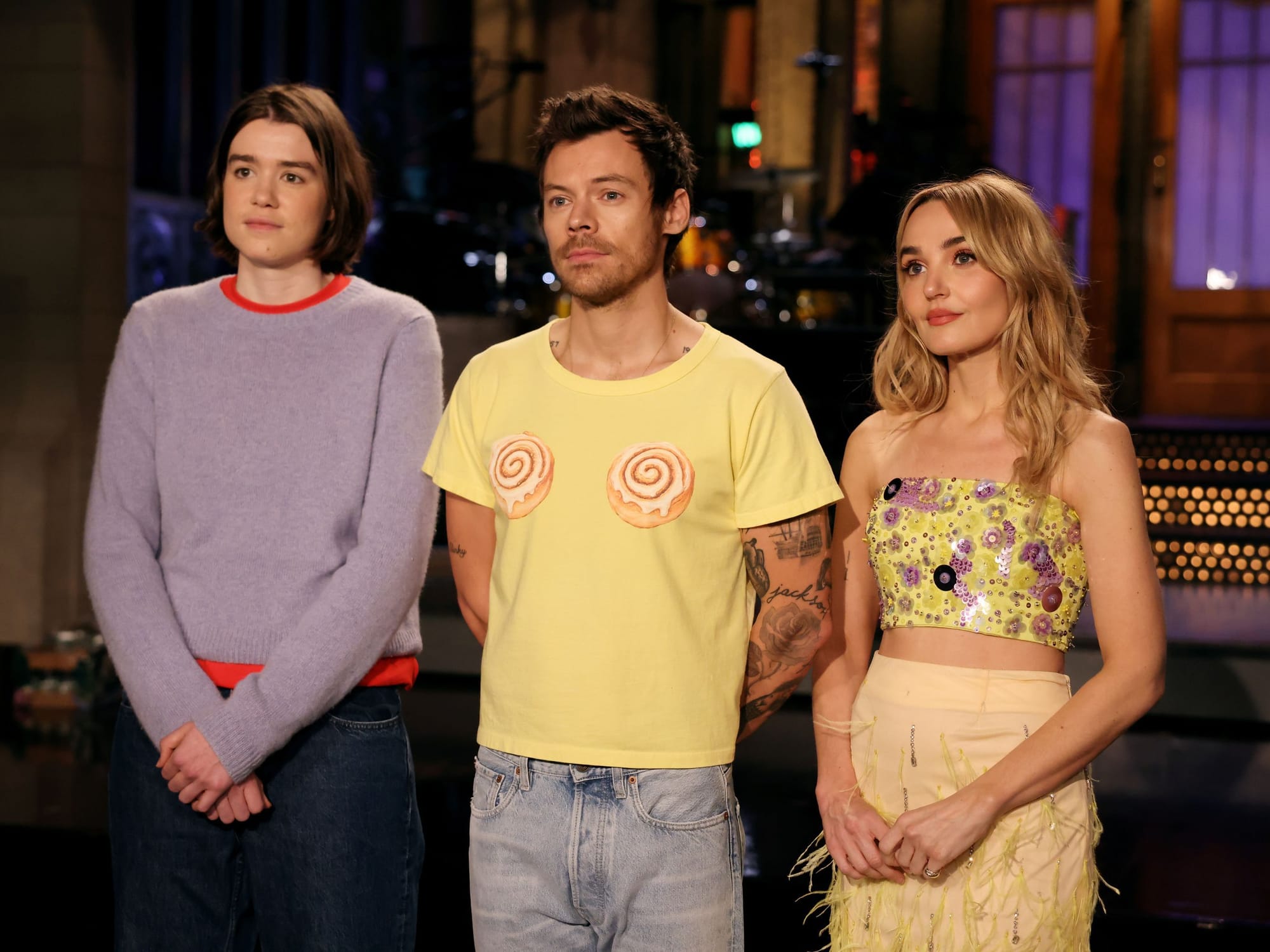
Harry Styles appeared on Saturday Night Live wearing three distinct looks: a cinnamon bun-emblazoned tee, minty tailoring, and Chanel. According to Vogue, the wardrobe was "all about the classics with a sweet, sweet twist." What the coverage missed is simpler: Styles treated a seven-minute musical guest slot like a fashion presentation with a built-in audience of millions.
Late-night television used to be where musicians showed up to promote albums. The performance was the product. The outfit was incidental — or at least, it was supposed to look that way. That logic no longer holds. For a certain tier of celebrity, the late-night appearance has become another brand touchpoint, as carefully art-directed as a magazine cover and significantly more valuable than one. SNL delivers live event urgency, multi-platform distribution, and the kind of organic social media capture that publicists used to have to manufacture. Styles didn't just perform on SNL. He dressed for the screenshots.
The three-look strategy is telling. One outfit is a talking point. Two suggests intention. Three is a editorial statement. It signals that the wardrobe is not incidental to the performance — it is the performance, or at least half of it. This is the same calculus that makes Paris Fashion Week's front row a more valuable real estate than most magazine covers. The audience isn't just watching Styles sing. They're watching him move through a sequence of images, each one optimized for a different kind of circulation. The cinnamon bun tee is for the meme accounts. The mint tailoring is for the fashion blogs. The Chanel is for Vogue.
This is not new for Styles, who has spent the better part of a decade turning every public appearance into a referendum on what male celebrity style can do. What's new is how completely the infrastructure has adapted to accommodate it. SNL gives musical guests multiple costume changes now because the show understands that the costume change is content. The musical performance might get 2 million views on YouTube. The outfit commentary will get 20 million impressions across TikTok, Instagram, and Twitter within 12 hours. The show is not doing Styles a favor. Styles is doing the show a favor by understanding that late-night TV is no longer about appointment viewing — it's about generating the raw material for the next day's internet.
The broader shift is worth naming. Late-night television has become a distribution platform for celebrity brand strategy, not a neutral stage. The same logic applies to red carpets, award shows, and increasingly, any public appearance that will be photographed. Paris Hilton's bathtub selfie showed how celebrities have become their own ad networks. Styles's SNL wardrobe shows how traditional media has become the infrastructure for that advertising. The performance is still happening. It's just not the music anymore.
The cinnamon bun tee, specifically, is a smart move. It's Styles at his most accessible — playful, a little bit silly, the kind of thing that translates across demographics. It's also a hedge. If the high-fashion looks read as too precious or too removed, the novelty tee says: I'm still the guy who doesn't take this too seriously. That balance is the entire brand. Styles has built a career on making fashion feel like a playground rather than a tribunal, and the SNL wardrobe is that strategy distilled into three looks.
What's less clear is whether this is sustainable for anyone who isn't Harry Styles. He has the industry relationships, the stylist infrastructure, and the cultural capital to make a three-look SNL performance feel like event television. For most artists, this level of wardrobe strategy would look like try-hard overreach. The risk is that the expectation becomes the standard anyway. If every musical guest starts treating SNL like a runway, the format stops being special and starts being exhausting. The same thing happened to red carpets, which became so relentlessly strategic that the fun drained out of them.
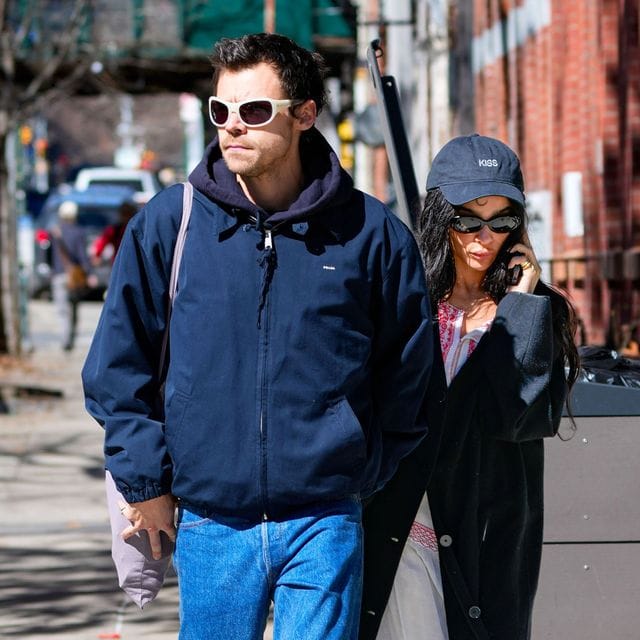
For now, Styles is still operating in the sweet spot where the fashion feels like an extension of the performance rather than a replacement for it. The question is how long that lasts — and whether the next generation of pop stars will have the option to show up in jeans and a T-shirt, or whether the runway has already swallowed the stage.