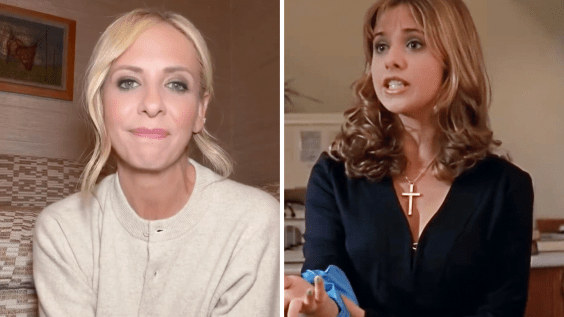
Hulu canceled its Buffy the Vampire Slayer revival before it ever made it to production, according to The Daily Dot, and the fan response wasn't relief or indifference — it was shock mixed with a kind of exhausted curiosity. "I *desperately* want to know what went on behind the scenes," one fan wrote, capturing the ambient suspicion that now surrounds every major IP resurrection. The cancellation wasn't announced with fanfare or explanation. It just quietly disappeared from development slates, leaving fans to piece together what happened and why a property that seemed like a guaranteed nostalgia win couldn't make it past the pitch stage.
The Buffy revival was supposed to be Hulu's prestige play — a way to capitalize on the show's enduring fan base while updating it for a new generation. But the project was haunted from the start. Original creator Joss Whedon's public fall from grace over the past few years — allegations of abusive behavior on set, toxic workplace culture, and a pattern of mistreatment that former cast members went public with — made any new Buffy project a minefield. Whedon wasn't attached to the revival, but his legacy was, and that legacy is now inseparable from the questions fans and critics would have asked before a single episode aired. Streaming platforms have spent the last five years betting that IP nostalgia could override creator baggage. The Buffy cancellation suggests they're finally realizing it can't.
This isn't the first time a high-profile reboot has collapsed under the weight of its own history. Tomorrow Studios attached Shinichirō Watanabe to its Samurai Champloo adaptation precisely because anime adaptations have learned that creator involvement is the only insurance policy against fan revolt. The Buffy revival had no such protection. It was being developed without Whedon, but also without a clear creative vision that could justify its existence beyond "people loved this show 20 years ago." That's not a strategy — it's a hope. And hope doesn't survive the scrutiny that comes with reviving a beloved property in 2026, when audiences are fluent in the business logic behind every nostalgia play and skeptical of anything that feels like a cash grab dressed up as cultural preservation.
The fan reaction to the cancellation is telling. There's disappointment, yes, but also a kind of relief that the show won't be subjected to a bad revival that tarnishes the original. That's the paradox streaming platforms are now facing: the IP they want to exploit is only valuable because fans care deeply about it, and fans who care deeply are the hardest to convince that a reboot is worth making. Hulu's yacht rock comedy revealed how streaming platforms turn niche music subcultures into predictable formulas, and the Buffy cancellation suggests the same thing is happening with beloved TV properties. The audience can see the formula now. They know when they're being sold nostalgia as product rather than being offered something that honors what made the original matter.
What makes the Buffy situation particularly revealing is how much creator baggage now factors into greenlight decisions. Whedon's fall didn't just damage his own career — it made every project associated with him radioactive in a way that's hard to quantify but impossible to ignore. Streaming platforms are risk-averse by nature, and the risk calculus for a Buffy revival in 2026 includes not just "will this find an audience" but "will this become a PR disaster before it even airs." That's a different kind of math than the one that drove the nostalgia boom of the late 2010s, when platforms assumed that recognizable IP was a guaranteed win. The Buffy cancellation is evidence that the IP nostalgia strategy is collapsing under its own contradictions: the properties worth reviving are the ones fans care about most, and the fans who care most are the least likely to accept a mediocre version.
The other factor at play is that streaming platforms are finally running the numbers on what nostalgia projects actually deliver. War Machine hit 39.3 million views in three days, but Netflix still can't build stars from its original content, and the same problem applies to reboots. A Buffy revival might generate initial curiosity, but if it doesn't land, it's not just a failed show — it's a damaged brand. And unlike a new IP, where failure is just failure, a bad reboot actively diminishes the value of the original property. That's a cost streaming platforms are starting to take seriously, especially as subscriber growth plateaus and the focus shifts from content volume to content that actually retains audiences.
The Buffy cancellation also highlights how much the entertainment industry has changed since the original show aired. Buffy was a product of the network TV era, when a show could build a passionate fan base over seven seasons and become a cultural touchstone without ever being a ratings juggernaut. That model doesn't exist anymore. Streaming platforms want hits that justify their budgets within weeks, not cult classics that build slowly. A Buffy revival would have needed time to find its audience and establish its own identity separate from the original — time that streaming platforms are increasingly unwilling to give. The economics don't support the kind of patient, character-driven storytelling that made the original Buffy work, and without that, a revival was always going to feel like a hollow imitation.
What happens next is the more interesting question. The Buffy cancellation might signal a broader pullback from nostalgia-driven IP plays, or it might just mean that platforms are being more selective about which properties are worth the risk. Either way, the era of greenlight-anything-with-name-recognition is over. Streaming platforms are learning what fans already knew: not every beloved show needs a revival, and trying to resurrect something without understanding why it mattered in the first place is a recipe for failure. The Buffy revival is gone before it started, and the real revelation isn't that Hulu canceled it — it's that they ever thought it could work in the first place.