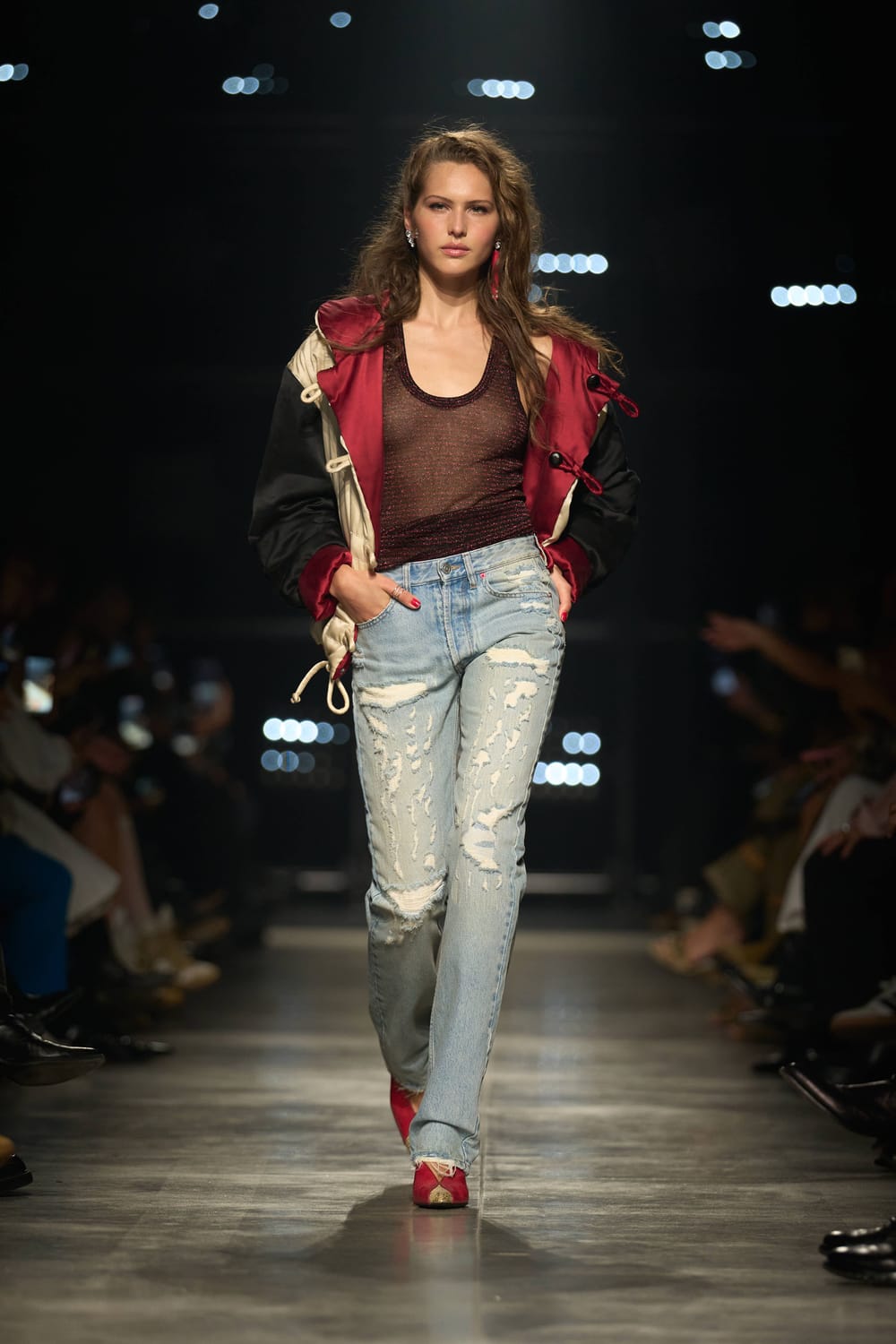
The Isabel Marant Fall 2026 collection opened with a model in an oversized blazer, slouchy trousers, and boots that looked effortlessly undone. It was a silhouette that could have walked out of a Marant show in 2010, or 2015, or last season. The styling was impeccable in its calculated casualness — hair that looked slept-in, minimal jewelry, the kind of confidence that reads as accidental but costs a fortune to manufacture. By look three, the pattern was clear: this was not a collection trying to rewrite Marant's playbook. It was doubling down on it.
And that's precisely the point. While other designers spend Paris Fashion Week chasing trend cycles or pivoting to capture younger audiences, Marant is doing what she's always done — delivering the French cool-girl aesthetic with the kind of consistency that makes finance teams very happy. The collection featured all the signatures: leather jackets with just enough edge, knitwear that drapes without trying, denim that looks lived-in from the first wear, and boots designed to anchor an entire wardrobe. It's a formula, but it's a formula that has kept Marant's business humming while more experimental brands struggle to find footing.
The commercial logic here is bulletproof. Marant's aesthetic occupies a specific position in the fashion ecosystem — expensive enough to signal taste, wearable enough to justify the price, and consistent enough that customers know exactly what they're buying into. It's not Viktor & Rolf's conceptual provocation or Saint Laurent's struggle to define itself post-Slimane. It's fashion as reliable luxury — the kind of product that moves units without requiring customers to decode a creative director's thesis statement.
This consistency is particularly valuable right now, when the luxury market is navigating economic uncertainty and shifting consumer priorities. Brands that have spent the past few years chasing hype cycles or reinventing themselves every season are discovering that constant reinvention is exhausting for both the creative team and the customer base. Marant's refusal to chase trends looks less like creative stagnation and more like strategic discipline. She's not trying to be everything to everyone — she's serving a specific customer who wants to look like they don't think too hard about what they're wearing, even though they absolutely do.
The collection also reveals something about how the industry values different kinds of creativity. Fashion celebrates the disruptors and the visionaries, but it's built on designers like Marant who understand that commercial success requires knowing when not to innovate. There's a reason department stores and multi-brand retailers love carrying Marant — her pieces sell through because they're not asking customers to take a risk. They're offering a pre-packaged identity that's been focus-grouped for two decades and refined to perfection.
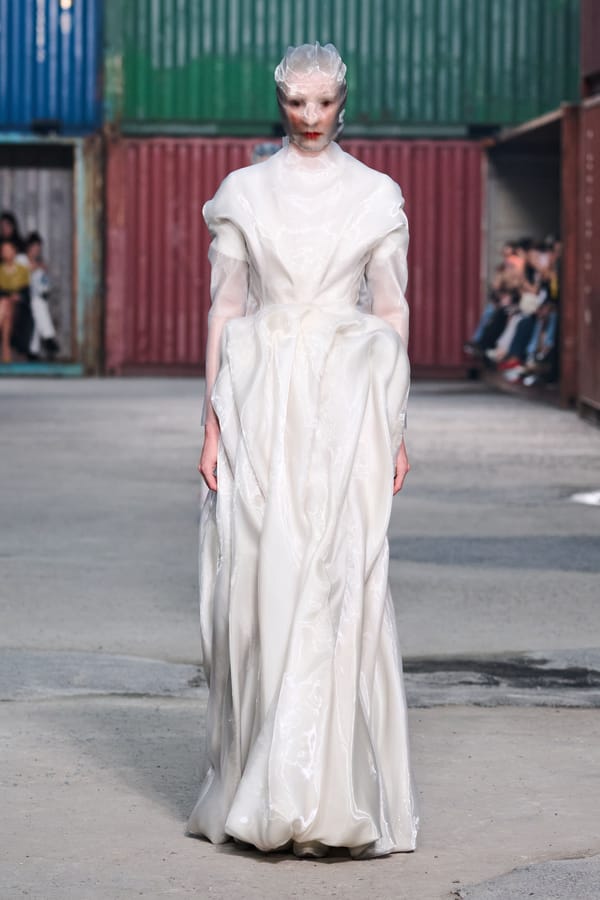
That's not a criticism — it's an observation about how fashion actually functions as a business. For every Anrealage pushing technical boundaries or Matières Fécales using provocation as design strategy, the industry needs brands that can deliver consistent revenue without requiring customers to be early adopters. Marant has built an empire by understanding that most people don't want to be fashion-forward — they want to look like they could be, if they cared to try.
The Fall 2026 collection also underscores how durable the "effortless French style" narrative remains, even as fashion becomes increasingly global and digitally native. Marant's aesthetic is rooted in a very specific fantasy — the Parisian woman who throws on a blazer and looks chic without effort — and that fantasy has proven remarkably resilient across market cycles and cultural shifts. It's aspirational without being intimidating, expensive without being ostentatious, and recognizable without being logo-driven. In an era when luxury brands are struggling to define what they stand for beyond their monograms, Marant's clarity of vision is a competitive advantage.
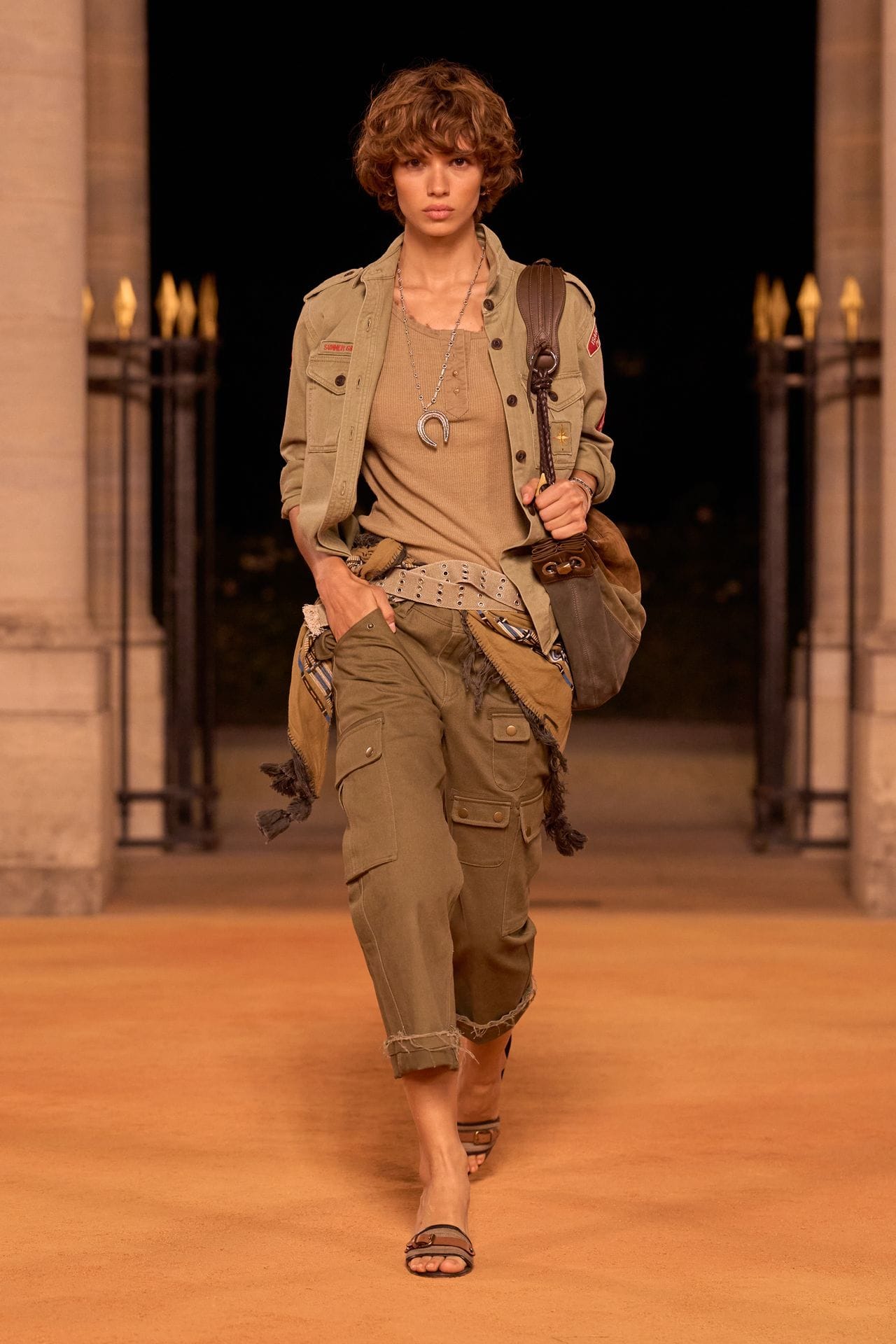
What makes this collection worth noting isn't that it breaks new ground — it's that it doesn't need to. While the rest of the industry debates whether luxury should be more accessible or more exclusive, whether heritage matters or youth culture drives sales, Marant keeps making the same clothes for the same customer, and that customer keeps showing up. The collection is a reminder that in fashion, the most radical move is sometimes refusing to move at all. When everyone else is pivoting, staying put can look like confidence. And in a nervous market, confidence sells.
For more, see Chloé’s archival strategy and Stella McCartney’s sustainable luxury push.