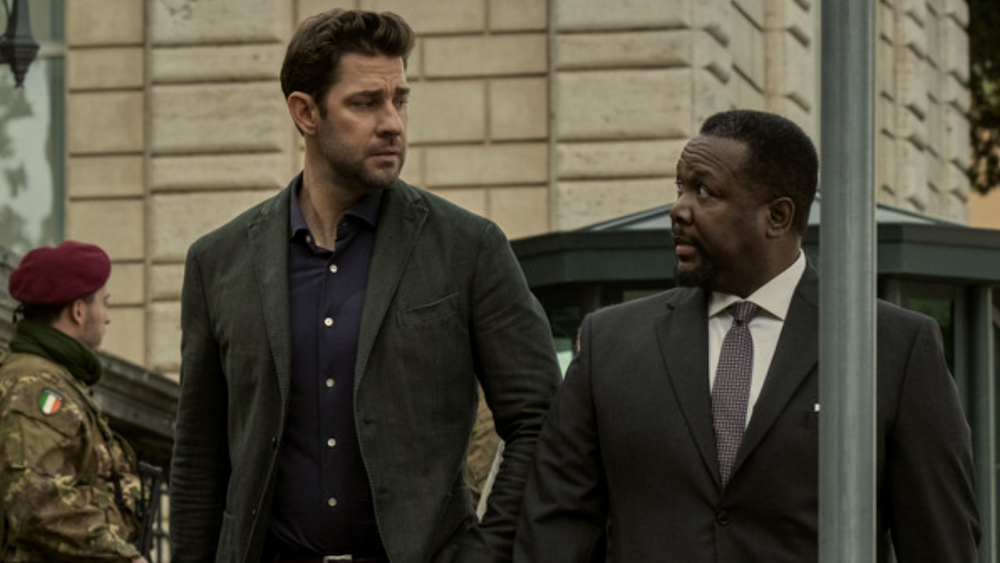
Prime Video released the trailer for Jack Ryan: Ghost War, a theatrical feature film hitting theaters May 20. John Krasinski returns as the reluctant CIA analyst turned field operative, this time facing what the studio is calling his "most personal and dangerous mission yet." The film marks the first time the character — who spent four seasons on Prime Video's streaming series — will appear on the big screen since Jack Ryan: Shadow Recruit flopped in 2014.
The decision to take a streaming franchise theatrical is not a creative pivot. It's a business calculation. Prime Video is testing whether the IP it built on its own platform has accrued enough cultural and commercial value to justify the economics of a wide theatrical release. That's a fundamentally different question than whether the movie will be good or whether fans will show up. It's about whether streaming services can build franchises that function as theatrical assets — or whether streaming IP remains quarantined to the platform that made it.
The math is straightforward. A theatrical release costs more to market, splits revenue with exhibitors, and exposes the IP to public failure in a way that streaming never does. Streaming platforms love announcing view counts because the numbers are unverifiable and the context is missing. Theaters don't offer that luxury. Box office is public, comparable, and unforgiving. If Ghost War underperforms, it's not a quiet algorithmic adjustment — it's a headline.
But the upside is real. A successful theatrical run revalues the entire franchise. It proves the IP can generate revenue outside the subscription model. It creates a cultural event that streaming — no matter how many push notifications Prime Video sends — cannot replicate. And it positions Jack Ryan as a multi-platform asset rather than a streaming exclusive, which matters when Amazon is trying to build a studio operation that competes with traditional Hollywood rather than just disrupting it.
The risk is that Ghost War exposes the limits of streaming's IP-building capacity. The Jack Ryan series was popular — Amazon renewed it through four seasons — but "popular on Prime Video" does not automatically translate to "worth $15 and a trip to the theater." The streaming audience is conditioned to consume content as part of a subscription bundle, not as individual purchases. Asking that audience to pay again, in a different format, for a character they already associate with their couch is a bigger leap than the studio is publicly acknowledging.
The move also clarifies where Amazon sees the future of its entertainment strategy. The company is not abandoning streaming — it's layering theatrical on top of it. That's the same model Disney has been running for years: build IP on Disney+, test it theatrically, then cycle it back to streaming. The difference is that Disney had decades of theatrical IP to start with. Amazon is building from scratch, which means every theatrical bet is higher stakes.
Ghost War is not the first streaming property to make the jump. Netflix has been experimenting with theatrical windows for years, though mostly as awards-season strategy rather than box office ambition. Apple has gone wide with films like Killers of the Flower Moon, but those were theatrical projects from the start, not streaming franchises being elevated. Jack Ryan is different. It was built for streaming, optimized for streaming, and successful on streaming. Taking it theatrical is not a prestige play — it's a stress test.
If it works, expect every major streaming service to start eyeing their own libraries for theatrical candidates. If it doesn't, streaming IP will remain streaming IP — valuable within its ecosystem, but not portable enough to survive outside it. Either way, May 20 is not just a release date. It's a referendum on whether the IP streaming platforms have spent billions building can function as anything other than subscriber retention tools.