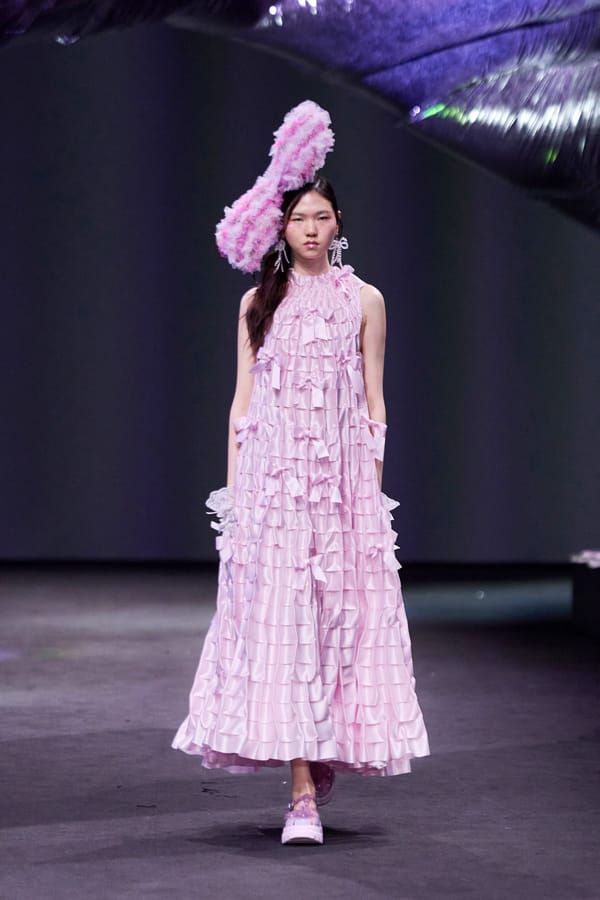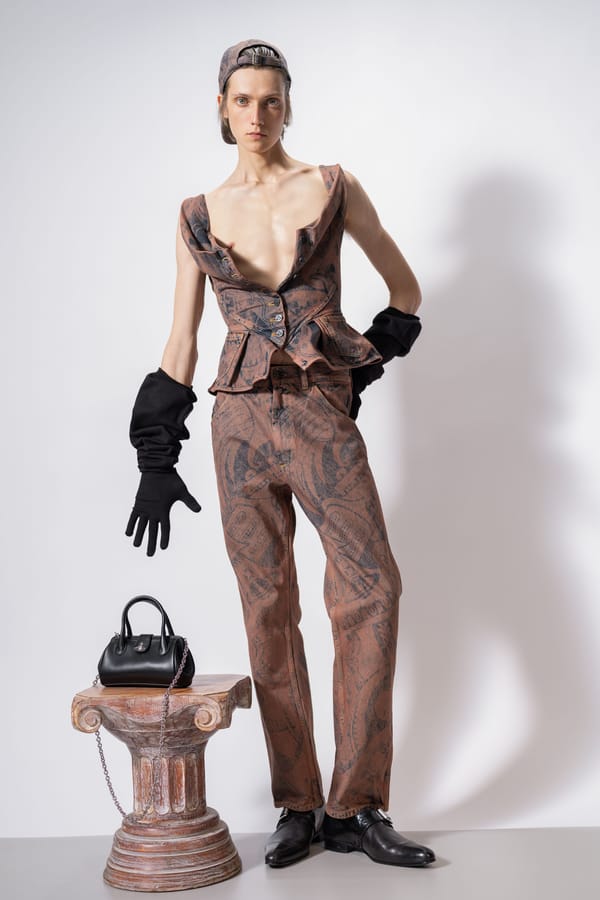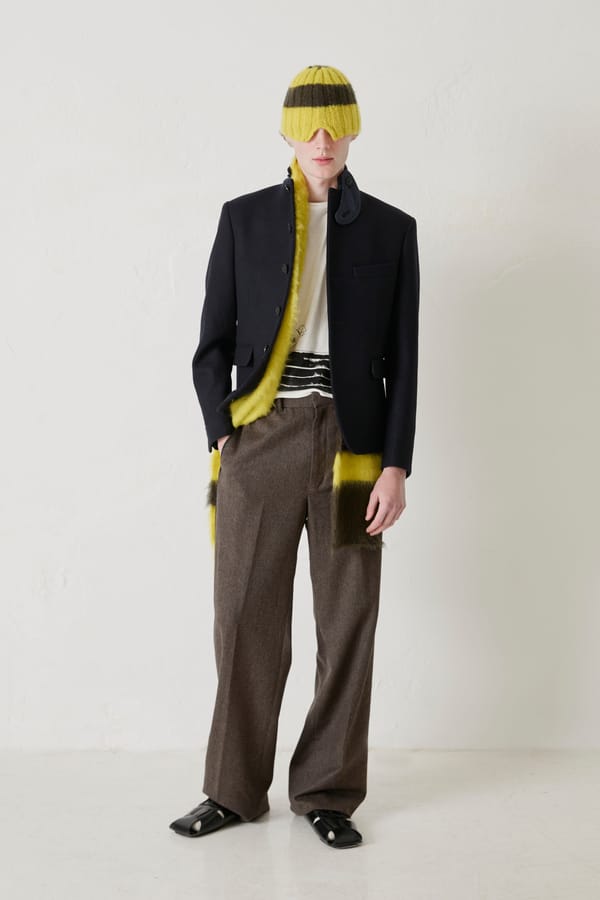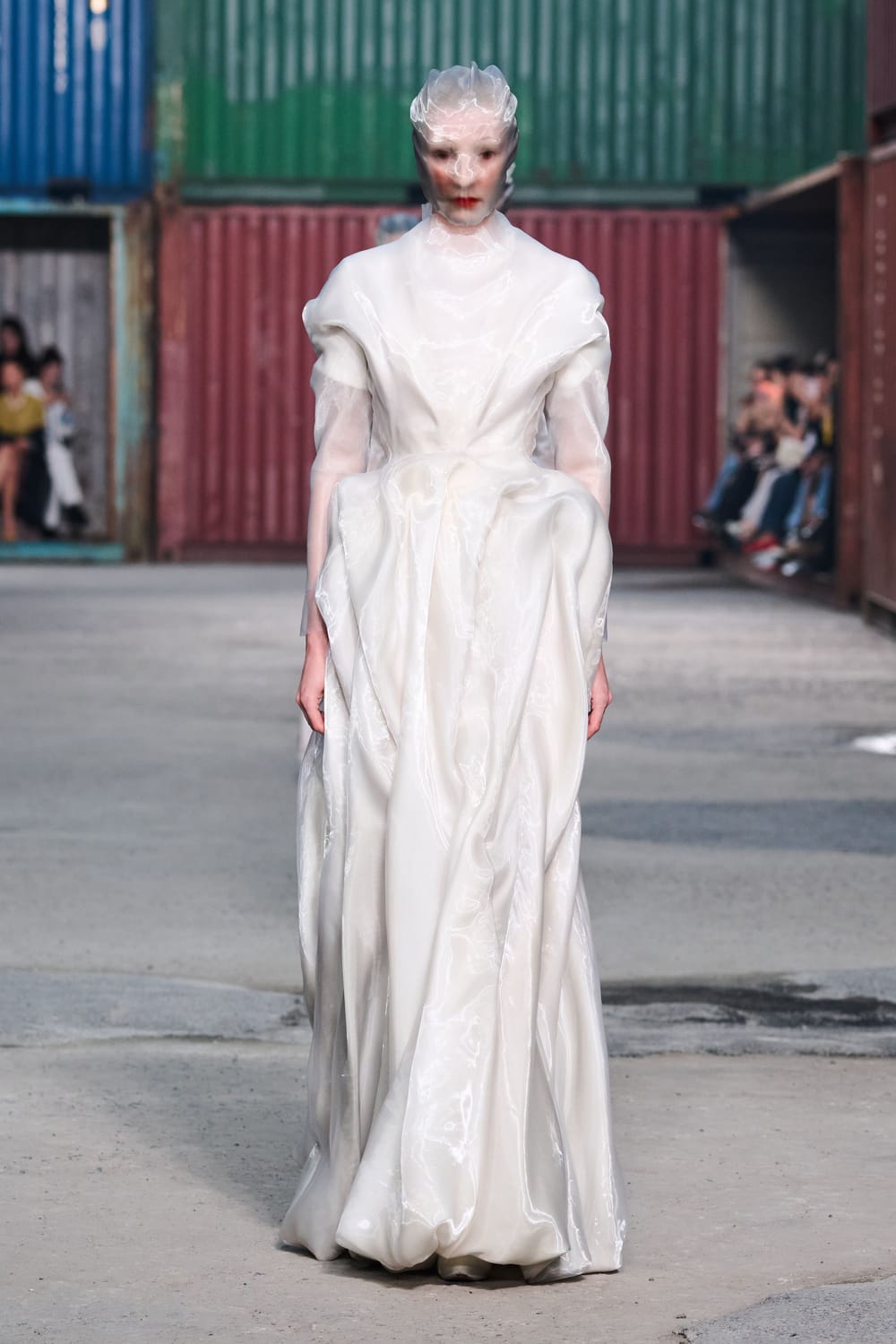
John Galliano's tenure at Maison Margiela has always operated on a specific premise: that fashion's highest calling is conceptual provocation, not commercial viability. Fall 2026's ready-to-wear collection reaffirms that position with a show that felt less like a seasonal offering and more like a thesis defense. Models emerged in garments that were structurally ambitious, visually arresting, and—by any practical measure—impossible to wear outside the context of a runway or a museum vitrine.
The collection leaned heavily into Margiela's foundational codes: deconstruction, recontextualization, garments that interrogate their own construction. Jackets were turned inside-out to expose seams and padding. Silhouettes were distorted through layering and padding techniques that rendered the body beneath unrecognizable. Fabrics were treated as sculptural material rather than functional textile. It was fashion as intellectual exercise, and Galliano executed it with the technical rigor and theatrical flair that has defined his work at the house since 2014.
But the collection also arrived at a moment when the fashion industry's tolerance for intellectualism without commercial payoff is visibly fraying. Luxury conglomerates are tightening budgets. Department stores are shrinking their buy lists. Wholesale is collapsing under the weight of direct-to-consumer models. And consumers—even wealthy ones—are increasingly skeptical of spending four figures on garments that require a curatorial statement to justify their existence.
Margiela under Galliano has always occupied a unique position within the LVMH portfolio. It's a prestige play, not a profit center. The house's revenue is a fraction of what Louis Vuitton or Dior generates, and that's by design. Margiela exists to signal that LVMH takes fashion seriously as an art form, not just as a vehicle for handbag sales. It's the same logic that allows Phoebe Philo's Céline alumni to command prestige even when their commercial performance is uneven—credibility has its own currency in this ecosystem.
But that currency is devaluing. The broader luxury market is contracting, and even prestige brands are being pressured to justify their existence in revenue terms. Galliano's Margiela operates with a level of creative freedom that is increasingly rare in an industry where creative directors are expected to deliver double-digit growth alongside critical acclaim. The question the Fall 2026 collection raises is not whether Galliano can continue making intellectually rigorous fashion—he clearly can—but whether the business infrastructure that supports that kind of work will remain intact.
The collection's lack of wearability is not an oversight. It's a feature. Galliano has repeatedly stated that his work at Margiela is about pushing boundaries, not accommodating customer expectations. The house's Artisanal line—haute couture in all but name—has always been the creative engine, with ready-to-wear functioning as a slightly more accessible translation of those ideas. But Fall 2026 blurred that distinction. The ready-to-wear looked like Artisanal that had been forced into a seasonal production schedule. The garments retained the conceptual ambition but lost the refinement that makes couture feel worth its price.
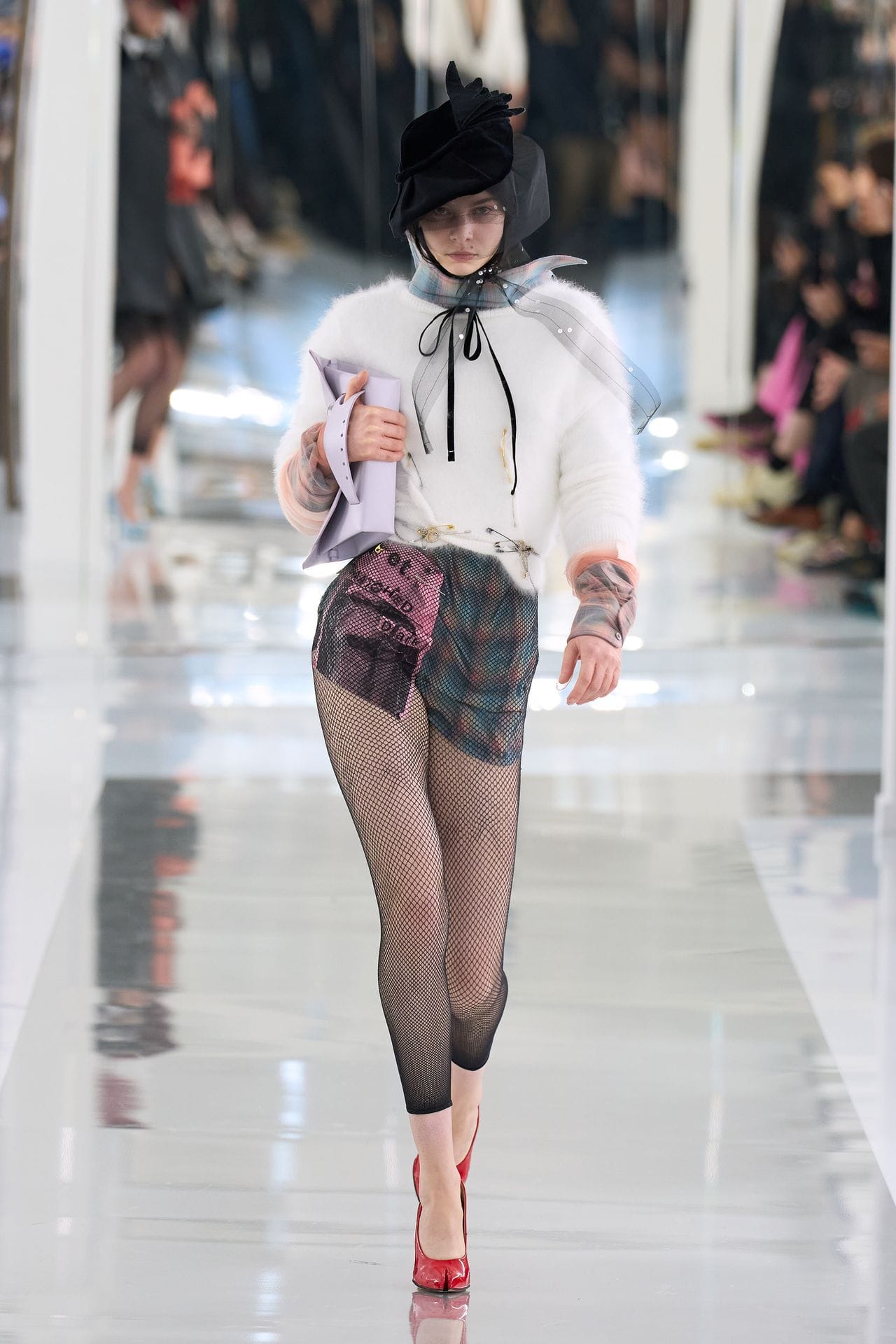
This is where the business tension becomes unavoidable. Margiela's ready-to-wear is expensive—jackets routinely cost $3,000 to $5,000, and that's before you get into the more elaborate pieces. At that price point, customers expect a garment they can actually wear, even if "wear" means "to a gallery opening twice a year." But Galliano's Fall 2026 collection offered garments that felt more like prototypes than finished products. The deconstruction was so aggressive that the clothes read as incomplete, which is conceptually interesting but commercially untenable.
The fashion press will praise this collection. It will be analyzed in academic journals and cited in design school critiques. But it will not sell. And in an industry where even prestige brands are being measured against profitability benchmarks, that matters more than it used to. LVMH's Loewe has managed to balance intellectual credibility with commercial success, proving that the two are not mutually exclusive. But Loewe's creative director, Jonathan Anderson, has always understood that conceptual fashion still needs to function as clothing. Galliano's Margiela operates under different rules—or rather, it has, until now.
The broader context is that fashion is moving away from intellectualism as a selling point. The market has shifted toward quiet luxury, wearable minimalism, and garments that signal taste without requiring a curatorial explanation. Margiela's aesthetic is the opposite of that trend. It's loud, difficult, and unapologetically niche. That has always been the brand's strength, but it's also becoming a liability in a market that is consolidating around safer, more commercially predictable aesthetics.
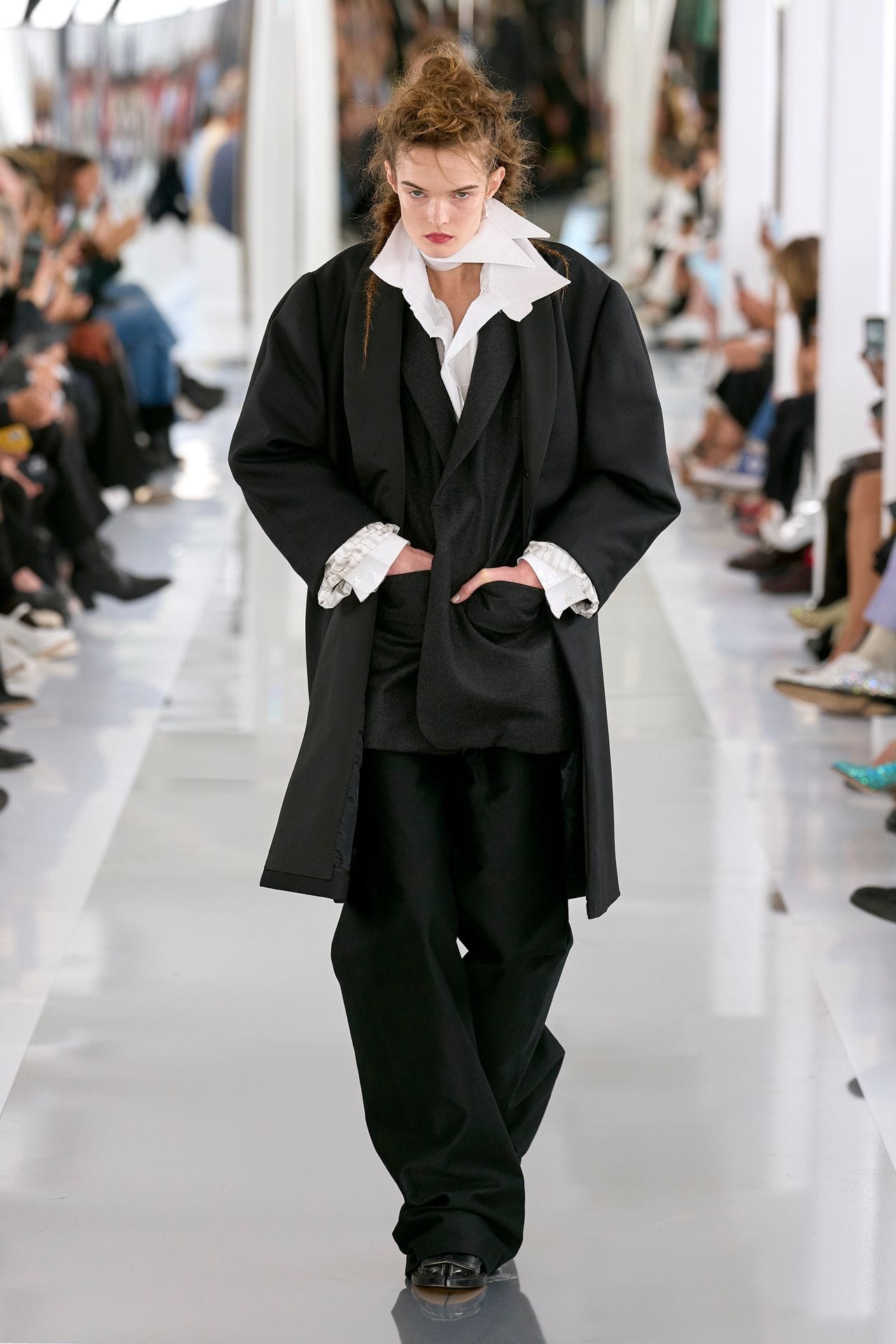
Galliano's Fall 2026 collection also raises questions about the role of the creative director in 2026. The job used to be about vision—making clothes that expressed a singular artistic perspective, regardless of whether they sold. But the economics of luxury fashion have changed. Creative directors are now expected to be brand strategists, product developers, and cultural influencers, not just designers. Galliano has never operated that way, and Margiela has given him the freedom to avoid those expectations. But that freedom is expensive, and it's not clear how much longer LVMH will continue subsidizing it.
The collection's most revealing moment came in the finale, when models walked in garments so heavily padded and distorted that their proportions became grotesque. It was a striking visual statement about fashion's obsession with the body, but it was also a garment that nobody—no matter how adventurous their taste—would ever wear. That's the tension at the heart of Galliano's Margiela: it's fashion that is meant to be looked at, not lived in. And in an industry that is increasingly skeptical of fashion that does not serve a functional purpose, that's a harder sell than it used to be.
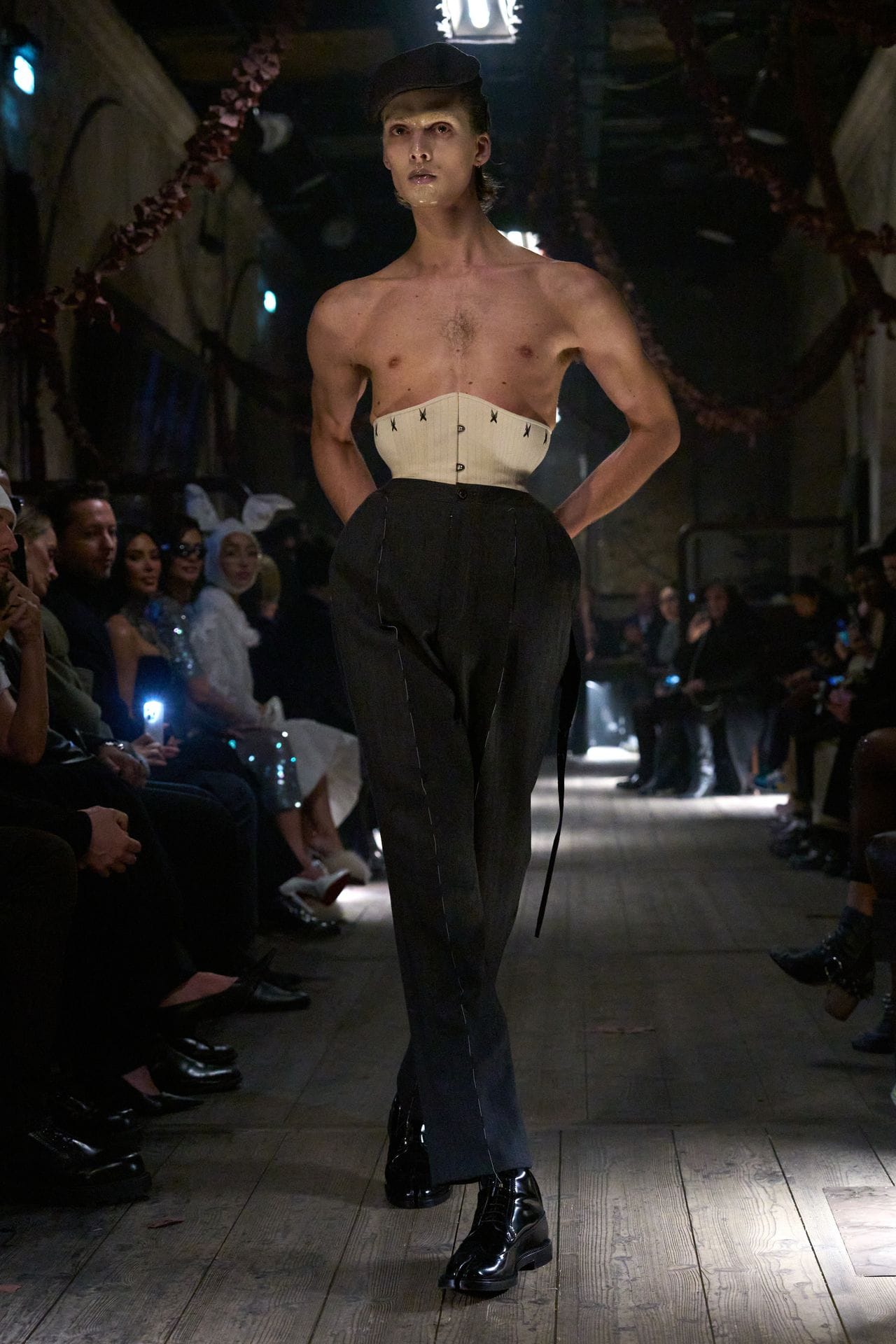
The fashion world will continue to celebrate Galliano's work at Margiela, because it represents a level of creative ambition that is rare in an industry dominated by commercial pressures. But celebration is not the same as support. Stores will buy fewer pieces. Customers will wait for sales. And LVMH will eventually have to decide whether the prestige value of Margiela justifies the financial reality. Fall 2026 is a beautiful collection, but it's also a reminder that intellectual fashion without wearability is a luxury the industry can afford less and less.