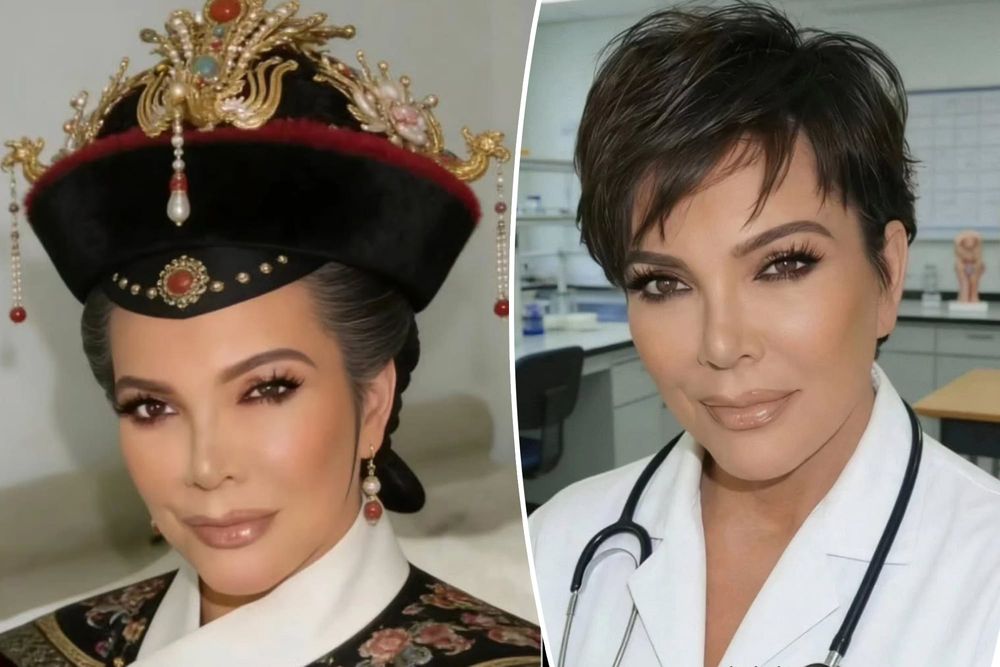
Kris Jenner's profile picture is flooding Chinese social media—not because users recognize her as the architect of the Kardashian empire, but because they've decided her face brings good luck. According to Page Six, social media users in China are treating the momager as a kind of digital talisman, changing their avatars to her image in hopes of manifesting success, wealth, or favorable outcomes. It's earnest. It's absurd. And it's the clearest illustration yet of what happens when Western celebrity brands cross borders they never anticipated.
The Kris Jenner prayer meme didn't emerge from Kardashian fandom—it emerged from platform-specific humor cultures that remix Western iconography into something entirely new. Chinese social media operates on different algorithmic logic, different humor codes, and different relationships to celebrity. What reads as brand equity in Los Angeles gets flattened into pure visual semiotics in Shanghai. Jenner's face doesn't signify "momager" or "reality TV empire builder" to users who've never seen Keeping Up With the Kardashians. It signifies wealth, confidence, and a vaguely aspirational American success narrative that can be repurposed as a joke, a charm, or both simultaneously.
This isn't the first time Western celebrities have been recontextualized beyond recognition. Duolingo's owl became a threatening meme. Gyaru Bulbasaur turned Pokémon into a meme template divorced from its original franchise context. But the Kris Jenner phenomenon is different because it's happening to a person whose entire brand is built on control—over narrative, over image, over how her family is perceived and monetized. The Kardashian-Jenner industrial complex has spent two decades engineering every aspect of their public presentation. And none of that infrastructure matters the moment the image crosses into a platform ecosystem they don't control, speaking to an audience they never courted.
The prayer meme works because it's illegible to the West. It's not fan engagement that can be tracked, monetized, or converted into brand partnerships. It's not even mockery in the traditional sense—it's affectionate, participatory, and completely untethered from the Kardashian media apparatus. There's no way to sell this audience anything. There's no way to convert meme ubiquity into a product launch or a licensing deal. The image has been liberated from its commercial context and repurposed as pure cultural material.
This is what algorithmic platforms do when they fragment audiences across linguistic and cultural borders: they create parallel meaning systems where the same image can signify entirely different things. Kris Jenner is a business strategist in the U.S. and a good luck charm in China, and both interpretations exist simultaneously without ever needing to reconcile. Western celebrities are used to global reach, but they're not used to global reinterpretation on this scale. The infrastructure that made them famous—television, tabloids, Instagram—gave them the illusion of control. The meme economy doesn't.
The broader implication is that celebrity brand equity is increasingly regional, not global. What a celebrity "means" in one market can be completely unrelated to what they mean in another, and the platforms connecting those markets have no incentive to preserve coherence. Brands are learning they can't ignore what the internet does to their image, but they also can't control it once it escapes their primary audience. The Kardashians built an empire on narrative control. The Kris Jenner prayer meme is what happens when that control evaporates the moment the image crosses a border the family never thought to defend.
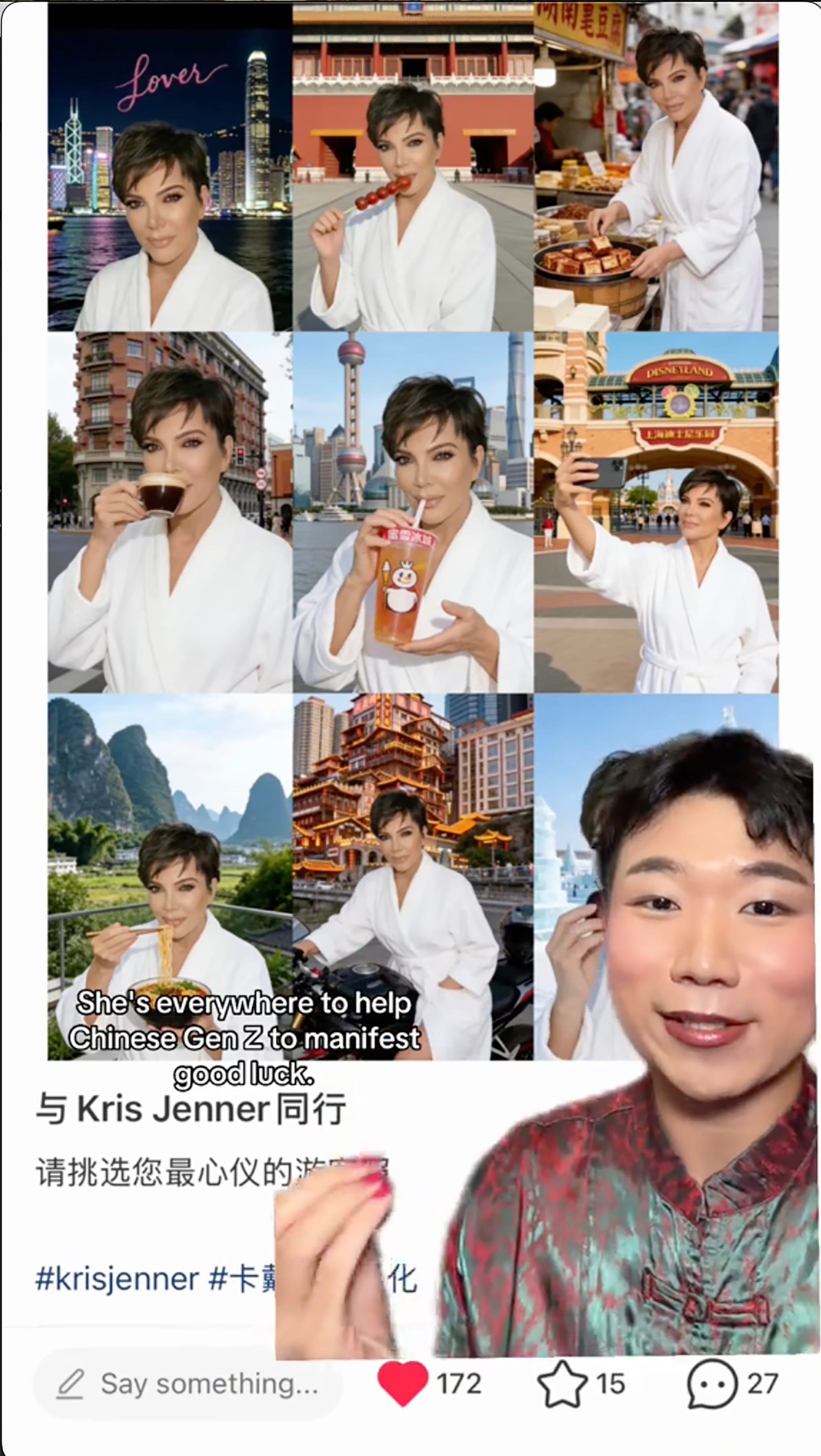
Western celebrities have spent the last decade chasing global audiences, assuming that fame translates universally. It doesn't. What translates is the image, stripped of context, ready to be remixed into whatever the local humor culture needs it to be. Kris Jenner didn't plan to become a digital good luck charm. But her face is now doing work she never authorized, for an audience she'll never reach, in a context she can't monetize. That's not a crisis for her—it's just the new normal for what happens when celebrity images become raw material for platform-specific meaning-making.
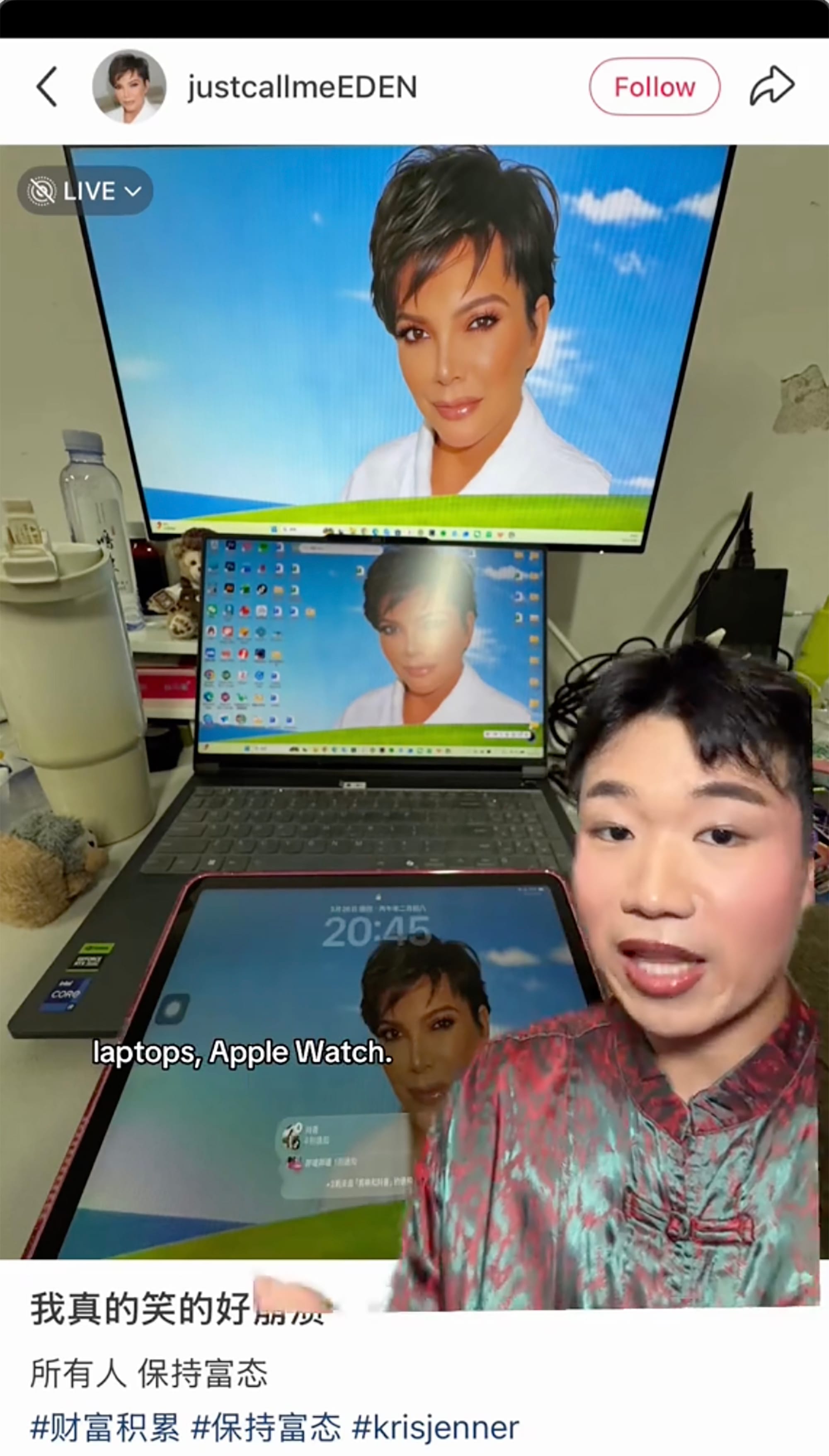
The prayer meme will fade. Another Western celebrity will get recontextualized in another unexpected way. The pattern is what matters: the infrastructure that made global celebrity possible is the same infrastructure that makes global brand coherence impossible. Kris Jenner's face belongs to Chinese social media now, at least for as long as the joke stays funny. And there's nothing her team can do about it except watch.