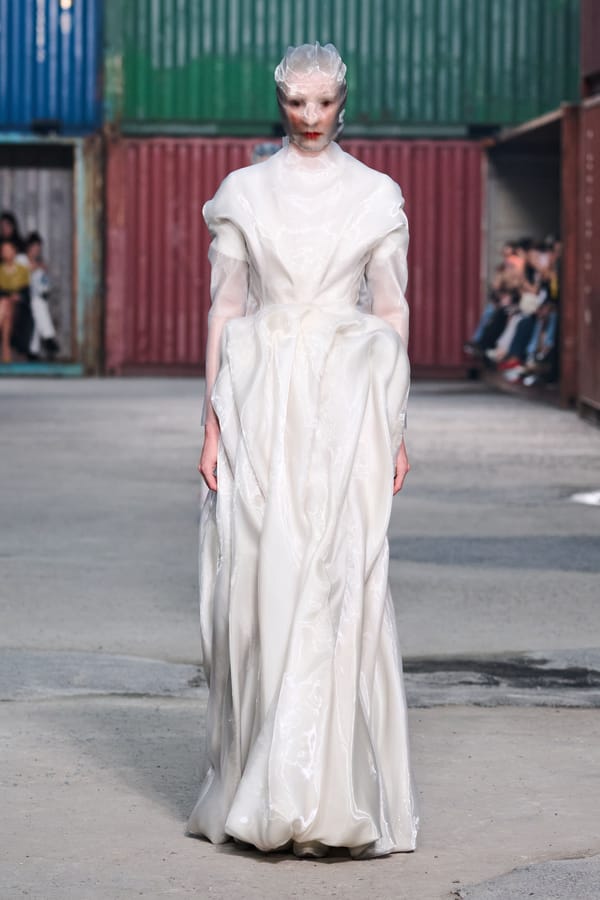
Nicolas Ghesquière sent a white leather coat down the runway at Louis Vuitton's Fall 2026 show—structured, architectural, with a collar that stood like a monument to tailoring. It wasn't designed to go viral. It wasn't meant for TikTok. It was built to last in museum archives and private collections, the kind of garment that signals luxury's intellectual ambitions rather than its quarterly earnings targets.
That coat is doing more work than it appears. While LVMH's other brands—Dior, Fendi, Givenchy—chase celebrity collaborations, streetwear adjacency, and the kind of logo-heavy product that moves units, Ghesquière's Fall 2026 collection holds the conglomerate's intellectual high ground. It's LVMH's insurance policy: proof that the world's largest luxury group still employs designers who think in decades, not drops.
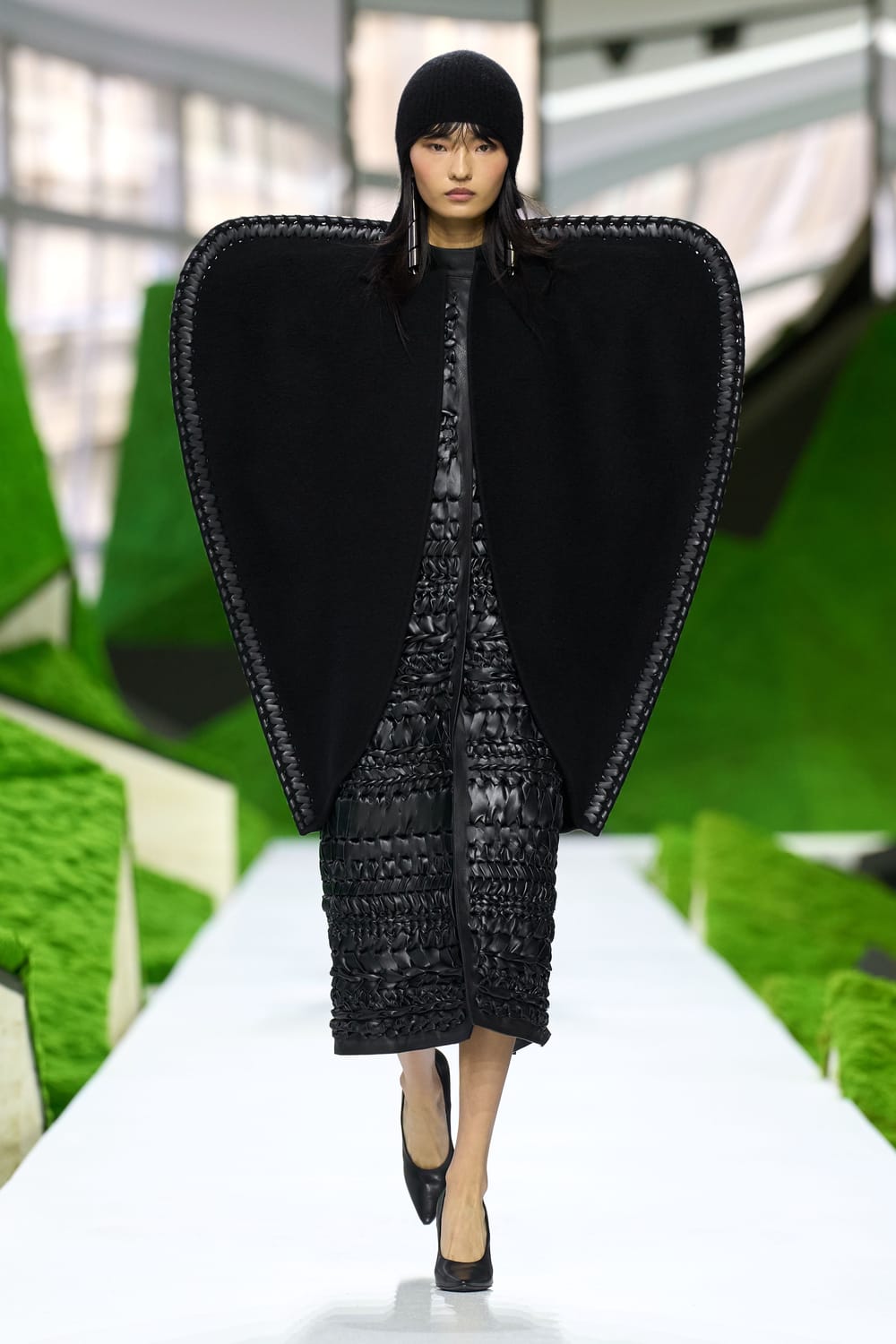
The collection leaned into Ghesquière's signature futurism—sharp tailoring, geometric silhouettes, materials that felt engineered rather than draped. There were structured leather pieces that referenced armor, coats with exaggerated proportions, dresses that played with volume in ways that required a second look to understand. According to Vogue's runway coverage, the show emphasized craftsmanship and construction over overt branding, a deliberate choice in an era when Louis Vuitton's monogram is one of the most recognizable—and merchandised—symbols in fashion.
That restraint is strategic. LVMH has spent the past decade turning Louis Vuitton into a $20 billion revenue engine, largely by leaning into accessible luxury: logo bags, sneaker collaborations, celebrity partnerships that drive social media engagement. It works. But it also creates a problem. When your brand becomes synonymous with viral moments and mass appeal, you risk losing the cultural authority that justifies charging $5,000 for a handbag in the first place.
Ghesquière's role is to prevent that erosion. His collections don't need to be the bestsellers—Marc Jacobs' successor, he's never been tasked with replicating the commercial dominance of the monogram canvas. Instead, he's the designer who keeps Louis Vuitton credible in the rooms where luxury's intellectual legitimacy is decided: museum retrospectives, fashion criticism, the kind of editorial coverage that treats fashion as art rather than product. Chloé's Fall 2026 collection showed what happens when heritage becomes the entire strategy. Ghesquière's Louis Vuitton does the opposite—heritage is the foundation, but the work is resolutely forward-looking.
The business logic is clearer when you look at LVMH's broader portfolio. Dior is chasing Gen Z with celebrity ambassadors and TikTok-friendly campaigns. Fendi is leaning into logomania and collaborations. Givenchy is still trying to find stable creative direction after years of designer turnover. None of that is inherently bad—it's how you build a $400 billion luxury conglomerate. But it does create a credibility gap. If every brand is optimizing for virality and accessibility, who's making the case that luxury still means something beyond price and logo recognition?
That's Ghesquière's assignment. His Fall 2026 collection included sculptural outerwear, laser-cut leather, and silhouettes that required genuine design innovation rather than nostalgic referencing. These are not clothes designed to move volume. They're designed to anchor Louis Vuitton's reputation as a house that still employs a visionary designer working at the highest level of craft. When LVMH needs to defend its luxury credentials—in press coverage, in investor presentations, in conversations with collectors and curators—Ghesquière's work is the evidence.
The tension is visible in how Louis Vuitton operates as two brands under one name. Walk into a Louis Vuitton store and you'll see the monogram bags and logo sneakers that generate most of the revenue. But the runway collections—Ghesquière's domain—occupy a different space. They're shown in Paris, covered by Vogue and the serious fashion press, and treated as cultural events rather than product launches. The clothes eventually make it to stores, but they're not the point. The point is maintaining the narrative that Louis Vuitton is still a fashion house, not just a luxury goods manufacturer.
This dual-brand strategy isn't unique to Louis Vuitton—Prada's Versace turnaround relies on a similar model, where the runway work maintains prestige while the commercial product drives profit. But Louis Vuitton's version is more visible because the gap between the two is so wide. Ghesquière's collections feel like they exist in a parallel universe to the brand's social media presence, its celebrity partnerships, its collaborations with artists and athletes. That distance is intentional. LVMH needs both—the commercial engine and the intellectual alibi.
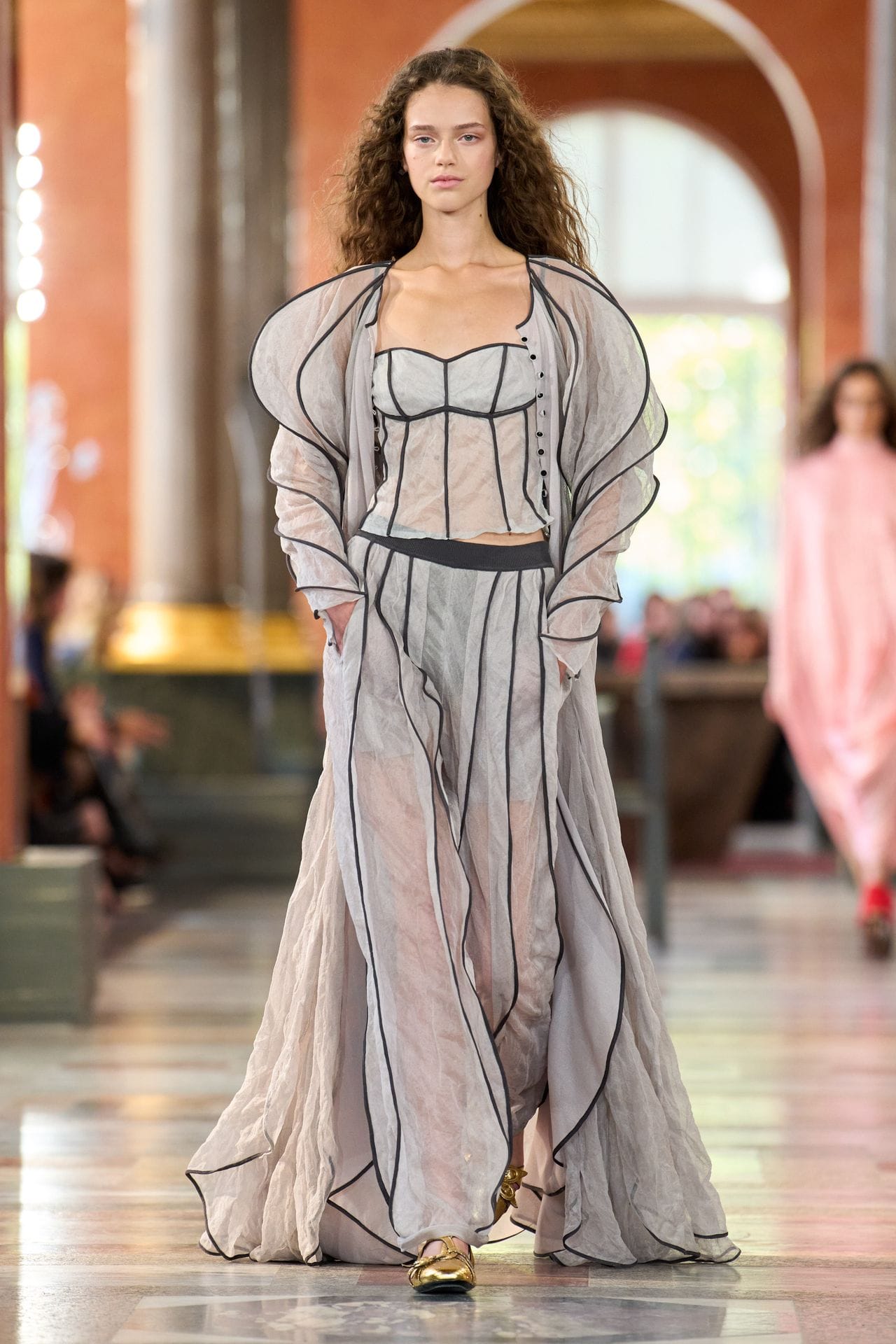
The Fall 2026 collection also signals where LVMH sees luxury heading in the next decade. While competitors chase streetwear's fading cultural dominance and bet on nostalgia-driven archival revivals, Ghesquière is building a case for luxury as forward-thinking craft. The materials were high-tech, the construction was architectural, the references were to future aesthetics rather than past glories. It's a bet that the next generation of luxury consumers—the ones who will justify $10,000 handbags in 2035—will value innovation over heritage, vision over virality.
Whether that bet pays off depends on how luxury's center of gravity shifts over the next five years. Right now, the commercial momentum is still with accessible luxury, logo-heavy product, and celebrity-driven campaigns. But LVMH is hedging. Ghesquière's Louis Vuitton is the hedge—a long-term investment in cultural legitimacy that doesn't need to justify itself in quarterly earnings but will matter enormously if luxury's intellectual credibility becomes a competitive advantage again.
The white leather coat that opened the show wasn't designed to sell. It was designed to prove that Louis Vuitton still employs someone who knows how to make a coat like that—and that LVMH still values the kind of designer who would spend resources on proving it.