Lorenzo Bertelli stood in front of analysts in March 2025 and did what heirs to luxury empires rarely do: he laid out exactly how Prada Group plans to turn Versace profitable. Not through vague promises of "heritage" or "craftsmanship," but through the unglamorous mechanics of supply chain optimization, pricing architecture, and what the industry calls "brand elevation." He talked about leather goods margins. He talked about retail footprint rationalization. He talked about Versace the way private equity talks about underperforming assets — which is precisely what it was when Capri Holdings sold it to Prada Group for $1.4 billion in December 2024.
The plan Bertelli unveiled to Vogue is textbook conglomerate strategy: tighten operations, expand leather goods and accessories (the actual profit drivers in luxury), reduce reliance on ready-to-wear (the brand-building category that rarely makes money), and leverage Prada Group's existing infrastructure to cut costs. It's the same playbook LVMH used to turn around Dior, Kering used at Gucci, and Richemont is attempting with multiple brands. The difference is that Versace isn't a sleepy heritage house that lost its way. It's a maximalist, celebrity-driven, unapologetically loud brand built on Donatella's vision of excess as aspiration. The question Prada Group is now tasked with answering is whether that kind of brand identity can survive the operational discipline required to make it profitable.
Prada Group's 2025 revenues grew 9%, driven almost entirely by the core Prada and Miu Miu brands. Versace, by contrast, has been bleeding relevance and revenue for years. Under Capri Holdings, it was squeezed into a portfolio alongside Michael Kors and Jimmy Choo — brands with entirely different customer bases and pricing strategies. The result was a Versace that felt confused: too expensive to be accessible, too ubiquitous to feel exclusive, too dependent on logo-heavy designs that read as dated rather than iconic. Prada Group's pitch is that it can fix this by doing what it does best: making luxury goods that justify their price through material quality and design rigor, not just brand recognition.
The problem is that Versace's brand recognition is its most valuable asset. The Medusa logo, the safety pins, the jungle print — these are not subtle signifiers of taste. They are loud, unmistakable, and deeply tied to a specific vision of glamour that doesn't fit neatly into the "quiet luxury" moment that has defined the past three years. Prada Group's plan to "elevate" Versace almost certainly means pulling back on the logo saturation and celebrity collaborations that kept it visible, even when it wasn't profitable. That's a rational business decision. It's also a gamble that the brand can retain its identity while shedding the very things that made it recognizable.
Bertelli's emphasis on leather goods is telling. Handbags and accessories are where luxury conglomerates make money — margins on a $3,000 bag are significantly higher than on a $5,000 dress, and bags sell in higher volume with less seasonal risk. But Versace's handbag business has never been its strength. The brand's equity is in ready-to-wear, in red carpet moments, in the kind of high-octane fashion that photographs well but doesn't necessarily translate to everyday wardrobe staples. Prada Group's bet is that it can build a handbag business from scratch by leveraging its supply chain expertise and retail network. That's possible. What's less clear is whether customers who want a Versace bag exist in the numbers required to justify the investment, or whether they'll just buy Prada instead.
The broader context here is that luxury conglomerates are running out of brands to acquire. The independent houses that defined the industry for decades have nearly all been absorbed into LVMH, Kering, or Richemont. What's left are either brands too small to move the needle or brands like Versace — recognizable but troubled, with enough equity to justify the price tag but enough operational dysfunction to require a complete overhaul. Prada Group's acquisition of Versace is less about expanding its portfolio than about proving it can do what the bigger conglomerates have done: take a struggling brand and turn it into a profit engine without erasing what made it valuable in the first place.
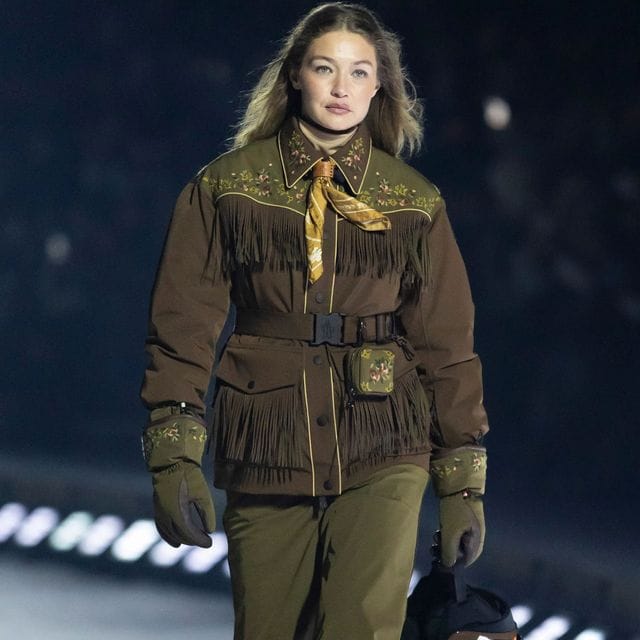
The challenge is that Versace's value has always been tied to a specific kind of cultural currency that doesn't optimize well. Donatella's vision of Versace is inseparable from celebrity culture, from the red carpet, from a very particular idea of sexiness that feels increasingly out of step with where fashion has moved. The industry's current obsession with "stealth wealth" and "timeless design" is fundamentally at odds with Versace's DNA. Prada Group can rationalize the supply chain, improve the quality, and expand the product categories. But it can't change the fact that Versace's brand identity is loud in a moment when the market is rewarding quiet.
What makes this particularly interesting is that Prada Group itself has spent the past decade moving in the opposite direction. Miuccia Prada and Raf Simons have built a Prada aesthetic that is intellectual, conceptual, and deliberately anti-commercial in its presentation, even as the business has become more commercially focused. Miu Miu's recent success has been driven by a similar strategy: clothing that feels niche and insider-y, marketed in a way that makes it feel discovered rather than sold. Versace is the inverse of that approach. It's a brand that has always been about being seen, about making a statement, about rejecting subtlety. Trying to apply the Prada playbook to Versace is like trying to make a nightclub feel like a library — you might succeed, but you'll lose everyone who came for the music.
There's also an accountability question embedded in this turnaround plan. Capri Holdings' mismanagement of Versace was well-documented — the brand was over-distributed, under-invested in design, and treated as a logo licensing opportunity rather than a fashion house. Prada Group is positioning itself as the savior, but the structural issues it's addressing are the same ones that every luxury conglomerate creates when it prioritizes profitability over creative vision. The supply chain efficiencies Bertelli is promising come with trade-offs: less flexibility for designers, more pressure to create commercially safe products, and a gradual homogenization of the brand's output to fit the conglomerate's operational model. That's not inherently bad, but it does mean that Versace under Prada Group will almost certainly be a different brand than Versace under Donatella's independent vision — assuming that vision ever had the operational support to fully realize itself.
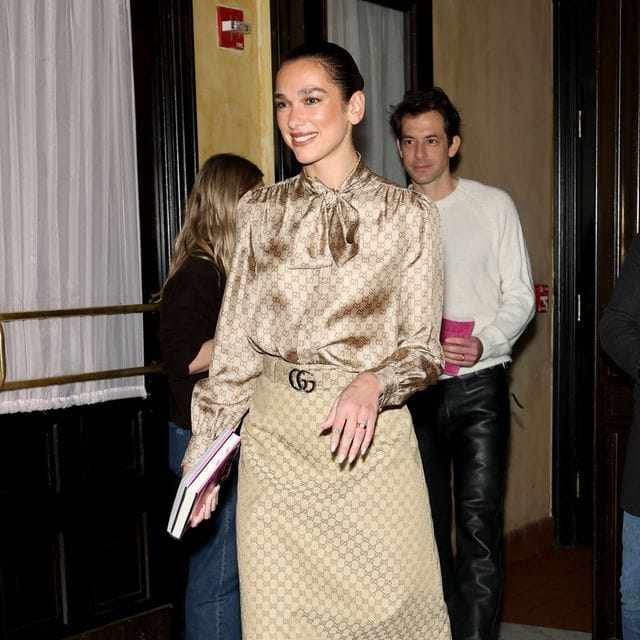
The broader pattern here is that luxury conglomerates are betting they can extract profitability from maximalist, personality-driven brands by applying the same operational discipline that works for heritage houses. Sometimes that works — Gucci under Kering is the obvious success story. But Gucci's turnaround was driven by a creative director who understood how to translate maximalism into product that people wanted to buy. Versace doesn't have that right now. It has a conglomerate with a plan, a legacy that's worth something, and a market that has moved on from what made it iconic. Whether Prada Group can build a profitable Versace without killing what made it matter is the test case for whether luxury consolidation is a strategy or just a way to monetize nostalgia until it runs out.

If Versace's turnaround succeeds, it will prove that conglomerate infrastructure can save brands that lose their way. If it fails, it will prove that some brands are only valuable as long as they're allowed to be inefficient, loud, and a little bit messy — and that optimizing them out of existence is just a slower way of killing them.
For more, see Saint Laurent’s confidence problem and Tom Ford’s post-designer era.