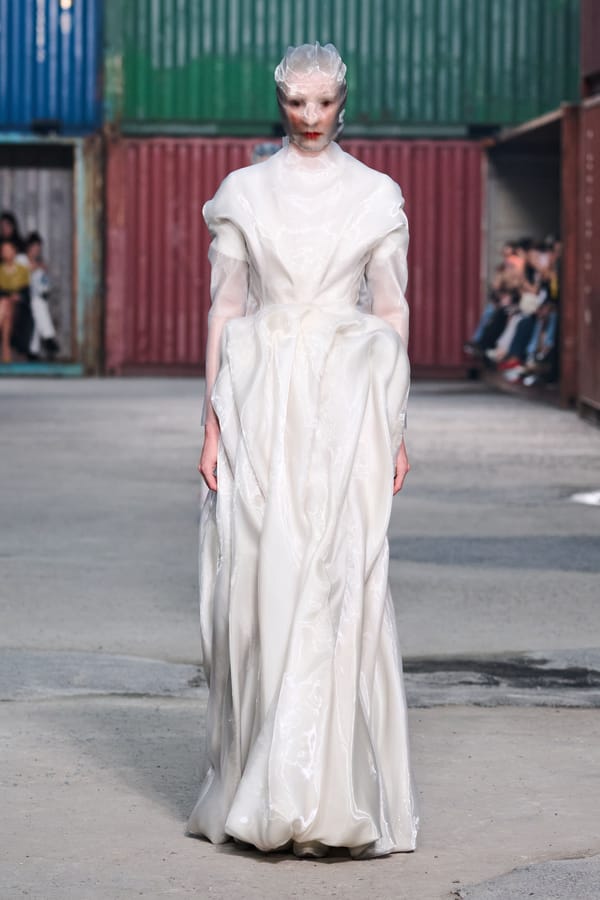
The models walked through a fog of dry ice in towering platform boots, their bodies wrapped in asymmetrical drapes that fell like liquid stone. Rick Owens's Fall 2026 ready-to-wear collection opened with the same architectural severity that has defined his work for two decades: elongated silhouettes, monochromatic palettes, and construction that treats fabric like a building material rather than decoration. The silhouettes were exaggerated—shoulders extended into sculptural wings, hems pooled on the floor in deliberate excess—but the vocabulary was unmistakably Owens. No surprise collaborations. No viral moments engineered for TikTok. Just another season of draped monoliths and geometric precision from a designer who has spent his career proving that refusing to pivot is its own form of brand strategy.
What made the collection notable wasn't what it contained—it was what it didn't. There were no references to the Y2K revival that has consumed contemporary fashion, no nods to the dopamine-dressing movement that dominated Spring 2026, no sudden shift toward accessibility or commercial softening. Owens delivered exactly what his audience expects: dark, dramatic, and uncompromising. In an industry that rewards reinvention and punishes predictability, that consistency reads as either stubbornness or confidence. The difference is whether the market keeps showing up. For Owens, it does.
The business case for Owens's approach is more compelling now than it was a decade ago. While houses like Balmain chase viral moments and Saint Laurent wrestles with its own identity crisis, Owens has built a brand that doesn't need to explain itself seasonally. His customers aren't buying into a trend—they're buying into a worldview. That creates a different kind of loyalty, one that isn't contingent on whether the collection feels "fresh" or "relevant" to editors who need a new narrative every six months. It's the same strategy that has insulated brands like The Row and Lemaire from the volatility that plagues more trend-responsive labels. The product doesn't need to change because the customer base isn't asking it to.
That stability also allows Owens to experiment within his own vocabulary rather than chasing external validation. Fall 2026 included exaggerated proportions that pushed his signature silhouettes into new territory—sleeves that extended past the hands, hemlines that required careful navigation, platform boots that added eight inches of height. These weren't commercial concessions or attempts to soften his aesthetic for a broader audience. They were refinements of an existing language, the kind of incremental evolution that only works when a designer has the institutional support and customer trust to take risks without abandoning the core identity. It's the difference between evolution and reinvention, and Owens has always understood that the former is more sustainable than the latter.
The collection also highlighted how much fashion's relationship to minimalism has shifted. A decade ago, Owens's aesthetic was positioned as a counterpoint to the maximalism of the mid-2010s—dark and severe against a backdrop of color and embellishment. Now, as maximalism returns through designers like Olivier Rousteing and the resurgence of Y2K excess, Owens's work reads differently. It's not oppositional anymore. It's foundational. The architecture is still there, the proportions are still exaggerated, but the context has changed. What once felt like a rebellion now feels like a refuge—a reminder that fashion can build a vocabulary and stick with it, even when the industry's attention economy rewards constant reinvention.
That doesn't mean Owens is immune to the pressures facing luxury fashion. His brand operates in the same ecosystem as everyone else, subject to the same economic volatility, the same shifts in consumer spending, the same questions about accessibility and relevance. But his refusal to chase trends has insulated him from the specific vulnerability that comes with building a brand on what's happening right now. When a house pivots to capture a moment, it inherits the lifespan of that moment. When the trend moves, the brand has to move with it or risk looking dated. Owens doesn't have that problem because he never built his business on being timely. He built it on being consistent.
The challenge for Owens—and for any designer who has spent decades refining a singular vision—is whether that consistency can sustain growth. The customers who buy Rick Owens today are buying into a well-established aesthetic, one that doesn't require much explanation or education. But growth requires new customers, and new customers often come from cultural moments that create entry points. Dries Van Noten's Fall 2026 collection showed how a house can evolve without its founder by leaning into its archive and creating space for new interpretations. Owens's challenge is different: how do you bring new people into a world that has been so carefully controlled, so resistant to external influence, without diluting what made it valuable in the first place?
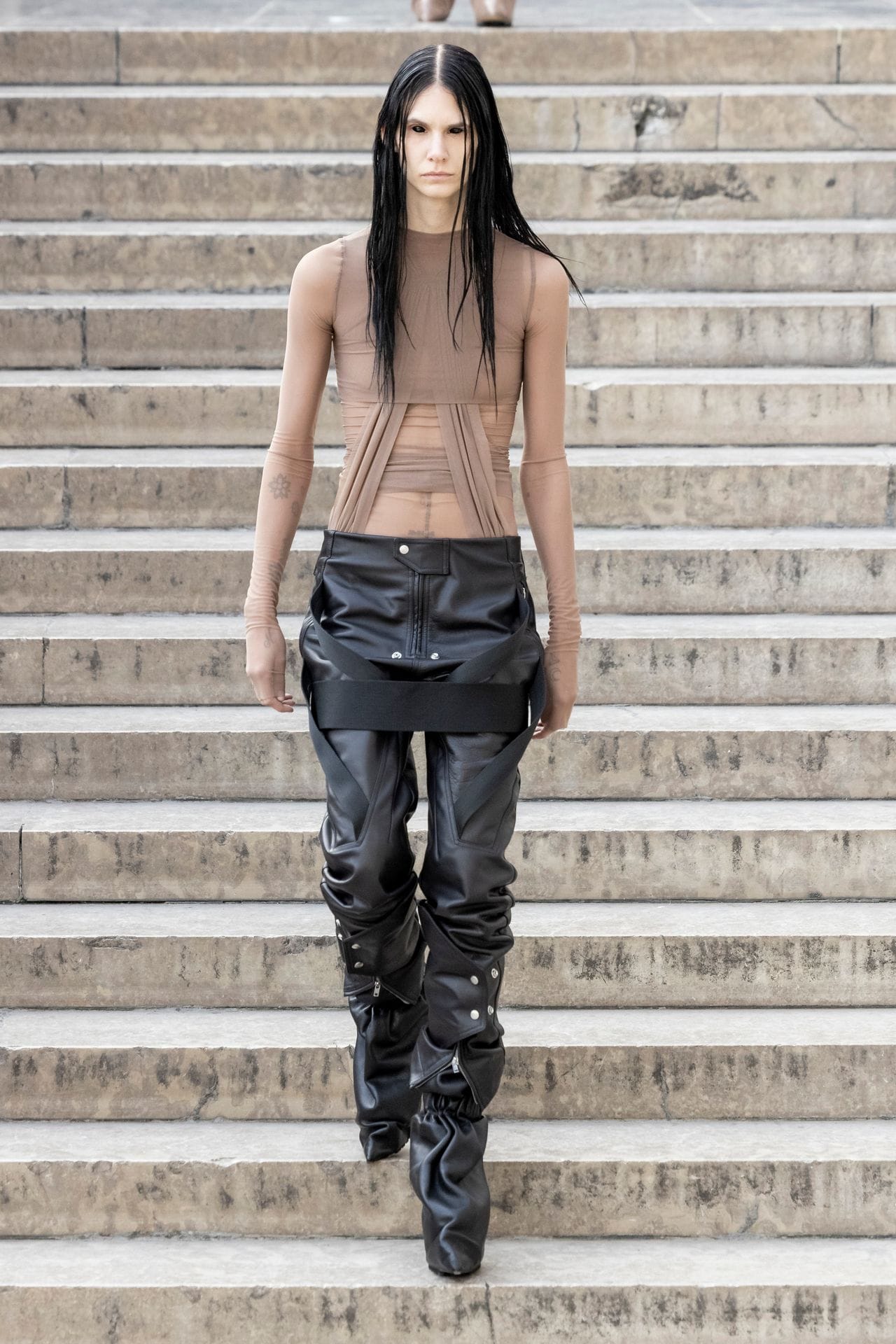
Fall 2026 didn't answer that question, but it didn't need to. The collection was a reminder that in an industry built on the premise that change is the only constant, there's still power in staying exactly where you are. The platforms were still towering. The drapes were still architectural. The palette was still monochrome. And the audience—both the one in the room and the one that will buy the collection—knew exactly what they were getting. That's not stagnation. It's strategy. And in a market where most brands are still trying to figure out who they want to be next season, Owens has already decided who he is.
For more, see Saint Laurent’s confidence problem and Uma Wang’s independence from the luxury system.