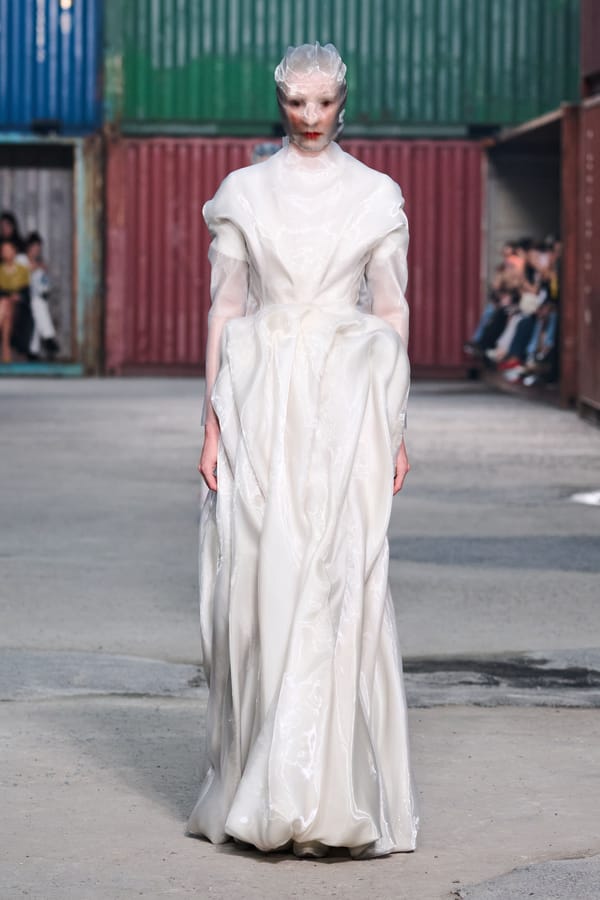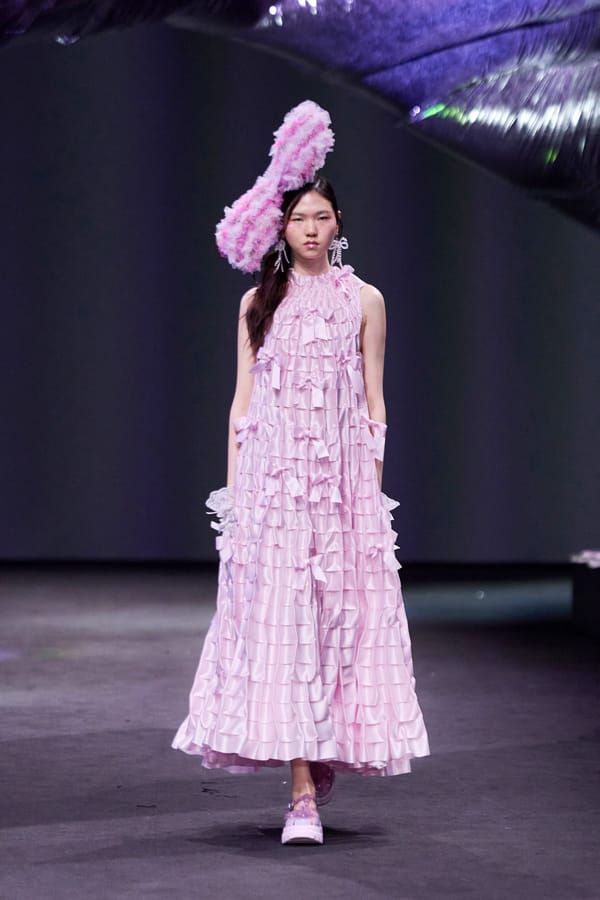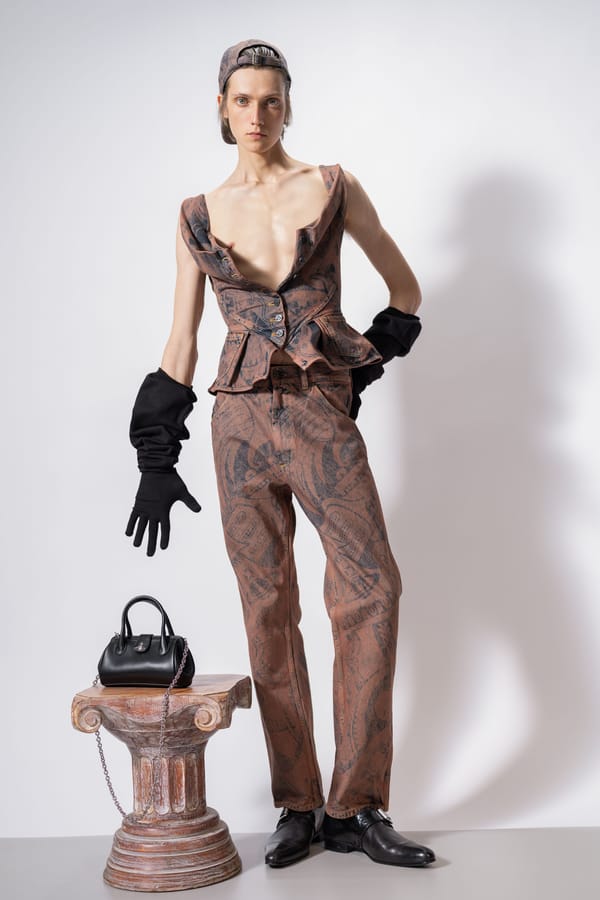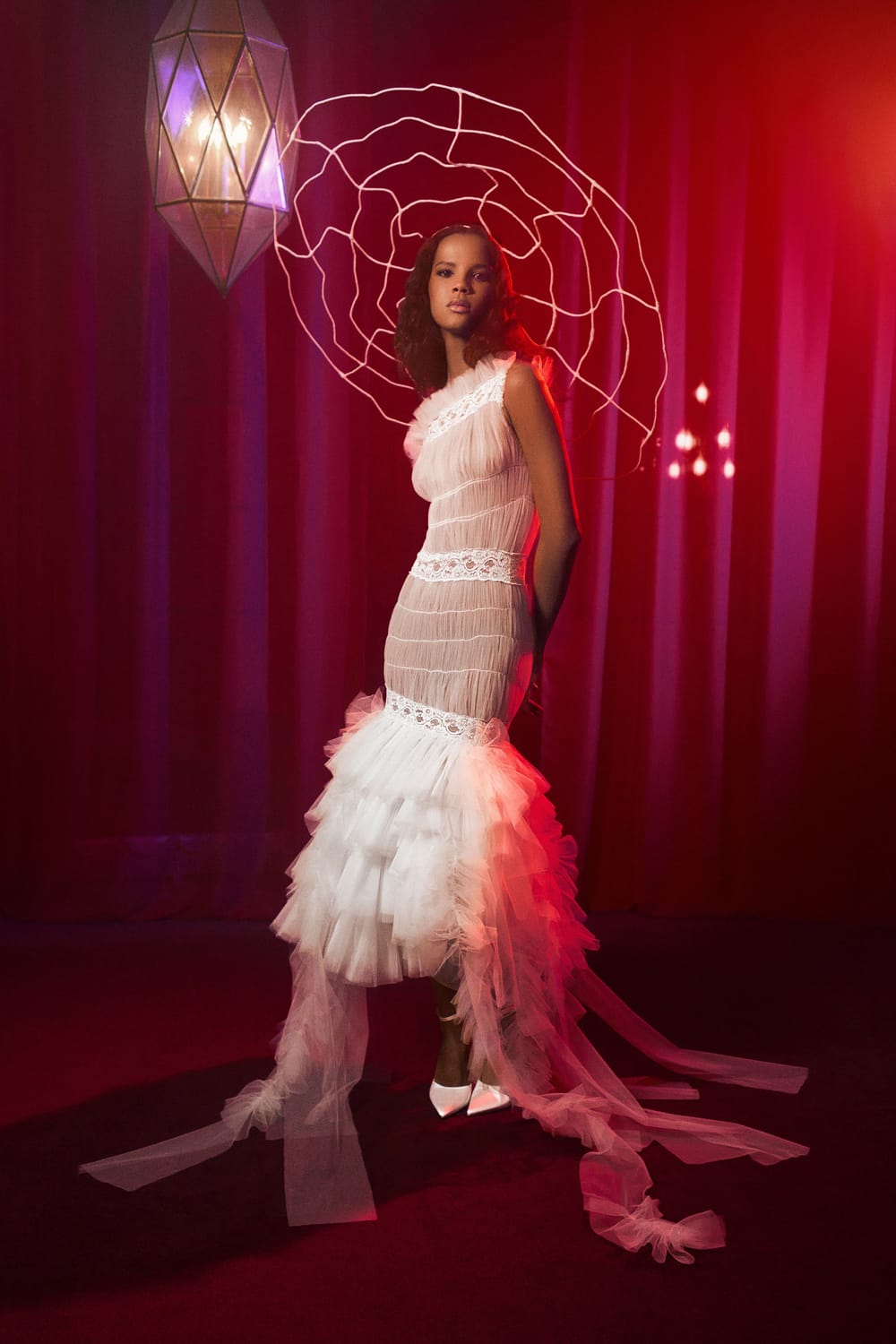
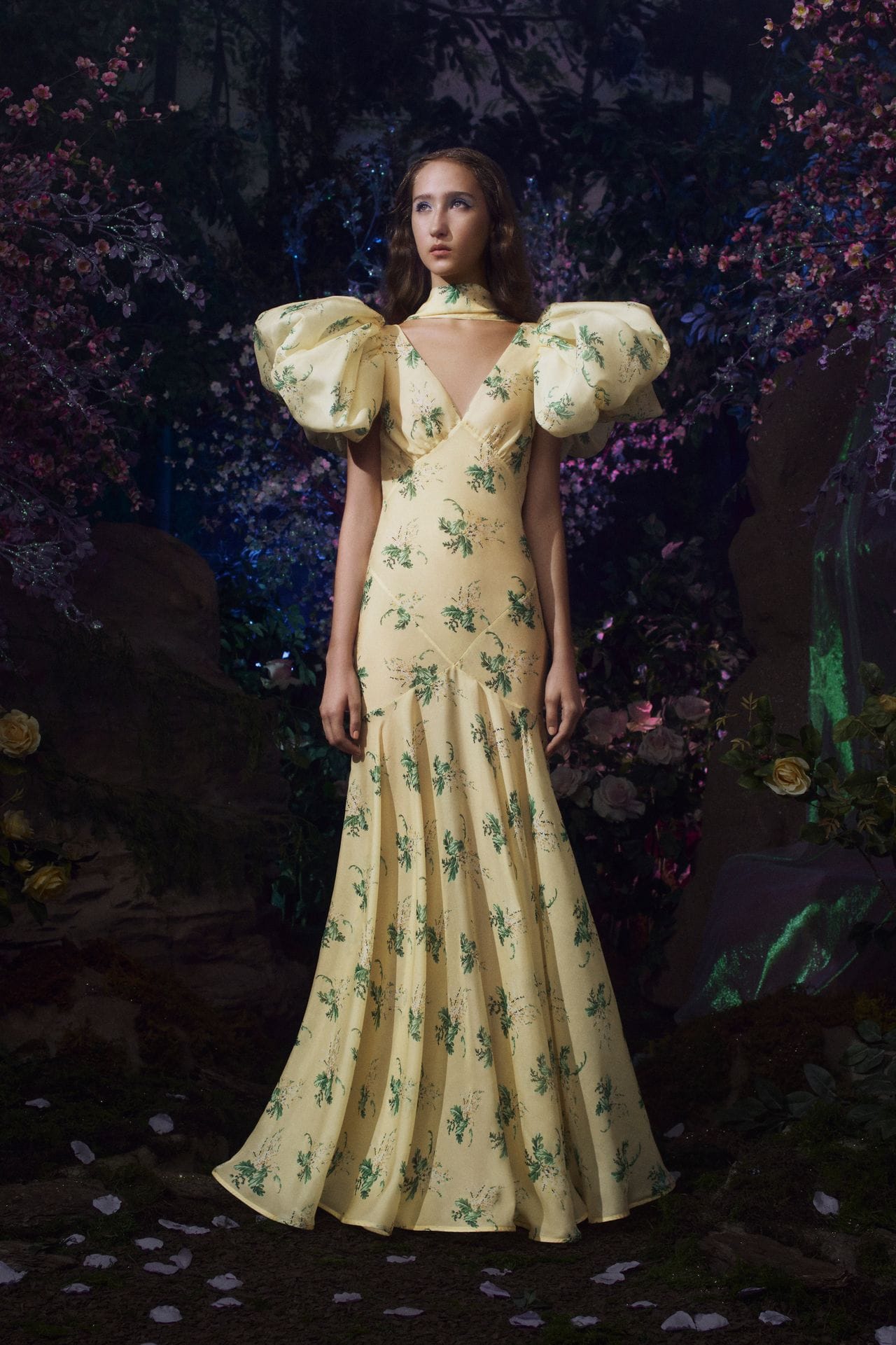
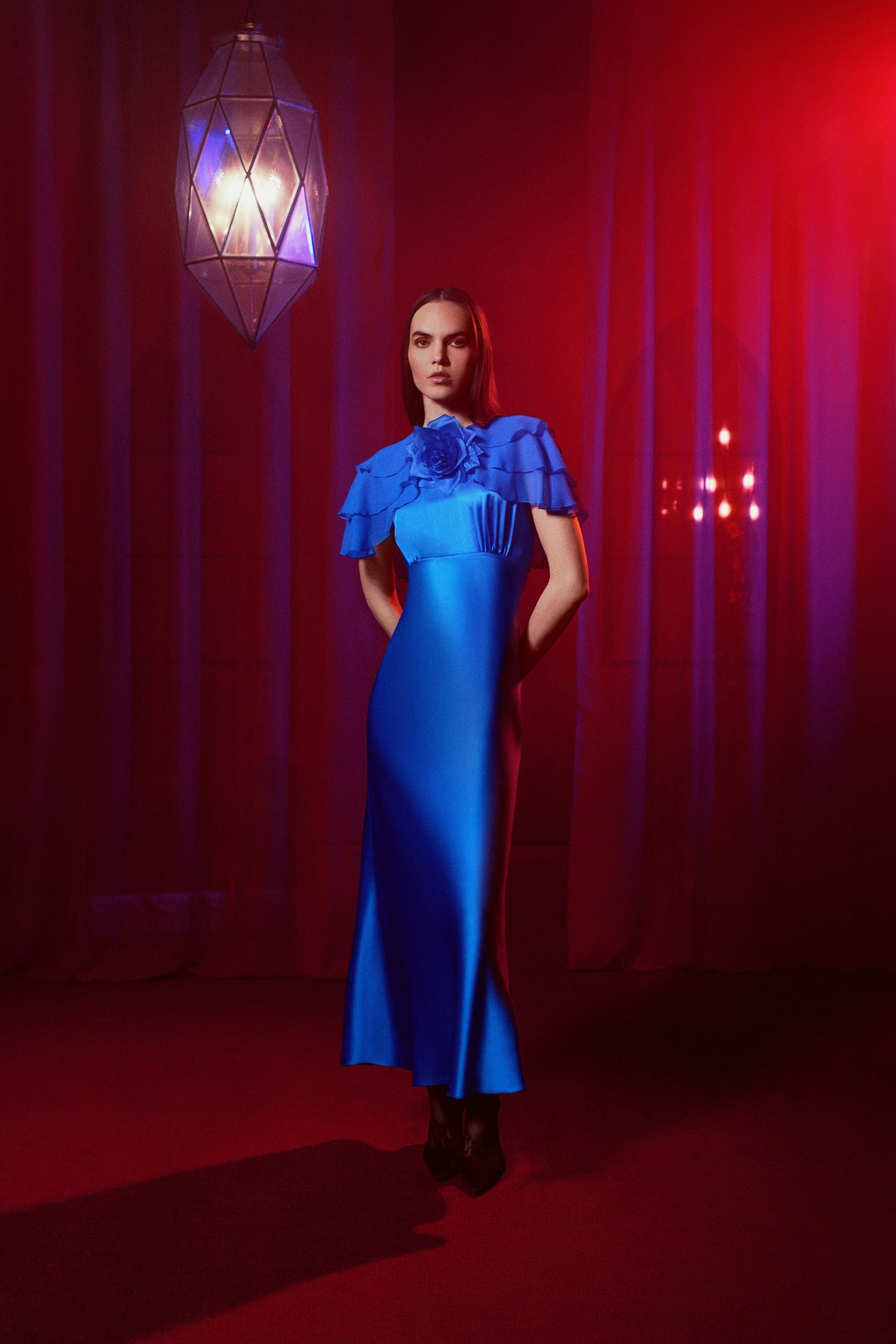
Kate and Laura Mulleavy sent 42 looks down the runway for Rodarte Fall 2026, and nearly every one required the kind of hand labor that fashion's current business model considers commercially irrational. There were gowns constructed from layers of tulle so dense they moved like sculpture. There were jackets encrusted with beading that took weeks to complete. There were floral appliqués applied by hand, one petal at a time. It was maximalism as a thesis statement — and a pointed one.
The collection arrives at a moment when quiet luxury still dominates the luxury market's merchandising strategy, even as its cultural moment has started to fade. The Row, Loro Piana, and Brunello Cucinelli built an aesthetic language around restraint, stealth wealth, and the kind of minimalism that signals taste through absence. It worked — commercially and culturally — because it offered luxury consumers a way to perform status without looking like they were performing at all. But that aesthetic has now calcified into a formula, and the formula has started to feel like a trap. When every luxury brand is selling the same cashmere sweater in the same shade of oatmeal, differentiation becomes impossible.
Rodarte's response is to go the opposite direction entirely. The Mulleavy sisters have always built their brand on craft maximalism — intricate construction, labor-intensive techniques, and a willingness to prioritize beauty over commercial practicality. But Fall 2026 feels less like a continuation of that approach and more like a declaration that American fashion still has something to say that European minimalism doesn't. The collection's hand-beaded evening gowns and layered tulle skirts are not just beautiful — they are evidence of a specific kind of labor that the fashion industry has spent the past decade trying to eliminate in favor of efficiency, speed, and scalability.
This is not nostalgia. The Mulleavys are not romanticizing pre-industrial craft or pretending that fashion can return to some imagined artisanal past. What they are doing is using craft as a competitive advantage. In a market where most luxury brands are sourcing from the same Italian mills and manufacturing in the same Portuguese factories, Rodarte's hand-beading and custom textile work become a form of differentiation that no amount of marketing budget can replicate. It is the same strategy that has kept Ryunosukeokazaki commercially viable in Tokyo's experimental fashion scene — craft as business model, not just aesthetic choice.
The broader pattern here is that independent American designers are starting to use maximalism as a direct counter to quiet luxury's market dominance. Where European heritage brands can lean on centuries of institutional credibility, American independents have to build their legitimacy through visible craft. The maximalism is not excess for its own sake — it is proof of work. It is a way of saying: we made this, by hand, in a way that no algorithm can optimize and no factory can replicate at scale. In a fashion system increasingly dominated by conglomerate-owned brands optimizing for margin, that becomes a rare and valuable thing.
What makes Rodarte's version of this strategy effective is that the Mulleavys have always understood that craft maximalism only works if the underlying design is disciplined. The Fall 2026 collection is ornate, but it is not chaotic. The silhouettes are controlled. The color palette is restrained. The decoration is applied with precision, not abandon. This is what separates craft-driven maximalism from the kind of over-designed, logo-heavy maximalism that luxury brands were selling in the early 2010s. The former is about making; the latter was about marketing.
The risk, of course, is that craft maximalism is expensive to produce and difficult to scale. Rodarte has never been a mass-market brand, and Fall 2026 will not change that. But the collection does something more important than drive revenue — it establishes a position. It makes an argument about what American fashion can be when it stops trying to compete with European minimalism on minimalism's terms and instead builds on what it does well: bold design, visible craft, and a willingness to prioritize beauty over commercial caution.
If quiet luxury's dominance is starting to crack — and the market data suggests it is — the brands that will benefit are the ones that have been building an alternative all along. Rodarte Fall 2026 is not a reaction to a trend. It is a reminder that some designers never bought into the trend in the first place. That kind of consistency, in an industry built on constant reinvention, is starting to look like the smartest long-term strategy available. The Mulleavys are not chasing the market. They are waiting for the market to come back around to them. And based on this collection, they will still be standing when it does.