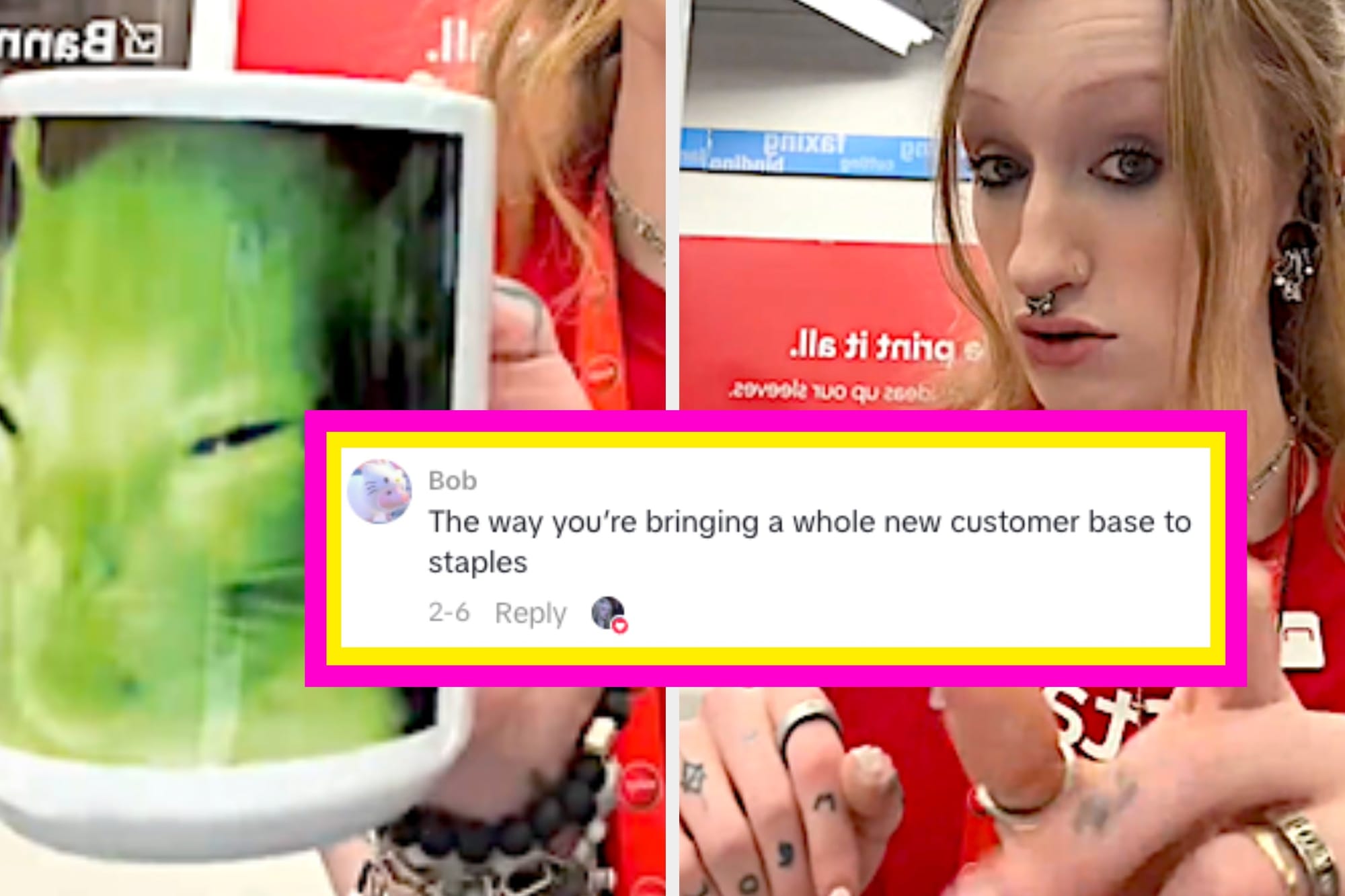
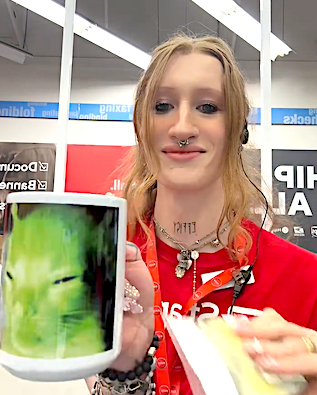
She's standing behind the counter at Staples, dead-eyed and unbothered, walking viewers through the store's custom printing services with the energy of someone who has fully dissociated from the fact that she is currently at work. The products—heavyweight cardstock, custom mugs, signature stamps—are positioned like luxury goods. The delivery is pure disaffected Gen Z: monotone, ironic, vaguely hostile to the premise that anyone should care about office supplies. The videos have millions of views. The comments are feral. "She's single-handedly saving Staples," one user writes. Another: "I've never needed a custom stamp until right now."
The phenomenon, widely covered as the "Staples Baddie" trend, has turned an anonymous retail employee into a minor TikTok celebrity and, more importantly, into an accidental case study for how employees can function as influencers—but only under very specific conditions. The Staples Baddie works because she doesn't look like she's trying to sell you anything. She looks like she's making fun of the fact that she has to sell you anything. That ironic distance is the entire product. Strip it away, and the whole thing collapses into corporate content.
This is TikTok's unspoken rule for employee-generated content: it can go viral, but only if it performs resistance to the brand it's ostensibly promoting. The algorithm rewards the appearance of subversion. It does not reward sincerity. A Staples employee earnestly explaining printing services would get maybe a few hundred views. A Staples employee delivering the same information with the affect of someone being held hostage by capitalism gets millions. The content is identical. The framing is everything.
The Staples Baddie isn't an isolated case. TikTok has produced a steady stream of employee influencers over the past two years—Duolingo's chaotic social media manager, the Ryanair admin who roasts passengers, the countless fast-food workers who film behind-the-scenes chaos with a mix of horror and dark humor. What they all share is a carefully calibrated tone that suggests they are not endorsing their employer, they are enduring their employer. The audience isn't laughing with the brand. They're laughing at the absurdity of the labor itself.
This creates a strange business proposition for corporations. On one hand, the Staples Baddie has demonstrably driven traffic and sales—users in the comments report making pilgrimages to Staples specifically because of her videos. On the other hand, the reason the content works is because it maintains the illusion that the employee is operating outside corporate control. The second Staples tries to formalize the relationship, hire her officially, or package her into a campaign, the authenticity evaporates. The audience will smell the difference immediately.
The tension here is structural. TikTok's algorithm has trained users to distrust anything that looks like advertising. Branded content gets skipped. Influencer partnerships get dismissed as shilling. But employee content occupies a gray zone: it's technically promotional, but it doesn't read as promotional because the employee isn't being paid extra to post. The labor is already happening. The TikTok is just documentation. That perceived lack of financial incentive is what makes it trustworthy. It's the same logic that makes word-of-mouth marketing so effective, except now it's industrialized and algorithmically amplified.
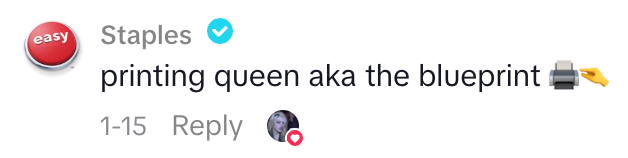
The problem is that this model is fundamentally unstable. The Staples Baddie can maintain her credibility as long as she appears to be posting independently, without corporate approval or compensation. But the moment her videos start driving real revenue, Staples has a vested interest in controlling the narrative. And the moment Staples tries to control the narrative, the content stops working. It's a paradox: the value of the content is directly tied to the appearance that it has no commercial value.
This is why most employee influencer moments are short-lived. They flare up, generate a burst of attention, and then either fade or get absorbed into official brand strategy—which kills them. The few that survive long-term are the ones where the company is smart enough to leave them alone, or at least to make it look like they're leaving them alone. Duolingo's social team, for example, has managed to maintain the chaotic energy that made them go viral in the first place, but only because the brand has been willing to let the content feel unpolished and occasionally off-message. The second it starts looking too clean, too coordinated, the audience will turn.
The broader implication is that TikTok has created a new category of labor that doesn't fit neatly into existing frameworks. The Staples Baddie isn't a traditional influencer—she's not getting paid per post, she's not negotiating brand deals, she's not building a personal brand separate from her employer. But she's also not just a retail employee. She's generating content that has measurable business value. She's driving traffic. She's building brand affinity. She's doing the work of a marketing department, except she's doing it for minimum wage and no formal recognition.
This raises uncomfortable questions about compensation and labor rights in the creator economy. If an employee's TikTok videos drive significant revenue for their employer, who owns that content? Who profits from it? Should the employee be entitled to a cut of the sales they generate? Current labor law doesn't have clear answers, because it was written before social media turned every retail worker into a potential marketing asset. The Staples Baddie is performing uncompensated labor, but it's labor that didn't exist as a category five years ago.
The cultural pattern here extends beyond Staples. TikTok has turned corporate employment into performance art, and the only performances that resonate are the ones that critique the system from within. The Staples Baddie works because she's not celebrating retail labor—she's surviving it, and letting you watch. That's the only version of corporate content TikTok will tolerate. Anything else is just an ad.
What happens next depends on whether brands can resist the urge to professionalize what made the content work in the first place. The smart move is to let the Staples Baddie keep posting, keep the tone intact, and quietly benefit from the traffic without trying to control the narrative. The likely move is that Staples will eventually try to turn her into an official brand ambassador, the irony will collapse, and the whole thing will die. The algorithm giveth, and corporate strategy taketh away.
For more, see how the creator economy actually works and why everyone is a network now.