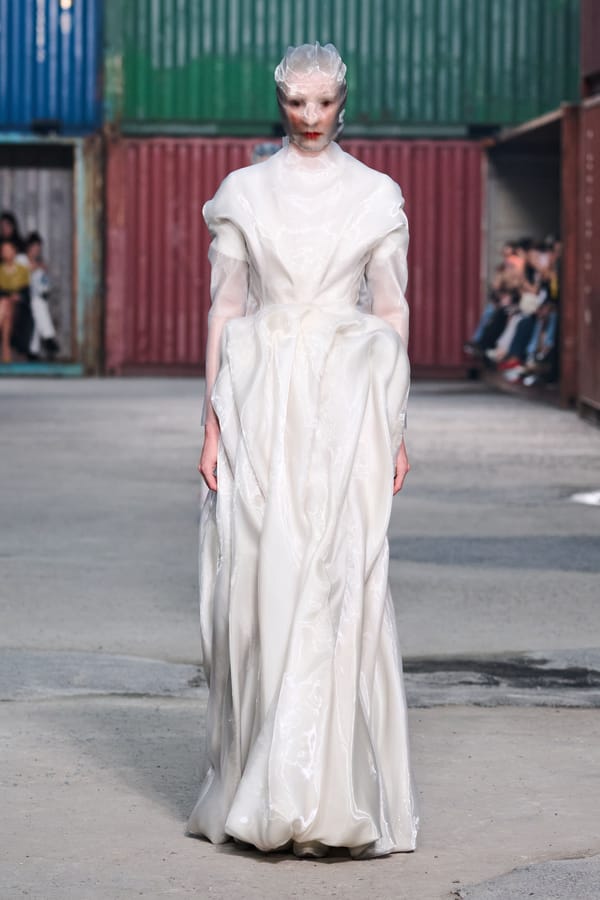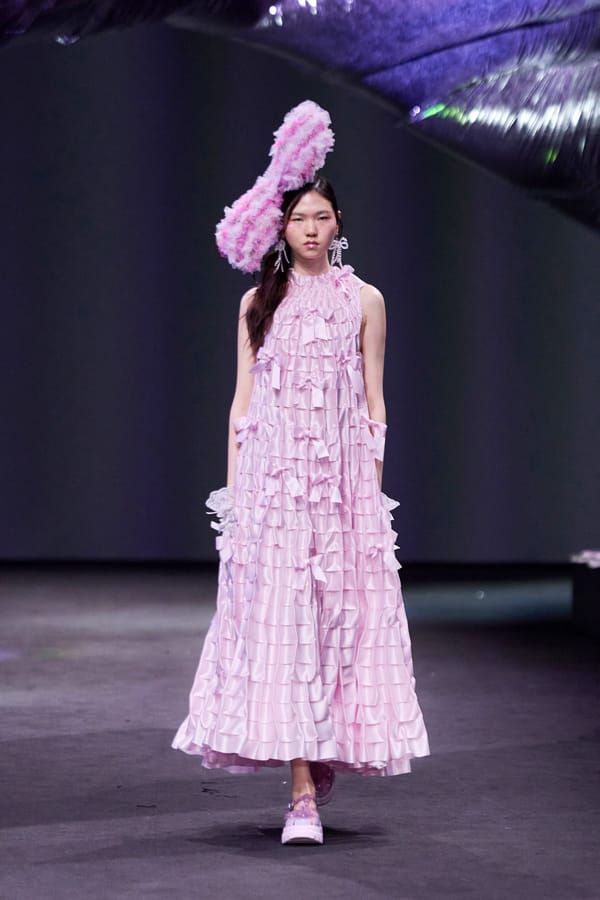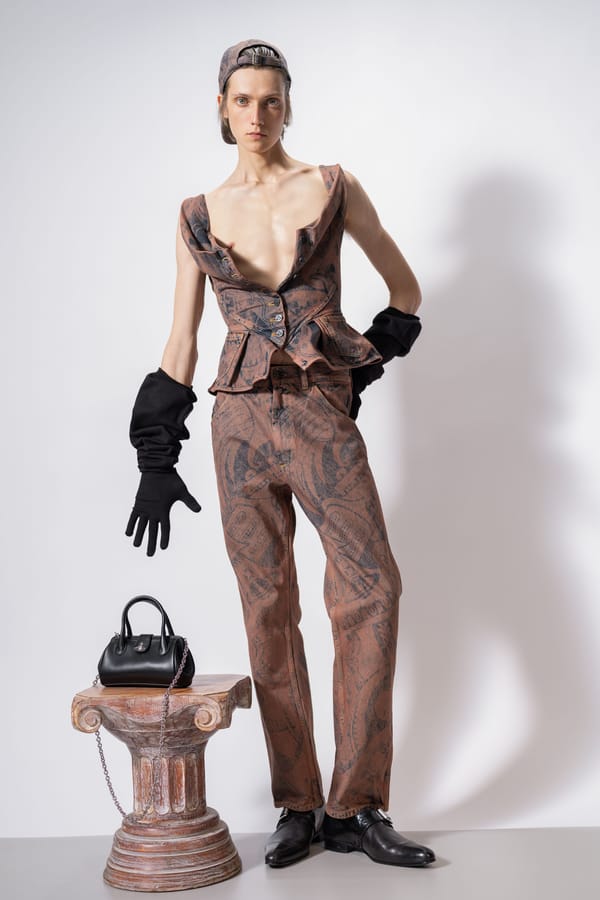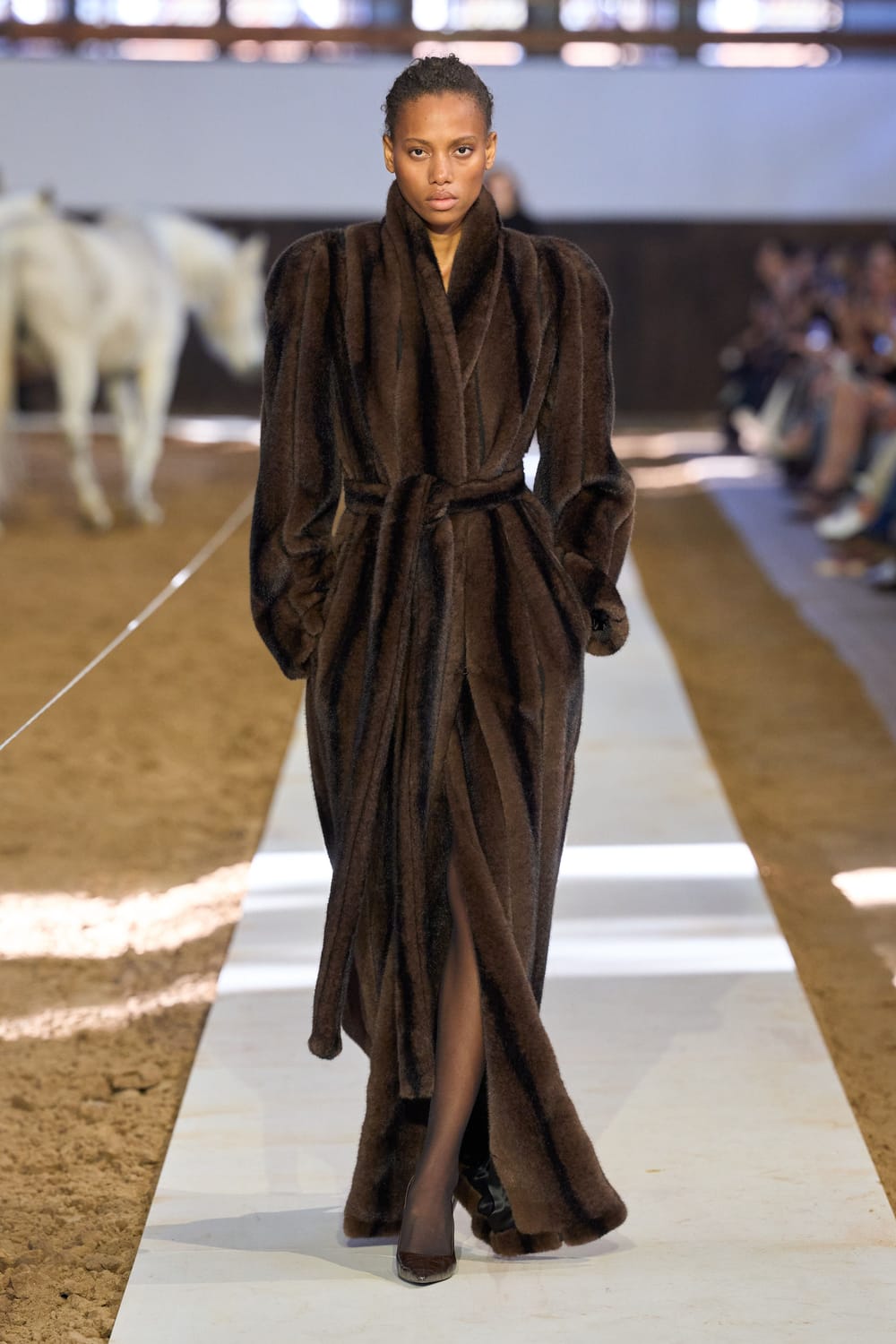
The mushroom leather blazer that opened Stella McCartney's Fall 2026 show wasn't labeled as innovative. It wasn't called out in the show notes as groundbreaking. It simply existed—structured, tailored, luxury-coded—and that quiet confidence is the point. After 25 years of McCartney arguing that fashion could be beautiful without animal products, wasteful without planned obsolescence, and profitable without exploitation, her latest collection arrives in a market where those arguments no longer need to be made. The industry caught up. Now McCartney is setting the next standard.
The Fall 2026 collection, shown in Paris, featured bio-fabricated materials, regenerative wool, and recycled nylon woven into pieces that looked like luxury first and sustainability second. That ordering matters. For years, sustainable fashion carried the aesthetic baggage of virtue signaling—earthy textures, muted palettes, an implicit apology for not being "real" luxury. McCartney's collection dispenses with that entirely. The tailoring is sharp. The silhouettes are confident. The materials happen to be ethical, but they don't announce themselves as such. This is what mainstreaming looks like: when the alternative becomes the default, and the innovation stops needing a disclaimer.
What makes this moment significant isn't just McCartney's execution—it's the context she's operating in. Five years ago, sustainable luxury was a niche market defended by a handful of designers and treated by the industry as a costly experiment. Today, every major luxury house has a sustainability initiative, a circularity program, or a bio-material partnership. Some of it is genuine. Much of it is branding. But the fact that it exists at all signals a shift in what consumers expect and what investors demand. McCartney didn't just build a brand around sustainability—she built the infrastructure that made it possible for the rest of the industry to follow. Her supply chain innovations, material partnerships, and transparency standards became the blueprint. Now that the industry has adopted the framework, McCartney is free to push further.
The Fall 2026 collection hints at where that push is heading: circularity as design principle, not afterthought. Several pieces were designed for disassembly, with modular construction that allows components to be replaced, repaired, or recycled without destroying the garment. This isn't new technology—it's old tailoring logic applied to modern materials. But it represents a fundamental shift in how luxury defines value. For decades, luxury fashion has been built on the idea of the irreplaceable object: the handbag, the coat, the piece so precious it must be preserved exactly as purchased. McCartney's approach suggests a different model—one where value comes from longevity, adaptability, and the ability to evolve alongside the wearer. It's a harder sell, because it requires consumers to think beyond the transaction. But it's also a more honest relationship with the product.
The business case for this approach is becoming clearer. As luxury houses recalibrate what they're selling in a market increasingly skeptical of excess, sustainability offers a narrative that aligns aspiration with responsibility. McCartney's brand has consistently grown revenue while maintaining strict ethical standards—proof that the model works at scale. The question is whether the rest of the industry is willing to commit to the infrastructure required, or whether sustainability remains a marketing layer applied to business as usual.
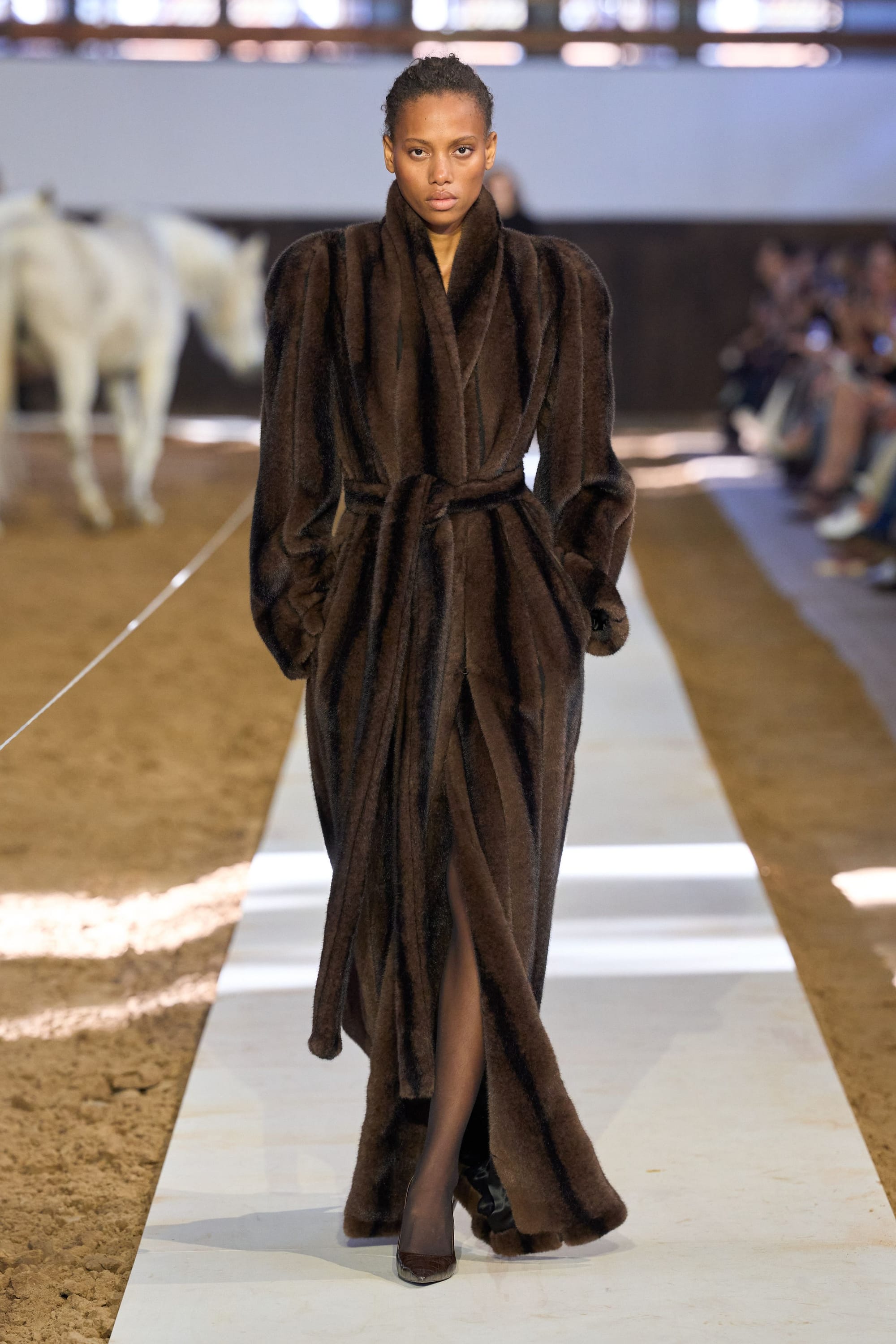
What McCartney's Fall 2026 collection makes clear is that the conversation has moved past whether sustainable luxury is possible. It is. The question now is whether it becomes table stakes or remains a differentiator. McCartney built her career being the exception. The risk—and the opportunity—is that she's succeeded so thoroughly that the exception is becoming the rule. If the industry follows through, McCartney will have reshaped luxury in her image. If it doesn't, her brand remains the proof of concept that the rest of the market failed to replicate. Either way, the mushroom leather blazer that opened the show wasn't making an argument. It was stating a fact.
For more, see Rick Owens’ minimalist antidote and Acne Studios’ intellectual wearability.