Your phone rings on a Friday night. You don't recognize the number, so you let it go.
It rings again.
And again.
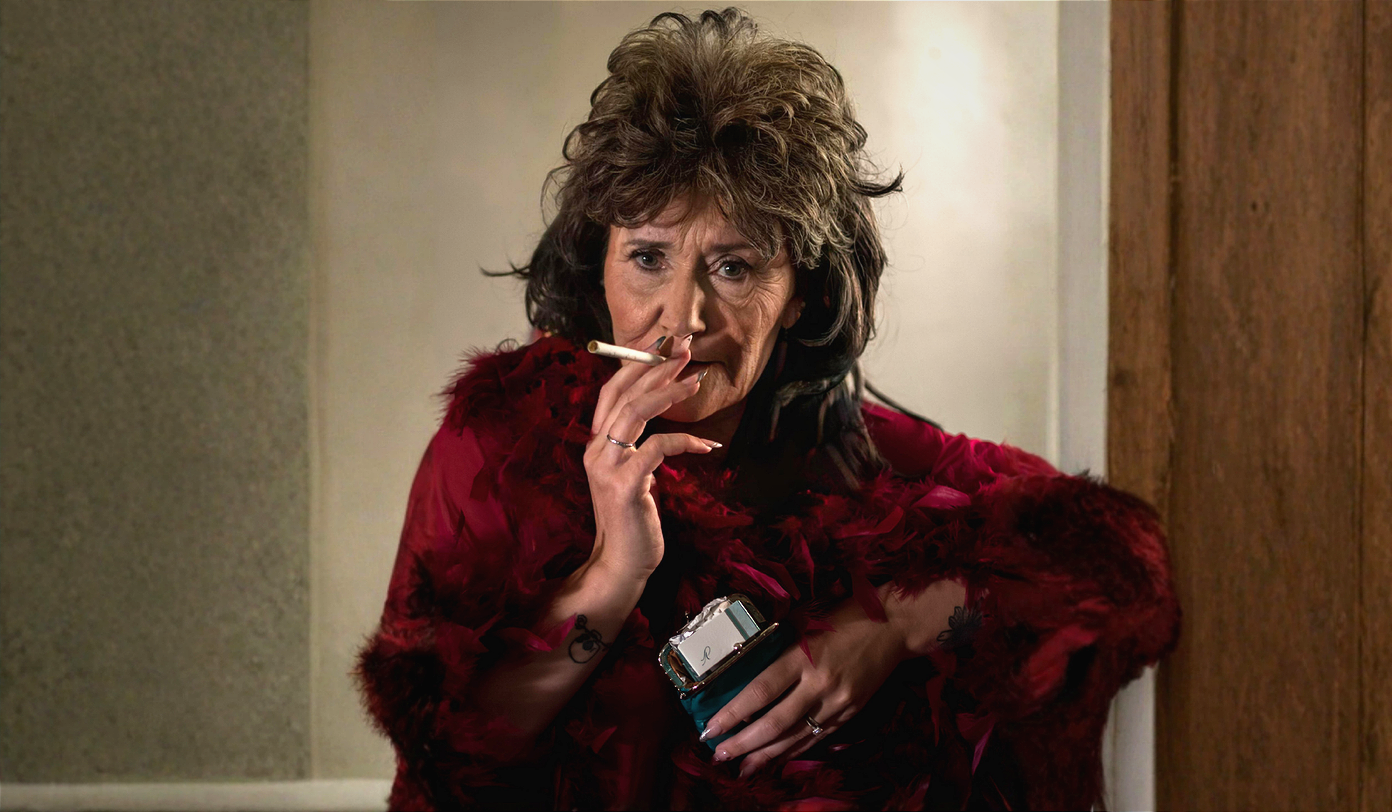
By the fourth call, you answer — or maybe you don't. Maybe you let it hit voicemail, and a minute later there's a message waiting for you: a gravel-voiced Southern woman who sounds like she's been smoking since the Carter administration, furious about something involving your brother, filling in details you can't quite place but can't quite deny either.
Eventually, you call her back.
She already knows your name.
None of it is real. Not the brother, not the situation, not even the woman. Her name is Sue Dillon — a 69-year-old, mullet-wearing, chain-smoking Southern firecracker with bedazzled cigarette earrings and a personality that could fill a football stadium. And she doesn't exist. She is the invention of Sarah Soda, a woman from Tennessee with a quiet voice, a doctorate in psychiatric nursing, and an imagination that borders on weaponized.
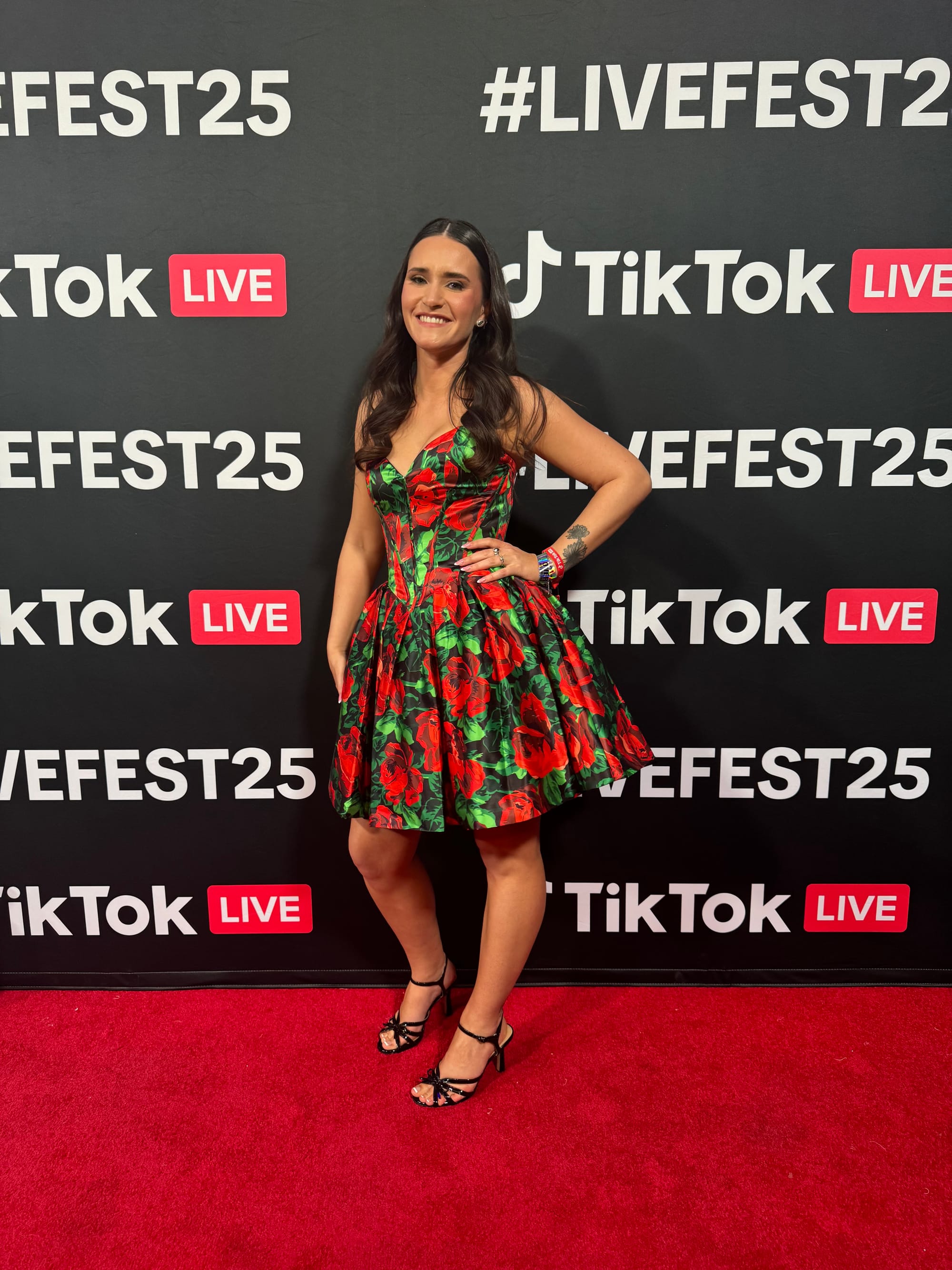
And right now, while you're on the phone trying to figure out what's happening, upwards of 5,000 people are watching it all unfold live on TikTok. Sarah—known online as Sarah Soda (@sarahsoda5)—has built an audience of 1.3 million followers and over 26 million likes doing this. Four nights a week, Thursday through Sunday, she transforms into Sue Dillon and performs live prank calls for thousands. No script. No safety net. No second takes.
She works from a short prompt submitted by a viewer—a few details about the person being called, maybe a scenario suggestion—and from those crumbs, she constructs entire fictional universes in real time. Backstories, relationships, grievances, histories, all invented in the seconds between reading a note card and dialing a number. It may be one of the most technically demanding live acts on any platform right now. And at a time when networks are rebooting IP from 2004 and calling it innovation, one of the most disciplined live character performers in the country is working from a spare room in Tennessee with no agent, no manager, and no one in Hollywood paying attention.
Ask her how she pulls it off and she’ll tell you, with the kind of disarming honesty that makes you believe every word: “I have a really big imagination and I am actually a great liar.” She pauses. “I think these two skills come in handy together.”
The voice is entirely self-taught—a vocal transformation she’s been toying with since childhood, one that used to drive her mother crazy and now sustains a performance schedule of roughly fifteen hours a week of live voice acting. But it comes at a cost. Go beyond that threshold, and the acid reflux kicks in. The sore throat. The hoarseness. Sarah has learned the hard way where the line is between a character voice and a medical issue, and she walks it every week. These are occupational hazards that don’t show up in the highlight reel, but they’re the kind of details that separate someone who does a funny voice from someone who works in one.
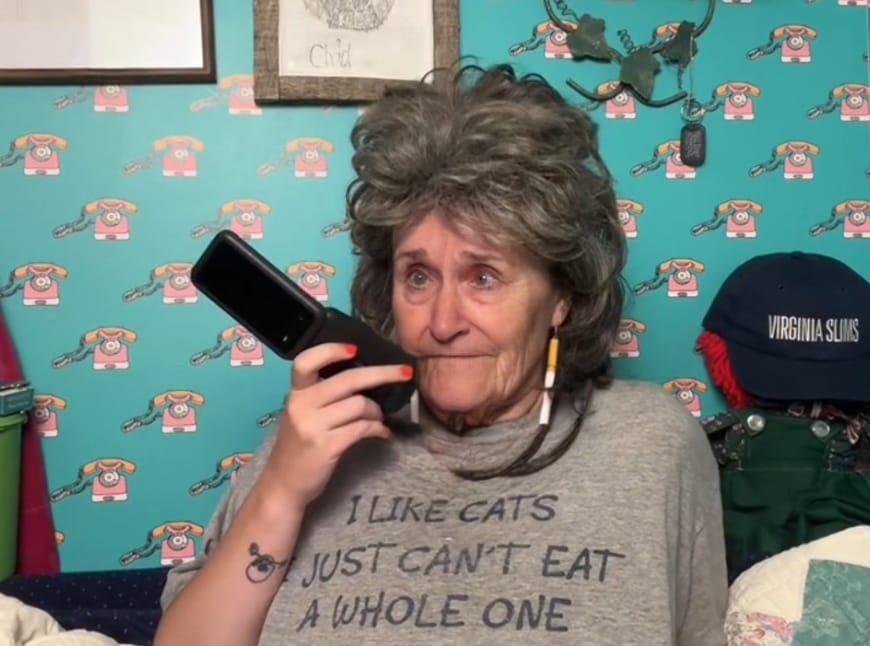
Sue Dillon works because Sarah disappears. The worldview shifts. The cadence changes. The instincts become Sue’s instincts. When I asked about the creative process—what’s actually happening inside her head during a call—she described it as something close to channeling. “It is like an intuitive download most of the time,” she said. “I have been told that I have comedic spirit guides that feed me information.”
Spirit guides aside, there’s something more grounded at work here. Sarah holds a Doctor of Nursing Practice in psychiatric-mental health nursing. Before she was reading strangers on prank calls, she was reading patients in clinical settings—assessing emotional states, picking up on verbal cues, understanding what someone means underneath what they’re actually saying. That training didn’t evaporate when she picked up a wig and a phone. It’s the invisible architecture underneath every call she makes. She knows when to push. She knows when to pull back. And when a call goes sideways—when she accidentally references something painful, when a joke lands in the wrong place—she knows how to read the silence on the other end of the line and respond like a human being, not a performer protecting a bit.
That skill gets tested more often than you’d think. Prank calls, by nature, operate in an ethical grey area—you’re deceiving someone for an audience’s entertainment, and the person on the other end didn’t sign up for it. Sarah is unusually honest about this tension. “I hate it when people get their feelings hurt,” she told me, describing a call where a detail she’d invented happened to touch a real loss the person on the other end was carrying. “I haven’t mastered how to comedically rescue that situation, but I think apologizing when this happens is very needed.”
She turns down call requests that are designed to hurt people. She can spot the ones that aren’t really about comedy—the ones where someone wants Sue to be the weapon they’re too polite to fire themselves. “I refuse to do a call if its only intent is to drag someone down,” she said. “That isn’t fun for me.”
But then there are the other calls. The ones that start as pranks and become something else entirely. Sarah told me about a prank call that ended up reuniting two sisters who hadn’t spoken in years. The call itself was comedy—Sue Dillon doing her thing, spinning a ridiculous scenario—but somewhere in the middle of it, the conversation turned. They ended up three-way calling the other sister in. The sisters started speaking again.
And then there are the elderly callers. People who don’t quite get the joke, who don’t realize it’s a prank, who just… talk. Sarah stays on the phone with them. She doesn’t break character, but she doesn’t hang up either. “Sometimes people just need a friend,” she said. “And even though it is acting, I genuinely want to be that friend for them.”
When I asked her whether the entertainment industry understands what TikTok performers like her are doing, she didn’t hesitate: “In general, no. Live streaming is exceptionally not understood out of all of social media. It is a new art form, and the majority of the people live streaming are not doing it in a professional way, so it is hard to understand the seriousness of the art there. I do not think the value is seen yet.”
She’s right. Four nights a week, Sarah sits in a room in Tennessee and does something that combines the vocal dexterity of a character actor, the improvisational instincts of a UCB-trained comedian, and the emotional intelligence of a clinician—all performed live, unrehearsed, for an audience that would fill a mid-size theater. “If I have a tiny bit of pressure,” she told me, “that is when the craziest stuff comes out of my mouth.”
Ego isn’t really in Sarah’s vocabulary. When I asked her what she’s never been asked in an interview—the question she wishes someone would think to ask—she chose: why do I feel the need to create content?
“It gives me a sense of purpose that I have never felt before,” she said, “largely because it exercises my creativity beyond what anything else has ever been able to. It also feels like I finally found something that I am good at.”
Her dream project is an in-person prank show in the vein of Impractical Jokers—but with her own spin. She wants to go on dates in character, say unhinged things, and see how long it takes the person across the table to realize none of it is real. She wants to bring the thing she does on the phone into a room, with a camera, and let Sue loose on the physical world.
Someone should let her. Every night, thousands of people willingly answer the phone and let a fictional woman rearrange their reality for ten minutes. That isn’t content. It’s control. And very few performers have it.