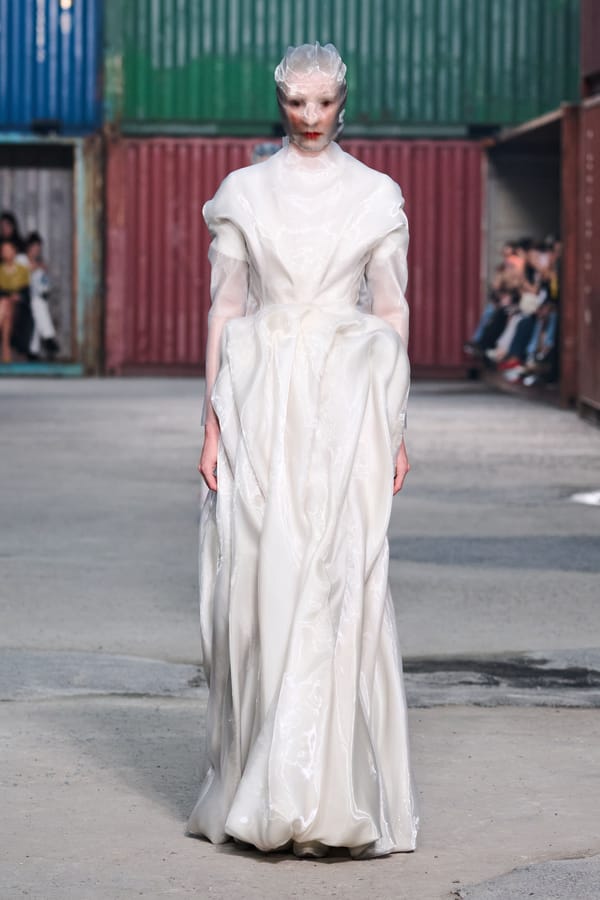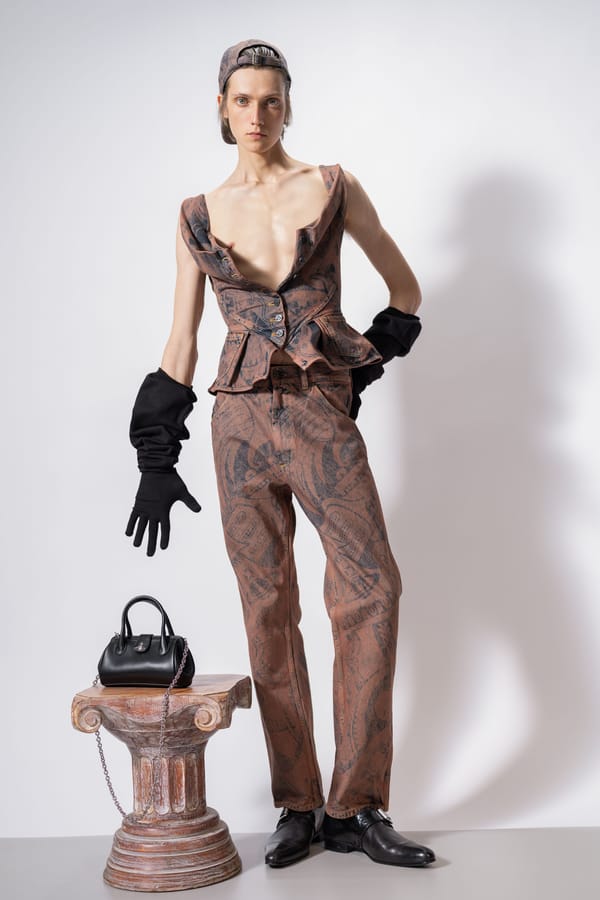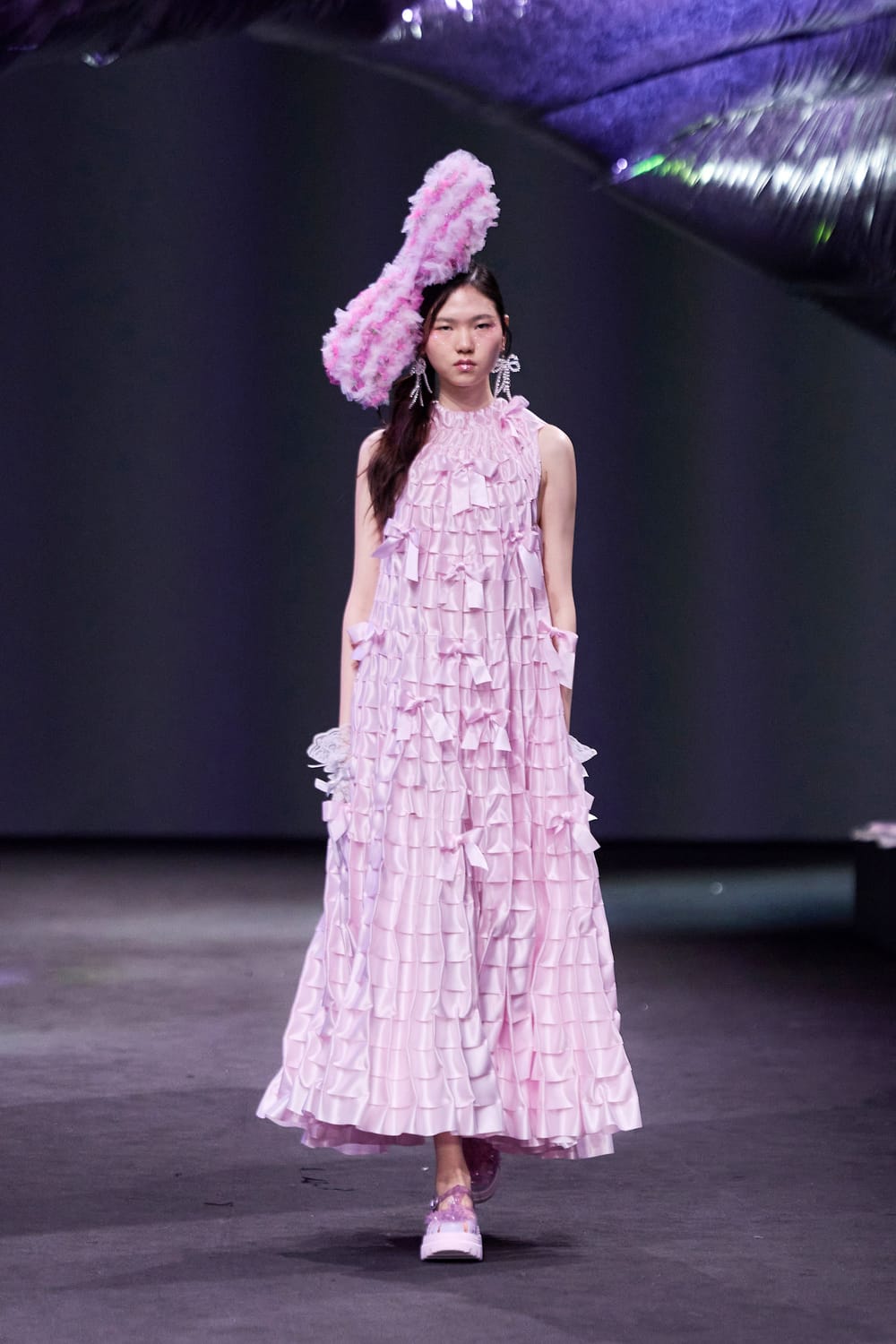
Susan Fang showed her Fall 2026 collection in Shanghai, not Paris. The distinction matters because it used to be impossible.
For decades, Chinese designers who wanted global recognition followed a predictable path: train in Europe, show in Paris or Milan, build credibility through Western institutions, then maybe—maybe—bring that validation home. Fang's trajectory ran the opposite direction. She built her brand in Shanghai, developed her signature air-filled silhouettes and sculptural textures on Chinese manufacturing infrastructure, and attracted international buyers and press without ever pretending the road to legitimacy ran through the Tuileries. Her Fall 2026 show wasn't a statement of arrival—it was confirmation that the infrastructure to bypass Paris entirely already exists.
The collection itself leaned into Fang's established vocabulary: inflatable volumes, quilted textures, and a palette that moved between soft pastels and deeper jewel tones. There were coats that looked like wearable sculptures, dresses with exaggerated proportions that managed to feel playful rather than unwearable, and a consistent through-line of technical innovation applied to pieces you could actually imagine someone buying. Vogue documented the show with the same editorial treatment it gives to established European houses—full runway gallery, detailed coverage, no asterisks about it being a "regional" collection.
That editorial parity is the tell. A decade ago, Shanghai Fashion Week coverage in Western publications came with implicit caveats: promising, emerging, worth watching. The framing suggested these designers were working toward something—toward the moment they'd be ready for a bigger stage. Fang's coverage reads like she's already on it. The difference isn't just her design maturity. It's that the infrastructure supporting her—production capabilities, media access, buyer networks, digital distribution—no longer requires Western validation to function at a global scale.
Chinese fashion's infrastructure build-out has been quiet but comprehensive. Manufacturing capacity that used to serve Western brands now supports domestic designers with the same technical sophistication. Digital platforms that were once dismissed as regional alternatives to Instagram now drive purchasing decisions for international customers. Trade shows and fashion weeks in Shanghai, Shenzhen, and Beijing draw the same buyers who used to only show up for Milan and Paris. The result is that designers like Fang can build entire careers without ever needing a European runway to legitimize their work. Tokyo designers have been testing the same model, and the pattern is consistent: once the infrastructure exists, the validation becomes optional.
This isn't about nationalism or rejecting Western markets—Fang's work sells internationally, and her aesthetic doesn't read as explicitly "Chinese" in the way Western buyers used to expect. It's about the geography of credibility. For decades, fashion operated on the assumption that legitimacy flowed in one direction: from European capitals outward. Designers from everywhere else could be talented, interesting, worth covering—but the institutional weight, the buyer relationships, the editorial authority all lived in Paris, Milan, London, New York. That centralization is breaking down, not because those cities matter less, but because the infrastructure that made them gatekeepers now exists elsewhere.
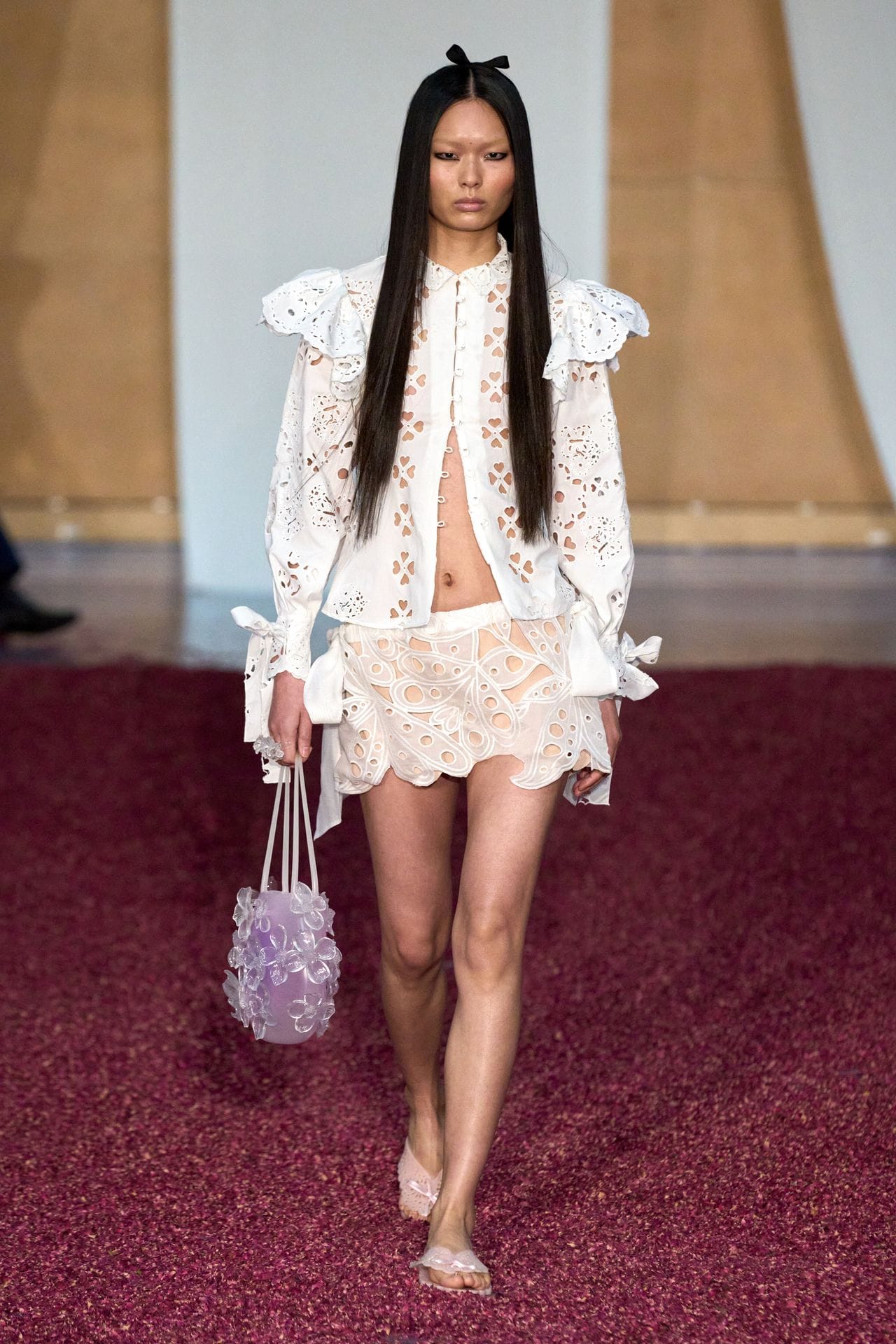
The business implications are straightforward. If Chinese designers can build global brands without European runway costs, without relocating to Paris, without the sample production and shipping logistics that come with showing abroad, they're operating with a structural cost advantage that changes competitive dynamics across the industry. They're closer to manufacturing, closer to a domestic market with luxury spending power, and increasingly connected to the same international buyers and press that used to require a Paris showroom to access. Western designers are still building careers through institutional pathways, but those pathways are no longer the only ones that lead to global distribution.

Fang's Fall 2026 show won't be remembered as the moment Chinese fashion arrived—that framing still centers Western approval as the finish line. It's more useful as evidence that the arrival already happened, quietly, while the industry was still pretending Paris was the only stage that mattered. The designers who recognize that early, who build for the infrastructure that exists now rather than the system that used to be the only option, are the ones positioning themselves for the next decade of fashion business. Fang's doing that from Shanghai. The fact that it's no longer surprising is the whole point.