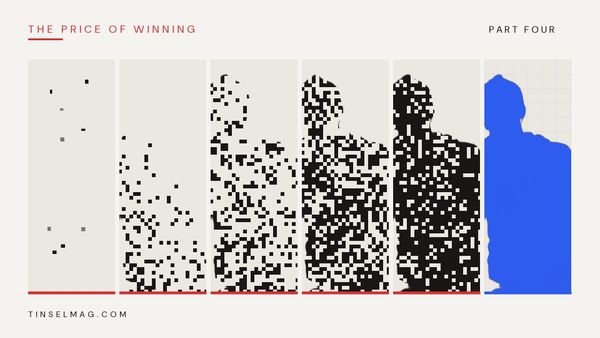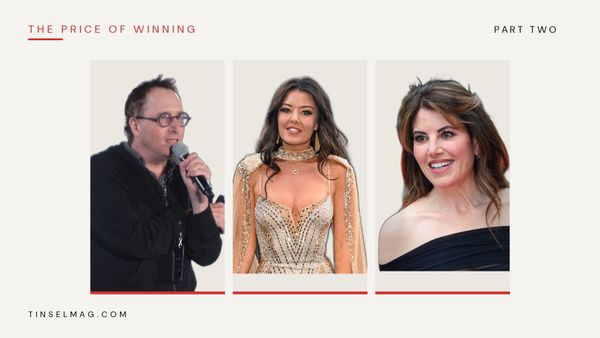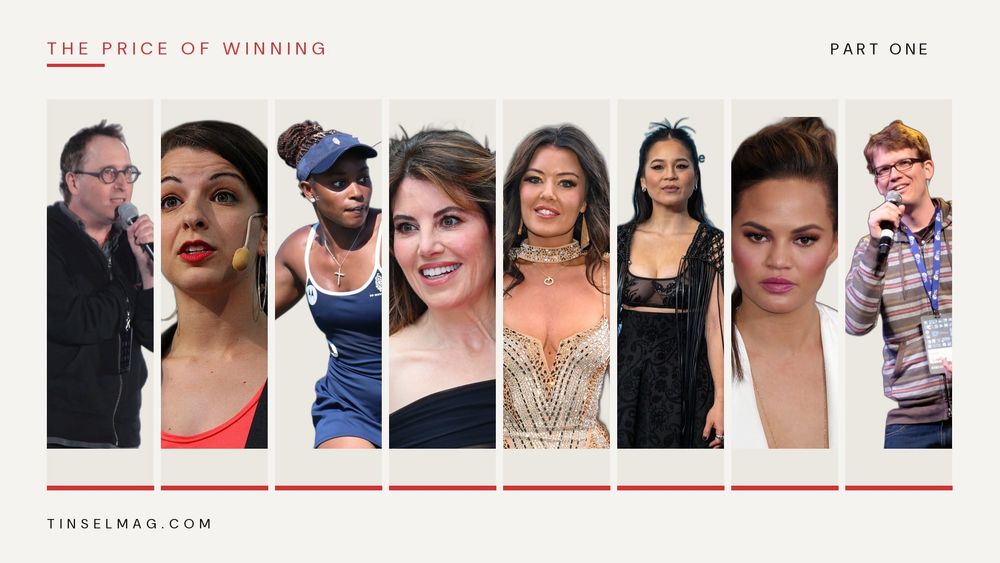
This is Part One of The Price of Winning, a four-part Tinsel series on harassment, moderation, and the people who compete in public. Part Two is out now; Part Three is out now; the final part is out now.
Ask someone who streams for a living to describe the morning their account went dark, and the word that comes back is seldom anger; it is closer to confusion. The notice arrives without detail, a single line about a community guidelines violation and a button to appeal, and then nothing on the far side of that button for days. Years of work sit behind a login that has stopped opening. There is no one to call.
The people this happens to are easy to picture wrongly. Press coverage files it under online drama, which makes it sound like a squabble among teenagers. What it resembles more closely is a small business losing its storefront overnight on the say-so of an anonymous crowd. These are people who built an audience by being consistent and a little fearless, who learned a format the platform designed and got good enough at it to be noticed. Being noticed, it turns out, carries a cost that no terms-of-service page lists.
That cost is measured in more than hurt feelings. It shows up in hours, in dollars, and in health. The journalist Amanda Hess catalogued the arithmetic in a 2014 essay that became a landmark account of the problem, writing that threats of this kind "can overpower our emotional bandwidth, take up our time, and cost us money through legal fees, online protection services, and missed wages." A decade of reporting since has only confirmed the pattern she named.
Put a face to that arithmetic. When the actress Kelly Marie Tran was driven off social media by a racist and misogynistic campaign after a leading role in a 2017 film, she described the interior damage in a 2018 essay for the New York Times. "For months," she wrote, "I went down a spiral of self-hate, into the darkest recesses of my mind, places where I tore myself apart, where I put their words above my own self-worth." She was, by any outside measure, a working actress at the top of her field. The campaign did not care.
The toll is physical as much as emotional, and it accumulates until people simply leave. The model and author Chrissy Teigen, who deleted her account on what was then Twitter in 2021 after years of it, put the daily math plainly. "The trolls I can deal with, although it weighs on you," she told ABC News. "Someone can't read that they disappointed you in some way every single day, all day without physically absorbing that energy. I can feel it in my bones." Walking away was the only thing that made it stop.
It reaches into every corner of public life. After a third-round loss at the 2021 US Open, the tennis champion Sloane Stephens told reporters she had received more than two thousand abusive and threatening messages, and summed up the feeling in a single line: "This type of hate is so exhausting and never ending."
And it does not end when the campaign does. Anita Sarkeesian, the media critic who spent years as the target of one of the internet's first coordinated harassment mobs, described what it leaves behind. "One thing that harassment does is it takes away your ability to fully feel," she told the Daily Beast in 2016. "You're in survival mode." That is the part outsiders rarely see. The pile-on stops, and the flinch stays.
There is a pattern in who gets hit hardest, and the creators who have lived through it tend to describe it the same way. The organized version of this finds the people who are doing well. A creator climbs, starts beating accounts that were supposed to be unbeatable, and somewhere in that ascent the air around them changes. That detail shapes everything that follows.
Some of what is known about these campaigns has been documented from inside the industry. Moxie Media Marketing, a company that represents independent creators, says it has tracked the same sequence across one client after another, which is part of how the pattern comes into focus.
The shape of an organized campaign is consistent enough to have a grammar. It usually starts with a single target and a small, committed group, where the coordination counts for more than the numbers. Screenshots travel stripped of the conversation that surrounded them. Old clips come back wearing new captions. Reports get filed in waves, because the people running this have studied how enforcement triggers more carefully than the people they are aiming at, and they have learned that a platform reads volume as truth.
It is worth stopping on what that actually is. A group that organizes to bait a person, clip her worst moment, and file reports in shifts is running a bullying campaign, and running it through group chats and report forms instead of a schoolyard only makes it more methodical. The people behind these operations tend to describe themselves as a community holding someone accountable. The word for what they are doing is the one they keep pinning on their target.
The independent creators at the center of this series face those same forces inside a smaller economy, one where the account under attack is also the paycheck. Jolene Burns, a singer-songwriter from north Belfast who reached number one in the UK and third in the world in a global live-streaming competition, has been open about what it takes to keep going. "I grew up in north Belfast, so I learned early what real hardship looks like, and it taught me the difference between something that can actually hurt you and something that's just noise," she says. "A lot of what comes at you online is noise. You have to trust yourself before anyone out there decides you're worth it, and that is the thing that has kept me singing through all of it."
None of this is confined to one app or one corner of the culture, which is part of why it earns more than a shrug. The journalist Liz Fraser wrote in the Times in June 2026 about years of coordinated, anonymous harassment, much of it organized on gossip forums, and the real damage it did to her work and her family before she went to the police. Hers is one account among many in recent years establishing that sustained, organized abuse of any woman with a public profile is a documented and serious phenomenon. The creators in this series are describing the same weather from inside a different building.
Where their experience departs from the older story of online cruelty is in what the campaigns are built to accomplish. On a livestreaming platform, the campaign wants more than a target's misery. It wants the target gone, and it reaches for the platform's own safety tools to get there. To make that work, the people behind it have learned to speak fluently in the language of safety while doing the opposite of keeping anyone safe.
Sources
- Amanda Hess, "Why Women Aren't Welcome on the Internet," Pacific Standard, 2014
- Kelly Marie Tran, "I Won't Be Marginalized by Online Harassment," The New York Times, 2018
- Chrissy Teigen, on leaving Twitter, ABC News, 2021
- Sloane Stephens, remarks on abuse after the 2021 US Open, ABC7 News
- Anita Sarkeesian, "Life After Gamergate," The Daily Beast, 2016
- Liz Fraser, first-person account of online harassment, The Times, June 2026
The Price of Winning · A four-part series
Part One: They Come for You When You're Winning (this installment)
Part Two: The Bully Is Whoever's Winning
Part Three: How to Disappear an Account
Part Four: The Fix Is Already Written