"The Handmaid's Tale" spent five seasons at the bottom of Gilead's hierarchy. "The Testaments," its sequel series based on Margaret Atwood's 2019 novel, is going straight to the top — and the shift matters more than the plot.
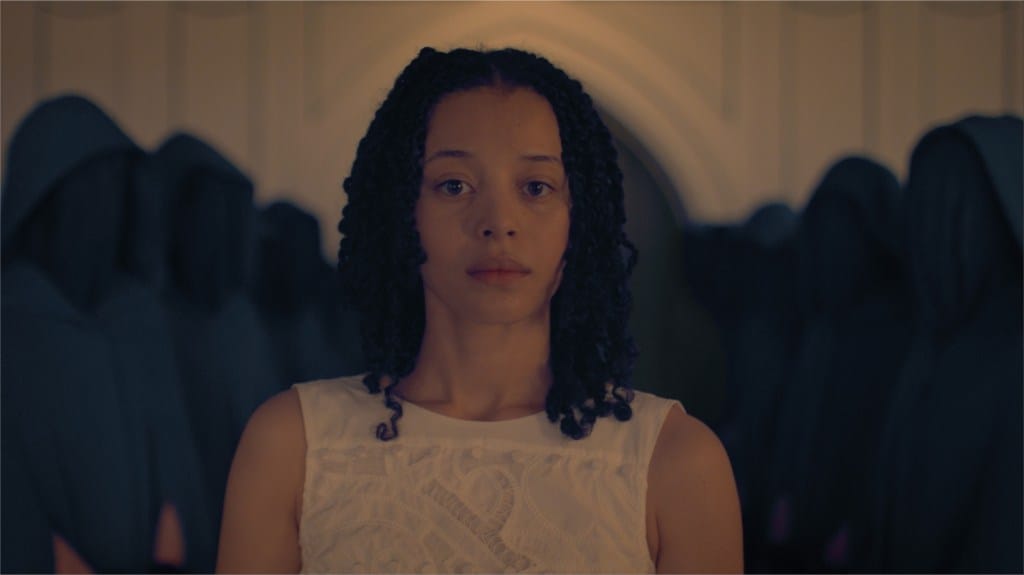
Speaking at Series Mania, the creative team behind "The Testaments" described the sequel as an exploration of "this other side of Gilead, with all these privileged people," according to Variety. Where "The Handmaid's Tale" centered on the Handmaids — women stripped of autonomy, forced into reproductive servitude — "The Testaments" examines the Wives, Aunts, and Commanders' daughters who occupy the system's upper tiers. These are the women who didn't just survive Gilead. They gained status from it.
The pivot is strategic. After five seasons of resistance narratives and escape plots, the franchise is moving toward a harder question: what about the people who chose to stay comfortable? Dystopian television has spent a decade perfecting victimhood as spectacle — tracking who suffers, who resists, who escapes. "The Testaments" is asking who benefits, who enforces, and who convinces themselves the arrangement is acceptable because it works for them.
This is the same shift that made "The White Lotus" work. Mike White's HBO series succeeded not by showing the exploited — we've seen that — but by dissecting the psychology of people who vacation at resorts built on invisible labor and feel vaguely guilty but not guilty enough to leave. "The Testaments" is applying that lens to theocratic fascism. It's a much sharper angle than another season of tunnel escapes.
The timing is deliberate. Dystopian fiction has always been a mirror, but the reflection changes depending on who's looking. When "The Handmaid's Tale" premiered in 2017, the urgency was about recognizing authoritarianism before it fully consolidated. Seven years later, the question isn't whether we'd recognize a fascist state — it's whether we'd rationalize our position within one. "The Testaments" is betting that the more uncomfortable story is the one about complicity, not resistance.
This approach also solves a structural problem that has plagued long-running dystopian TV: diminishing returns on suffering. After five seasons of watching June Osborne endure brutality, the audience's capacity for empathy starts to flatten. The show becomes numbing rather than galvanizing. Shifting focus to the women who upheld the system — who taught girls to accept it, who policed other women, who benefited from proximity to power — resets the emotional stakes. These characters haven't earned sympathy yet. The show has to make the case for why they matter.
The move also aligns with broader shifts in how prestige TV is handling power. Institutional access is no longer treated as neutral — whether it's a documentary crew inside Vogue or a drama inside Gilead's upper class, the framing now assumes that proximity to power requires interrogation, not celebration. Streaming platforms are learning that nostalgia and comfort aren't sustainable as content strategies when the culture is demanding accountability.
"The Testaments" is also a test of whether Hulu can build a franchise that doesn't rely on a single protagonist. "The Handmaid's Tale" was Elisabeth Moss's show — her performance anchored every season, and her character's arc defined the narrative. The sequel is designed as an ensemble, with multiple perspectives and no singular hero. If it works, Hulu has a model for extending IP without exhausting a star. If it doesn't, the franchise ends here.
The risk is that the show will soften the critique. Depicting privilege is easy. Interrogating it without letting the audience off the hook is harder. If "The Testaments" turns into a redemption arc for Gilead's elite — if it asks us to sympathize with the Wives because they were victims too — it will have wasted the premise. The point isn't that everyone in Gilead suffered. The point is that some people suffered less, and they made choices to keep it that way.

Dystopian TV is finally growing up. It's done asking us to imagine what we'd do if we were oppressed. Now it's asking what we'd do if we weren't.